Anthropic CEO to Meet Trump One-on-One for the First Time, Raising Questions About AI Regulation
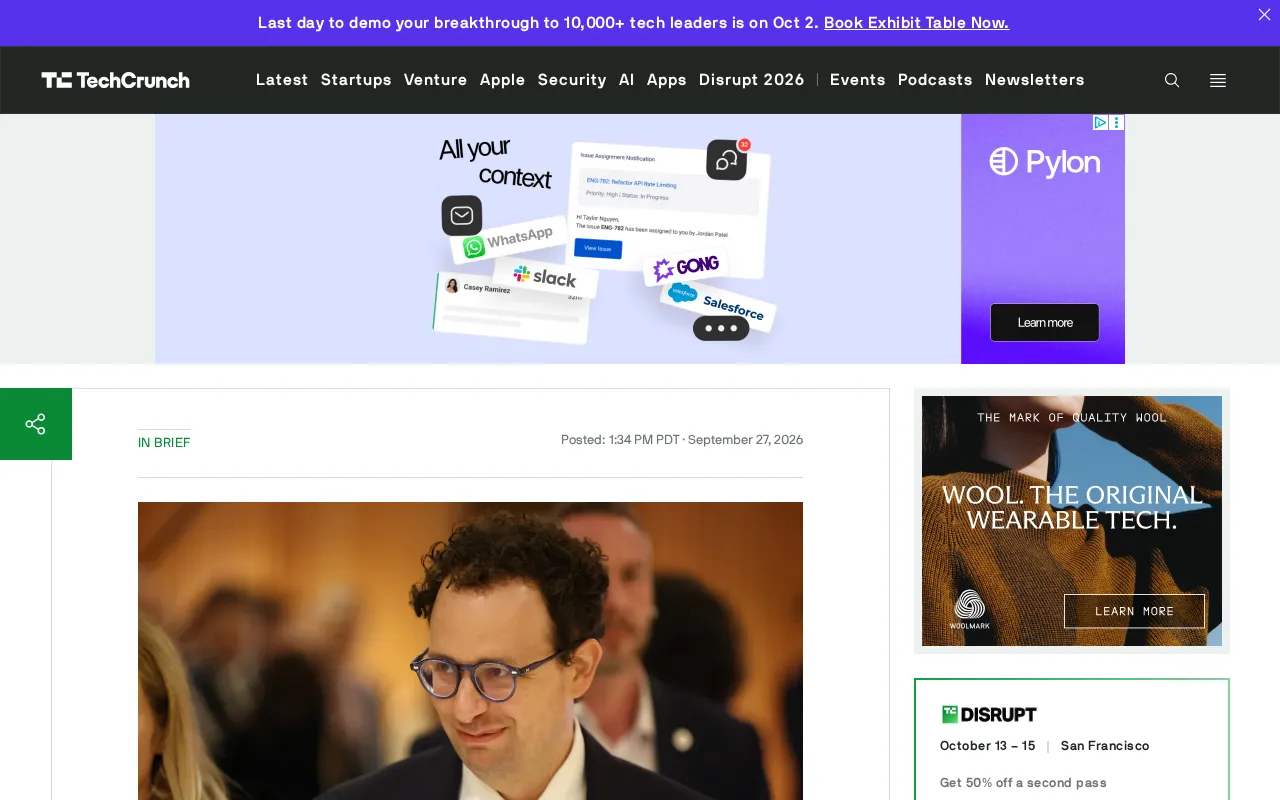
Anthropic CEO Dario Amodei is meeting Trump one-on-one for the first time, spotlighting AI regulation.
Anthropic CEO Dario Amodei is set to have his first private one-on-one dinner with President Trump. Known for its safety-first approach, Anthropic has long advocated for clear regulatory rules around frontier AI models. The meeting comes at a critical juncture as the U.S. AI regulatory framework is still taking shape, with key issues like compute policy, chip export controls, and safety standards all in play. As AI has evolved from a technical race into a matter of national strategy, the industry is watching this high-profile political engagement closely.
A High-Profile Dinner
Anthropic CEO Dario Amodei is set to have dinner with President Donald Trump — their first one-on-one meeting. For a company that has staked out a clear position on AI safety, a direct conversation between its leader and the nation's top decision-maker carries significant weight.
As one of OpenAI's primary competitors, Anthropic has long been known for its Claude model series and its "responsible AI" positioning. Dario Amodei has publicly voiced concerns on multiple occasions about the risks of rapid AI development, advocating for a balance between regulation and innovation. This unmistakable safety-first stance makes every interaction he has with policymakers worth watching closely.
Anthropic was founded in 2021 by Dario Amodei, his sister Daniela Amodei, and several former OpenAI researchers. The company's core mission is AI safety, and it developed the Claude model series using a Constitutional AI training methodology. Unlike OpenAI, Anthropic dedicates substantial resources to model interpretability and alignment research, emphasizing the need to establish robust safety evaluation frameworks before models reach transformative capabilities. The company is currently valued at over $60 billion and has received strategic investment from Amazon, Google, and other major players, making it one of the most influential frontier AI labs in the world.
Why This Meeting Matters
From an industry perspective, direct communication between AI executives and heads of government often signals potential shifts in policy direction. The United States is still in the early stages of building its AI regulatory framework, and positions on export controls, compute policy, and safety standards could all be shaped by input from leading companies.
Amodei himself holds a measured view on AI regulation and has repeatedly called for clearer rules governing the deployment of frontier models. This private dinner with Trump gives him a direct channel to articulate that position. Informal meetings like this typically enable more substantive exchanges of views than formal congressional hearings.
The Industrial Logic Behind Political Engagement
In recent years, the heads of major AI labs have appeared on the political stage with increasing frequency — a reflection of how the industry has evolved from a purely technical race into a complex arena involving national strategy, industrial policy, and international competition. Issues like compute supply, chip exports, and data compliance all require ongoing dialogue between companies and governments.
For Anthropic, maintaining open lines of communication with policymakers serves two purposes: it allows the company to advocate for its expertise in AI safety, and it shapes the policy environment in which the company will operate going forward. For the government, listening to frontier AI companies is a necessary prerequisite for crafting sensible regulatory frameworks.
Compute supply and chip export controls are at the heart of current AI policy battles. Since 2022, the U.S. Department of Commerce has restricted exports of high-end AI chips — such as Nvidia's A100 and H100 series — to China, and has since tightened those rules multiple times, extending restrictions to additional countries and chip models. For AI labs, these policies directly affect the cost and supply chain stability of the compute needed to train large models. For the government, they serve as a strategic tool to maintain technological leadership and prevent adversaries from acquiring critical capabilities. The positions taken by leading AI companies on this issue often have a material influence on how the rules are refined and enforced.
Observations With Limited Information
It's worth noting that publicly available information remains quite limited — what has been confirmed is simply that this will be Amodei's first solo meeting with Trump. The specific topics on the agenda, the positions each party will take, and any potential outcomes have not been disclosed.
Nevertheless, this development is worth watching closely for anyone in the AI industry. The interaction between a leading lab and the center of political power could have far-reaching effects on regulatory direction and the competitive landscape in the months ahead. As more details emerge, the true significance of this dinner may become considerably clearer.
Related articles
Salesforce Acquires Rune for $375M: AI Logistics Tech Bolsters Defense Business
Salesforce reportedly acquires defense tech startup Rune for $375M. Rune's AI logistics tech will strengthen Salesforce's Missionforce defense platform, continuing its M&A spree.

Why Fair Use Benefits Everyone in the AI Era
Starting from a Hacker News discussion, this article analyzes the legal logic and controversies of the fair use principle in AI training and content creation, and its dual impact on creators and the tech ecosystem.

Mistral Large 4 Open-Sources a Trillion Parameters, Microsoft Offers Voluntary Severance to 60,000 Employees
Mistral Large 4 open-sources a trillion-parameter multimodal model with a coding agent score of 48; SanDisk earnings show AI inference reshaping NAND demand; Google Gemini adds in-app file editing, OpenAI raises Codex quotas, and Microsoft offers voluntary severance to 60,000 employees.