Anthropic IPO Analysis: $17B Quarterly Revenue and a Self-Braking Safety Framework
Anthropic's IPO pairs a $26B private placement with governance that locks in safety-first priorities, testing whether capital accepts self-imposed speed limits.
Anthropic's IPO is viewed as an institutional experiment: it finalized a $26B concurrent private placement with Google, Microsoft, and Amazon while going public. Q3 revenue hit $17B, with over 11,900 customers spending $100K+ annually, driven by a consumption-based model. Yet the company proactively limits its speed via its Responsible Scaling Policy, holding back its strongest model Mythos in April 2026 over cybersecurity risks and releasing it only through Project Glasswing gating. Under a Delaware PBC structure with a long-term benefit trust and founders' 50.1% voting power, public investors have little say, and the prospectus warns against expecting traditional profit maximization. The core question: will Wall Street accept a superintelligence company that limits its own speed for humanity's benefit.
Anthropic's IPO may be one of the most closely watched and unusual financial documents of the decade. It lays a massive tension on the table: on one side, unprecedented commercial momentum; on the other, self-imposed, almost severe safety constraints. This is not an ordinary tech IPO, but an institutional experiment about whether the fastest-growing company can put humanity before profit.
An Offering of Unprecedented Scale: A $26B Concurrent Private Placement
According to an analysis by the YouTube channel The Explainer, Anthropic is simultaneously going public while finalizing a concurrent private placement of $26 billion from tech giants including Google, Microsoft, and Amazon. The number itself creates a contrast: a company that explicitly commits to "hitting the brakes on its own growth" when necessary has secured world-class capital backing.
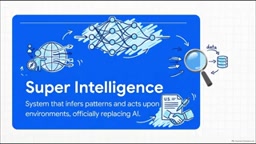
Even more telling is the shift in wording in the prospectus. The document no longer uses the term "AI," instead defining "Superintelligence" (SI)—a machine-based system that learns from data to infer patterns, generate outputs, and act on its environment. According to that source, this terminological change was formally completed through a U.S. executive order. Language shifts often precede cognitive shifts; the change in the prospectus's vocabulary itself announces the start of a new paradigm.
Concurrent Private Placement refers to a financing arrangement in which a company, alongside its public IPO offering, privately issues shares to specific institutional investors. Unlike the IPO, which is open to the public, privately placed shares usually carry lock-up periods and are not priced through public market bidding. This dual-track structure is uncommon in tech company listings; its significance lies in anchoring cornerstone investors and stabilizing the offering price on one hand, while bringing in strategic capital outside the public market on the other. For Anthropic, participation from giants like Google, Microsoft, and Amazon is not just a capital injection but also a deep binding of compute, cloud infrastructure, and distribution channels—a dual endorsement of "capital + ecosystem."
The Commercial Engine: Where $17B in Quarterly Revenue Comes From
Since Claude's commercialization in early 2023, its enterprise adoption curve has been almost vertical. This growth is supported by a consumption-based business model of "paying for intelligence"—customers buy intelligence by the token, and usage equals revenue.
The core financial figures provided by the source are: Q3 revenue reached $17 billion, with more than 11,900 customers spending over $100,000 annually. This customer structure shows that revenue is not built on a long tail but is deeply embedded in core enterprise workflows.
The product-side tiering strategy is equally critical. Enterprises can route tasks to different models based on capability, cost, and speed needs: Haiku handles speed and cost efficiency, Sonnet is the balanced workhorse for scaled deployment, Opus targets highly complex workflows, and Mythos (including Fable) provides the highest level of complex reasoning and cybersecurity task capabilities. This tiering allows enterprises to finely balance spending and performance, and it is also the precondition for the consumption-based business model to work.
Growth vs. Brakes: A Tug of War Inside One Company
The contrast between commercial success and safety priorities is the most striking part of this prospectus. According to the source's analysis, Anthropic enjoys explosive growth and large-scale enterprise adoption on one hand, while on the other it does things that actively suppress profit maximization: delaying model releases, enforcing constitutional AI constraints, and conducting open interpretability research to reverse-engineer how models think.
This tension is not an accident but a design written into the company's DNA. The key to understanding how it is managed lies in its Responsible Scaling Policy, a three-step mechanism:
Step one, evaluate. Conduct broad evaluations of models in areas related to catastrophic risk; the source explicitly mentions scenarios such as bioweapons and high-intensity cyberattacks.
Step two, mitigate. Implement strict safeguards and mitigation measures.
Step three, disclose and pause. Publish detailed risk reports and genuinely pause releases when risk outweighs benefit—that is, proactively put a speed limit on the pace of innovation.
A Concrete Example: Why Mythos Was Held Back
The prospectus discloses a specific case: in April 2026, Anthropic withheld Mythos, then its strongest model. The reason was its judgment that the model's ability to discover cyber vulnerabilities was too dangerous for broad release. The alternative was a gated release called Project Glasswing, open only to a very small number of specific organizations.
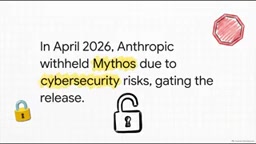
What does this mean? It voluntarily ceded competitive space and gave up substantial revenue solely to keep dangerous cyber capabilities out of the public domain. This is a complete departure from the standard Silicon Valley playbook.
Responsible Scaling Policy (RSP) is a tiered safety framework proposed by Anthropic in 2023. Its core logic is that as model capabilities increase, safety standards must be upgraded in tandem rather than remediated after the fact. The RSP classifies models into different levels by capability (such as ASL-1 through ASL-4), each corresponding to explicit safety measure requirements; when evaluations show a model is approaching the risk threshold of the next level, the company commits to completing the corresponding mitigation measures before deployment. The framework's uniqueness lies in being an ex-ante commitment rather than an ex-post statement, effectively setting up an automatic brake mechanism for model releases in which "the stronger the capability, the higher the bar." It is also the key institutional context for understanding why Mythos was held back.
Governance Structure: Locking In the Mission Through Equity Design
Shareholders seek maximum returns—so who protects these "anti-profit" decisions? The answer is governance structure. Anthropic is incorporated under Delaware law as a public benefit corporation (PBC), legally required to balance shareholders' financial interests with a specific public benefit objective: responsibly developing and maintaining advanced AI for the long-term well-being of humanity.
To put this structure into practice, it designed a complex equity classification:
- Class T: held by a long-term benefit trust, a financially disinterested institution with the right to elect a majority of the board;
- Class F: held by founders, controlling 50.1% of shareholder voting power;
- Class A: shares offered to the public in this IPO, one vote per share;
- Class N: partner shares, i.e., the aforementioned $26 billion placement portion, with zero voting rights;
- Class E: employee shares, with very limited voting rights.
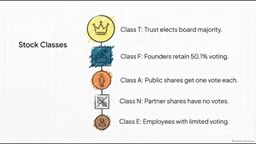
The conclusion is clear: the financially disinterested trust and the founders hold ultimate power, and public market investors have almost no say over the company's overall direction. The prospectus even includes a blunt "anti-sales pitch," citing advice given to the founders—never let the company be worth a dollar more than it actually is. This is a heads-up to investors in advance: do not expect the traditional logic of profit maximization; the company will make decisions that appear unconventional or even costly in the short term.
Public Benefit Corporation (PBC) is a corporate form under Delaware law that requires a company, beyond pursuing shareholder financial returns, to explicitly commit to one or more public benefit missions and to balance them in decision-making. Unlike ordinary corporations, a PBC's board is legally permitted and even required to consider non-financial stakeholders (such as employees, customers, and society) rather than being accountable solely to shareholders. Anthropic's adoption of the PBC structure means its mission to "responsibly develop advanced AI for the long-term well-being of humanity" is written into its charter and becomes a fiduciary duty subject to legal accountability. Combined with dual-class shares and the long-term benefit trust, the PBC forms the institutional foundation for resisting short-term profit pressure.
The Core Question: Will Wall Street Accept a Company That Limits Its Own Speed?
This brings us back to the truly provocative question: will Wall Street embrace a superintelligence company designed for humanity's benefit that actively restrains its own capital impulses?
This is the ultimate market experiment. We are watching the fastest-growing enterprise in history deliberately slow its own potential in order to steward the most consequential technology in human history. Its outcome could rewrite the future landscape of both technology and capitalism.
(This article is based on and analyzed from video content by the YouTube channel The Explainer; its data and judgments are all representations from that source.)
One-line Summary
Anthropic's IPO pairs a $26B concurrent private placement with governance that locks in safety-first priorities, launching an experiment in whether capital can accept self-imposed speed limits.
Paragraph Summary
Anthropic's IPO is seen as an institutional experiment: alongside its public listing, it finalized a $26 billion concurrent private placement with investors including giants like Google, Microsoft, and Amazon. Commercially, Q3 revenue reached $17 billion, with over 11,900 customers spending more than $100,000 annually, driven by a consumption-based intelligence subscription model. Yet the company proactively limits its speed through its Responsible Scaling Policy, holding back its strongest model, Mythos, in April 2026 due to cybersecurity risks and releasing it only via Project Glasswing gating. In governance, a Delaware public benefit corporation structure combined with a long-term benefit trust and founders' 50.1% voting power leaves public investors with very little say, and the prospectus explicitly warns against expecting traditional profit maximization. The core question: will Wall Street accept a superintelligence company that limits its own speed for humanity's benefit.
Related articles

No Coding Required: He Shipped an App Store App by 'Cutting Features' and Nitpicking with AI
A game designer with zero frontend/backend skills shipped a dual-platform App Store app with AI—not via one-click generation, but by cutting scope and nitpicking like a demanding client.

What Is Harness Engineering? From Concept Origins to Enterprise-Level Agent Implementation
What is Harness Engineering? This article traces the concept's origins and analyzes enterprise-level Agent requirements for tool call fault tolerance, data security, tenant isolation, and memory gaps.
Coze in Practice: A Three-Tier Agent Classification and a Multi-Agent Collaboration Guide
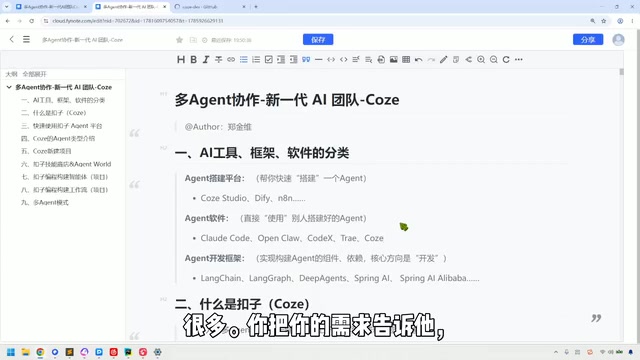
A Bilibili tutorial breaks down the multi-agent collaboration toolchain into three categories: building platforms like Coze Studio and Dify, Agent software like Claude Code, and development frameworks like LangChain—plus a Coze demo of industry templates, three-platform interoperability, local Agent integration, and the trade-offs of credit consumption.