Anthropic IPO Filing Reveals Enterprise Customer Retention Strategy
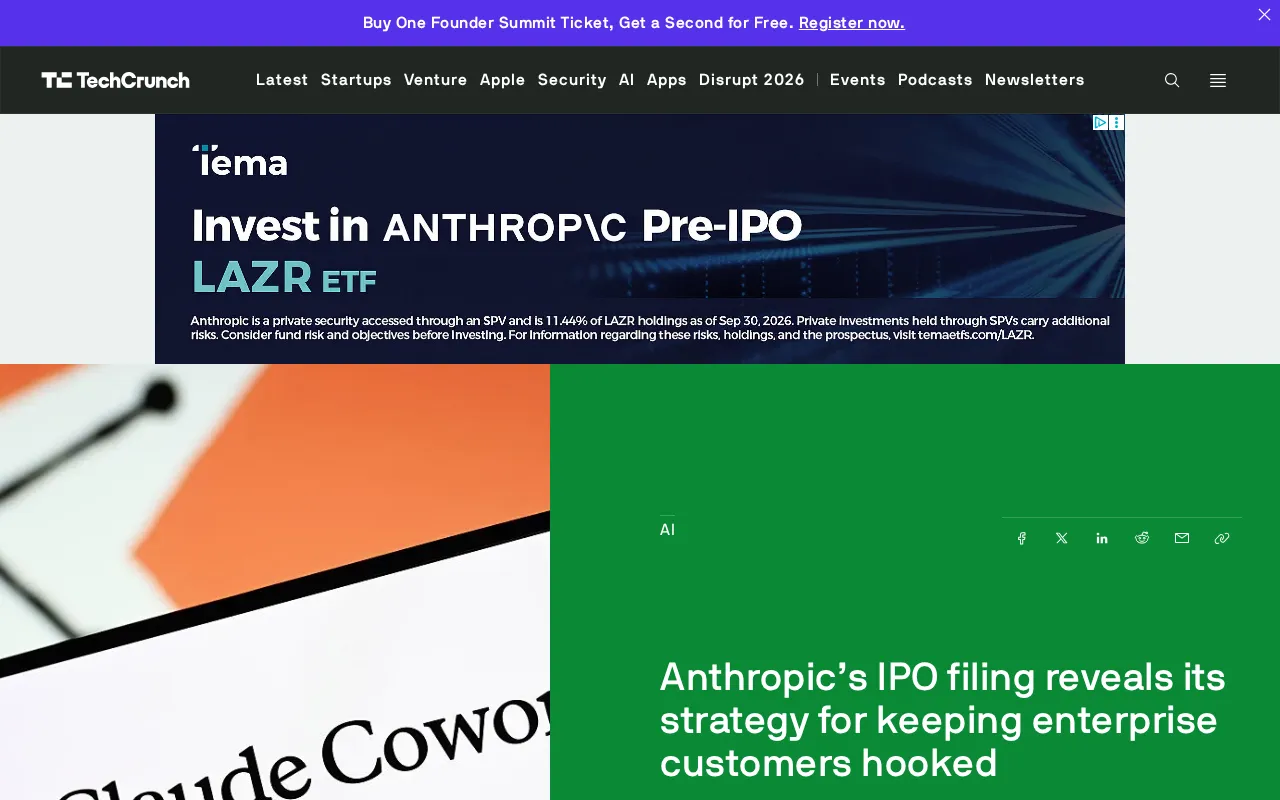
Anthropic S-1 shows over half of high-value enterprise customers use both Claude platform and first-party apps, replicating Amazon-style ecosystem stickiness.
Anthropic's S-1 filing reveals that more than half of enterprise customers paying over $100,000 annually use both the Claude platform (API) and at least one first-party application. This cross-selling strategy mirrors Amazon's multi-product matrix approach, aiming to raise switching costs and boost retention through dual dependence. The article analyzes how this combination builds barriers across technical, organizational, and data layers—key evidence for Anthropic's IPO pitch and a sign that enterprise AI competition is shifting from model capability to product ecosystems.
Anthropic's S-1 filing reveals a key business signal: among its enterprise customers paying over $100,000 per year, more than half use both the Claude platform and at least one first-party application. This cross-selling strategy is reminiscent of Amazon's classic playbook—using a multi-product matrix to keep enterprise customers firmly anchored in the ecosystem.
Cross-Selling: The Stickiness Formula for Enterprise AI
The filing shows that combined use of the Claude platform (API access) and first-party applications (such as Claude web, desktop, etc.) is becoming standard for high-value customers. For customers paying over $100,000 per year, more than half have already developed a dual dependency on "platform + application."
Behind these numbers lies a clear business logic: offering only an API makes it easy to fall into price wars and commoditized competition, while first-party applications can embed directly into enterprise workflows, building usage habits and data accumulation. When customers use both the API and applications, switching costs rise significantly, and renewal rates and willingness to expand purchases increase accordingly.
According to the S-1 filing, this cross-selling model is a core component of Anthropic's enterprise strategy, with its effects directly reflected in the retention and upsell behavior of large customers.
The S-1 filing is the registration statement form required by the U.S. Securities and Exchange Commission (SEC) for an initial public offering (IPO). Companies must disclose their business model, financial data, risk factors, and strategic details in it. The S-1 is the most authoritative primary source for investors to understand a company planning to go public, and its disclosures are legally binding—false statements carry legal liability. Therefore, data in the S-1 regarding customer structure, payment levels, and product usage is generally regarded as a more credible business signal than marketing materials.
Customer Lifetime Value (LTV) refers to the net revenue a customer contributes to a company over the entire duration of their relationship. The higher the LTV, the more revenue a company generates from a single customer, and the higher the customer acquisition cost (CAC) it can afford. Cross-selling is valued precisely because it can significantly increase LTV—the same customer buys more products, increasing revenue contribution while acquisition and service costs are spread thinner.
Replicating the Amazon Playbook in the AI Era
Comparing Anthropic's strategy to Amazon's is not a stretch. Amazon creates dependencies across multiple touchpoints for enterprise customers through a combination of AWS infrastructure, Prime membership, advertising, and its retail marketplace. Anthropic's path is similar: the Claude platform provides underlying model capabilities, while first-party applications handle scenario implementation and user experience.
The advantage of this model is that enterprise customers don't need to piece together solutions from multiple vendors. One contract covers API calls and end-user applications, simplifying procurement and unifying the tech stack. For Anthropic, multiple product lines also mean higher customer lifetime value (LTV) and lower per-customer acquisition costs.
The S-1 filing does not disclose specific revenue contribution ratios, but explicitly lists cross-selling as a key lever in its large-customer strategy.
AWS (Amazon Web Services) is Amazon's cloud computing platform, offering infrastructure services such as compute, storage, and databases. AWS's success lies not only in technological leadership but also in the ecosystem it has built that enterprise customers find hard to leave: once a company's system architecture, data pipelines, and operational processes are built on AWS, switching costs are extremely high. Anthropic's Claude platform plays a similar "infrastructure" role to AWS—providing underlying model capabilities for enterprises to integrate—while first-party applications are akin to Amazon's Prime or retail front-end, reaching end users directly. This two-tier structure of "infrastructure + front-end applications" is the core mechanism of Amazon's ecosystem stickiness.
Why Enterprise Customers Get "Hooked"
Customers paying over $100,000 per year typically have complex AI deployment needs: they need to integrate models into their own systems via API, and they also need out-of-the-box applications to quickly empower business teams. By offering both, Anthropic is effectively playing a dual role of "AI infrastructure + productivity tool."
The stickiness this positioning creates manifests at several levels. At the technical level, the deeper the API integration, the higher the replacement cost. At the organizational level, the more departments use first-party applications, the greater the sunk costs of internal rollout and training. At the data level, the prompts, workflows, and fine-tuning assets accumulated during use all constitute migration barriers.
The "more than half" figure in the filing indicates that cross-selling is not an isolated phenomenon but has already achieved scale effects. For a company pursuing an IPO, this data is key evidence to prove the health of its enterprise business to public market investors.
Switching cost is the sum of time, money, and risk a customer must bear to switch from one vendor to another. In enterprise software, switching costs typically come from three sources: technical integration (API connections, system modifications), organizational inertia (employee training, process restructuring), and data assets (historical data, configurations, and fine-tuning results). The higher the switching cost, the more customers tend to renew rather than change vendors—this is the so-called "lock-in effect." By offering both API and first-party applications, Anthropic is effectively raising switching costs at the technical, organizational, and data levels simultaneously, thereby enhancing customer stickiness.
Implications for the Enterprise AI Market
Anthropic's S-1 disclosure provides the industry with a window: competition in enterprise AI is shifting from single-model capabilities to product matrices and ecosystem stickiness. OpenAI is similarly advancing a combination of API and enterprise products, while Google leverages its existing cloud and Workspace ecosystem.
The difference is that Anthropic has no proprietary cloud infrastructure or office suite as an entry point, so it relies more on synergy between the Claude platform and first-party applications to build its moat. The cross-selling data revealed in the S-1 filing is preliminary validation of this strategy's effectiveness.
For enterprise buyers, this means that when choosing an AI vendor, they need to more carefully evaluate the long-term costs and flexibility of multi-product bundling. For competitors, Anthropic's path shows that a strong model alone is not enough—you also need a product portfolio that customers "can't leave."
Key Takeaways
- Anthropic's S-1 filing shows that more than half of enterprise customers paying over $100,000 per year use both the Claude platform and first-party applications.
- The cross-selling strategy resembles Amazon's multi-product stickiness playbook, aimed at improving enterprise customer retention and upsells.
- The platform + application combination raises switching costs at the technical, organizational, and data levels, creating competitive barriers.
- This data is an important signal for Anthropic to prove the health of its enterprise business to IPO investors.
One-line Summary
Anthropic's S-1 filing shows that over half of high-value enterprise customers use both the Claude platform and first-party applications, replicating Amazon-style ecosystem stickiness through cross-selling.
Paragraph Summary
Anthropic's S-1 filing reveals that among enterprise customers paying over $100,000 per year, more than half use both the Claude platform (API) and at least one first-party application. This cross-selling strategy resembles Amazon's multi-product matrix playbook, aiming to increase customer switching costs and boost retention and upsell willingness through dual dependence on "platform + application." The article argues that this combination builds barriers at the technical integration, organizational habit, and data asset levels, serving as key evidence for Anthropic to prove the health of its enterprise business to IPO investors, and reflecting that enterprise AI competition is shifting from single-model capabilities to product matrices and ecosystem stickiness.
Related articles
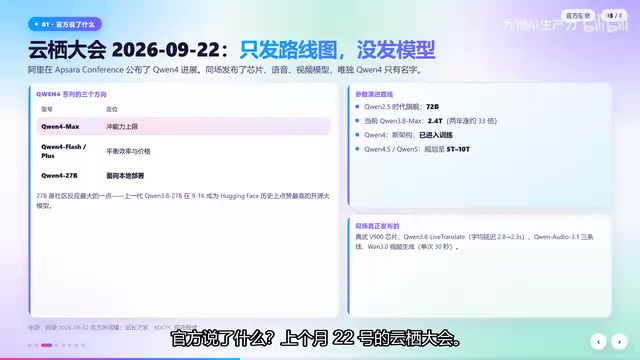
Qwen4 Architecture Preview Open-Sourced: 125B Parameters, 512 Experts, Designed for VRAM-Constrained Hardware
Qwen4 isn't released yet, but its architecture is previewed via open-source Qwen3.8 Flash Next: 125B params, 6B activated per token, 512 experts, 262K context, built for VRAM-limited hardware. This article covers official confirmations, key config.json metrics, and local deployment tests on 24G memory.
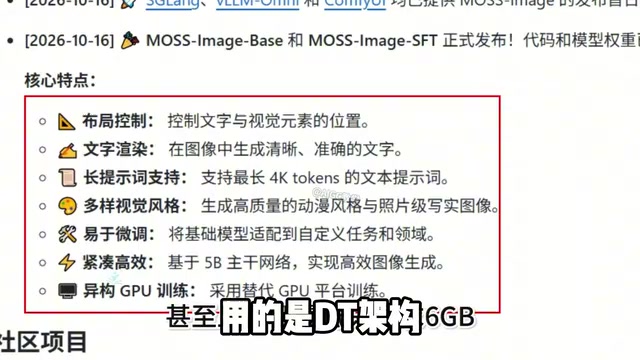
Run 8K Images on 6GB VRAM! Hands-On Test of Fudan's Open-Source MOSS-Image Model
Fudan OpenMouse team and Shanghai MOSS Intelligence open-source MOSS-Image, a 500M-parameter DT architecture text-to-image model that runs locally on 6GB VRAM with precise text rendering, structured layout control, and 4K Token prompt support—ideal for e-commerce posters and local deployment by individual creators.
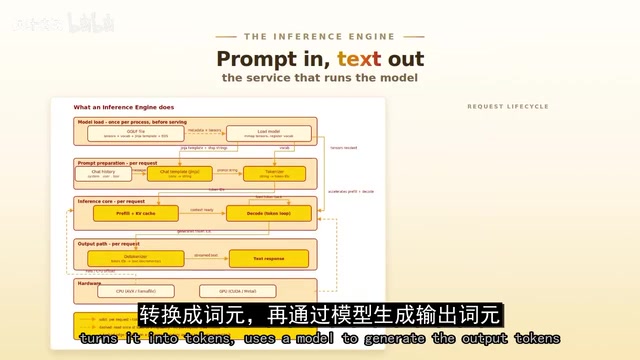
Overseas Blogger Tests Local Deployment of 100B-Parameter MoE Model: Key Lessons on Quantization and Tool Calling
Overseas blogger tests local deployment of Alibaba's Qwen 3.8 Flash Next 100B MoE model on a Strix Halo mini PC and CUDA workstation, revealing how quantization precision affects tool-calling success and the real-world performance of the Strata and GUFO inference engines.