Anthropic Launches IPO with $1.4 Trillion Valuation and Fable 5.2 Model Debut

Anthropic launches its IPO roadshow at a valuation of up to $1.4 trillion and debuts the coding-boosted Fable 5.2 model.
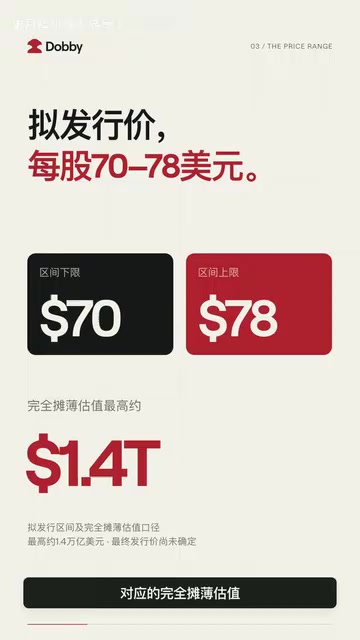
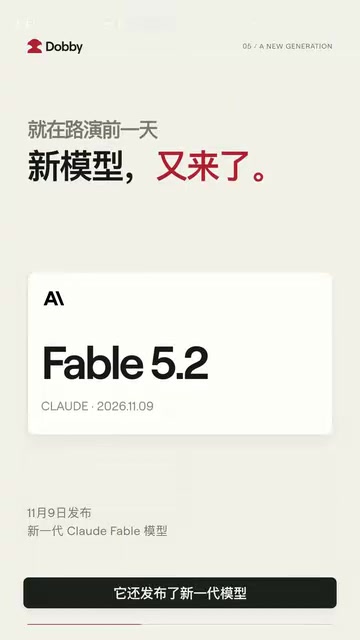
According to a Bilibili video, Anthropic has initiated its IPO, with a proposed issue price of $70-78 per share, a fully diluted valuation of up to about $1.4 trillion, and a target listing date of November 19. One day before the roadshow, it released Fable 5.2, whose official complex coding benchmark score rose from 32.4% to 49.1%, a relative gain of about 52%. Users can start using the model via Dobby for $10. The article cautions that the valuation, price, and test results come from a single video source and lack official or third-party verification.
Anthropic Launches IPO with $1.4 Trillion Valuation and Fable 5.2 Model Debut
According to a Bilibili video report, pure-play AI company Anthropic has officially initiated its IPO process, planning to list on public markets at an issue price of $70 to $78 per share, implying a fully diluted valuation of up to approximately $1.4 trillion, with a target listing date of next Thursday (November 19). One day before the roadshow, Anthropic released its next-generation model Fable 5.2, which improved its score on the company's official complex programming benchmark from 32.4% in the previous generation to 49.1%, a relative gain of about 52%, described as a "cliff-edge lead."
IPO Process and Valuation Logic
Anthropic has begun its roadshow with a proposed price range of $70 to $78 per share, corresponding to a fully diluted valuation of up to approximately $1.4 trillion. This valuation level is extremely rare among AI startups and reflects strong capital market confidence in leading large-model companies. The timeline of the roadshow and listing arrangements is tight, indicating the company's active effort to seize the market window.
A note: the valuation and issue price information above comes from a single source, a Bilibili video, and has not been cross-verified by official announcements or prospectus filings. Readers should remain cautious when referencing it and follow formal documents disclosed by regulators.
Fully diluted valuation is a commonly used basis for measuring a company's market value. It refers to calculating valuation not only on currently issued common shares but also including all granted but unexercised options, restricted stock units (RSUs), convertible bonds, and shares that may be issued in the future in the total share count, then multiplying by the share price. Compared with a basic valuation calculated only on outstanding shares, fully diluted valuation better reflects the true post-IPO total share capital and the degree of shareholder equity dilution, so it is often used in tech company IPO pricing and investor comparisons. For AI companies with large employee equity incentive programs, the difference between the two bases can be significant.
Fable 5.2: A Major Leap in Programming Capability
On the eve of its listing, Anthropic released the next-generation model Fable 5.2. Its official complex programming benchmark score rose from 32.4% in the previous generation to 49.1%, a relative improvement of about 52%. This jump is notable among model iterations; the video even describes its performance as a "cliff-edge lead," and some users commented that "this is AGI."
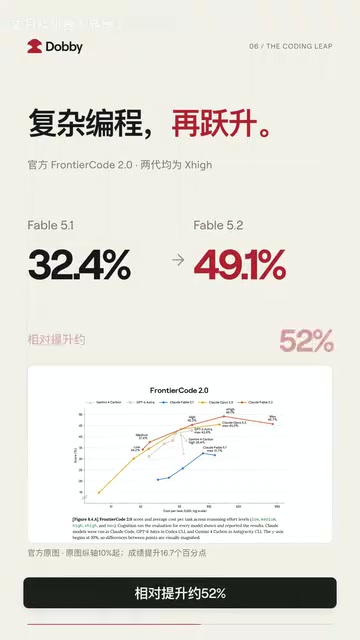
From a technical perspective, a relative improvement of about 52% on the programming benchmark means the model has made substantive progress in complex code understanding, generation, and debugging tasks. However, this is Anthropic's official test, and the specific composition of the test set and evaluation methodology have not been disclosed, so differences in methodology should be noted when comparing it horizontally with other models.
What the industry commonly calls a complex programming benchmark usually refers to benchmark tasks that require a model to complete code generation, defect localization, and repair under long-context, multi-step dependency conditions, such as SWE-bench-style evaluations. Unlike simple function completion, these tests emphasize end-to-end resolution of engineering problems at the level of real code repositories, and therefore better reflect the model's practical ability as a "coding agent." However, test sets designed by different organizations vary greatly in difficulty and scoring rules (whether retries are allowed, whether human review is involved), making absolute scores difficult to compare directly across vendors. This is also why official self-reported results usually require third-party reproduction.
Commercial Deployment: Low-Barrier Access and Scenario Coverage
The video mentions that users can start using Fable 5.2 through the Dobby platform for $10, covering scenarios such as coding, research, and report writing. This low-barrier access method helps model capabilities quickly reach developers and knowledge workers, and also aligns with Anthropic's need to demonstrate commercialization potential before its IPO.
Pay-as-you-go API pricing is the most common commercialization model for large models: vendors provide programmable interfaces, and developers pay based on the number of input and output tokens, usually priced per million tokens. Low-barrier trial packages (such as obtaining a certain quota for a fixed small fee) are essentially packaging pay-as-you-go pricing as an experience entry point, reducing trial-and-error costs for individual developers and small teams while binding users to the vendor's own API ecosystem. For a company preparing for an IPO, developer count, call volume, and paid conversion rates are key indicators of growth potential presented during the roadshow, so such access strategies are often closely tied to the commercialization narrative.
Industry Impact and Factors to Watch
If Anthropic lists at a valuation of approximately $1.4 trillion, it will become an important milestone for the AI industry and may further raise market expectations for the valuations of pure-play AI companies. At the same time, Fable 5.2's improvement in programming capability also intensifies technical competition among leading models.
But it is important to view this rationally: the listing date, issue price, and valuation all come from a single video source, and the information may be incomplete; Fable 5.2's benchmark results are official data and lack independent third-party verification; and the specific partnership between the Dobby platform and Anthropic is not explained in the source material. It is advisable to continue following official announcements and subsequent disclosures.
The IPO roadshow and prospectus filings are key stages in the listing process. During the roadshow, company management introduces the business, financials, and growth prospects to institutional investors and uses that feedback to gauge subscription interest and determine the final issue price; formal information is based on the prospectus submitted to regulators (such as the SEC's S-1 filing in the United States), which discloses details including revenue, losses, customer concentration, equity structure, and risk factors. Valuation ranges and issue prices obtained only from secondary channels such as videos are often merely rumors or preliminary intentions and may differ from the final pricing. Investors should base their judgments on official documents.
One-line Summary
Anthropic has launched its IPO roadshow with a valuation of up to $1.4 trillion, while releasing the Fable 5.2 model with greatly enhanced programming capability.
Paragraph Summary
According to a Bilibili video report, Anthropic has initiated its IPO process, with a proposed issue price of $70 to $78 per share, a fully diluted valuation of up to approximately $1.4 trillion, and a target listing date of November 19. One day before the roadshow, the company released the next-generation model Fable 5.2, whose official complex programming benchmark score rose from 32.4% to 49.1%, a relative improvement of about 52%, described as a cliff-edge lead. Users can start using the model through the Dobby platform for $10, covering scenarios such as coding, research, and report writing. The article also notes that the valuation, issue price, and benchmark results all come from a single video source and have not been verified by official documents or independent third parties, and that the partnership between Dobby and Anthropic has not been explained; it recommends following subsequent official disclosures.
Related articles

AI Writes Your Code—Do You Still Need to Learn Git? Five Reasons
AI coding agents handle Git operations automatically—is it still necessary to learn Git? Five reasons: team communication, reviewing agent PRs, monitoring code changes, fallback when AI goes down, and the joy of learning—plus how the focus of learning Git is shifting in the agent era.
Anthropic Reportedly Prices IPO at $83 Per Share, Valuing Company at $1.5 Trillion
Anthropic reportedly prices IPO at $83 per share, above the expected range, with a fully diluted valuation of $1.5 trillion. This article analyzes the signal significance of the pricing and its impact on the AI industry's financing environment.
Open-Source Code Hosting Platform Codeberg Suffers Outage, Sparking Debate in Developer Community
Open-source code hosting platform Codeberg.org suffered an outage, sparking Hacker News debate over nonprofit platform stability and open-source infrastructure dependency risks.