Anthropic Lost $80.7B in Six Months: Burning Cash or Making Money?
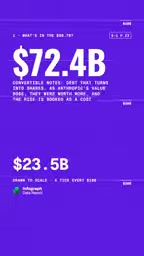
Anthropic's massive paper loss mainly comes from debt-to-equity conversion; the business is profitable but the company still burns financing.
Anthropic recorded an $80.7B loss over six months, but quarterly revenue exceeded the previous three years combined—seemingly contradictory figures that need unpacking. Most of the loss is a paper loss from debt-to-equity conversion, paid in shares rather than cash; excluding it, actual operating loss is only $693M. Operationally, customers paying $100K+ annually grew from 400 to nearly 12,000, cost per dollar of revenue fell from $2.50 to $0.48, and the business was profitable from April to June. Yet the company still lost $66B overall, filled by $111B from investors and lenders, while its own cash contribution is only ~$4B. Signed but not yet commenced lease obligations total $321B, far exceeding business cash contribution.
Introduction: Two Narratives Behind One "Loss"
Anthropic recorded an $80.7B loss over six months, yet its quarterly revenue exceeded the sum of the previous three years. This seemingly contradictory set of figures makes "Is Anthropic making money or burning it?" a question that needs to be unpacked. We've compiled its financial structure based on public information to try to answer this question.
The Composition of the $80.7B Loss: Mostly Not Cash Outflow
The vast majority of this $80.7B loss is a paper loss from debt-to-equity conversion. As Anthropic's valuation rose, the book value of this convertible debt increased, but the owners are paid in shares rather than cash. In other words, this "loss" is more the result of accounting treatment than actual cash burn.
Setting this debt aside, Anthropic's actual operating loss was $693M. This figure shifts the question from "how big is the loss" to "does the business itself hold up."
Convertible Debt and Debt-to-Equity Conversion
Convertible debt is a financing instrument that sits between debt and equity: investors lend money to a company, but under agreed conditions (such as the company's valuation reaching a certain level, or at maturity), this debt can convert into company shares at a predetermined price. For the borrowing company, its coupon rate is typically lower than ordinary debt because investors receive the option value of future conversion.
When the company's valuation rises, the value of the conversion option increases accordingly, and accounting rules require remeasuring this liability at fair value, with the difference recorded in profit and loss, creating a paper loss. This loss is not accompanied by cash outflow—the company pays in shares, not cash. This is precisely the main source of Anthropic's $80.7B loss: it reflects the liability revaluation brought about by the company's rising valuation, not operational deterioration. Understanding this is the key to distinguishing "paper loss" from "cash burn."
The Business Itself: Customer Growth and Declining Unit Costs
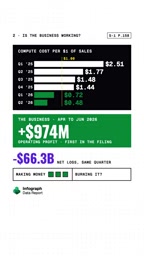
From an operational perspective, Anthropic's business shows clear improvement trends. The number of customers paying over $100,000 annually grew from 400 to nearly 12,000—a significant increase. More importantly, as sales scale expanded, the cost of generating each dollar of revenue declined—compute costs fell from $2.50 to 48 cents in June.
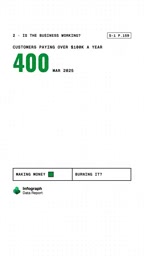
This means the business itself achieved profitability between April and June. Economies of scale are beginning to show, and the unit economics model is improving.
Unit Economics and Economies of Scale
Unit economics refers to measuring the relationship between revenue and costs on a per-customer, per-transaction, or per-dollar-of-revenue basis. The statement that "the cost of generating each dollar of revenue fell from $2.50 to 48 cents" is exactly this metric: it shows that for every $1 of revenue earned, the required compute cost has dropped from $2.50 to $0.48. When this ratio falls below 1, it means the business is already positive at the gross margin level.
For large model companies, the cost structure is highly dependent on the scale of inference compute. As customer numbers and call volumes rise, GPU utilization improves, batch processing efficiency increases, and model inference optimizations (such as quantization and caching) gradually dilute fixed costs—this is the manifestation of economies of scale. Unit costs declining alongside customer growth indicates that Anthropic's growth is not simply buying volume through subsidies, but is accompanied by efficiency improvements—this is the core basis for judging whether its business can sustain profitability.
Who Is Paying for the Growth?
Although the business is profitable at the operational level, Anthropic as a whole still recorded a $66B loss. This gap was filled by investors and lenders—who collectively put in $111B. By comparison, the business itself generated about $4B in cash.
More noteworthy are the signed but not yet commenced lease obligations, totaling $321B, primarily for compute resources. This figure is more than twice the business's own cash contribution, meaning future cash commitments far exceed the cash currently generated by the business.
Lease Obligations and Off-Balance-Sheet Commitments
Lease obligations are future payment commitments corresponding to lease contracts the company has signed but not yet begun to execute. In the AI industry, these leases mainly point to long-term leases for data centers, GPU clusters, and other compute resources. Because the contracts are signed, payment obligations have already arisen even if the relevant compute capacity has not yet been activated, and these are typically disclosed in the notes to financial statements.
The $321B in signed but not yet commenced lease obligations means Anthropic has made commitments for future compute capacity far exceeding the current business's cash contribution. These commitments are characterized by rigidity: rent must be paid regardless of whether business growth meets expectations. This amplifies the company's operating leverage—if scale expands as expected, unit costs can continue to be diluted; if growth falls short, fixed lease expenses will erode cash flow. This is also the key to understanding the contrast of "business profitable but company burning cash": improved income statement does not equal cash flow safety—long-term commitments are the real risk exposure.
Conclusion: The Business Is Making Money, the Company Is Burning It
Returning to the original question: Is Anthropic making money or burning it? The answer depends on which level you're looking at. From the business operations between April and June, it is indeed making money—customer growth, declining costs, and unit economics turning positive. But from the company's overall cash flow perspective, its cash mainly comes from financing, and lease commitments are more than twice the business's cash contribution.
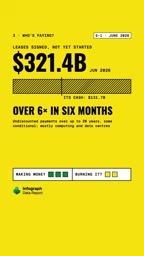
This is a typical state of "business proven, capital-driven." The business itself has proven it can be profitable, but the compute infrastructure supporting its growth requires substantial upfront investment. Investors and lenders are paying for future compute capacity, betting on returns after further scaling.
Frequently Asked Questions
Is Anthropic's $80.7B loss a real cash loss?
No. Most of it is a paper loss from debt-to-equity conversion, paid in shares rather than cash. Excluding this portion, the actual operating loss is $693M.
Is Anthropic's business already profitable?
Based on operating data from April to June, the business level has achieved profitability. Declining unit costs and customer growth are the main drivers.
What does the $321B in lease obligations mean?
This is mainly for compute resource leases that have not yet commenced, representing future cash commitments. Its scale far exceeds the cash currently generated by the business, indicating that Anthropic's growth remains highly dependent on external capital.
One-line Summary
Anthropic's massive paper loss mainly stems from debt-to-equity conversion; the business is profitable but the company still burns financing.
Paragraph Summary
Anthropic recorded an $80.7B loss over six months, but quarterly revenue exceeded the sum of the previous three years—seemingly contradictory figures that need to be unpacked. The vast majority of the loss is a paper loss from debt-to-equity conversion, paid in shares rather than cash; excluding this, the actual operating loss is only $693M. At the operational level, customers paying over $100,000 annually grew from 400 to nearly 12,000, the cost of generating each dollar of revenue fell from $2.50 to $0.48, and the business achieved profitability from April to June. However, the company as a whole still lost $66B, a gap filled by $111B from investors and lenders, while the business's own cash contribution is only about $4B. Additionally, signed but not yet commenced lease obligations total $321B, far exceeding the business's cash contribution, indicating that growth remains highly dependent on external capital.
Related articles

No Coding Required: He Shipped an App Store App by 'Cutting Features' and Nitpicking with AI
A game designer with zero frontend/backend skills shipped a dual-platform App Store app with AI—not via one-click generation, but by cutting scope and nitpicking like a demanding client.

What Is Harness Engineering? From Concept Origins to Enterprise-Level Agent Implementation
What is Harness Engineering? This article traces the concept's origins and analyzes enterprise-level Agent requirements for tool call fault tolerance, data security, tenant isolation, and memory gaps.

Coze in Practice: A Three-Tier Agent Classification and a Multi-Agent Collaboration Guide
A Bilibili tutorial breaks down the multi-agent collaboration toolchain into three categories: building platforms like Coze Studio and Dify, Agent software like Claude Code, and development frameworks like LangChain—plus a Coze demo of industry templates, three-platform interoperability, local Agent integration, and the trade-offs of credit consumption.