Anthropic Races Toward IPO: $1.4 Trillion Valuation Faces Market Test

Anthropic launches its IPO, with a valuation of up to ~$1.4 trillion set to face public-market scrutiny for the first time.
Anthropic has officially launched its IPO, targeting a valuation of up to approximately $1.4 trillion, with an offering size of up to about $64.4 billion at the top of the price range, including shares sold by existing shareholders. The listing matters not just for giving investors a way to hold an AI developer, but for testing whether public markets will put real money behind trillion-dollar AI valuations. Investors must weigh enterprise AI-driven revenue growth against rigid infrastructure spending and competitive pressure on profitability. The IPO opens to eligible Australian retail investors, closing November 17, with trading expected to begin on Nasdaq on November 20. Subscription enthusiasm reflects only short-term demand; long-term valuation depends on whether growth translates into sustainable profit and cash flow, and the pricing will serve as an important reference for the entire AI sector.
The AI industry is about to face a critical test in the capital markets. Cloud developer Anthropic has officially launched its IPO, targeting a valuation of up to approximately $1.4 trillion. To be clear, this is the company's valuation, not the amount raised—at the upper end of the offering price range, the IPO size is up to approximately $64.4 billion, including shares sold by existing shareholders. These figures alone speak volumes: for the first time, the market must deliver an answer for a trillion-dollar AI company under a public pricing mechanism.

An IPO That's About More Than Raising Capital
According to analysis by Bilibili creator "ACCM," the significance of this listing goes far beyond giving investors a direct opportunity to hold an AI developer. More fundamentally, it tests whether the market is willing to put real money behind trillion-dollar AI valuations. Private-stage valuations can be negotiated by a handful of institutions with limited information, whereas an IPO means pricing power is partly returned to the public market—any optimistic narrative must withstand scrutiny that is far more dispersed and immediate.

The offering also opens to eligible retail investors in Australia, who can apply through participating brokers. Under the current arrangement, Australian subscriptions close on November 17, and shares are expected to begin trading on Nasdaq on November 20 Australian time. Opening a retail channel means demand no longer comes solely from institutional capital—short-term subscription enthusiasm will serve as a direct window into market sentiment.
How IPO Pricing Differs from Private Valuation
Private-stage valuations are typically set through negotiation between a few investment institutions and the company in the most recent funding round, with high information asymmetry and low transaction frequency—the valuation reflects more of a "price tag from the last round" than a market consensus formed through continuous trading. An IPO, by contrast, uses bookbuilding to solicit bids from a large number of institutional investors, with the final offering price determined by underwriters in consultation with the company based on subscription demand; after listing, the share price is set by continuous secondary-market trading. This means the public market will repeatedly test the valuation with more dispersed and immediate information, and any optimistic narrative must withstand broader skepticism. For this reason, a trillion-dollar valuation can be sustained in the private stage by the conviction of a few institutions, but at the IPO stage it must persuade a far larger investor base.
The Two Sides of the Valuation Scale
Investors must weigh two forces against each other. On one side is revenue growth from enterprise AI adoption—the core logic supporting high valuations and the main story AI developers tell capital markets. On the other side are the successful deployment of infrastructure spending and the pressure that intense competition places on profitability. Compute investment is rigid, the competitive landscape is far from settled, and whether revenue growth can outpace cost expansion is the key to whether the valuation holds.

This tension determines the delicacy of IPO pricing. Subscription enthusiasm reflects short-term demand, but long-term valuation ultimately depends on whether growth can translate into sustainable profit and cash flow. In other words, first-day performance is only the starting point—the real test is whether subsequent financial reports can prove that a trillion-dollar valuation has fundamental support.
The Capital-Intensive Nature of AI Infrastructure Spending
Training and running frontier large models requires large-scale GPU clusters, data centers, power and cooling facilities, and the related spending is highly rigid: compute contracts are often locked in advance, data center construction cycles are long, and depreciation pressure persists. Unlike traditional software companies, which have very low marginal costs and can scale almost without increasing costs, AI developers' revenue growth is typically accompanied by equal or even faster increases in compute costs, structurally constraining gross margins. This makes "whether revenue growth can outpace cost expansion" the core variable determining whether the valuation holds—if growth cannot translate into sustainable profit and cash flow, a high valuation lacks fundamental support.
What It Signals for the AI Industry
Anthropic's IPO pricing will become an important reference for the entire AI sector. If the public market is willing to accept this valuation range, it will provide a valuation anchor for other AI developers' capital activities; if subscriptions or first-day performance fall short of expectations, it could prompt the industry to re-examine the sustainability of the high-investment model.
For practitioners and investors watching the AI industry, this listing offers a rare observation sample: as an AI company moves from private narrative to public markets, the relationship among revenue growth, infrastructure spending, and competitive pressure will be examined one by one under the spotlight. After Nasdaq opens on November 20, the answers will gradually emerge.
Background
Nasdaq Listing and the Retail Subscription Channel
Nasdaq is a major listing venue for technology companies worldwide, and its listing standards and disclosure requirements mean companies must regularly publish financial reports and submit to ongoing public market scrutiny. This IPO opens subscriptions to eligible retail investors in Australia, a retail allocation arrangement common in some markets: retail investors submit subscription applications through participating brokers, and the final allocation ratio depends on total subscription demand and offering size. Opening the retail channel broadens the demand base and makes short-term subscription enthusiasm a direct window into market sentiment, but retail subscriptions are also subject to deadlines and allocation rules and do not guarantee an allocation.
Related articles

AI Writes Your Code—Do You Still Need to Learn Git? Five Reasons
AI coding agents handle Git operations automatically—is it still necessary to learn Git? Five reasons: team communication, reviewing agent PRs, monitoring code changes, fallback when AI goes down, and the joy of learning—plus how the focus of learning Git is shifting in the agent era.
Anthropic Reportedly Prices IPO at $83 Per Share, Valuing Company at $1.5 Trillion
Anthropic reportedly prices IPO at $83 per share, above the expected range, with a fully diluted valuation of $1.5 trillion. This article analyzes the signal significance of the pricing and its impact on the AI industry's financing environment.
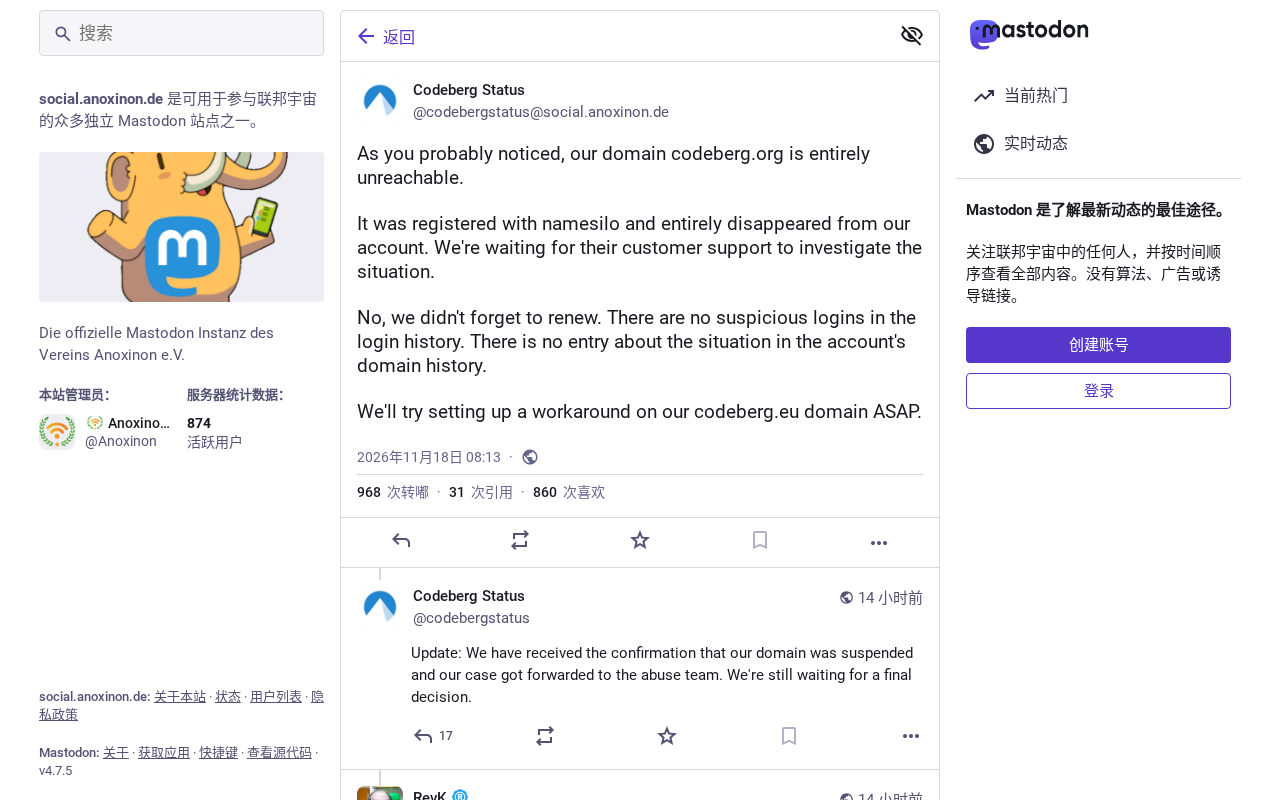
Open-Source Code Hosting Platform Codeberg Suffers Outage, Sparking Debate in Developer Community
Open-source code hosting platform Codeberg.org suffered an outage, sparking Hacker News debate over nonprofit platform stability and open-source infrastructure dependency risks.