Anthropic Races Toward IPO: Nearly $2 Trillion Valuation—What Makes an AI-Native Company Worth It?

Behind Anthropic's high valuation is dual validation: monetization in the coding track and AI-native organizational efficiency.
Using data from Anthropic's prospectus, the article analyzes the logic and hidden concerns behind its high valuation. Revenue was about $4.6 billion in 2025 and has exceeded $16 billion in the first half of this year—14 times the same period last year—with more than 11,900 customers paying over $100,000. Its business loop is built on coding, a track with easily verifiable results, focusing on enterprise and coding scenarios and generating sustained revenue as agents enter real enterprise work. The efficiency of about 5,300 employees and over $6.6 million in revenue per employee leads to the proposition of AI Native 2.0: moving from company-wide coding in 1.0 to workflow reconstruction, letting agents take on tasks while humans handle review and judgment, and precipitating individual experience into organizational capability. The article also flags practical constraints such as compute investment, sales and service capacity, and focus.
After Anthropic's prospectus went public, market discussion of its IPO heated up quickly—with a valuation range as high as $1.5 trillion to $2 trillion. An AI company less than six years old is now challenging Meta-scale market capitalization. Behind this is not just a technology story, but a reconstruction of organizational form and business logic.
Revenue Explosion: From $4.6B to $16B in Half a Year
According to the prospectus, Anthropic's actual revenue in 2025 was about $4.6 billion, while revenue in the first half of this year has already exceeded $16 billion—14 times the same period last year. Half-year revenue exceeding three times last year's full-year total, while maintaining such growth at this scale, is what is truly astonishing.
More critical is the quality of revenue. As of the end of September, more than 11,900 customers had contributed at least $100,000 in revenue over the past 12 months. These are real paying customers, not annualized figures obtained by multiplying a single month's revenue by 12. Enterprises are already creating value with it and paying real money.
How It Makes Money: The Value Loop of the Coding Track
Coding is currently one of the core tracks with the clearest AI business value and the most mature monetization. Code can run, results can be tested, and software can be delivered. Customers can clearly calculate the math: how many people and how long a task used to require, and how far AI can now complete it.
Anthropic's Claude stands at the forefront of this track. In actual use—such as game reverse engineering and development, and code-generated animation—Claude Opus 5.5 demonstrated strong comprehensive capabilities: understanding intent, building logic, implementing effects with code, and continuously revising based on feedback. Compared with the GPT models used for comparison, the advantage is obvious.
This ability to "turn requirements into deliverable results" is the foundation for sustained revenue. Anthropic's important choice is to focus on enterprise and coding: first do well in a scenario where the value is large enough and the results are easy to verify, then expand outward.

Why It's Valuable: Betting That AI Enters Real Work
The logic behind the high valuation is a bet that AI will enter more and more real work. In the past, when enterprises bought software, they still had to have employees learn to operate it, organize data, and execute tasks; now agents can directly participate in completing part of that work. When enterprises procure, they can calculate another equation: how much does this AI cost per year, how much more work can it complete, and can it make R&D, operations, and business run faster.
Early APIs and self-service purchasing made it easy for customers to get started. Only after capabilities improved did customers have the opportunity to put it into more business links—first for one team, then expand to other departments; first solve one problem, then take on more complex tasks. What the market expects is the continuous expansion of depth of use and scope of application.
Another point often overlooked: Anthropic itself is an intensive user of its products. AI helps it do R&D, write code, and build tools, and also gives it a chance to accelerate the next round of product iteration.
But hidden concerns also exist. Compute requires upfront investment, enterprise applications require sales and service capabilities, and after rapid growth, focus must be maintained. These accounts ultimately have to land on operating results. Being able to see market space and being able to continuously and efficiently deliver are two different things; high valuations will ultimately still be decided by growth and profit.
agent: Unlike chatbots that only do single-turn Q&A, an agent refers to an AI system that can autonomously plan steps, call tools (read and write files, execute code, retrieve information), and adjust its next actions based on execution results until it completes a full task. It connects the large model's "generation capability" to "execution capability," which is why it can directly participate in real enterprise work rather than merely provide suggestions. The article's statement that "agents can directly participate in completing part of that work" refers precisely to this shift from passive answering to active delivery.
It is worth distinguishing workflows from autonomous agents: the former has steps fixed in advance by humans, with AI filling in the links; the latter has the model decide the path itself. The two differ markedly in reliability and auditability, which also explains why enterprises often adopt a restricted, human-intervenable agent form first when implementing AI.
AI Native 2.0: From Company-Wide Coding to Workflow Reconstruction
The prospectus discloses that as of the end of September, Anthropic had about 5,300 employees, with revenue per employee exceeding $6.6 million over the past 12 months. This efficiency is the combined result of model demand, compute, and channel investment, but it also reminds every operator: after business scale expands, must headcount necessarily increase proportionally?
This leads to a deeper proposition—AI Native 2.0. The previous stage of company-wide coding, in which every department used AI to write its own systems, can be called 1.0: where software could not cover, work used to be handled manually; now AI can build tools at low cost and modify them on demand. This is very valuable.
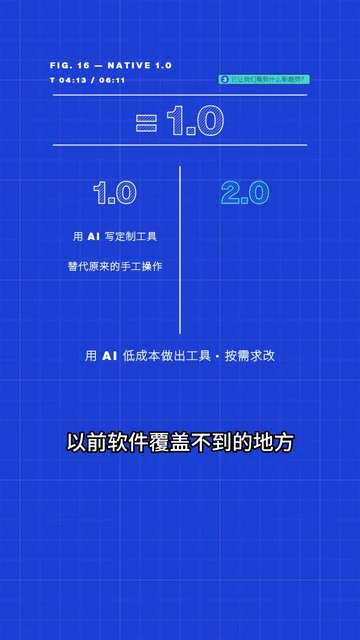
But if one person's operations become faster, the whole company's processes are not necessarily faster. After you finish one step, you still have to wait for someone else to provide data; once the data is complete, you still have to wait for approval; and the approver is in a meeting, so things remain stuck. A very large drain on organizational capacity occurs in communication and waiting.
2.0 needs to further change workflows: let agents take on specific tasks, have different agents connect work through content, have humans review at key nodes before proceeding, and have humans use the problems they discover to improve agents. What is reduced is mechanical information relay and repeated waiting, while human judgment remains in the process.

Review here is not just clicking agree. Whether the message an agent is about to send is understood correctly, whether this matter should move forward, and whether the basis is sufficient all require human judgment. The review process is also telling the agent what should be done, what needs supplementation, and how it should be handled next time.
Take short-video copywriting as an example: if today's opening does not grab attention, you fix it yourself and can publish today; but if the agent does not improve, tomorrow it may make the same mistake again, so you are fixing the same type of problem every day, and the person remains trapped in specific content. The correct approach is to feed back to the agent "why it is bad and what counts as good," improve its rules, add cases, and adjust the process. Fixing one piece of copy yields only one piece of copy; fixing the agent that generates copy accumulates the ability to deliver sustainably.
The stronger AI becomes, the higher the demand for human judgment. You need to understand the business and users better in order to spot problems, propose standards, and improve agents well. In the future, a person's work capability will also be reflected in how many agents he can review and improve, and what things those agents can continuously do well.
Anthropic's prospectus shows the market how big a business AI productivity can form, while AI Native 2.0 explores how to organize intelligence, precipitate individual judgment, and continuously improve the entire company's delivery capability. Every boss can start today from one real workflow: let agents take on tasks, let people be responsible for review, and turn discovered problems into the ability to do better next time.
AI Native: Means treating AI as a default factor of production from the very beginning of organizational design, rather than layering AI tools onto existing processes. To judge whether a company is AI Native, three things are usually examined: whether processes are redesigned around AI capabilities, whether headcount growth curves change because of AI, and whether decisions depend on data produced by AI. The article's mention of revenue per employee exceeding $6.6 million is the financial manifestation of this organizational form.
The boundary from 1.0 to 2.0 is essentially a move from "tools replacing individual actions" to "reconstructing collaboration structures." The upper limit of gains in the 1.0 stage is constrained by bottleneck links in the original process; 2.0 directly changes the process itself, so the room for gains is larger, but the requirements for standard-setting, review mechanisms, and feedback loops are also higher.
Related articles
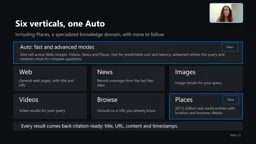
Microsoft WebIQ: Verifiable Real-Time Web Grounding for AI Agents
Microsoft WebIQ gives AI Agents real-time, citable web grounding across web, news, images, videos, and Places—164ms P95 latency, 50% fewer tokens, Scopes source control, and MCP integration.
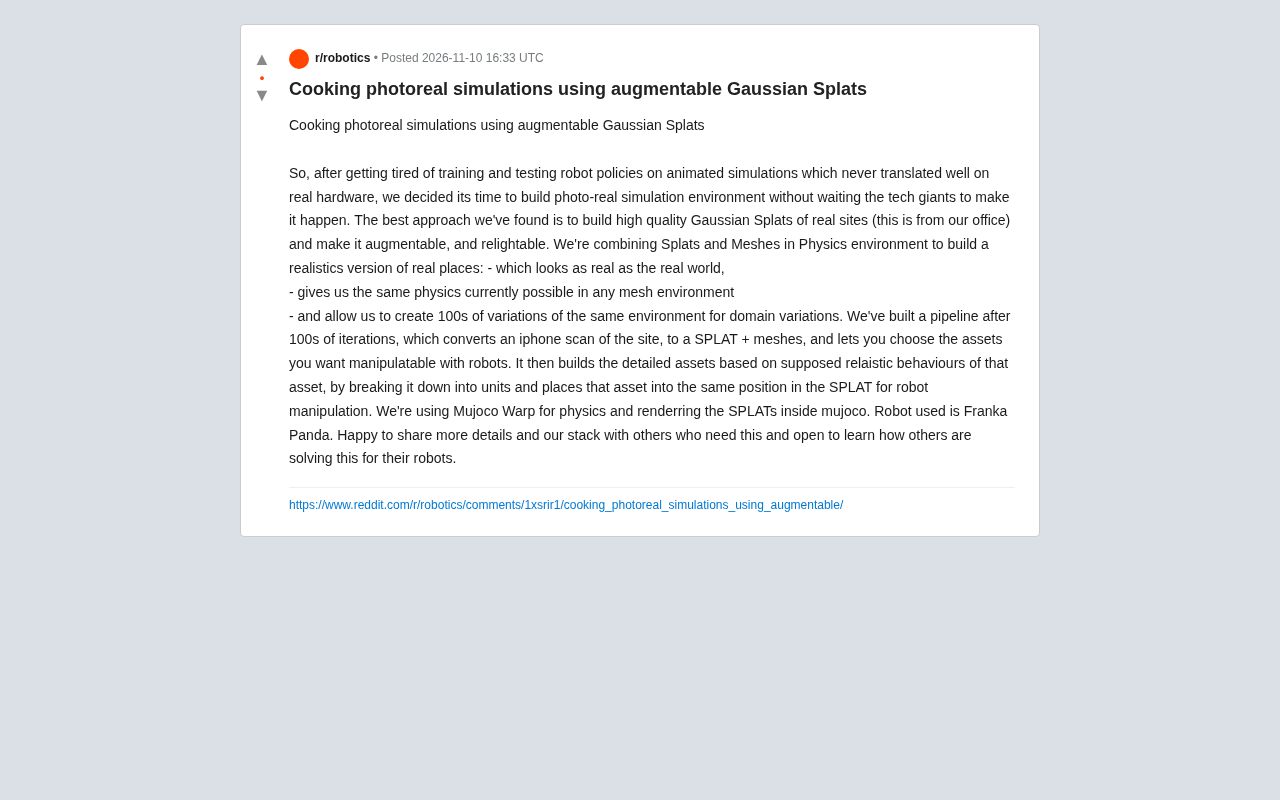
Augmentable Gaussian Splatting: Building Photorealistic Simulation Environments for Robot Training
Team combines Gaussian Splatting with meshes to build photorealistic robot simulation environments, integrating MuJoCo Warp physics and Franka Panda for augmentable, relightable real-site simulation.

Gemini 4 Carbon Released: The Leap from Gemini 3 to Gemini 4 in Under a Year
Google releases Gemini 4 Carbon, less than a year after Gemini 3. In the official demo, Carbon reverse-engineered the Theme Park binary, added a new DeepMind-themed ride, and ported it to the web in one shot.