Anthropic Removes Claude Code Feature Without Warning, Developer Community Unhappy
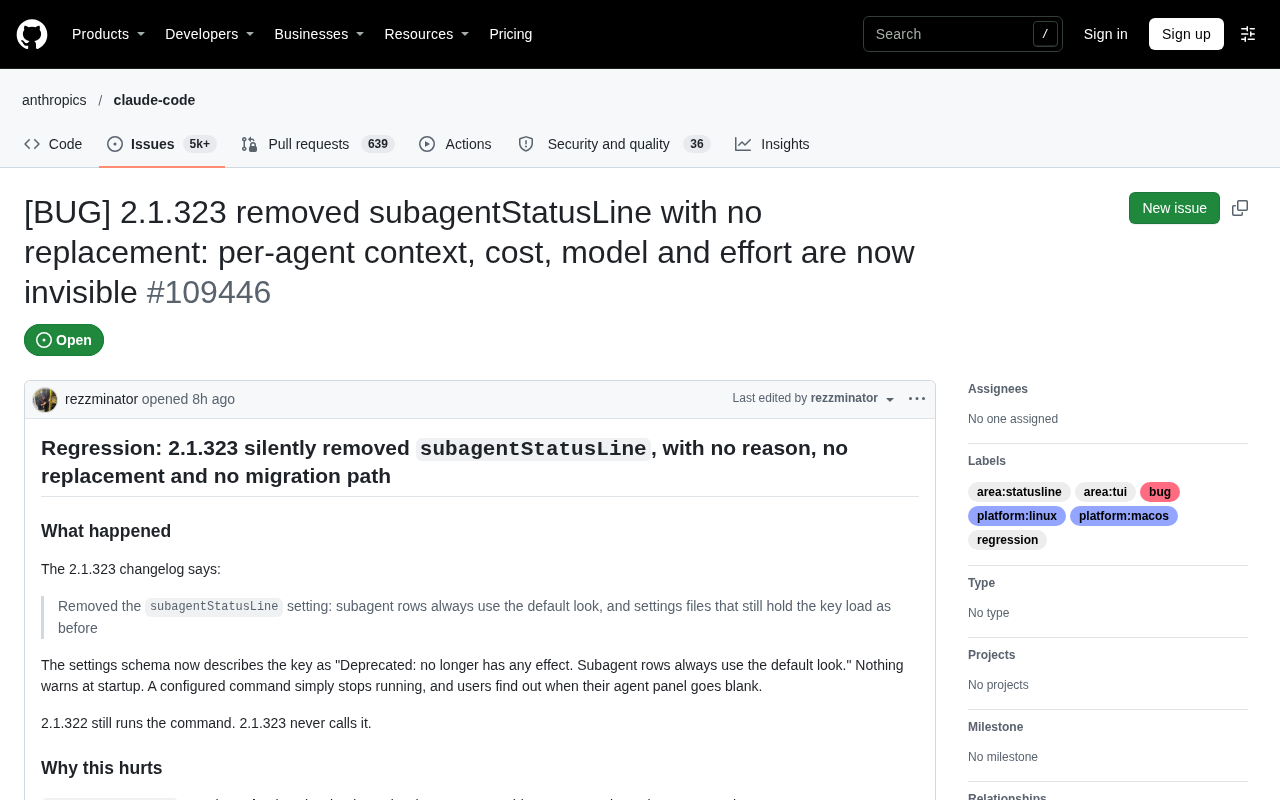
Anthropic removed a Claude Code feature without warning, raising developer concerns about the stability and trustworthiness of AI tools.
Anthropic removed a Claude Code feature without prior notice, disrupting the workflows of developers who relied on it. Although the Hacker News discussion did not gain much traction, it reflects the core contradiction between rapid iteration of AI programming tools and users' need for stability. Once developer tools are integrated into workflows, they create path dependence; sudden removal means extra migration costs and weakened trust in the vendor. Anthropic's silence further exacerbated dissatisfaction. The article points out that vendors should establish change management mechanisms such as advance notice, transition periods, alternatives, and feedback channels, while developers need to assess the change risks of closed-source tools and reduce lock-in through abstraction layers or open-source alternatives.
Anthropic Removes Claude Code Feature Without Warning, Developer Community Unhappy
Recently, a post on Hacker News titled "Anthropic carelessly killed a Claude Code feature users built on, no warning" sparked discussion. The post pointed out that Anthropic removed a Claude Code feature that users had already come to rely on without prior notice, disrupting some developers' workflows. Although the post did not gain much traction (6 points, 1 comment), the issue behind it is worth paying attention to: when AI programming tools iterate rapidly, how can vendors balance product evolution with user trust?
Event Recap: Feature Suddenly Disappears, Users Caught Off Guard
According to the discussion on Hacker News, the removed feature had been part of Claude Code users' daily development work, and some users had already built automation processes or work habits around it. Anthropic did not provide advance notice through changelogs, emails, or community announcements; the feature simply stopped working, leaving developers who depended on it surprised.
The poster used the word "carelessly" to describe this behavior, criticizing Anthropic for lacking consideration of user impact when making changes. Although the post received only 6 points and 1 comment, this kind of "small-scale" feedback often represents the shared experience of a portion of silent users. In the AI tool ecosystem, such unannounced changes are not isolated incidents, but when they happen to a product aimed at professional developers like Claude Code, they deserve particular scrutiny.
Why Are Developers So Sensitive to Feature Removal?
Claude Code is an AI programming assistant launched by Anthropic, positioned to provide developers with code generation, debugging, and automation support. Unlike consumer products, once developer tools are integrated into workflows, they create path dependence. A feature may be written into scripts, documentation, or team standards, and sudden removal means additional migration costs.
More critically, developers value stability and predictability when choosing tools. Unannounced changes undermine trust—users cannot be sure whether another dependency will disappear tomorrow. This uncertainty may prompt teams to turn to more controllable open-source solutions or competitors. Although this incident is small in scale, it touches on a core contradiction in the commercialization of AI tools: vendors need to iterate quickly, while users need stable contracts.
Path Dependence is a key concept for understanding developers' sensitive reactions. The theory was originally proposed by economists Paul David and W. Brian Arthur to explain lock-in phenomena in technology adoption: once a technology or tool is adopted, the supporting processes, scripts, documentation, and team habits formed around it are continuously reinforced, making switching costs increasingly high. In the developer tool context, a Claude Code feature may be written into CI pipelines, packaged into internal scripts, or incorporated into team standards. Removing it is not just "losing a button" but requiring developers to redesign already stable workflows. This lock-in effect is especially pronounced with closed-source SaaS tools, because users cannot maintain or fork to fix the removed feature themselves.
Semantic Versioning (SemVer) is a common convention in software engineering for managing change expectations, with the format major.minor.patch. Its core agreement is: major version changes indicate incompatible API modifications, minor version changes indicate backward-compatible feature additions, and patch version changes indicate backward-compatible bug fixes. For developer tools, following SemVer and providing migration notes for major version changes is a basic means of establishing a stable contract. As a hosted AI programming assistant, Claude Code's feature updates often take effect directly on the server side rather than through user-controllable version upgrades, which partially invalidates the traditional SemVer expectation management mechanism and makes the impact of unannounced changes even greater.
Anthropic's Silence and Community Reaction
As of the visible discussion, Anthropic had not responded in the Hacker News post. This silence may exacerbate user dissatisfaction. In the developer community, transparent communication is the foundation for building long-term relationships. Even if a feature must be removed, advance announcements, alternative solutions, or migration guides can significantly reduce negative impact.
The post has only one comment, indicating that the topic has not yet gained momentum, but that does not mean the problem does not exist. Many developers do not speak out publicly when they encounter similar situations; instead, they quietly adjust or leave. For Anthropic, ignoring such early signals may sow the seeds of user churn.
Implications for the AI Programming Tool Ecosystem
This incident serves as a wake-up call for all AI tool providers. In the rapidly iterating AI field, adding and removing features is normal, but how it is handled determines user retention. Vendors should establish change management mechanisms, including:
- Advance notice: Inform users through changelogs, mailing lists, or community announcements;
- Transition period: Provide a buffer period for removed features, allowing users to migrate;
- Alternatives: Clearly explain why the feature is being removed and provide viable alternative paths;
- Feedback channels: Let users participate in decision-making, especially for key features that affect workflows.
For developers, this is also a reminder: when relying on closed-source AI tools, it is necessary to assess the vendor's change history and communication culture, and when necessary, reduce lock-in risk through abstraction layers or open-source alternatives.
Conclusion: Trust Matters More Than Features
Anthropic's removal of a Claude Code feature may itself be just a product decision, but the unannounced approach consumed user trust. In today's increasingly competitive AI programming tool market, powerful features are certainly important, but a stable and transparent user experience is the long-term moat. It is hoped that this discussion will prompt Anthropic and other vendors to reflect on their change processes, so that developers no longer have to worry about "features that suddenly disappear."
Related articles
The Ultimate Codex Tutorial: From Zero to Hands-On in 40 Minutes
A complete beginner's Codex tutorial: from GPT account registration and desktop installation to login error troubleshooting, permission and quota setup, and Pro membership upgrades—a step-by-step guide to getting started with an AI coding assistant, plus common fixes and practical advice.
AI-Driven Testing in Practice: How Agents Are Reshaping the Testing Workflow
Starting from how Agents work, this article analyzes the practical path of AI-driven testing: how task planning, tool calling, and feedback loops reshape the testing workflow, and the boundaries and acceptance authority human testers must retain.
How to Review a 22,505-Line PR? Matt Pocock's Stacked PRs and Ratchet Rules
Matt Pocock split a 22,505-line agent PR into 9 stacked PRs, used a two-way/one-way door framework to isolate the DB change, and enforced ratcheted lint rules and retro.