Anthropic's $1.4 Trillion IPO: AI Giant Goes Public and the Industry Shifts

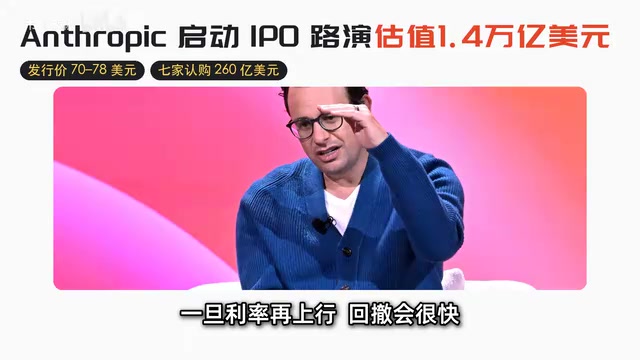
Anthropic launches IPO at $1.4 trillion valuation, upstream suppliers subscribe $26 billion; AI costs and rates are the main thread.
The article centers on Anthropic's IPO launch: a $1.4 trillion valuation despite massive losses, with 7 upstream compute and chip suppliers subscribing $26 billion at the offering price, compressing bargaining room on costs. Google's Gemini 4 Carbon API opens at half price until December 1, making "model-per-task" the standard move for enterprise cost control. MiniMax's open-source image model claims 10-second output, but speed is unverified and commercial use still requires licensing and success-rate checks. On tools, Cloud is upgraded to a workbench with a human-in-the-loop design, Blender 5.3 brings native 3D Gaussian Splatting but is not an LTS release—production should stay on 5.2. DeepMind used AI to complete a 6-million-line formal proof of Signal's real code, but coverage is limited. At the market level, chip stocks surged while Nvidia fell 4.3%, capital rotated into equipment and memory, and rates are the short-term dominant variable.
Anthropic IPO: Hidden Concerns Behind the High Valuation
Anthropic has launched its IPO, with its valuation cut to $1.4 trillion, while 7 upstream compute and chip suppliers subscribed to $26 billion at the offering price. This news is noteworthy not just because it's the "largest IPO," but because it puts the relationship between AI companies, upstream supply chains, and capital markets on full display. According to analysis by a Bilibili tech creator, these 7 companies are themselves compute and chip suppliers, which means Anthropic will have less room to negotiate prices in the future, and its cost structure is deeply bound to upstream players.
At the same time, Google's top-tier model Gemini 4 Carbon has fully opened its API, offering a half-price discount until December 1. For development teams, this is a hard cost checkpoint: keep the coding workhorse on Cloud for now, while long-document and research analysis work can switch to Carbon. This "model-per-task" strategy is becoming the standard move for enterprises looking to control AI costs.
Anthropic IPO: Hidden Concerns Behind the High Valuation
A $1.4 trillion valuation, yet over a hundred billion in losses in just 9 months. This combination speaks for itself: the market is willing to give AI companies extremely high pricing, while the path to profitability remains unclear. The creator warns in the analysis that once interest rates rise again, the pullback will be swift. The high valuation rests on the dual expectations of low interest rates and the AI narrative—any loosening on either end will bring severe volatility.
What you may not have noticed is the upstream suppliers' subscription arrangement. 7 suppliers subscribed to $26 billion at the offering price—ostensibly a binding partnership, but in reality a deep alignment of interests. Anthropic's bargaining room on compute and chip procurement is compressed, and long-term cost flexibility declines. For a company still posting massive losses, this is not a reassuring signal.
The relationship between IPO, valuation, and losses: An IPO (initial public offering) is the process by which a company first issues shares to the public and lists them for trading on an exchange—essentially raising capital from the public markets. The "$1.4 trillion valuation" mentioned here is the market's pricing of all of Anthropic's equity, and does not mean the company has actually received that much money; it reflects investors' expectations of future profits. "Over a hundred billion in losses in 9 months" shows the company is still burning heavily during rapid expansion. Valuation and losses expanding together means pricing relies heavily on the low-rate environment and the AI narrative—once financing conditions tighten, the magnitude of valuation pullback will also be amplified.
The strategic meaning of supplier subscriptions: Upstream compute and chip suppliers subscribing to $26 billion in shares at the offering price is a typical strategic investment (strategic placement). Suppliers exchange subscriptions for long-term orders and influence, while Anthropic gains capital and supply assurance—but at the cost of compressed procurement bargaining power. For a company still posting massive losses, this amounts to trading future cost flexibility for present compute certainty.
MiniMax Open-Source Image Generation Model: Speed Claims and Commercial Risks
MiniMax has open-sourced an image generation model, claiming 10-second image output, but no one has independently tested the speed yet. Open weights mean teams can deploy it themselves, potentially saving money on purchased image libraries. For product teams with image generation needs, this is an option worth evaluating.
However, the official success rate has not been published, so small-scale trials are needed before commercial use. The more realistic issue is licensing: open-source weights do not equal commercial authorization, and legal teams need to review it first. The creator's advice is to start with small-scale market testing before discussing scale—this pace is prudent.
Open-source weights and commercial licensing are two different things: An open-source model typically means the model weights (parameter files) are publicly released, and teams can download and deploy inference themselves, saving on pay-per-call API costs and purchased image library fees. But "open weights" does not equal "commercial authorization"—the license type (whether commercial use is allowed, whether attribution is required, whether redistribution is permitted) determines legal risk. Before launch, enterprises need to check license terms and confirm the compliance of the model's training data—these are evaluation dimensions independent of model speed and image quality.
The verification premise of "10-second image output": "10-second image output" is the vendor's claimed inference latency; actual speed is heavily affected by GPU model, resolution, sampling steps, and batch size. Before commercial use, you should run small-batch tests yourself, record the success rate (whether images are usable, whether content filtering is triggered) and end-to-end time, and then decide whether to scale.
Productivity Tool Updates: Cloud Workbench and Blender 5.3
Cloud has been upgraded into a workbench that can directly edit the files you open, but each change requires your approval. After the news broke, Microsoft fell as much as 3% intraday. Similar situations have hit enterprise software stocks multiple times this year, mostly recovering afterward—this is more short-term sentiment than repricing. This "human-in-the-loop" design both protects accuracy and shows that the risks of AI directly editing files have not been fully digested.
Blender 5.3 has been released, with 3D Gaussian Splatting becoming a native feature, lowering the barrier to real-scene production by one level. But 5.3 is not a long-term support release, and there are still deviations in performance and color. The creator's advice is clear: don't upgrade in production environments yet—stay on 5.2.

"Human-in-the-loop" and software stock reactions: "Human-in-the-loop" means that after AI performs an operation, a human must confirm each item before it takes effect. This design reduces the risk of AI mistakenly editing files, but also shows that the degree of automation is still limited—for existing office software, it is more an enhancement than a replacement. Microsoft's 3% intraday drop is a short-term sentiment reaction to the market's fear that "AI may erode enterprise software subscriptions"; historically, similar news has triggered selloffs multiple times, most of which recovered.
The meaning of long-term support (LTS): Blender 5.3 is not a long-term support release, meaning it will not receive long-term security and bug fixes, and its interfaces and performance may continue to change. Production environments should generally stay on versions labeled LTS (such as 5.2), and upgrade only after new features stabilize and the plugin ecosystem adapts, avoiding rework caused by version changes mid-project.
DeepMind Formal Proof: AI Verifies Cryptographic Protocol
DeepMind used AI to produce a 6-million-line formal proof of Signal's real code—the first time AI has verified a widely deployed cryptographic protocol at the implementation level. The technical significance is that the object of verification is not an abstract algorithm, but real running code.
But the coverage is limited: it only covers one-on-one encryption; group chats and key generation were not verified, and only a tiny fraction was manually reviewed. In the short term, this is more of a consulting-style project than an out-of-the-box tool. The barrier to formal verification remains high, and AI here plays the role of accelerator, not replacement.
What formal proof is: Formal proof uses mathematical logic to write the properties a program should satisfy as propositions, then uses machine-checkable derivations to prove that the code indeed satisfies these properties, rather than relying on sampling tests. It verifies "implementation-level" code and can catch edge cases that tests miss, but it is extremely costly and requires precisely formalizing the target properties.
Limitations of coverage: This proof only covers one-on-one encryption; group chats, key generation, and other links were not verified, and the proportion of manual review is very small. Therefore, the significance of the result is that it proves AI can accelerate high-barrier work like formal verification—not that it provides a general tool directly usable for production audits. In the short term, it is closer to a consulting-style project, and implementation still depends on professional verification teams.
Market and Macro: Chip Stock Divergence and the Rate Logic
Chip stocks surged in a single day, yet Nvidia fell 4.3%, hitting a 7-month low, and the S&P equal-weight index also fell. What really propped up the index was the equipment and memory line: Lam Research revenue surged, along with large buybacks; equipment orders remain, and the money isn't in the GPU leader. This is a reallocation of capital within the AI supply chain.

At the macro level, US core CPI came in above expectations month-over-month, and the market is already holding back on December rate hikes, even beginning to price in larger hikes. Gold fell 3% in a single day, breaking below $4,014; the dollar and Treasury yields rose. Short-term moves are dominated by rates, while the medium-to-long term is supported by central bank gold purchases—the two logics are not contradictory. Revalue your gold holdings by market value, and don't use single-day volatility as a strategic basis.
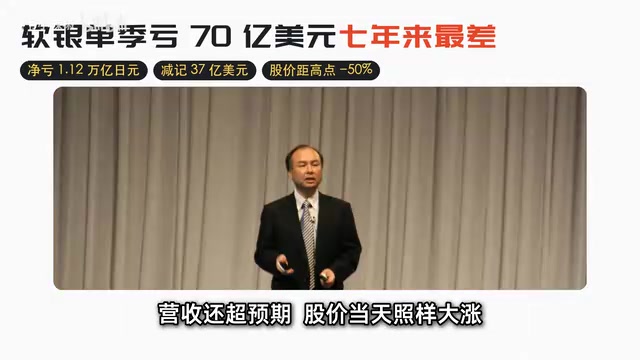
SoftBank swung from profit to loss for the quarter, its worst quarter in 7 years, dragged down mainly by a cliff-like decline in Vision Fund returns. Revenue still beat expectations, and the stock still surged that day—SoftBank's stock price is the thermometer of AI sentiment.
Geopolitically, face-to-face Russia-US-Ukraine negotiations resumed after more than half a year of suspension; Ukraine listed cessation of hostilities as a priority, and Russia said that same day it would not accept it. Talks happened but nothing loosened—this round of ceasefire is dead, and oil prices instead fell below $90 that day.
Summary
Putting these news items together, the main thread is clear: AI companies' high valuations require continuous capital market funding, deep upstream supply chain binding reduces cost flexibility, and competition at the model layer is shifting toward "model-per-task" cost optimization. Toolchain updates should treat long-term support versions with caution, and frontier results like cryptographic verification are still far from engineering deployment. At the market level, interest rates are the short-term dominant variable, and capital reallocation within the supply chain deserves more attention than overall gains and losses.
Related articles

AI Writes Your Code—Do You Still Need to Learn Git? Five Reasons
AI coding agents handle Git operations automatically—is it still necessary to learn Git? Five reasons: team communication, reviewing agent PRs, monitoring code changes, fallback when AI goes down, and the joy of learning—plus how the focus of learning Git is shifting in the agent era.
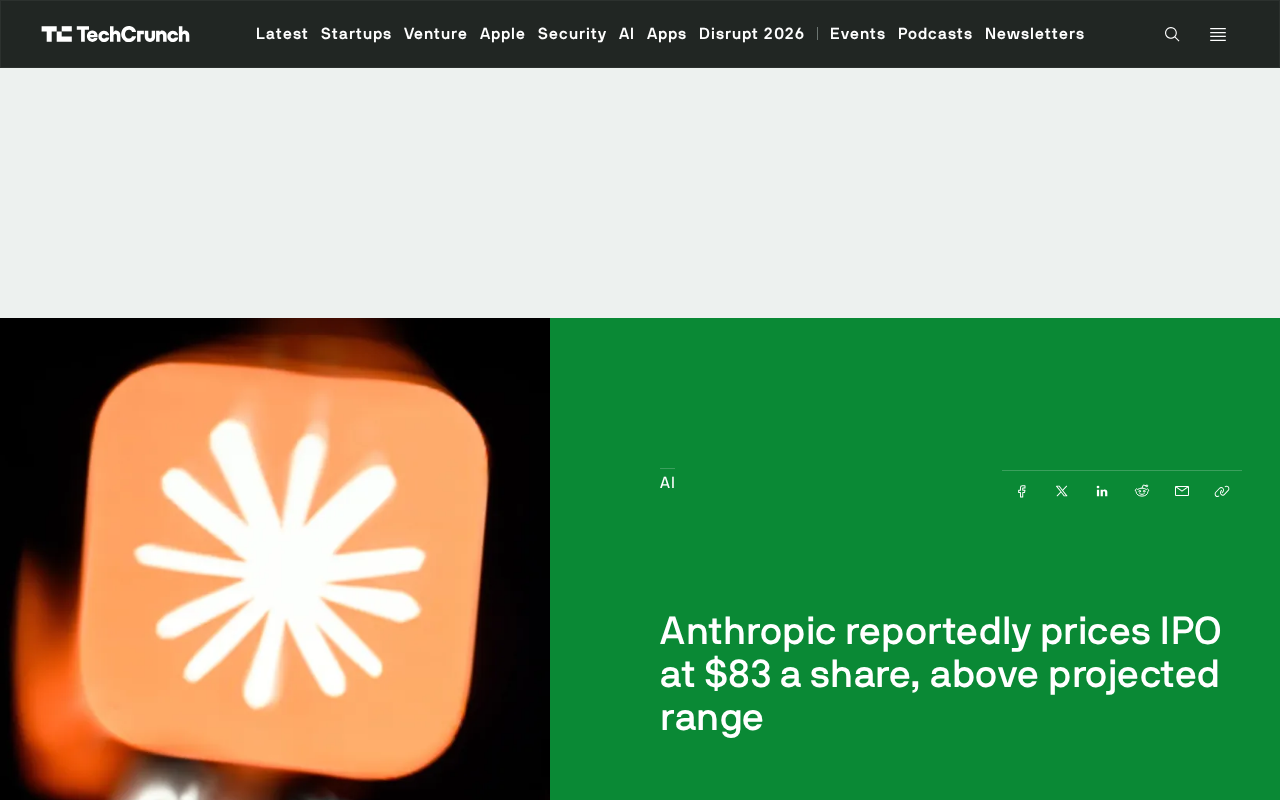
Anthropic Reportedly Prices IPO at $83 Per Share, Valuing Company at $1.5 Trillion
Anthropic reportedly prices IPO at $83 per share, above the expected range, with a fully diluted valuation of $1.5 trillion. This article analyzes the signal significance of the pricing and its impact on the AI industry's financing environment.
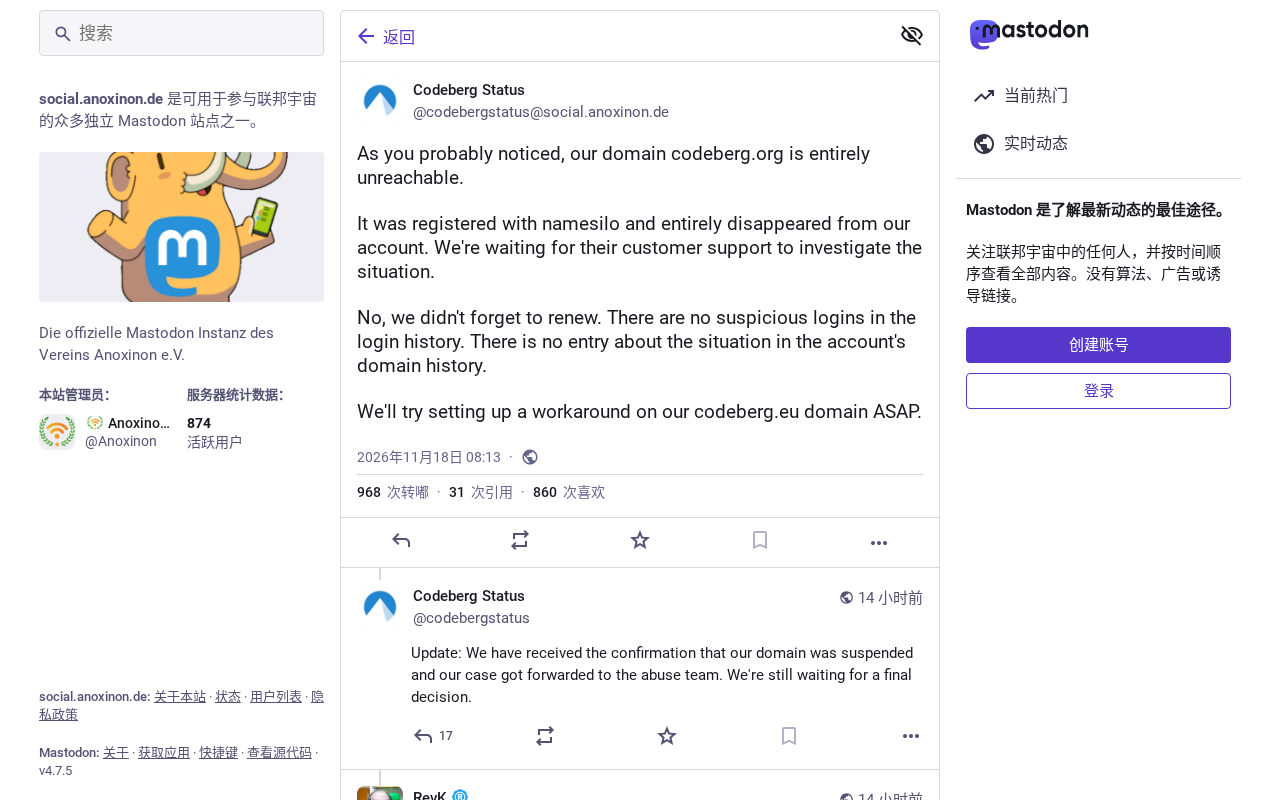
Open-Source Code Hosting Platform Codeberg Suffers Outage, Sparking Debate in Developer Community
Open-source code hosting platform Codeberg.org suffered an outage, sparking Hacker News debate over nonprofit platform stability and open-source infrastructure dependency risks.