Anthropic's IPO Ledger: A $1.4 Trillion Valuation and a $900 Billion Compute Commitment

Anthropic's prospectus reveals a mismatch between booming revenue and $900B compute commitments—plus the accounting truth behind its $23.3B net loss.
Anthropic's IPO roadshow shows quarterly revenue surging from $376M in Q1 2025 to nearly $17B in Q3 2026, alongside $900B in long-term compute contracts—$70.7B due within 12 months, close to 90% of annualized revenue. Of the $23.3B Q3 net loss, $21.9B comes from convertible note fair value changes, a non-cash accounting result; operating cash flow was actually positive at $6.6B. The $1.4T valuation is about 16.5x annualized revenue but 38x trailing 12-month revenue, with sharp bull-bear disagreement on growth sustainability. Under the PBC structure, Class A shareholders have limited voting power, with the founders' holding company permanently controlling 50.1% of votes.
Anthropic's IPO roadshow materials serve as a mirror reflecting the true financial picture of a leading AI company. On one side is explosive growth with quarterly revenue approaching $17 billion; on the other are long-term compute contracts totaling as much as $900 billion and a quarterly net loss of $23.3 billion. This ledger reveals the core contradiction of AI commercialization.
Revenue on a Tear: From $376 Million to $17 Billion
The prospectus shows Anthropic's quarterly revenue climbing from $376 million in Q1 2025 all the way to nearly $17 billion in Q3 2026—more than a 12x year-over-year increase. Cumulative revenue for the first three quarters reached $33.2 billion, compared with just $4.6 billion for all of 2025. Growth at this pace is extremely rare in the history of tech companies.
The paying customer mix is also shifting. Customers paying more than $100,000 annually grew from about 20 at the end of 2023 to roughly 1,500 at the end of 2025, and to more than 11,900 by the end of September this year. Among them, more than 1,900 customers pay over $1 million a year, and about 250 pay over $10 million. Revenue is becoming more diversified: in Q3, revenue outside the top five customers accounted for 79%.
But the prospectus also offers a number that warrants caution: annualized revenue of about $81 billion as of the end of October. That figure is calculated by multiplying the most recent 28 days of usage revenue by 13, plus the current month's subscription revenue multiplied by 12. Actual booked revenue over the past 12 months was about $35.3 billion. The prospectus explicitly states that annualized revenue is neither accounting revenue nor a forecast, and that it includes some customers who may later be banned for violations—such customers account for roughly 5% to 7% of revenue.

Compute Commitments: A $900 Billion Long-Term Bet
The biggest number in the entire prospectus isn't revenue—it's commitments. As of the end of September, including contracts signed afterward, Anthropic has committed roughly $90.9 billion (the original text says $900.9 billion; based on context it should be $90.9 billion—the original figure may contain an error) to compute and infrastructure, stretching all the way to 2045. Of that, about $70.7 billion comes due within the next 12 months—already close to 90% of October's annualized revenue.
The nature of this money matters. Contracts with Google and Amazon state that payment is due as agreed regardless of actual usage. The prospectus itself highlights the mismatch: revenue is mostly billed by usage, and many customers have no long-term contracts; compute commitments, however, are signed for many years at a time. If actual compute needs deviate too far from forecasts, the company will either run short or pay for idle capacity. About $186.2 billion of the contracts carry termination rights or preconditions, but most depend on the counterparty delivering on time—they can't simply be returned if unused. Another $150–175 billion in arrangements with undetermined amounts has not yet been counted.
The company's answer is efficiency. In Q1 2025, every $1 spent on compute and infrastructure generated only $0.40 of revenue; by Q2 this year it reached $2.08, and in Q3 it fell back to $1.72 because of expensive short-term compute. Its chips come from multiple suppliers including Amazon, Google, Nvidia, and AMD, and are scheduled through a single compute pool.
Annualized Revenue Run-rate is an operating metric commonly used by SaaS and subscription businesses, typically calculated as the most recent month's or week's revenue multiplied by a corresponding factor (such as 12 or 52) to reflect the full-year revenue level at current growth rates. It is not actual revenue under accounting standards, nor a forecast of future performance, and may include unsustainable one-time revenue. Anthropic's prospectus explicitly notes that this metric includes about 5%–7% of revenue from customers who may be banned for violations, which explains the significant gap versus actual booked revenue over the past 12 months.
The Truth About Profit: 85% Gross Margin and a $23.3 Billion Net Loss
Calculated from the prospectus data, gross margin for the first three quarters of this year is about 85%, but the roadshow cites a compute gross margin of 43%. The difference lies in which costs are deducted: the compute gross margin deducts only the portion used to serve customers, while the other figure also deducts compute used for training new models, research, internal use, and free users.
One detail is worth noting: more than 80% of Q3 revenue came from models released only in the past six months. Models are replaced every six months, so training isn't a one-time investment—it's more like an ongoing cost of production. Under this lens, roughly $57 of every $100 in revenue goes to compute.

On an adjusted basis—excluding stock-based compensation, non-cash charitable contributions, and a $1.5 billion book copyright settlement—operating margin rose from -221% in Q1 2025 to positive 19% in Q2 this year, then fell back to 15% in Q3. The company explains that Q3 used $5 billion of expensive short-term compute and expects short-term compute to increase further in the near term.
The most easily misread figure is net income. The Q3 net loss of $23.3 billion exceeds that quarter's revenue, but $21.9 billion of it comes from fair value changes on convertible notes and similar instruments. Simply put, Amazon previously bought notes convertible into stock in the future; the more the company's valuation rises, the more valuable those notes become, and under accounting rules this must be recognized as a loss for the company. This involves no cash spending, but ultimately shows up as dilution for existing shareholders. Operating cash flow for the first three quarters of this year was actually positive at $6.6 billion.
Fair value changes on convertible notes refer to hybrid financial instruments such as convertible bonds issued by a company, whose liability component must be measured at fair value. When the company's valuation rises, the value of the conversion option increases, raising the carrying value of the liability, with the difference recorded in current-period profit or loss (usually as a loss). This loss involves no cash outflow, but it inflates the book net loss and ultimately dilutes existing shareholders through conversion. Anthropic's $21.9 billion loss of this type in Q3 is an example, and it is key accounting context for understanding its "huge loss but positive cash flow."
The $1.4 Trillion Valuation: The Bull and Bear Cases
The prospectus itself doesn't state a valuation. Media estimates multiply share count by price: about 18 billion fully diluted shares times $70–78, yielding $1.26–1.4 trillion. Counting only the roughly 13.1 billion shares outstanding after the offering gives $920 billion to $1.02 trillion. At the midpoint, that's about 16.5x October's annualized revenue, or 38x actual revenue over the past 12 months. The same valuation yields very different conclusions depending on the denominator.
The bull case rests on three points: revenue is growing far faster than compute costs, and operating cash flow turned positive in the first three quarters; the prospectus says penetration is still shallow, with large Fortune 500 customers spending on average less than one-thousandth of their total budgets on Anthropic; and cheaper means more usage—Opus 4.5 is stronger and cheaper, and after its release quarterly sequential growth accelerated from 48% to 132%. Valuation scholar Damodaran estimates roughly $1.25 trillion based on Q3 data, near the low end of the range.

The cautious case is equally solid: with $900 billion in fixed commitments, pressure will concentrate if revenue growth slows—and sequential growth has already fallen from 144% in Q2 to 47% in Q3; suppliers, shareholders, sales channels, customers, and even competitors are often the same companies; and policy risk has materialized—in June this year the U.S. Commerce Department imposed global export restrictions on two of its models, and the company briefly took them offline for all customers until the restrictions were lifted.
Control: What Owning Stock Actually Gets You
Anthropic is a public benefit corporation whose charter states its mission is to responsibly develop and maintain advanced AI for the long-term benefit of humanity. The law allows the board to weigh shareholder returns against the mission. Class A shares offered to the public carry one vote per share, while Class N shares held by strategic partners and some early investors have no voting rights. A majority of board seats is elected by an entity called the Long-Term Benefit Trust, and 50.1% of shareholder votes are permanently held by the founders' holding company. The prospectus puts it bluntly: Class A shareholders may have essentially no ability to influence major decisions such as a takeover of the company.
The core message the roadshow aims to prove is one sentence: our business and balance sheet can support these compute commitments. The numbers already support the first half: revenue is exploding, output per dollar of compute is improving, and the huge net loss is mostly an accounting result. The second half still needs time to prove: costs are locked in for years by contract, while revenue is mostly usage-based and follows the latest models. The $70.7 billion due within 12 months is already close to 90% of October's annualized revenue—manageable at Q3's growth rate, but hard if growth slows.
Three numbers worth watching: sequential growth, revenue per dollar of compute, and commitments maturing each year.
Public Benefit Corporation (PBC) is a special U.S. corporate form that requires a company to state a specific public benefit mission in its charter and allows the board to weigh shareholder financial returns against the public benefit mission when making decisions, rather than single-mindedly maximizing shareholder value. PBCs can still go public, but shareholders' right to sue over the mission is limited. Anthropic's use of this structure means Class A shareholders' voting power on major matters such as acquisitions is constrained by the charter and the Long-Term Benefit Trust—fundamentally different from the "one share, one vote, shareholder primacy" governance logic of traditional public companies.
Related articles

AI Writes Your Code—Do You Still Need to Learn Git? Five Reasons
AI coding agents handle Git operations automatically—is it still necessary to learn Git? Five reasons: team communication, reviewing agent PRs, monitoring code changes, fallback when AI goes down, and the joy of learning—plus how the focus of learning Git is shifting in the agent era.

Anthropic Reportedly Prices IPO at $83 Per Share, Valuing Company at $1.5 Trillion
Anthropic reportedly prices IPO at $83 per share, above the expected range, with a fully diluted valuation of $1.5 trillion. This article analyzes the signal significance of the pricing and its impact on the AI industry's financing environment.
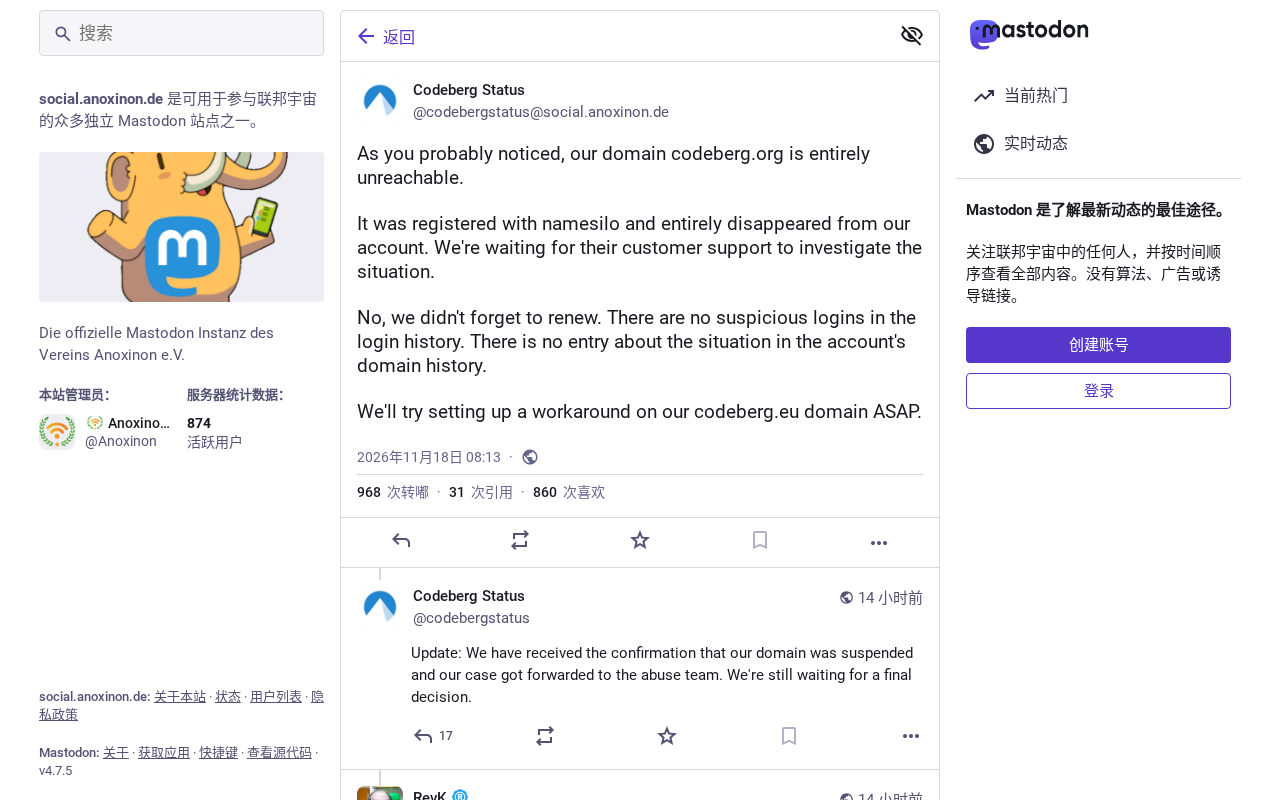
Open-Source Code Hosting Platform Codeberg Suffers Outage, Sparking Debate in Developer Community
Open-source code hosting platform Codeberg.org suffered an outage, sparking Hacker News debate over nonprofit platform stability and open-source infrastructure dependency risks.