Antigravity Hands-On Test: Downgrading to Gemini Flash to Complete a Short-Video Project

Creator tests Opus 5.5-customized short-video skills on Antigravity, with results degraded by quota limits and model downgrades.
The article documents a Bilibili creator's hands-on test of the Lemo-Opuscar project on Antigravity IDE. The project is a short-video generation skill set customized for Claude Opus 5.5, with 59 built-in video styles that automatically turn articles into storyboards and final videos. The creator had the AI clone the repo, verify Python and FFmpeg dependencies, recommend styles for a finance-and-tax account, and generate a full storyboard with shot list, beats, narration, and brand sign-off. But quota exhaustion and the loss of third-party Claude support after November 2 forced a downgrade from Opus 4.6 all the way to Gemini 3.8 Flash. The final video is usable but not stunning; background noise traced to a flawed pen-tip friction sound simulation was fixed by the AI.
Project Background: Skills Custom-Built for Opus 5.5
A Bilibili creator recently ran a hands-on test of a short-video generation project called Lemo-Opuscar on the Antigravity IDE. The project was originally a set of skills tuned by its author specifically for Claude Opus 5.5, designed to automatically turn articles into popular-science short videos. After installing Antigravity, the creator — on a Google AI Pro plan — initially could only try Claude Sonnet 4.6 and Opus 4.6. Later, due to changes in third-party model support, the workflow was ultimately downgraded to Gemini Flash 3.8 to complete the entire process.
The project ships with 59 built-in video styles, including data visualization, whiteboard explainers, and data storytelling. The creator sent an X article link to Antigravity, and the AI not only read the article but also offered two installation paths: as a Claude Code plugin or by cloning it locally. Since Claude Code wasn't installed locally, the creator chose the latter, and the AI immediately cloned the repository automatically and checked Python environment dependencies, including the FFmpeg video compositing tool.
Antigravity IDE is an AI-native integrated development environment launched by Google, aimed at an "agent-first" style of software development. It has built-in support for the Gemini family of models and also allows third-party models to be connected. Its core feature is that AI agents can directly operate the file system, run terminal commands, clone repositories, install dependencies, and iterate on code — not just autocomplete code in the editor. In this article, the creator relies on exactly this capability to let the AI automatically handle project cloning, Python environment checks, and FFmpeg detection.
Skills in the Claude ecosystem refer to a set of pre-written instructions, scripts, and resource configurations used to make a model perform more reliably and professionally on specific tasks. They are usually organized as folders containing documentation and executable scripts, which the model loads on demand. "Debugging skills" for a specific model version means the prompts, tool-calling formats, and output structures have all been tuned to that model's behavioral characteristics — so switching to another model often leads to instruction-following drift or output format errors.
From Style Recommendations to Storyboard: AI's Automated Orchestration
The creator told the AI that they run a finance-and-tax short-video account and asked which style would be suitable. The AI recommended several directions, including a data storytelling theme and a whiteboard explainer theme. After selecting an article, the creator requested a 3:4 short video with a brand logo added, at a size of 1080x1440 (the mainstream size for Douyin and Xiaohongshu). The AI then generated a complete storyboard, including a shot list, the beat of each frame, narration pacing, sound effect design, and a plan for displaying the brand logo.
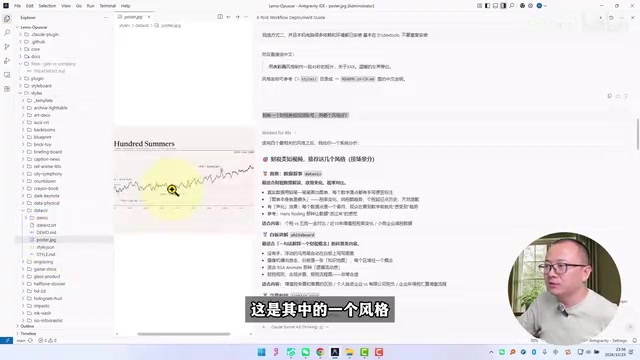
This stage demonstrated Antigravity's automated orchestration capability after understanding the project structure: from reading the article, recommending styles, and breaking down content to generating the storyboard, no manual coding was needed throughout. But the creator also noted that the project author explicitly stated these skills were debugged for Opus 5.5, and switching to other models may degrade the results.
Storyboard is a standard intermediate artifact in film and animation production, breaking a piece of content into a time-ordered shot list where each shot is annotated with visual content, duration, camera movement, narration, and sound effects. In AI short-video generation workflows, the storyboard serves as a "structured intermediate representation": first convert the article into an executable shot sequence, then have scripts render each frame and composite the voiceover, avoiding asking the model to generate the entire video in one pass. The "beats" mentioned in the article refer to the timing rhythm points of each shot, while the "brand sign-off" is the plan for displaying the brand identity at the end or in a corner.
FFmpeg is an open-source multimedia processing toolset that can handle video concatenation, audio muxing, transcoding, frame extraction, and more. It is the underlying dependency for the vast majority of automated video generation pipelines. The project specifically checks for FFmpeg when the AI verifies the Python environment, precisely because audio and visuals ultimately need to be composited and output through it.
Quota Limits and Model Downgrades: A Twisty Execution Process
After the storyboard was confirmed, the creator asked the AI to proceed, but at that point the AI Pro plan quota hit its limit, with a prompt to wait 4 hours and 22 minutes. After waiting 5 hours, the quota reset. When execution resumed, the AI first completed previews of 6 key storyboard shots, letting the creator confirm shot rhythm, detail expression, brand sign-off, and narration ending. Only after confirmation did it begin formally rendering the full video.
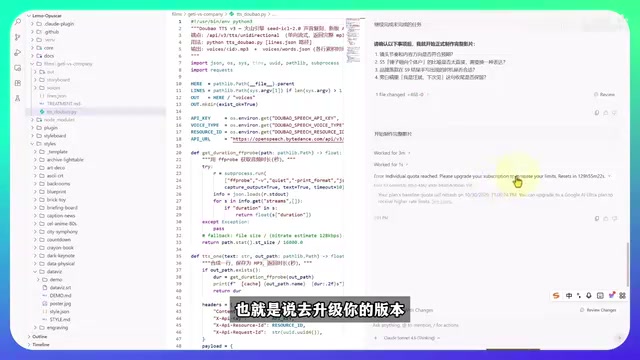
The creator then mentioned a key change: after November 2, third-party large models would no longer support the original Claude Sonnet 4.6 and Opus 4.6, and only Google's own Gemini 3.8 Flash could be used. During execution, the program repeatedly requested authorization. The AI used Doubao TTS to generate voiceover, wrote Python animation scripts, and corrected itself when it found issues in the scripts. But soon another personal quota limit prompt appeared, requiring an upgrade or a wait of 129 hours (roughly until after October 30). The creator lamented that cheap plans obtained through such channels come with too many restrictions.
TTS (Text-to-Speech) is the technology that synthesizes narration text into human voice. The Doubao TTS mentioned in the article is a speech synthesis service provided by ByteDance. The AI calls it during the workflow to convert the narration in the storyboard into audio segment by segment, ultimately generating 12 voiceover segments that are then composited with the visuals. Different TTS services differ noticeably in voice naturalness, emotional expression, and Chinese prosody, which directly affects the listening quality of the final video.
Model downgrading here refers to switching to a less capable or lower-version model to continue the task when the originally specified model is unavailable or its quota is exhausted. Because the skills' prompts and output structures are tuned for a specific model, downgrading reduces the model's adherence to complex instructions, consistency over long contexts, and code error-correction ability — manifesting as rougher visual details, more script errors, and distorted sound effect processing.
Finishing with Gemini Flash 3.8: The Final Video Result
The creator decided not to wait any longer and continued the task directly with Gemini 3.8 Flash. By then, 12 TTS audio segments had been generated, and the AI was compositing audio and exporting the final short video. The final result is a 3:4 short video on the topic "If you earn 500,000 a year, should you register as a sole proprietor or a limited company?" It opens with the question, then gradually breaks down concepts such as tax rates, profit, and VAT.
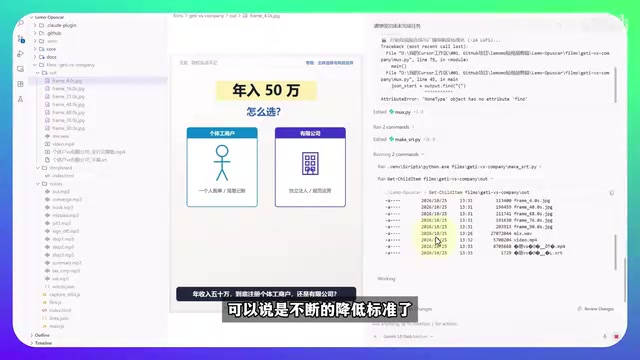
After playing it, the creator noticed a "chi chi chi" noise in the background, which was also present when playing the audio alone. Upon asking the AI, it traced the cause to the project simulating the friction sound of a pen tip on a whiteboard through some processing, but poor model performance produced noise. It then performed a deep fix. After the fix, the noise improved somewhat.
The creator concluded: the first result was "okay but not very impressive" — usable, but requiring further debugging. The impact of the large model is enormous — the project requires Opus 5.5, but in practice only Opus 4.6 was used to get halfway, and finally it was downgraded to Gemini 3.8 Flash to finish, so naturally there's a gap in quality.
Takeaways: The Hidden Costs of Cheap Plans
This hands-on test exposed several real-world issues. First, skills debugged for a specific large model deliver degraded results when switched to other models. The creator downgraded all the way from Opus 5.5 to Gemini 3.8 Flash — essentially "constantly lowering the bar." Second, cheap plans from third-party channels have extremely limited quotas. The 18-month free plan the creator used ran out of quota before the project was finished, after which the only options were to upgrade or wait for an extremely long reset cycle. Third, Antigravity's automated workflow itself is smooth — from reading the article, recommending styles, and generating the storyboard to writing Python scripts, compositing audio, and exporting video, the AI can self-correct and push the task forward — but the final video quality is clearly constrained by model capability.
For creators who want to try similar projects, the creator's experience suggests: if you want the results the project author intended, it's best to use the model version they specified; if you just want to experience the workflow, a downgraded model can still get you through, but you need to accept compromises in visual quality, audio quality, and detail.
One-line Summary
The creator used Antigravity to test short-video skills customized for Opus 5.5, with results degraded by quota limits and model downgrades.
Paragraph Summary
The article documents a Bilibili creator's full hands-on test of the Lemo-Opuscar project on the Antigravity IDE. The project is a set of short-video generation skills customized for Claude Opus 5.5, with 59 built-in video styles that can automatically turn articles into storyboards and final videos. The creator had the AI automatically clone the repository, verify Python and FFmpeg dependencies, recommend styles such as data storytelling and whiteboard explainers based on the finance-and-tax account positioning, and then generate a complete storyboard including shot list, beats, narration, and brand sign-off plan. But execution was interrupted multiple times when the AI Pro plan quota ran out, and since third-party Claude models were no longer supported after November 2, the workflow was downgraded all the way from Opus 4.6 to Gemini 3.8 Flash before finishing. The final video is usable but not stunning; the background noise was traced by the AI to a flawed pen-tip friction sound simulation and was fixed.
Related articles
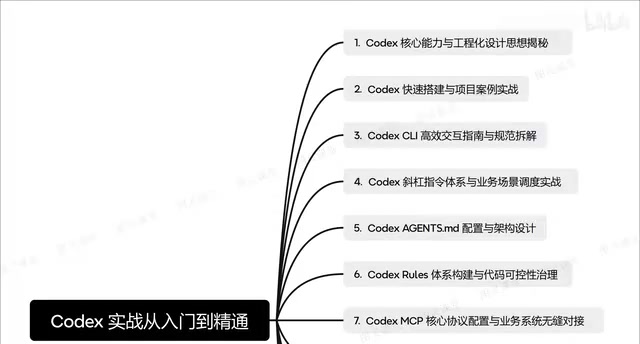
Codex in Practice: From Installation and Configuration to Multi-Agent Collaboration
Based on a Bilibili Codex course overview, this guide maps the full path of AI coding assistants from installation and agents.md context design to CLI commands, MCP integration, and multi-agent collaboration.
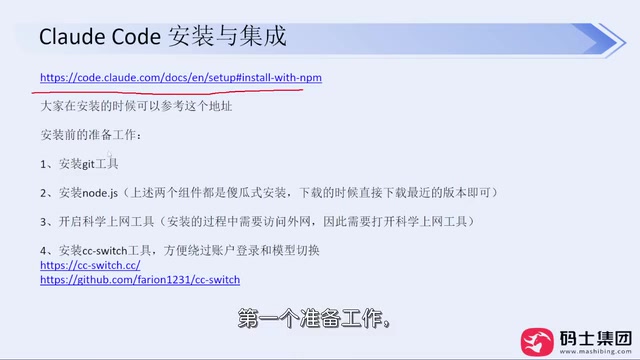
Claude Code Installation and Model Switching Guide for Users in China
How can developers in China install Claude Code reliably? This article compiles a Bilibili creator's hands-on solution: install via NPM, skip official login, use CC Switch to configure API Keys and freely switch between DeepSeek, Kimi, and other models to avoid account bans.
AI Supply Chain Security: What Canary Tokens Reveal
Starting from a Hacker News discussion, this article analyzes the role of canary tokens in AI supply chain security: how they detect abnormal access to model weights, training data, and credentials, as well as coverage blind spots and cost constraints during implementation.