Apple Releases MacBook Pro with PROLED XDR Display, Touch Comes to Mac

Apple launches MacBook Pro with PROLED XDR display and touch, sparking HN discussion.
Apple announced on its Newsroom the launch of a MacBook Pro with a PROLED XDR display and touch support, generating 289 points and 457 comments on Hacker News. The article analyzes that PROLED XDR continues the high-end display branding of Pro Display XDR, hinting at backlight or light-emitting material innovations expected to improve peak brightness, contrast, and color accuracy, simplifying professional creative workflows. The addition of touch marks a shift in Apple's long-standing philosophy of keeping Macs at a distance from touch, potentially extending to drawing, presentations, and other scenarios. Community discussion focuses on the actual power consumption and battery life of PROLED XDR, and whether touch will compromise chassis thickness or thermal design. The article argues that these questions cannot be settled before official detailed specifications are released, but Apple is attempting to redefine the experience standard for high-end laptops with a combined punch of display and interaction.
Apple announced on its official Newsroom that it is launching a MacBook Pro featuring a PROLED XDR display with touch support. The news quickly sparked discussion on Hacker News, garnering 289 points and 457 comments—a clear indication of users' strong interest in the display technology and touch interaction.
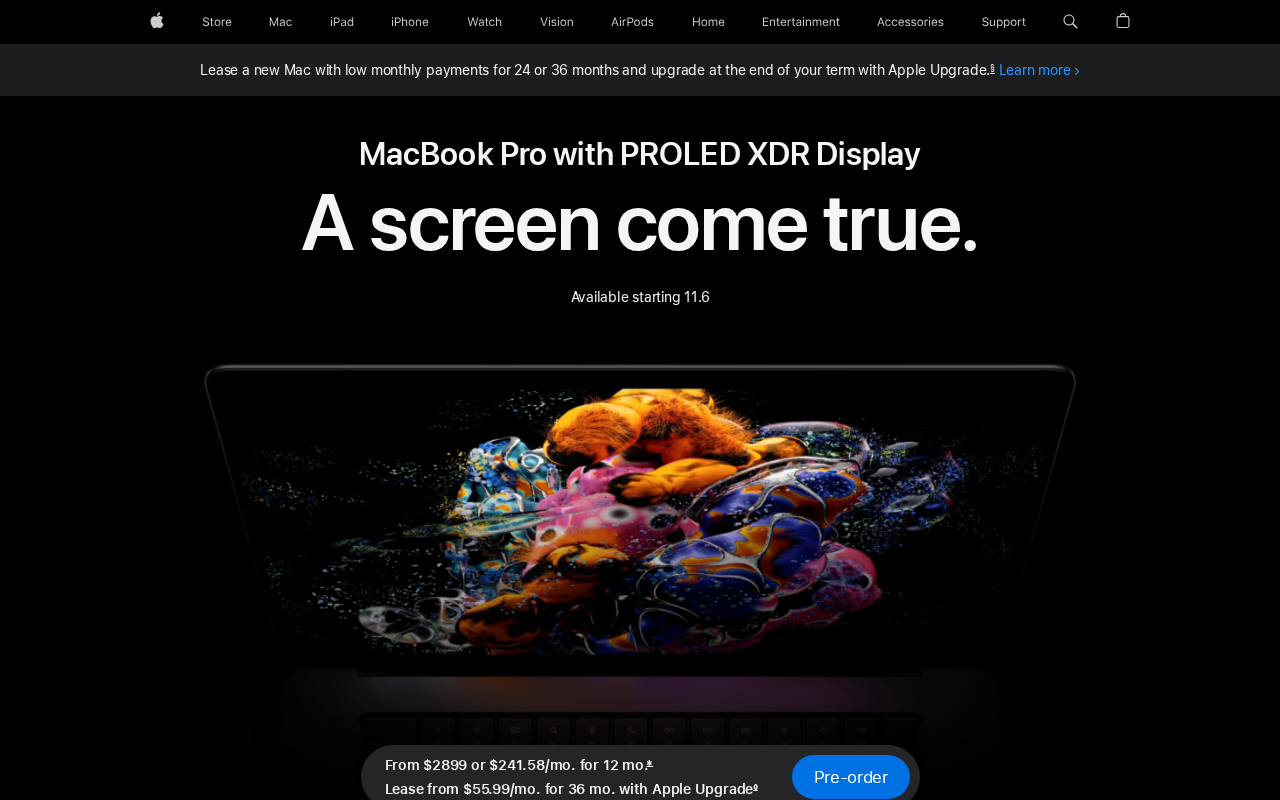
Display Upgrade: What PROLED XDR Means
Apple has named its new panel PROLED XDR, continuing the high-end display branding line established by the earlier Pro Display XDR. Judging by the naming logic, XDR stands for Extreme Dynamic Range, while PROLED hints at innovations at the backlight or light-emitting material level. For professional creatives, a display's peak brightness, contrast ratio, and color accuracy directly determine the reliability of tasks like color grading and HDR editing.
Although the official page has not yet disclosed full specifications, the naming itself sends a clear signal: Apple intends to further widen the display gap between its laptop lineup and competitors, bringing desktop-monitor-level experience to mobile devices.
XDR (Extreme Dynamic Range) is a display standard brand Apple has used since the 2019 Pro Display XDR. Its core metrics include extremely high full-screen sustained brightness (typically above 1000 nits), high peak brightness (around 1600 nits), a contrast ratio exceeding 1,000,000:1, and support for the P3 wide color gamut with 10-bit color depth. It is not a single hardware technology but a system-level certification covering the panel, backlight, driver, and color management.
PROLED is presumed by its name to point to improvements at the LED backlight or light-emitting material level, possibly involving denser backlight zones (mini-LED or similar) or new fluorescent materials to enhance brightness uniformity and energy efficiency. It should be noted that Apple has not yet published specific technical details; the above interpretation is based on brand naming logic and industry convention.
Touch Added: A Turning Point in Mac Interaction Logic
For a long time, Apple insisted on keeping Macs at a distance from touchscreens, emphasizing that iPad is the touch device. By introducing touch to the MacBook Pro, Apple is effectively adjusting its own product philosophy. Among the 457 comments on HN, many users were concerned precisely with how touch would coexist with macOS's pointer interaction and whether it would trigger a cascade of interface adaptation issues.
From an industry trend perspective, Windows-based 2-in-1 devices have long popularized touch, and Apple's hesitation had ironically become a differentiator. Now that this gap is being filled, the MacBook Pro's use cases may extend to drawing, presentations, and lightweight creative work.
macOS's pointer-first interaction model differs fundamentally from touch operation: macOS interface element sizes, hover states, right-click menus, and precise cursor positioning are all designed around mouse/trackpad input. Directly porting touch would require redesigning hit areas and gesture logic. Common industry transition approaches include "touch + trackpad dual-mode" or "touch limited to specific use cases," but both incur development adaptation costs. Apple previously insisted on not equipping Macs with touchscreens, with the public rationale that "reaching out to touch a vertical screen is ergonomically unsound" and that iPad is the touch device. This shift means Apple needs to address macOS touch adaptation, which may involve system-level UI adjustments or designing a dedicated interaction layer for touch.
Community Reaction and Open Questions
The high comment volume on Hacker News shows the news struck a nerve among developers and power users. Discussion focused on two areas: first, the actual power consumption and battery life of PROLED XDR; second, whether touch will compromise chassis thickness or thermal design.
These questions are difficult to resolve before official detailed specifications are released, but what is certain is that Apple is attempting to redefine the experience standard for high-end laptops with a combined punch of display technology and interaction methods.
Hacker News points and comment mechanics: A post's "points" reflect community voting热度, while comment count reflects discussion depth. 289 points is moderate-to-high popularity, but 457 comments is relatively high compared to the points, indicating the topic is highly controversial and users are eager to express themselves rather than simply upvoting. HN discussions typically lean toward technical implementation, power consumption, repairability, and other engineering details, which aligns with the questions about power/battery life and chassis thickness mentioned in this article.
Practical Impact on Professional Users
For professionals in film post-production, graphic design, and 3D rendering, a higher-spec display means less dependence on external monitors and a more streamlined workflow. The addition of touch makes operations like annotation and sketching more intuitive, reducing reliance on additional graphics tablets.
However, the maturity of new technology still needs market validation. Long-term color drift performance of PROLED XDR and the durability of the touch layer are factors professional users will weigh when upgrading.
Conclusion
Apple's simultaneous introduction of PROLED XDR and touch to the MacBook Pro represents a dual-track upgrade in display and interaction. The lively discussion in the HN community confirms market anticipation for changes in the Mac product line, but whether the actual experience can deliver on the promises implied by the naming will depend on subsequent specifications and real-world performance.
One-line Summary
Apple launches MacBook Pro with PROLED XDR display and touch, sparking heated discussion on HN.
Paragraph Summary
Apple announced on its Newsroom the launch of a MacBook Pro with a PROLED XDR display and touch support, generating 289 points and 457 comments on Hacker News. The article analyzes that PROLED XDR continues the high-end display branding of Pro Display XDR, hinting at backlight or light-emitting material innovations expected to improve peak brightness, contrast, and color accuracy, simplifying professional creative workflows. The addition of touch marks a shift in Apple's long-standing philosophy of keeping Macs at a distance from touch, potentially extending to drawing, presentations, and other scenarios. Community discussion focuses on the actual power consumption and battery life of PROLED XDR, and whether touch will compromise chassis thickness or thermal design. The article argues that these questions cannot be settled before official detailed specifications are released, but Apple is attempting to redefine the experience standard for high-end laptops with a combined punch of display and interaction.
Related articles

Why Does Self-Play AI Always Get Crushed by Cheap Units? An RTS Developer's Account of the Dilemma
An independent developer trained an RTS commander AI with pure self-play, only to find it dominated historical versions but was crushed by human players using cheap tier-1 units. This article analyzes the causes of self-play strategy collapse, explores solutions such as exploiters, diversity rewards, and reward design, and introduces the open Bot Kit and AI league plan.

Which Multi-Agent Platform Wins? A Small Team's Battle Scars and Selection Considerations
A 27-person startup's ops lead tried two multi-agent platforms in four months and both failed. This article analyzes why small-team deployments break down, and offers selection guidance on integration depth, observability, and progressive rollout.

Thrive Holdings Takes ADT Private in $7.6 Billion Deal
Thrive Holdings acquires ADT for $7.6 billion in an all-cash take-private deal expected to close in Q1 2027. Analysis of the deal structure, ADT's asset value, and impact on the smart home security industry.