Apple's AI Strategy Criticized as Conservative, Cook Pressures Software Chief to Accelerate
Apple's AI Strategy Criticized as Cons…
Cook reportedly pressures software chief to accelerate AI; Apple must balance privacy and progress.
Starting from a Hacker News rumor, the article discusses news that Cook pressured SVP of Software Engineering Federighi to demand a more aggressive AI strategy. It analyzes why Apple's AI seems "half a beat slow": a privacy-first product philosophy and fragmented organization make it unwilling to rush half-finished products. If true, it means AI shifts from feature embellishment to product mainline, possibly opening system-level interfaces to developers to accelerate diffusion. Community views diverge: one side advocates leveraging on-device computing and privacy architecture advantages, the other questions whether "more aggressive" equals "more effective." The conclusion notes that although unconfirmed, the rumor reflects Apple's real anxiety in finding a balance between conservatism and aggressiveness in the generative AI era.
Background: A Rumor Triggers a Chain Reaction
According to a discussion on Hacker News, Apple CEO Tim Cook is pressuring Senior Vice President of Software Engineering Craig Federighi to lead his team in adopting a more aggressive AI strategy. The report itself did not elaborate on specifics, but it sparked considerable discussion in the tech community. Given Apple's performance in generative AI over the past two years, the outside world widely believes this is not unfounded.
Apple's pace in AI has always differed from its competitors. When Microsoft, Google, and OpenAI密集ly released large model products around 2023, Apple focused more on emphasizing neural engines at the chip level and system-level machine learning features such as photo recognition and input prediction. These capabilities are solid but lack a mass-market, buzz-worthy AI product.
Why Apple's AI Appears "Half a Beat Slow"
Apple's product philosophy emphasizes experience integrity and privacy protection, which determines that it will not easily push half-finished products to the market. The hallucinations, copyright disputes, and privacy risks brought by large models conflict with the brand image Apple has long cultivated. Therefore, even if relevant technology has been accumulated internally, Apple prefers to wait for the technology to mature.
Another practical factor is organizational structure. Apple's software team has long focused on operating systems and ecosystem integration, with AI capabilities scattered across multiple teams, lacking a unified narrative like Microsoft's Copilot that runs through all product lines. According to discussion on Hacker News, this is precisely why Cook is pressuring the software chief—hoping the software department will take the lead in integrating AI capabilities more systematically into the system and developer tools.
Generative AI and Large Models: Generative AI refers to models that can generate new content such as text, images, and code based on training data, typically centered on large language models (LLMs). These models acquire general capabilities through pre-training on massive data, then adapt to specific tasks via fine-tuning. Around 2023, OpenAI's GPT-4, Google's Gemini, and Microsoft's Copilot system successively launched, pushing generative AI from the lab to mass-market products. Compared with traditional machine learning (such as photo recognition and input prediction), generative AI outputs are open-ended and uncertain, thus accompanied by hallucinations (generating plausible but incorrect content), copyright disputes, and privacy leak risks. Apple has long emphasized privacy protection and experience integrity, making it more cautious when introducing generative AI.
On-Device AI and Neural Engine: On-device AI refers to completing model inference locally on the user's device rather than uploading data to the cloud. Apple's self-developed Neural Engine has been integrated into the iPhone since the A11 chip to accelerate machine learning tasks. The advantages of on-device inference are good privacy, low latency, and no network dependency, but limited by device computing power and memory, it can usually only run models with smaller parameter counts or distilled and compressed models. This complements cloud-based large models: Apple can process sensitive data locally while leveraging private cloud computing for complex tasks. Understanding the boundaries of on-device AI helps determine that Apple's "half a beat slow" is not simply technological backwardness but a different path choice.
What the Pressure Means: From Defense to Offense
If the report is true, its significance lies not in Apple "chasing trends" but in adjusting its strategic focus. In the past, Apple's AI posture was more defensive: ensuring Siri did not lag too far behind and that the privacy framework was not compromised. Pressuring the software chief means Apple may want to turn AI from a feature embellishment into a product mainline.
The impact on the developer ecosystem deserves particular attention. Apple has a vast developer community and a mature toolchain. If AI capabilities are systematically opened to developers—such as more complete on-device model interfaces or intelligent development assistance—their diffusion speed could far exceed that of a standalone app. This is also what many in the Hacker News comment section are hoping for.
Copilot and a Unified AI Narrative: Microsoft's Copilot is not a single product but a set of AI assistant systems running through Windows, Office, GitHub, Edge, and other products, backed by OpenAI's model capabilities combined with Microsoft's cloud services. The key to Copilot is a "unified narrative": users get a consistent AI-assisted experience across different scenarios, and developers can embed Copilot capabilities into their own applications via APIs. This horizontal integration capability is exactly what Apple currently lacks. Apple's AI capabilities are scattered across multiple teams including Siri, Photos, input methods, and developer tools (such as Xcode), lacking a cross-product unified brand and interface. If Cook is pressuring software chief Federighi, the goal is likely to借鉴 the Copilot model, with the software department taking the lead in integrating AI capabilities to form a system-level AI layer rather than scattered feature points.
Community Skepticism: What Kind of AI Does Apple Need
There are also calm voices in the discussion. Some argue that Apple's real advantage lies not in model parameters but in on-device computing power and privacy architecture. Putting large models into devices and completing inference locally can both avoid privacy disputes and leverage the advantages of self-developed chips—this is the path Apple should take.
Others question whether "more aggressive" equals "more effective." While large tech companies chase AI buzz, product experiences vary. If Apple hastily launches features merely to respond to external pressure, it could instead damage its consistent reputation. This divergence shows that the direction choice of Apple's AI strategy is far more complex than deliberately pursuing speed.
Privacy Architecture and Private Cloud Compute: Apple's privacy architecture emphasizes data minimization and local processing, but large model inference often requires cloud computing power. To this end, Apple proposed the concept of "Private Cloud Compute": sending user data to dedicated servers powered by Apple chips, used only to process requests without retaining data, and allowing security researchers to verify its privacy commitments. This architecture attempts to strike a balance between cloud AI capabilities and privacy protection. The view in community discussions advocating leveraging on-device computing power and privacy advantages is based on this background: Apple does not need to compete on model parameters but can provide a trustworthy AI experience through a combination of on-device inference and private cloud. This also explains why Apple's AI strategy values architecture design over model scale.
Conclusion
Currently, the news about Cook's pressure remains at the rumor level, lacking official confirmation. But the anxiety it reflects is real: at a time when generative AI is reshaping software experiences, Apple needs to find a new balance between conservatism and aggressiveness. For users and developers, what truly deserves attention is not when Apple will release a certain AI feature, but whether it can use its own strengths to turn AI into a reliable, usable everyday tool.
One-line Summary
Cook reportedly pressures software chief to accelerate AI; Apple needs to balance privacy and aggressiveness.
Paragraph Summary
The article starts from a Hacker News rumor discussing news that Cook pressured Senior Vice President of Software Engineering Federighi to demand a more aggressive AI strategy. It analyzes why Apple's AI appears "half a beat slow": a privacy-first product philosophy and fragmented organizational structure make it unwilling to rush out half-finished products. If the pressure is real, it means AI is shifting from a feature embellishment to a product mainline, possibly opening system-level interfaces to developers to accelerate diffusion. Community views diverge: one side advocates leveraging on-device computing power and privacy architecture advantages, while the other questions whether "more aggressive" equals "more effective." The conclusion notes that although the rumor is unconfirmed, it reflects Apple's real anxiety in finding a balance between conservatism and aggressiveness in the generative AI era.
Related articles
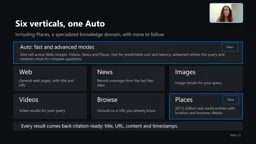
Microsoft WebIQ: Verifiable Real-Time Web Grounding for AI Agents
Microsoft WebIQ gives AI Agents real-time, citable web grounding across web, news, images, videos, and Places—164ms P95 latency, 50% fewer tokens, Scopes source control, and MCP integration.
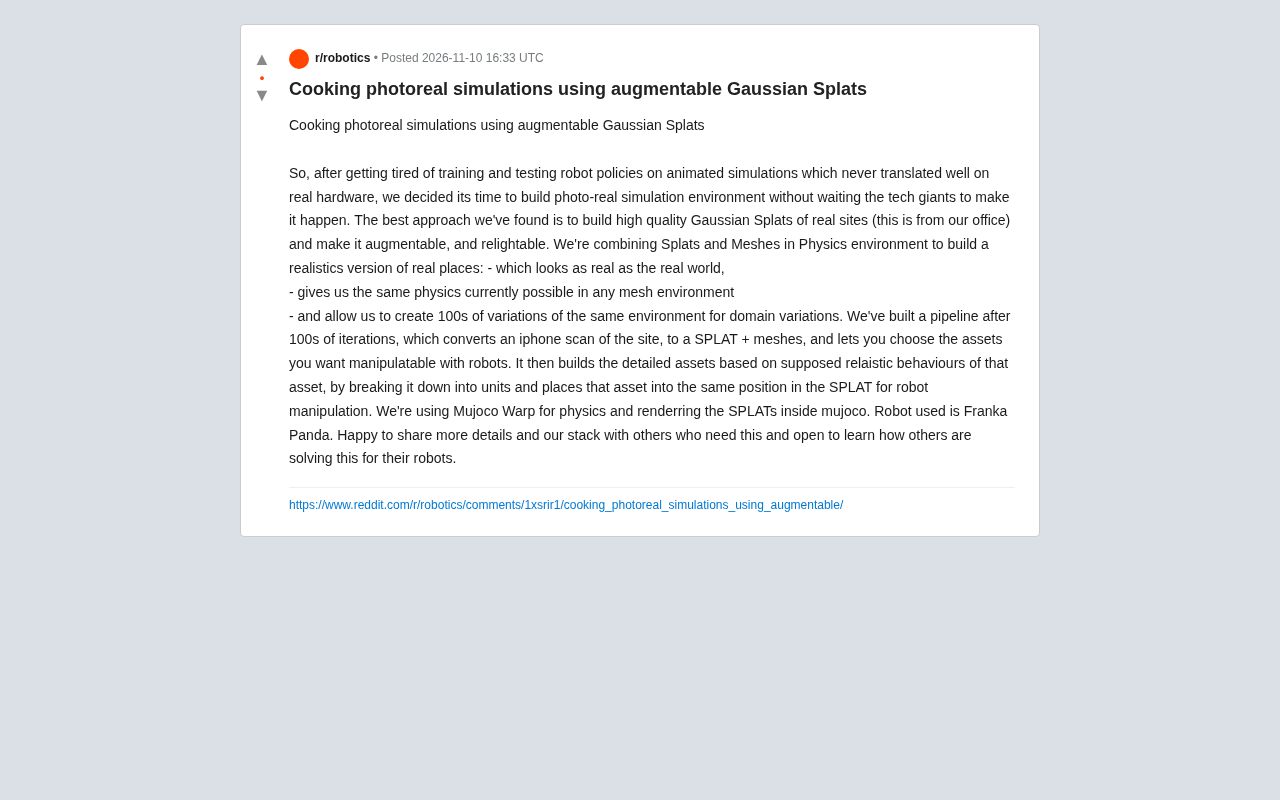
Augmentable Gaussian Splatting: Building Photorealistic Simulation Environments for Robot Training
Team combines Gaussian Splatting with meshes to build photorealistic robot simulation environments, integrating MuJoCo Warp physics and Franka Panda for augmentable, relightable real-site simulation.

Gemini 4 Carbon Released: The Leap from Gemini 3 to Gemini 4 in Under a Year
Google releases Gemini 4 Carbon, less than a year after Gemini 3. In the official demo, Carbon reverse-engineered the Theme Park binary, added a new DeepMind-themed ride, and ported it to the web in one shot.