AT&T Teams Up with OpenAI: Reshaping Corporate Legal Workflows

AT&T and OpenAI collaborate, starting from the legal intake entry point to make legal knowledge more accessible and scale legal judgment.
AT&T's legal team LegalEdge collaborated with OpenAI, choosing to start from the legal intake entry point rather than contract review automation, aiming to make legal knowledge more accessible and scale legal judgment. The model positions AI as a knowledge retrieval and triage tool, with the model handling issue identification, precedent matching, and rule sorting, while human lawyers retain final judgment. The article analyzes the risk-control significance of this division of labor and summarizes three implications for corporate legal digitalization: start from the process entry point, define AI's capability boundaries, and measure success by judgment coverage rather than document volume. It also notes that public information is limited and actual results remain to be seen.
When generative AI enters a company's core departments, legal is often the most cautious. The collaboration between AT&T and OpenAI offers a sample worth dissecting: it's not about letting AI replace lawyers, but about making legal knowledge more accessible and enabling legal judgment to scale.

Starting with "intake": LegalEdge's entry point
AT&T's in-house legal team, LegalEdge, didn't start with contract review automation. Instead, it focused on "intake"—the entry point where business departments submit requests to legal. This choice is quite deliberate.
The pain point for traditional corporate legal teams often isn't the difficulty of any single legal question, but the efficiency of demand distribution: business teams don't know who to contact or what information to provide, while legal teams are overwhelmed by a flood of repetitive inquiries. LegalEdge used OpenAI's technology to redesign this entry point, with the goal of making legal knowledge reachable at the moment a need arises, rather than waiting in line for manual response.
According to the original report, the core goal of this collaboration is to "make legal knowledge easier to access." This positioning determines how the technology is used: it leans toward knowledge retrieval and Q&A triage rather than directly outputting legal opinions.
intake is the starting point of the legal service process, referring to the stage where business departments submit inquiries or requests to legal. In traditional corporate legal departments, intake usually takes the form of emails, tickets, or verbal requests, with common problems including incomplete information, repetitive inquiries, and routing errors. Digitalizing intake means completing information collection, issue classification, and initial triage the moment a need arises, thereby reducing the burden of manual triage. The leverage of this stage lies in the fact that it determines the input quality and allocation efficiency of all subsequent legal work.
How legal judgment can "scale"
A key phrase in the original material is "scaling legal judgment." This statement deserves further analysis.
Legal judgment is typically regarded as a scarce resource that is highly experience-dependent and difficult to replicate. The value of senior lawyers lies precisely in their discretion when facing ambiguous situations. AT&T's approach is not to replace this capability with a model, but to hand over the "upstream portion" of judgment—identifying issue types, matching precedents, and sorting applicable rules—to AI assistance, so that lawyers can focus their time on the parts that truly require human judgment.
This division of labor aligns with the mainstream approach to enterprise AI adoption today: models handle information-intensive but relatively standardized cognitive tasks, while humans retain final decision-making authority. For a field like legal with an extremely low tolerance for error, this is almost the only viable way forward.
Balancing knowledge accessibility and risk control
Opening legal knowledge to business departments carries inherent risk: misread knowledge can be more dangerous than no knowledge at all. Therefore, redesigning the intake stage must include boundary design—which questions can be answered directly by the system and which must be escalated to humans. The original material does not disclose the specific mechanisms, but judging from the phrase "rethinking intake," the design of triage rules should be one of the project's central tasks.
Legal judgment refers to a lawyer's ability to exercise discretion based on rules, precedents, and professional experience in ambiguous or conflicting situations. It is typically regarded as a scarce resource that is difficult to standardize and scale. "Scaling" judgment does not mean letting AI make decisions on behalf of lawyers, but rather handing over the information-preparation portion of the judgment process—such as identifying issue types, retrieving relevant statutes and precedents, and sorting applicable rules—to the model, enabling lawyers to cover more legal issues in less time. The premise of this division of labor is that model output serves only as supporting material, not as a final legal opinion.
Human escalation is a key safety mechanism in AI-assisted legal systems. It refers to automatically routing requests to human lawyers when the system identifies that a question exceeds preset boundaries (such as involving litigation, regulatory investigations, major transactions, or high-risk areas). The design of this mechanism usually includes multiple layers of judgment, such as confidence thresholds, keyword rules, and issue classification models. In legal scenarios, escalation rules must be sufficiently conservative, because the cost of misread knowledge or incorrect triage far exceeds the cost of efficiency loss.
Implications for corporate legal digitalization
The value of the AT&T case lies not in the technology itself, but in the choice of approach. It suggests several reusable ideas:
- Start from the entry point rather than the endpoint: intake is the starting point of the legal process, and transforming it offers the greatest leverage with controllable risk.
- Clearly define AI's capability boundaries: positioning it as a knowledge access tool rather than a legal opinion generator reduces compliance and liability risks.
- Target judgment scale rather than document volume: the measure of success should be the expansion of the scope covered by lawyers' judgment, not the growth in the number of documents processed.
It should be noted that currently available public information is limited, and specific implementation details and performance data have not been disclosed. The actual effectiveness of this collaboration remains to be seen. But in terms of direction, this AT&T-OpenAI experiment provides a pragmatic reference framework for large corporate legal departments: first open up the knowledge channel, then discuss deeper process automation.
One-line Summary
AT&T collaborates with OpenAI, starting from the legal intake entry point to make legal knowledge more accessible and scale legal judgment.
Paragraph Summary
AT&T's legal team LegalEdge collaborated with OpenAI, choosing to start from the legal intake entry point rather than contract review automation, with the goal of making legal knowledge more accessible and scaling legal judgment. This model positions AI as a knowledge retrieval and issue triage tool, with the model handling upstream work such as issue identification, precedent matching, and rule sorting, while human lawyers retain final judgment. The article analyzes the significance of this division of labor for risk control and summarizes three implications for corporate legal digitalization: start from the process entry point, clearly define AI's capability boundaries, and measure success by judgment coverage rather than document processing volume. It also notes that public information is limited and actual results remain to be seen.
Related articles

Mistral Large 4 Open-Sources a Trillion Parameters, Microsoft Offers Voluntary Severance to 60,000 Employees
Mistral Large 4 open-sources a trillion-parameter multimodal model with a coding agent score of 48; SanDisk earnings show AI inference reshaping NAND demand; Google Gemini adds in-app file editing, OpenAI raises Codex quotas, and Microsoft offers voluntary severance to 60,000 employees.
Mistral Large 4 Opens Its Weights: AI Morning Brief Roundup of Models and Ecosystem Trends
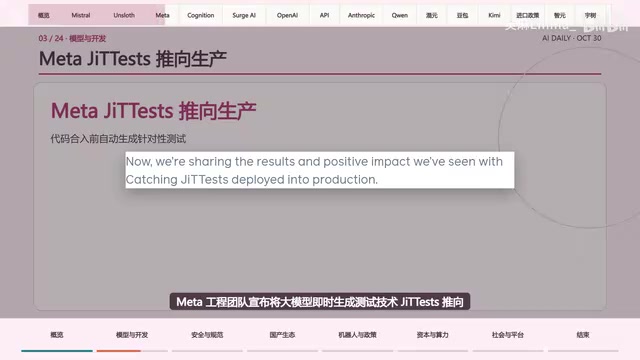
Mistral Large 4 opens its weights, a 1-trillion-parameter MoE architecture that can run locally on MacStudio; Meta's test-generation technology enters production; top tax benchmark pass rate only 10.8%; Canadian government takes a stake in Cohere; Doubao Work opens third-party model calls. This AI Morning Brief rounds up model, ecosystem, capital, and policy developments.

Mistral Large 4 Goes Open Source: A 1T-Parameter European Qwen Challenging DeepSeek
Mistral Large 4 is now open source: 1T total parameters, 52B activated, focused on coding and cybersecurity, with ~610G NVFP4 weights. We analyze its comparison with DeepSeek V4 Flash, API pricing, demo realism, and local deployment value.