Atomico Report: Europe Should Own Its Tech Success Stories

Atomico's annual report says European tech is undervalued and calls for proactively telling its success stories.
In its annual "State of European Tech" report, Atomico notes Europe has produced many of the world's fastest-growing companies but remains undervalued in the international narrative or credited to other regions. It argues narrative is a resource in tech ecosystem competition, directly affecting talent, capital, and partner flows. The mismatch between Europe's tech strength and image may stem from cultural reserve, insufficient media coverage, or a preference for acquisition exits. Founders should build products and tell stories; investors should support portfolio branding and global reach.
Veteran VC firm Atomico points out in its latest annual "State of European Tech" report that Europe has produced many of the world's fastest-growing companies, yet outside perceptions of Europe's tech ecosystem still lag behind reality. The report not only reviews the development of European tech but also calls on Europe to actively tell and own its own success stories.
Core Thesis: European Tech Is Undervalued
According to the RSS source, Atomico—an early investor in Stripe—emphasizes in its annual report that Europe is home to many of the world's fastest-growing companies. However, a long-standing problem is that these successes are often attributed to other regions or are absent from the international narrative.
Atomico argues that Europe needs to showcase its tech innovations with greater confidence, rather than letting its success stories be overshadowed by the aura of Silicon Valley or Asia.
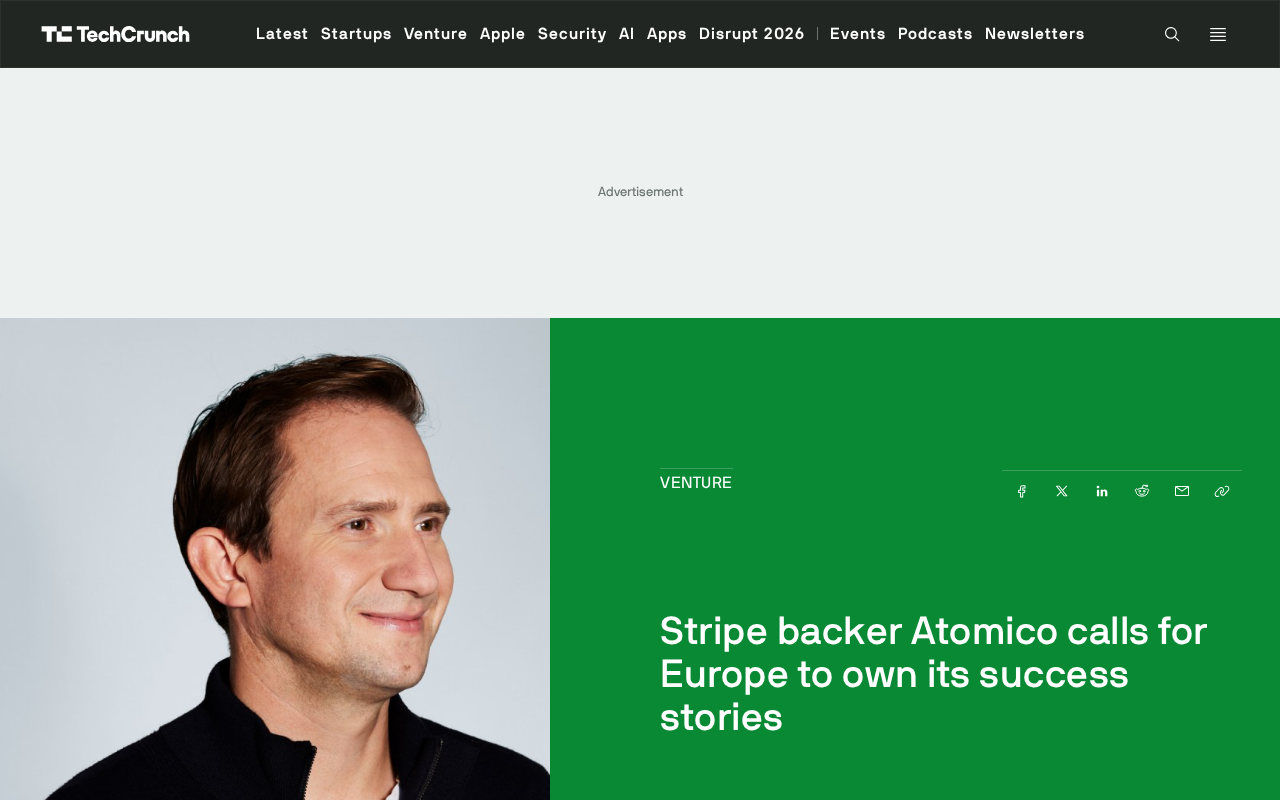
Atomico is one of Europe's most representative venture capital firms, founded in London in 2006 by Skype co-founder Niklas Zennström, and has long focused on early- and growth-stage tech investments in Europe. Its portfolio includes well-known companies such as Stripe, Klarna, and Spotify, giving its judgments on the European tech ecosystem a certain bellwether significance.
The "State of European Tech" report has been published annually since 2015, with data drawn from survey questionnaires, public funding data, and partnerships with events such as Slush. It is an important reference for observing the scale, funding structure, and talent flows of Europe's tech ecosystem. The report's emphasis on being "undervalued" is related to its long-term statistical approach: Europe's number and growth rate of companies in areas such as deep tech, B2B SaaS, and climate tech are not inferior to those of the United States, yet their visibility in global media and capital narratives is noticeably lower.
Why "Owning Success Stories" Matters
In the competition among tech ecosystems, narrative itself is a resource. If a region cannot effectively communicate its own success cases, it will struggle to attract global talent, capital, and partners. Atomico's call directly targets this pain point: there is a mismatch between Europe's tech strength and its international image.
This mismatch may stem from cultural differences, insufficient media coverage, or European companies' preference for keeping a low profile. But the report suggests that as Europe's tech ecosystem matures, the cost of this silence is rising.
In tech ecosystem research, "narrative economics" refers to the ability of a region to tell its own success stories, which itself translates into observable flows of resources. When founders, engineers, and investors evaluate where to go, the available role models, media coverage, and community discussions form an information environment that directly affects their judgment of opportunity density in a given region.
European companies have historically preferred acquisition exits over independent IPOs, and founders tend to keep a low profile while media exposure concentrates on a few star companies, resulting in an uneven distribution of "success samples" in the public eye. As late-stage funding rounds and the number of unicorns increase in Europe, this narrative gap is beginning to impose real costs: talent flows more easily to the U.S. market with a stronger narrative, and early-stage funds face questions during fundraising about "Europe lacking big winners."
Implications for Founders and Investors
For European founders, this report is a signal: it's not enough to build a good product—you also need to learn to tell your story. For investors, it means more actively supporting portfolio companies' brand building and global communication.
As an investor in star companies such as Stripe, Atomico's stance also reflects the role of VC firms in shaping regional tech narratives. Although the report does not provide a specific action list, the direction is clear: European tech needs more proactive self-expression.
Conclusion
Atomico's annual report raises a thought-provoking issue: beyond technical strength, narrative capability also determines a tech ecosystem's global standing. Europe has many high-growth companies; what it needs now is to let the world know about them. This report is not only a summary of the status quo but also a call for the future—Europe should own its own tech success stories.
One-line Summary
Atomico's annual report says European tech is undervalued and calls for proactively telling its success stories.
Paragraph Summary
In its annual "State of European Tech" report, Atomico points out that Europe has produced many of the world's fastest-growing companies, yet they have long been undervalued in the international narrative or credited to other regions. The report argues that narrative itself is a resource in tech ecosystem competition, directly affecting flows of talent, capital, and partners. There is a mismatch between Europe's tech strength and its international image, possibly due to cultural reserve, insufficient media coverage, or companies' preference for acquisition exits. The takeaway for founders is to both build good products and tell good stories, while investors should more actively support portfolio companies' branding and global communication. Although the report offers no action list, the direction is clear: Europe needs to showcase its innovations with greater confidence.
Related articles

When Harry Met Sally: Does Sleeping With Someone After a Breakup Prove You've Moved On?
Drawing from the classic When Harry Met Sally dialogue, we explore whether using new sexual relationships to prove you're over an ex actually holds up. Harry and Sally's debate reveals the complex relationship between sexual experience and emotional healing.

Nvidia Exits the Chinese Market: A Major Strategic Shift After Jensen Huang's Departure
Nvidia's interim CEO announces a halt to chip sales in China, marking a major strategic shift after Jensen Huang's departure. This article analyzes the background, financial costs, and potential impact on the global semiconductor landscape.

Nadella Reveals He's 'AGI-pilled': Why Microsoft's CEO Is Turning to AGI Political Economy
Microsoft CEO Satya Nadella says he is now 'AGI-pilled,' focusing on AGI's disruptive impact on economic structures and political landscapes, and raising how political economy should be organized around AGI—a deep shift in Microsoft's AI strategy.