AWS AgentCore Gateway: Connecting AI Agents to Enterprise Backends with MCP
AWS AgentCore Gateway: Connecting AI A…
Enterprise agents fail due to LLM-hardcoded backend mismatch; gateway-layer decoupling is key to production.
The article starts from the common gap AI agents face in enterprises, noting the problem is tool integration, not the model: LLMs decide tools on the fly, mismatched with hard-coded REST, causing M×N glue chaos and credential risks. MCP unifies communication but can't cover legacy REST, Lambda, and multiple MCP servers. AgentCore Gateway fills this as a primary MCP aggregator: compiles OpenAPI to AST for real-time reconstruction, runs translation serverless to avoid cold starts, uses semantic search with a single search tool, provides session-isolated workspaces, and stores keys in Secrets Manager injected then stripped. The key to production AI is decoupling probabilistic LLMs from deterministic backends and pushing mapping, memory, key injection, and tool discovery to the gateway layer.
Why AI Agents "Fail" as Soon as They Enter the Enterprise
Most teams building AI agents have experienced the same落差 (gap): during the demo phase, a strong model plus a system prompt runs well enough, but once actually connected to enterprise systems, it grinds to a halt. The problem isn't the model itself—it's the tools. An agent that can't connect to databases, workflows, and internal APIs is essentially just a chatbot with better grammar.
Traditional software architecture was not designed for LLMs. In the past, when App A called Service B, it relied on hard-coded REST requests: fixed URL, fixed headers, fixed JSON structure. Change one field in the backend, update the client, redeploy—done. But LLMs lack this determinism—they decide which tool to call on the fly based on user input, and they inherently don't understand your URLs, headers, or internal table names.
According to a YouTube tech channel's analysis of AWS AgentCore Gateway, this mismatch has directly spawned a flood of "glue code": developers wrap every internal API into a giant JSON Schema, describe it in natural language, and stuff it into the prompt. With 5 agents connecting to 10 APIs, an M×N integration mess forms—each agent needs custom connection code for each backend and holds its own raw credentials. A single prompt injection could cause the bot to leak the primary database key.
What MCP Solves—and What It Doesn't
The industry's response is the Model Context Protocol (MCP). The video likens it to "HTTP for AI": agents connect to MCP servers through a unified language and discover tools on their own, eliminating the need for custom glue for each application.
But enterprise reality quickly pushes back. A large number of legacy Java REST APIs, Lambda functions, and old SQL databases are not MCP servers at all; even if third-party MCP services like Slack, GitHub, and Jira are already connected, agents still have to manage multiple connections, multiple sets of authentication, and multiple tool inventories simultaneously—the headache just changed clothes.
This is exactly where AgentCore Gateway positions itself: as a "primary MCP server" and aggregator, standing between the agent and everything else. The agent speaks standard MCP to a single door, and behind that door can be raw REST APIs, AWS Lambda, OpenAPI services, or existing MCP servers—all unified into a single interface by the gateway.
Model Context Protocol (MCP) is an open protocol proposed and open-sourced by Anthropic in late 2024 to standardize how LLM applications connect to external tools and data sources. It uses a client-server model: the agent (client) communicates with the MCP server via JSON-RPC, and the server declares to the client the "tools," "resources," and "prompt templates" it exposes. This way, any model or agent framework that supports MCP can discover and invoke tools using the same semantics, without writing separate glue code for each backend. MCP's value is similar to what USB-C is for hardware or HTTP is for the Web: it defines a communication contract rather than a specific implementation, so third-party providers can each offer MCP servers, and the agent side can reuse them with a single integration. However, MCP only specifies the protocol "between the agent and the MCP server"; it does not specify how the MCP server should connect to legacy REST APIs, Lambda, or SQL databases—this is precisely the gap the gateway layer fills.
Inside the Gateway: Real-Time Translation from OpenAPI to AST
The core engineering approach of AgentCore Gateway is not simply forwarding text. According to the video, when you point it at an OpenAPI spec or Lambda, the gateway compiles the spec into an internal abstract syntax tree (AST), forming a real-time mapping engine. The agent sends a flat MCP tool call; the gateway validates types during transport and reconstructs the path variables, query parameters, and headers expected by the legacy backend. If the target is already an MCP service, the gateway acts as a proxy, forwarding the call while wrapping it in an enterprise-grade security shell.
This "compile rather than interpret" design keeps protocol rewriting low-latency and彻底 decouples the unstable, probabilistic LLM from the stable, deterministic backend. Whether the backend migrates from Java to Node or from Oracle to DynamoDB, the agent side requires no rewrite.
Zero Cold Start: Translation Runs on a Serverless Routing Layer
The gateway-layer translation does not rely on waking up heavy Node or Python applications; instead, it runs on a serverless routing plane with compiled ASTs, avoiding cold starts that would slow down protocol rewriting. This is especially critical for high-frequency tool invocation scenarios.
Semantic Search Tackles Tool Overload
Stuffing thousands of tool descriptions into the context drives up token costs, causes the model to "get lost in the middle," and even hallucinate non-existent tools. AgentCore Gateway's solution is to give the agent only one primary tool—search. The agent asks on demand, and the gateway matches descriptions via vectors, returning only the most relevant few schemas—fast, economical, and accurate.
"Lost in the middle" refers to the phenomenon where LLMs, when processing long contexts, have significantly weaker recall and utilization of information located in the middle of the context compared to the beginning and end. This was systematically documented by Liu et al. in 2023. When the tool inventory swells to thousands of entries, each with descriptions of dozens of tokens, relevant content often falls in the middle of the context, making the model prone to ignoring the correct tool and more likely to fabricate non-existent tool names (tool hallucination). Semantic search matches user intent with tool descriptions via vector similarity, injecting only the most relevant few schemas into the context, thereby shortening context length at the source and balancing token cost, recall accuracy, and invocation reliability.
Sessions and Isolated Workspaces
Multi-turn agents need to remember the conversation path. The gateway issues a session ID, reuses authentication for subsequent calls, and can provide an isolated workspace for that session: tool A writes a CSV, tool B reads the same file; when the session ends, the workspace is cleared.
Security Firewall: The Model Never Sees Keys
The agent does not hold backend keys; keys are stored in AWS Secrets Manager, injected by the gateway on an internal path, and stripped before the response returns. A password the model has never seen cannot be leaked via prompt injection. When the database throws a raw crash dump, the gateway also sanitizes it into a clean failure message the agent can handle.
Abstract Syntax Tree (AST) is a tree-structured representation obtained after parsing source code or a specification file, where nodes correspond to syntactic constructs and edges represent nesting relationships. Compilers typically first parse an AST, then perform type checking, optimization, and code generation on the AST. AgentCore Gateway compiles OpenAPI specs into ASTs, meaning it no longer "interprets" the spec as plain text but first builds a structured intermediate representation: every endpoint, path variable, query parameter, header, and request body schema becomes an AST node. At runtime, the gateway matches flat MCP tool calls against AST nodes, validates parameter types, and reconstructs the complete HTTP request required by the backend based on node information. Compared to dynamically parsing JSON specs each time, "compile once, reuse many times" significantly reduces per-call overhead and enables type validation and protocol rewriting to be completed at low latency on the routing layer.
Prompt injection is a class of attacks against LLM applications: attackers hide malicious instructions in content the model will read (such as web pages, emails, or tool return results), inducing the model to deviate from its original task, leak system prompts, or invoke tools it shouldn't. In agent scenarios, if the model's context holds backend credentials, a successful injection could let an attacker use the model to exfiltrate keys. The gateway injects keys on an internal path and strips them before returning responses, ensuring credentials never enter the model-visible context, cutting off this leakage path at the architectural level—this aligns with the traditional security principle of "least privilege + credentials never landing on the client," except the boundary is pushed down from the application layer to the gateway layer.
Implications for Agent Architecture
The video's engineering conclusion is straightforward: the key to production-grade AI is decoupling the unstable, probabilistic LLM from the stable, deterministic backend, pushing protocol mapping, session memory, key injection, and tool discovery down to the serverless gateway layer. The agent always speaks standard MCP, while the backend can evolve freely.
One front door, many backends—this is the question AgentCore Gateway attempts to answer, and it is an architectural threshold that enterprise agents must cross to move from demo to production.
Note: The views and data in this article come from a single YouTube tech channel's analysis video and have not been cross-validated with official AWS documentation or other independent sources. Readers are advised to verify official materials before implementation.
One-line Summary
Enterprise agents fail due to the mismatch between LLMs and hard-coded backends; gateway-layer decoupling is key to productionization.
Paragraph Summary
The article starts from the common gap AI agents face when landing in enterprises, pointing out that the problem lies not in the model but in tool integration: LLMs decide which tool to call on the fly, inherently mismatched with traditional hard-coded REST architectures, leading to M×N glue-code chaos and credential leakage risks. MCP unifies the communication language between agents and tools but cannot cover the reality of legacy REST APIs, Lambda, and multiple coexisting MCP servers. AgentCore Gateway fills this gap as a primary MCP server aggregator: compiling OpenAPI specs into ASTs and reconstructing paths, parameters, and headers in real time, with translation running on a serverless routing layer to avoid cold starts; using semantic search so the agent holds only one search tool and pulls schemas on demand; providing isolated workspaces via session IDs; storing keys in Secrets Manager, injected by the gateway and then stripped. The conclusion is that the key to production-grade AI lies in decoupling probabilistic LLMs from deterministic backends and pushing protocol mapping, session memory, key injection, and tool discovery down to the gateway layer.
Related articles

Mistral Large 4 Open-Sources a Trillion Parameters, Microsoft Offers Voluntary Severance to 60,000 Employees
Mistral Large 4 open-sources a trillion-parameter multimodal model with a coding agent score of 48; SanDisk earnings show AI inference reshaping NAND demand; Google Gemini adds in-app file editing, OpenAI raises Codex quotas, and Microsoft offers voluntary severance to 60,000 employees.
Mistral Large 4 Opens Its Weights: AI Morning Brief Roundup of Models and Ecosystem Trends
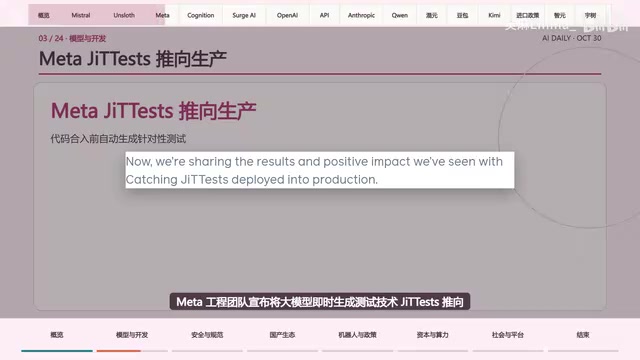
Mistral Large 4 opens its weights, a 1-trillion-parameter MoE architecture that can run locally on MacStudio; Meta's test-generation technology enters production; top tax benchmark pass rate only 10.8%; Canadian government takes a stake in Cohere; Doubao Work opens third-party model calls. This AI Morning Brief rounds up model, ecosystem, capital, and policy developments.

Mistral Large 4 Goes Open Source: A 1T-Parameter European Qwen Challenging DeepSeek
Mistral Large 4 is now open source: 1T total parameters, 52B activated, focused on coding and cybersecurity, with ~610G NVFP4 weights. We analyze its comparison with DeepSeek V4 Flash, API pricing, demo realism, and local deployment value.