Backblaze Privacy Policy Sparks Debate: Where Are the Boundaries of Cloud Storage Privacy?
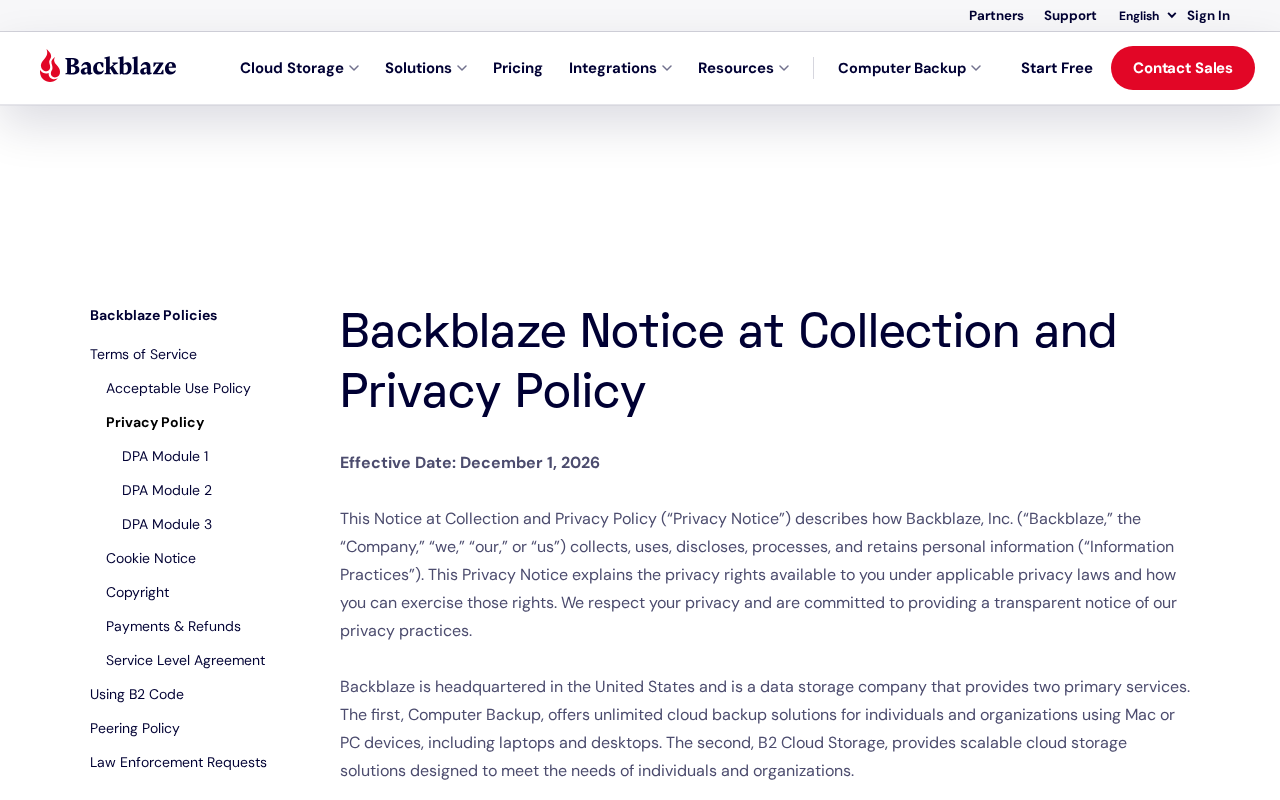
Backblaze places its collection notice alongside its privacy policy, prompting collective scrutiny from the HN community over cloud storage data transparency.
Backblaze's privacy policy page drew 237 points and 87 comments on Hacker News, with discussion focused not on feature specs but on policy readability and data processing transparency. The article notes that Backblaze presents its "Collection Notice" alongside its privacy policy, separating "what is collected" from "how it's used," lowering the understanding barrier and improving accessibility. Economies of scale in cloud storage raise data concentration, and users' tolerance for vague language and "reserve the right of interpretation" clauses is declining. The community divergence: does clause transparency equal verifiable practice? The article suggests developers factor encryption layers, key ownership, and deletion request timelines into their evaluation, and looks forward to verifiable privacy practices like independent audits.
Backblaze's privacy policy page has drawn 237 points and 87 comments on Hacker News—a figure that isn't particularly striking on its own. What's notable is the direction the discussion took. When a cloud storage provider known for being "cheap and reliable" sets up a standalone entry point for its "Collection Notice and Privacy Policy," users' first instinct usually isn't to read the terms—it's to ask: who exactly is looking at my data, who's using it, and who's storing it?
A Collective Scrutiny of "Policy Readability"
Backblaze presents its privacy policy alongside a "Collection Notice," a practice that's uncommon in the cloud storage industry. Traditionally, a privacy policy is a lengthy legal document that users almost never open proactively; splitting out a separate "Collection Notice" effectively separates "what we collect" from "how we use it," lowering the barrier to understanding.
According to feedback in the Hacker News discussion thread (item 50585593), the community's attention centered on two levels: first, the transparency of the policy text; second, the actual boundaries of cloud storage providers when it comes to data retention and third-party sharing. Judging by the comment activity, users' sensitivity to whether a policy "speaks plain language" has already surpassed their interest in feature specifications.
A signal worth noting: when a technical community is willing to spend 87 comments discussing a privacy policy, it shows that privacy has evolved from an internal compliance matter into part of the product experience.
The Privacy Paradox of Cloud Storage: The Cheaper It Is, the More It Needs to Explain
Backblaze's core selling points are low-cost object storage and personal backup services. This business model inherently depends on economies of scale—the more storage nodes and the lower the unit cost, the more prices can be pushed down. But economies of scale also mean increased data concentration, and users naturally worry: will my backup files be used to train models, will they be cross-analyzed, will they be retrieved in bulk under law enforcement requests?
The role of a privacy policy here isn't to "promise what we won't do" but to "clearly state what we will do." Judging by the leanings of the HN comments, the community's tolerance for vague language is declining, and vigilance toward clauses that "reserve the right of interpretation" is clearly rising.
Why the "Collection Notice" Is More Worth Reading Than the Policy Body
A collection notice typically lists data types, collection purposes, and retention periods in checklist form, with information density far higher than the policy body. For developers, this checklist has greater practical reference value—it directly answers specific questions like "will the metadata of the files I upload be recorded?" By placing this notice alongside the privacy policy, Backblaze objectively improves its accessibility.
In the field of privacy compliance, the Collection Notice and the Privacy Policy serve different functions. A privacy policy is typically a complete declaration oriented toward regulation and legal compliance, covering every aspect of data processing, with long length and heavy terminology; a collection notice, by contrast, often appears at specific data collection touchpoints (such as registration pages or upload entry points), informing users in the form of a concise checklist about "what is being collected right now, why, and for how long it will be kept."
This distinction stems from the privacy design philosophy of "layered notice": first give users the most critical short information, then provide the full text for in-depth reading. Article 13 of the EU GDPR, California's CPRA, and other regulations all encourage this layered structure. For cloud storage providers, making the collection notice a standalone page means users don't have to search through thousands of words of legal text for key items themselves, and it also reduces the risk of criticism that "informed consent" is merely a formality.
The mention of "retrieved in bulk under law enforcement requests" touches on a frequently overlooked mechanism in the cloud storage industry: Law Enforcement Requests. In the United States, service providers may receive different types of legal process such as subpoenas, court orders, and warrants, with different procedures corresponding to different scopes of data disclosure and thresholds. Most major cloud providers regularly publish "transparency reports" disclosing the number of requests received and the response ratio.
For users, the key question isn't "will there be a request" but "under what conditions will the provider cooperate, will it notify users, and does it offer channels to challenge requests." This content is usually written in the "Legal Disclosure" clause of the privacy policy; if the wording is vague (such as "we may disclose when necessary"), it means there's considerable room for interpretation. This is also why the HN community is especially wary of "reserve the right of interpretation"-type phrasing.
Industry Anxiety Reflected in Community Discussion
Discussions on Hacker News often reflect the real concerns of technical professionals. Around this privacy policy, the comments reveal a point of divergence: some users believe that cloud storage providers' privacy terms are already transparent enough, and that the real risk lies in users' own security configurations; others believe that improved readability of policy text doesn't equal verifiability of actual data processing behavior.
This divergence itself is worth recording. Judging by the analytical leanings of the discussion thread, the community would rather see auditable privacy practices—such as independent third-party audit reports, explicit figures for data retention periods, and specific pathways for cross-border transfers—rather than merely optimized clause wording.
Practical Implications for Developers
If you're currently selecting a cloud storage or backup service, the privacy policy should become an evaluation dimension on par with price and performance. Specifically, you can focus on three points: whether data encryption is at the transport layer or the storage-at-rest layer, who manages the keys, and whether there's an explicit commitment to the effective period for deletion requests. These questions all have corresponding entries in Backblaze's collection notice and policy pages, but they require cross-referencing to piece together the complete picture.
The encryption layers and key management mentioned in the article correspond to two sets of concepts that are often confused. Transport-layer encryption (such as TLS/HTTPS) only protects data from being eavesdropped during network transmission; encryption at rest (such as AES-256) protects data stored on disk. The two are configured independently, and enabling only the former doesn't mean stored data is encrypted.
A further key distinction is provider-managed keys versus customer-held keys (BYOK / client-side encryption). If keys are generated and held by the provider, the provider technically has the ability to decrypt, and law enforcement requests or internal errors could lead to plaintext exposure; if keys are managed by users themselves (such as local encryption before upload), the provider can only see ciphertext. When evaluating cloud storage privacy, you should clarify which layer "encryption" in the policy text refers to and which party owns the keys—this determines the actual security boundary more than the clause wording itself.
Conclusion: Privacy Policies Are Becoming Product Manuals
The discussion that Backblaze's policy page sparked on HN is essentially not about one company's compliance issue, but about information asymmetry in the cloud storage industry. When users entrust their data to a third party, the policy text is the only contract. The numbers—237 points and 87 comments—show that the technical community is using reading and discussion to push for this contract to be written more clearly.
Related articles
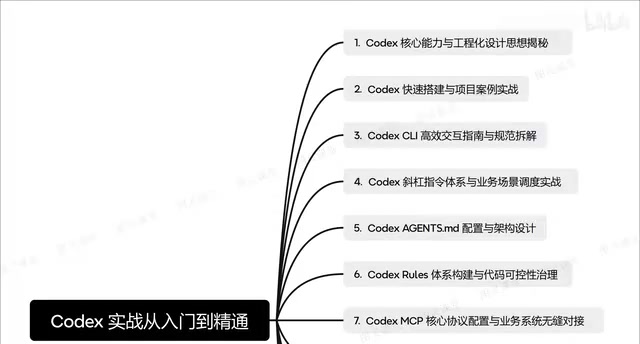
Codex in Practice: From Installation and Configuration to Multi-Agent Collaboration
Based on a Bilibili Codex course overview, this guide maps the full path of AI coding assistants from installation and agents.md context design to CLI commands, MCP integration, and multi-agent collaboration.
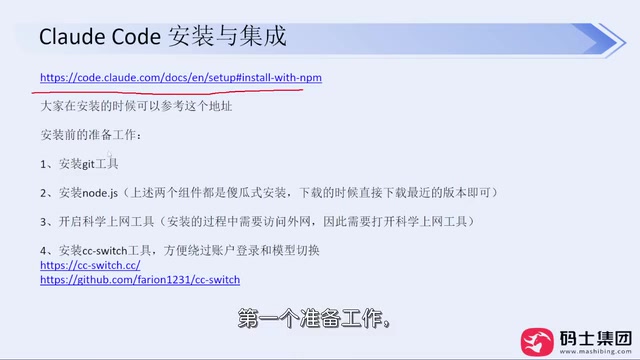
Claude Code Installation and Model Switching Guide for Users in China
How can developers in China install Claude Code reliably? This article compiles a Bilibili creator's hands-on solution: install via NPM, skip official login, use CC Switch to configure API Keys and freely switch between DeepSeek, Kimi, and other models to avoid account bans.
AI Supply Chain Security: What Canary Tokens Reveal
Starting from a Hacker News discussion, this article analyzes the role of canary tokens in AI supply chain security: how they detect abnormal access to model weights, training data, and credentials, as well as coverage blind spots and cost constraints during implementation.