Behind 'Everest: The Other Side': How IMAX Captured the Most Complex Documentary
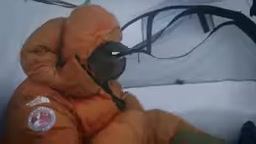
Everest: The Other Side was shot in IMAX on Everest's north face, with the team as mountaineers first.
National Geographic's Everest: The Other Side took an IMAX camera system to Everest's north face, shooting at around 29,000 feet with stays of up to two months—what producers call their most technically complex film. The piece explains the complexity: gear hauled by hand, prolonged high-altitude exposure, and the clash between IMAX format and extreme conditions. The team's approach: mountaineers first, filmmakers second.
Why Bring Cameras to the North Side of Everest
National Geographic's Everest: The Other Side points its lens at Everest's north face—a place "almost no one has seen before." The team behind it had a clear goal: to capture this "wild, pristine, unbelievable" landscape in IMAX format.
That choice was itself the starting point of the technical challenge. The team worked at around 29,000 feet, spending as long as two months on the north side each time, and every piece of equipment had to be carried up by human labor, one item at a time. That's why the producers call this "the most technically complex film we've ever made."
Mountaineers First, Filmmakers Second
The film's methodology can be summed up in one sentence: the team always saw itself as climbers and mountaineers first, and filmmakers second.
This ordering of identities isn't posturing—it's a practical constraint. In a high-altitude environment, "you have to satisfy all those conditions before you can even start thinking about filming." Thin air, freezing temperatures, weather windows, and camp safety form the prerequisites for shooting; if any one of them falls short, the cameras don't roll. The line in the film—"looks like the weather's about to clear, so let's go"—captures exactly this rhythm of waiting for the window and seizing it.
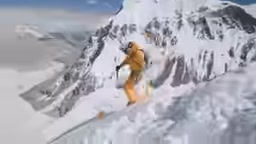
What 29,000 feet actually means. Everest's summit sits at about 29,032 feet (8,849 meters), a height that enters the "death zone" (generally above 8,000 meters): atmospheric pressure is only about one-third of that at sea level, the oxygen taken in with each breath drops sharply, the body cannot acclimatize here, and cells are continuously breaking down. Typical operating rules in this zone include: strictly limiting time spent, relying on supplemental oxygen, letting weather windows dictate the pace of going up and down, and recognizing that any physical exhaustion or lapse in judgment can be fatal. High-altitude filming, therefore, isn't "showing up to work with a camera"—it's embedding filmmaking inside a mountaineering safety system. This is precisely why the film's priority is "satisfy all the conditions first, then think about filming."
Where the Technical Complexity Comes From
Bringing an IMAX camera system to 29,000 feet creates layered complexity.
Equipment and manpower. Every piece of gear has to be carried up on shoulders and in hands, which means weight and quantity must be carefully calculated—any redundant configuration translates directly into climbing risk.
Length of stay. The team spent two months on the north side at a time, and prolonged high-altitude exposure is a continuous test for both people and machines. The scene of a collapsing tent in the film vividly illustrates how uncontrollable the camp environment can be.
Format requirements. Shooting in IMAX means no compromise on image quality—a standard that is extremely difficult to maintain in an extreme environment. When the production team calls the film "the most technically complex film we've ever made," they mean exactly this conflict between format and environment.
What the IMAX format actually means. IMAX isn't simply "a big frame"; it's a complete format standard spanning negative size to projection system. Traditional 65mm negative (with 70mm prints for projection) has an imaging area roughly ten times that of 35mm, and its information density, latitude, and detail far exceed conventional film formats. The cost: large, heavy cameras, limited film duration per load (typically just a few minutes), and extreme sensitivity to operating conditions. Bringing such a system to the north face at 29,000 feet—with bitter cold and scarce power and maintenance support—means the cost of every frame is magnified and the margin for error is squeezed to a minimum. This is why the team sees the "conflict between format and environment" as the core source of technical complexity.
Collective Effort and the Value of Storytelling
Behind-the-scenes interviews repeatedly emphasize "collective effort": this isn't one person's work but the result of an entire team collaborating under extreme conditions. One member calls it "the greatest journey of my life and my career."
On the meaning of the shoot, the film puts it plainly—the truly interesting part is telling the story once you get back down. The technology serves the narrative: bringing landscapes that almost no one has seen to audiences is the ultimate destination of this complex process.
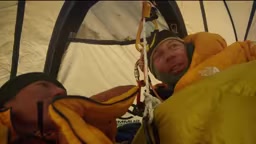
The logic of collaboration in high-altitude climbing. Above 8,000 meters, climbing is usually organized as a team effort: a route-fixing team lays ropes and ladders, guides scout ahead, members move in rope teams at a steady rhythm, and supplies are shuttled between camps by human labor. This division of labor is about efficiency, but even more about safety redundancy—any single-point failure requires others to respond. Film crews borrow the same structure, bringing cinematographers, porters, guides, and logistics under unified scheduling, with equipment transport and shooting windows both subject to the team's overall rhythm. This is the technical meaning behind the "collective effort" emphasized throughout the film: in extreme environments, collaboration isn't a bonus—it's the infrastructure that makes filming possible at all.
A Takeaway for Filmmaking
The behind-the-scenes story of Everest: The Other Side offers a sample to study: when the subject itself has a high barrier to entry, the center of gravity of the production process shifts from "creating" to "arriving." By placing mountaineering ability ahead of filmmaking ability, the team effectively redefines the priority order of documentary production.
For readers interested in imaging technology and filming in extreme environments, the value of this case lies not in the equipment list but in the organizational approach—using climbing standards to screen for shooting feasibility, using collective collaboration to distribute the pressures of an extreme environment, and using the highest format to deliver on the rarity of the landscape. Stack those three logics together, and you get that phrase: "the top of the world."
One-line Summary
Everest: The Other Side was shot in IMAX on Everest's north face, with the team acting as mountaineers first and filmmakers second.
Paragraph Summary
National Geographic's Everest: The Other Side brought an IMAX camera system to Everest's north face, completing the shoot at around 29,000 feet with stays of up to two months—a film its producers call "the most technically complex" they've made. The article breaks down where that complexity comes from: all equipment had to be carried by human labor, prolonged high-altitude exposure tested both people and machines, and the IMAX format clashed with the extreme environment. The team's methodology was to see itself as mountaineers first, rolling cameras only after all safety and technical conditions were met, and to distribute the pressure through collective effort. The ultimate goal is narrative—bringing landscapes almost no one has seen to audiences.
Related articles

The Hegseth Controversy: How Christian Nationalism Entered the Pentagon
Last Week Tonight examines the Hegseth book and tattoo controversy, revealing how Christian nationalism influences Pentagon personnel and policy narratives.

AI Voice Agent Answers Business Calls for 7 Days: Real Data and Lessons Learned
A business owner let an AI voice agent answer calls for 7 days: 43 calls, 24 real people, 7 bookings, $9.26 total. Breakdown of setup, the Day 4 calendar failure, usage-based billing risks, and why workflows matter more than prompts.
Why Your Browser Deserves Serious Attention: Reflections and Choices After Arc's Demise
Starting from Arc's demise, why browsers deserve serious attention: how tab management, profiles, and sync affect efficiency—and why most browsers are just poor Arc clones.