Behind OpenAI and Anthropic's 80% Price Cuts: The LLM Price War Begins

OpenAI and Anthropic cut prices by 80%, driven by falling inference costs, open-source disruption, and platform positioning.
OpenAI and Anthropic cut LLM API prices by up to 80% within months, sparking heated discussion on Reddit about the reasons. The article notes that inference costs are falling rapidly due to model compression, framework optimizations such as vLLM/SGLang, and the proliferation of dedicated chips, allowing vendors to maintain gross margins. Meanwhile, the benchmark gap between flagship models has narrowed, enterprises are shifting to cost-effectiveness-based choices, and price has become a customer acquisition lever. Open-source models such as Llama, Mistral, and Qwen are approaching closed-source performance, making self-hosting an alternative and setting a price ceiling for the industry. The price cuts are also a platform positioning move under the capital cycle: boosting call volumes to support valuations and squeezing small and medium-sized vendors. The endgame will be market stratification, and developers need to be wary of vendor lock-in and slowing iteration.
OpenAI and Anthropic have cut the API prices of their large language models (LLMs) by up to 80% within just a few months — a magnitude far beyond routine commercial promotions, sparking heated discussion in the Reddit community. On the surface it looks like a price cut to grab users, but behind it is an industry shake-up driven by technological iteration, open-source disruption, and capital imperatives.
Where does the wave of price cuts come from?
AI inference costs are falling at a visible pace. Model compression, inference framework optimizations (such as vLLM and SGLang), and the proliferation of dedicated inference chips mean that the compute consumption of a single API call is now far lower than it was half a year ago. Vendors can still maintain gross margins while cutting prices — and even achieve lower marginal costs as call volumes surge.
On the other hand, the competitive logic of large models has changed. When the gap between flagship models on benchmarks shrinks to single digits, enterprise customers no longer pay a premium for the "strongest model" but instead choose based on cost-effectiveness per million tokens. Price has become the most direct lever for customer acquisition.
vLLM and SGLang are currently the two most closely watched open-source LLM inference frameworks. The core innovation of vLLM is PagedAttention, which manages the KV Cache in blocks much like an operating system manages memory pages, greatly reducing VRAM fragmentation and redundant copying, thereby significantly boosting throughput on the same hardware. SGLang, meanwhile, uses RadixAttention to cache and reuse multi-turn conversations and shared prefixes, and combined with a frontend language for structured generation, further reduces latency and cost in complex invocation scenarios. Both support features such as continuous batching and tensor parallelism, multiplying the number of requests a single card can serve concurrently. For API vendors, such frameworks rapidly drive down the compute overhead per token — an important engineering foundation that makes substantial price cuts possible without incurring losses.
Open-source models lower the industry's pricing anchor
Open-source models such as Llama, Mistral, and Qwen are continually approaching the performance of closed-source models, and enterprises can choose self-hosting to avoid API fees. If closed-source vendors don't cut prices to near the cost of self-building, they will lose customers at scale. In the Reddit discussion, several developers mentioned that they had already replaced API calls with open-source models in some scenarios — "the money saved is enough to pay for an ops engineer."
This trend of "fleeing the API" is an important driver of price cuts by closed-source vendors. The existence of open-source models essentially sets a price ceiling for the entire market.
Self-hosting refers to enterprises deploying open-source model weights on their own or rented GPU servers rather than calling third-party APIs. Its cost structure differs from traditional APIs: upfront investment is needed in GPUs, data centers, or cloud GPU rental fees, as well as operational manpower for model deployment, monitoring, and scaling — but marginal inference costs mainly depend on hardware utilization and electricity prices. When call volumes are large enough and there are customized requirements for latency and compliance, the unit cost of self-hosting may be lower than API quotes. This is exactly the meaning of "the money saved is enough to pay for an ops engineer" in the text — the cost reference provided by open-source models forces closed-source vendors to bring API prices closer to self-built costs.
Capital cycles and market positioning
Anthropic is at a critical stage of fundraising and revenue expansion, and OpenAI also faces commercialization pressure. Price cuts can quickly boost call-volume metrics to support valuation narratives, while squeezing the survival space of small and medium-sized model vendors — when the prices of leading vendors are already low enough, startups find it hard to use "cheaper" as a selling point.
This is a typical platform strategy: first use price to lock developers into one's own ecosystem, then earn long-term revenue through value-added services such as model upgrades, toolchains, and private deployments.
Platform strategy in the LLM field manifests as: vendors use the API as an entry point to attract developers to their models and toolchains, then build stickiness through value-added capabilities such as context caching, fine-tuning, function calling, private deployment, and compliance auditing. Low-priced APIs amount to customer acquisition costs, while the real profit comes from subsequent ecosystem services and scaled usage. The side effect of this strategy is vendor lock-in: once an application deeply depends on a vendor's proprietary interfaces, caching mechanisms, or fine-tuned weights, migration costs rise significantly, and developers must assess their long-term bargaining power even while enjoying low prices.
The endgame of the price war: from selling models to selling ecosystems
Pure price cuts are not sustainable. The moat of closed-source vendors is shifting from model capability to engineering ecosystems — function calling, context caching, fine-tuning services, and compliance guarantees. For developers, lower API costs in the short term are a tangible benefit; but in the long term they need to be wary of vendor lock-in and of model capability iteration slowing down during the price war.
The endgame of the price war is not necessarily a "winner takes all" for one vendor, but more likely market stratification: ultra-cost-effective inference models, highly reliable enterprise-grade services, and fully self-hosted open-source self-built solutions each occupying different segments. The 80% price cut is merely a signal of this stratification process.
One-line Summary
OpenAI and Anthropic cut prices by 80%, driven by falling inference costs, open-source disruption, and platform positioning.
Paragraph Summary
OpenAI and Anthropic cut LLM API prices by up to 80% within months, sparking heated discussion on Reddit about the reasons. The article notes that inference costs are falling rapidly due to model compression, framework optimizations such as vLLM/SGLang, and the proliferation of dedicated chips, allowing vendors to maintain gross margins even with price cuts. Meanwhile, the benchmark gap between flagship models has narrowed, enterprises are shifting to cost-effectiveness-based choices, and price has become a customer acquisition lever. Open-source models such as Llama, Mistral, and Qwen are approaching closed-source performance, making self-hosting an alternative and setting a price ceiling for the industry. The price cuts are also a platform positioning move under the capital cycle: boosting call volumes to support valuations and squeezing small and medium-sized vendors. The endgame will be market stratification, and developers need to be wary of vendor lock-in and slowing iteration.
Related articles
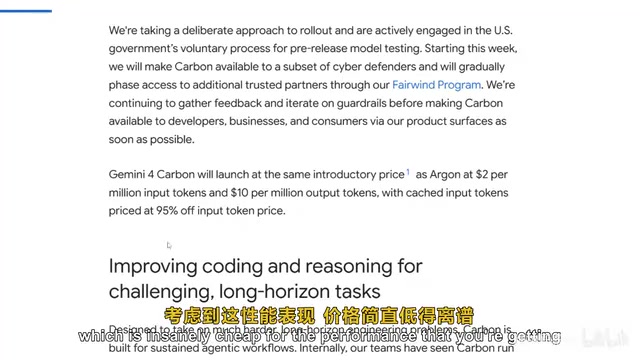
Gemini 4 Carbon Hands-On: The Strongest AI Model? Compared with Claude Opus 5.5
Google's Gemini 4 Carbon tops the Artificial Analysis leaderboard with 71% on CW Bench and leads Vending Bench. Hands-on comparison with Claude Opus 5.5: stunning front-end design but slightly behind in web development, with a clear price advantage.

Gemini 4 Carbon Tops Global Rankings as AI Productivity and Open-Source Ecosystems Surge
Google DeepMind's Gemini 4 Carbon tops global benchmarks, built for complex agents and system security. ByteDance launches Doubao Work integrated with Feishu, Anthropic's AI autonomously breaches 5 system-level attack chains, and ModelBest and Fudan open-source on-device multimodal and image generation models.

Overseas Creator Breaks Down N8n AI Agent Business Playbook: From Tooling to Monetization
An overseas creator breaks down the N8n AI agent business playbook: comparing Zapier, Make, and N8n, detailing four monetizable automation categories—lead capture, WhatsApp follow-up, booking, and content pipelines—plus agency pricing and a sales playbook.