Berlin Tech Salon: n8n, NVIDIA, and Together AI Discuss Production Deployment of Open-Source Models

Engineers from n8n, NVIDIA, and Together AI discussed engineering challenges in production deployment of open-source models at a Berlin salon.
This article reports on a tech salon held in Berlin, where engineers from n8n, NVIDIA, and Together AI shared production deployment experience around "what it takes to run open-source models." The article notes that as open-source large models improve, enterprise demand to use them in actual products is growing, but an engineering gap remains between prototype and production. The three parties offered perspectives from workflow orchestration, GPU resource scheduling and inference optimization, and large-scale model hosting infrastructure, sending the signal that adopting open-source models requires coordination among toolchains, compute power, and services. On-site interaction was lively, the community shows strong interest in the topic, and the organizers look forward to follow-up events.
Recently, a tech salon held in Berlin brought together engineers from n8n, NVIDIA, and Together AI to share their experiences with the practical deployment of open-source models in production environments. According to a message posted by the event organizers on Twitter, the discussions were lively and attendees asked many high-quality questions.
Production Deployment of Open-Source Models Takes Center Stage
The core topic of the salon was "what it takes to run open-source models." As the capabilities of open-source large models improve rapidly, more and more enterprises want to use them in actual products rather than keeping them at the experimental stage. However, an engineering gap still exists between prototype and production. The three engineers, coming from different backgrounds, shared their practical experience from the perspectives of workflow orchestration, hardware acceleration, and model hosting services.
Open-source models generally refer to pre-trained large language models whose weights are publicly available and may be freely downloaded, modified, and redistributed, such as the Llama, Mistral, and Qwen series. Unlike closed-source models accessed through APIs, enterprises can deploy open-source models on their own or rented infrastructure, gaining greater autonomy in data privacy, cost control, and custom fine-tuning. But this also means enterprises must bear the engineering complexity of inference services themselves: including model quantization and acceleration, GPU memory management, batching and scheduling, monitoring, and canary releases. The so-called "engineering gap between prototype and production" refers precisely to the huge distance between running a demo on a single GPU in an experimental environment and meeting low latency, high concurrency, observability, and cost constraints in a production environment.
Engineering Experience from Different Perspectives
As an open-source workflow automation tool, n8n's engineer may have discussed how to embed model calls into business processes; the NVIDIA engineer focused on GPU resource scheduling and inference optimization; and Together AI, as a model hosting platform, shared infrastructure considerations for deploying open-source models at scale. Although the specific technical details were not elaborated in the tweet, the fact that the three parties appeared together itself sends a signal: the adoption of open-source models requires coordination among toolchains, compute power, and services.
n8n is an open-source workflow automation platform that uses node-based visual orchestration to connect API calls, database operations, message pushes, and other steps into automated processes. In AI scenarios, n8n is often used to embed large model calls into business processes such as customer service, content generation, and data cleaning, playing the role of a "glue layer." Together AI is a cloud platform that provides hosting and inference services for open-source models, focusing on efficiently running open-source models on GPU clusters and offering on-demand inference APIs, fine-tuning services, and private deployment solutions. Its core technology involves inference engine optimization and distributed scheduling. NVIDIA's role here is as the compute foundation; its GPUs and CUDA ecosystem, along with inference acceleration libraries such as TensorRT-LLM, are currently the primary hardware and software support for production deployment of open-source models.
Community Feedback and Follow-up Events
The organizers said "the room brought great questions" and looked forward to the next event. This reflects strong developer interest in the topic of bringing open-source models into production. For practitioners who could not attend, they can follow technical blogs or documentation subsequently released by n8n, NVIDIA, and Together AI to obtain more deployment details.
(Note: This article is based on public tweet information; the specific presentation content is subject to official releases.)
Related articles

Why Does Self-Play AI Always Get Crushed by Cheap Units? An RTS Developer's Account of the Dilemma
An independent developer trained an RTS commander AI with pure self-play, only to find it dominated historical versions but was crushed by human players using cheap tier-1 units. This article analyzes the causes of self-play strategy collapse, explores solutions such as exploiters, diversity rewards, and reward design, and introduces the open Bot Kit and AI league plan.
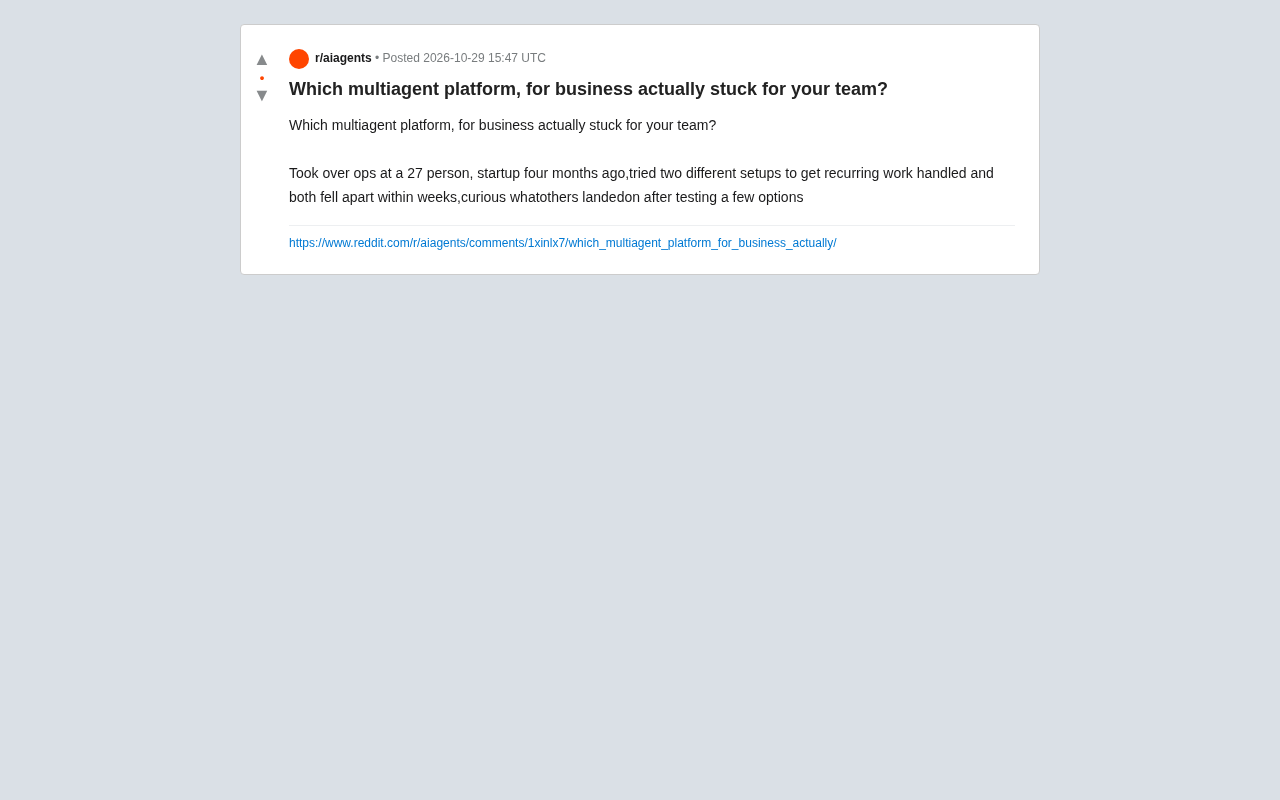
Which Multi-Agent Platform Wins? A Small Team's Battle Scars and Selection Considerations
A 27-person startup's ops lead tried two multi-agent platforms in four months and both failed. This article analyzes why small-team deployments break down, and offers selection guidance on integration depth, observability, and progressive rollout.

Thrive Holdings Takes ADT Private in $7.6 Billion Deal
Thrive Holdings acquires ADT for $7.6 billion in an all-cash take-private deal expected to close in Q1 2027. Analysis of the deal structure, ADT's asset value, and impact on the smart home security industry.