Bill Gates Warns: AI Disruption Will Last 20 Years—How to Navigate the Tumultuous Period?

Bill Gates predicts AI disruption will last about 20 years, and society must prepare for a long adjustment period.
In a recent podcast interview, Bill Gates suggested that the disruptive changes brought by AI could last up to 20 years, calling the current stage a "tumultuous AI age." This judgment is more cautious than Silicon Valley's popular short-term-change narrative, based on the fact that general-purpose technologies like electricity and the internet each took decades to penetrate society. Gates notes that AI's foundational capabilities are advancing quickly, but business models, employment structures, education systems, and the social contract are adapting far more slowly; the turmoil stems from labor-market mismatches, lagging educational responses, and unequal distribution of benefits. He is not bearish on AI but holds a "calm optimism," seeing potential in healthcare and education. For individuals and organizations, this means treating AI transformation as a long-term strategy rather than a one-off project.
Microsoft co-founder and Gates Foundation chairman Bill Gates recently offered a striking assessment in a conversation: the disruptive changes brought by AI could last as long as 20 years, a period he calls the "tumultuous AI age." The view comes from a recent podcast interview and echoes a same-titled article he published earlier. As he has appeared frequently in public view in recent months, this warning deserves serious attention from every technologist and ordinary person alike.
Gates's Core Judgment: A 20-Year Period of Turmoil
Gates frames the current stage as the beginning of the "tumultuous AI age." In his view, AI technology will not complete its penetration and stabilize within just a few years; instead, it will go through a structural adjustment period lasting two decades. During this time, business models, employment structures, education systems, and even the social contract will be repeatedly disrupted and reshaped.
This timescale is more cautious than many optimistic forecasts. Silicon Valley's popular narrative is that "AI will change everything in a year or two," while Gates's perspective is closer to the pattern of historical technological revolutions—electricity and the internet both took decades to achieve deep penetration. He believes AI's foundational capabilities are advancing quickly, but the adaptation speed of social systems lags far behind.
The "tumultuous AI age" Gates refers to originates from his 2023 article "The Age of AI Has Begun," published on his personal blog Gates Notes, which appeared almost simultaneously with OpenAI's release of GPT-4. In the article, he compared the AI revolution to the rise of the personal computer and the internet, but stressed that AI will diffuse faster and have a broader impact. Gates has long focused on the patterns of technology adoption curves, and in his foundation work he has observed that even mature technologies like vaccines often take more than a decade from successful development to broad coverage in low-income countries. This experience reinforced his cautious judgment about the speed of AI's social penetration.
Why "Tumultuous" Rather Than "Smooth Transition"
Gates uses the word "tumultuous" to imply the friction and pain of the transformation process. He does not specifically list all the risks, but from his recent remarks and the foundation's focus, the sources of turmoil he is concerned about include: structural mismatches in the labor market, the lagging response of education systems to AI literacy, and social tensions that may be exacerbated by unequal distribution of technological benefits.
You may not have noticed that Gates is not talking down AI. He has long been optimistic about AI's potential in healthcare, education, and other fields, and the foundation actively funds related applications. His warning is closer to a kind of "calm optimism": the technology itself is worth investing in, but one must prepare for a long adjustment period rather than expect an overnight utopia.
"General Purpose Technology" (GPT) is the key economic concept for understanding Gates's timescale judgment. The term refers to technologies that can penetrate almost all industries and continuously spawn complementary innovations—the steam engine, electricity, the internal combustion engine, and the internet are typical examples. Research in economic history shows that the true productivity dividends of GPTs often take decades to appear, because organizational processes, skill structures, and infrastructure need to be redesigned around the new technology. For example, after electricity became widespread, factories did not simply replace steam engines with electric motors; it took decades to form assembly-line layouts. AI likewise has GPT characteristics, which explains why Gates believes there is a long lag between advances in technological capability and social adaptation.
Implications for Individuals and Organizations
Facing a 20-year period of turmoil, short-term strategies may fail. For individuals, continuously learning AI tools and cultivating the ability to collaborate with machines is more reliable than betting on a specific skill. For companies, Gates's judgment means AI transformation is not a one-off project but an ongoing process that must be incorporated into long-term strategy.
In the interview, he also mentioned that he will closely follow the progress of AI implementation in health and education. This suggests that clear windows of opportunity also exist during the tumultuous period—AI applications that can solve real problems will accumulate genuine value over the long adjustment.
Conclusion
Gates's 20-year judgment may not be precise, but it provides a valuable framework for thinking: treat AI as a marathon, not a sprint. Amid the noisy hype, acknowledging the long-term nature and complexity of the transformation may be the more pragmatic starting point.
(This article is based on publicly available interview content; the views belong to the original interviewee.)
Related articles
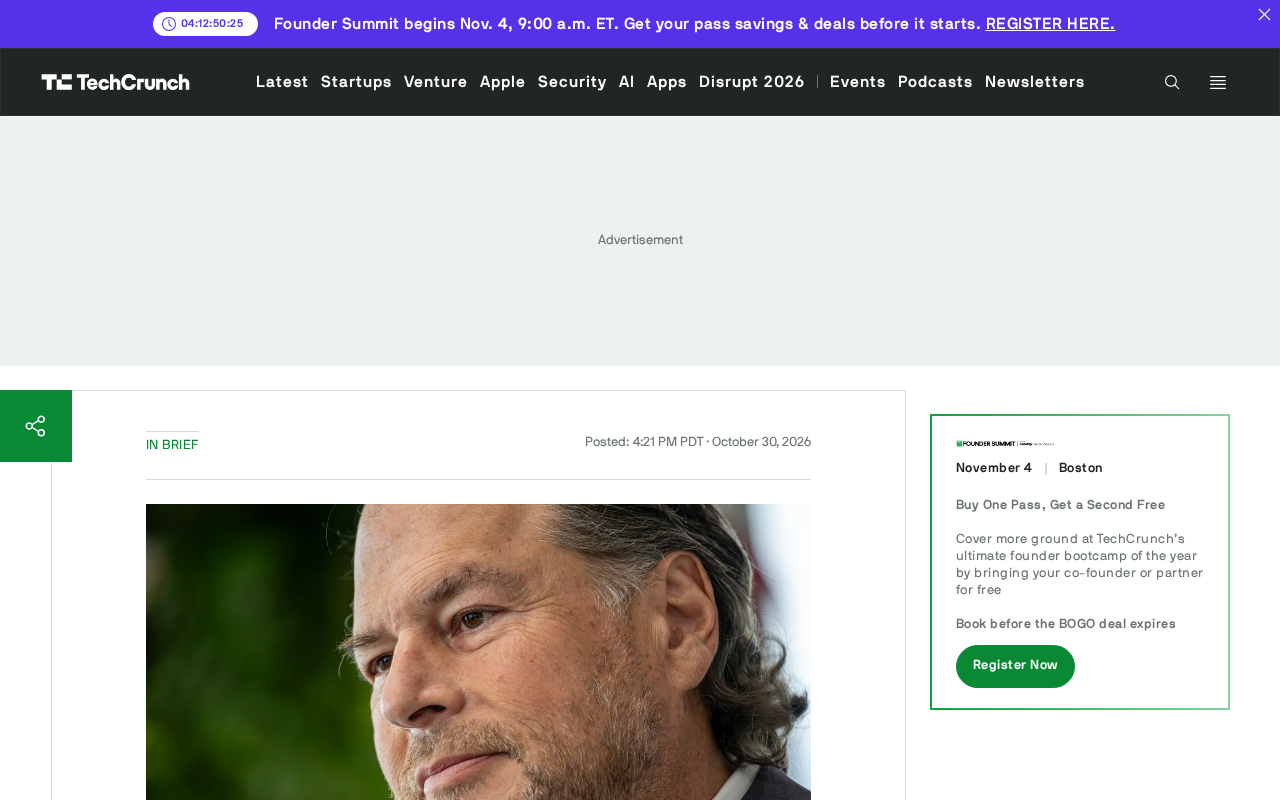
Salesforce Acquires Rune for $375M: AI Logistics Tech Bolsters Defense Business
Salesforce reportedly acquires defense tech startup Rune for $375M. Rune's AI logistics tech will strengthen Salesforce's Missionforce defense platform, continuing its M&A spree.

Why Fair Use Benefits Everyone in the AI Era
Starting from a Hacker News discussion, this article analyzes the legal logic and controversies of the fair use principle in AI training and content creation, and its dual impact on creators and the tech ecosystem.

Mistral Large 4 Open-Sources a Trillion Parameters, Microsoft Offers Voluntary Severance to 60,000 Employees
Mistral Large 4 open-sources a trillion-parameter multimodal model with a coding agent score of 48; SanDisk earnings show AI inference reshaping NAND demand; Google Gemini adds in-app file editing, OpenAI raises Codex quotas, and Microsoft offers voluntary severance to 60,000 employees.