Birdbuddy Nook vs Home: How a Budget Bird Feeder Keeps Squirrels Out
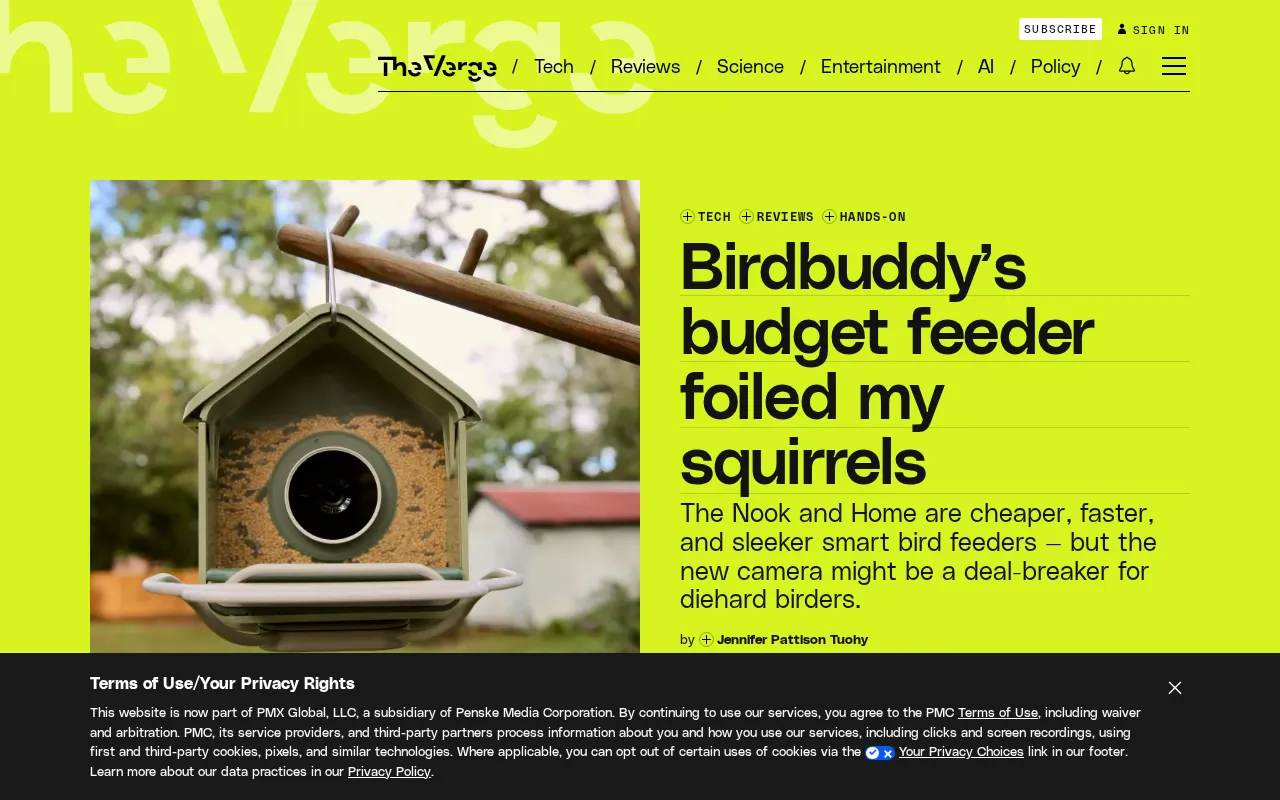
Review: the $99 Nook keeps squirrels out and offers balanced value—the all-around pick.
Based on days with the Nook and longer use of the flagship Home, this review assesses Birdbuddy's new smart feeders. The Nook (from $99) and Home ($219) target budget and flagship buyers respectively. The Nook doesn't sacrifice core features—especially squirrel deterrence—while delivering smart monitoring and birdwatching joy, balancing tech, nature, and value. The Home suits those wanting longer life and richer features.
Title
Birdbuddy Nook vs Home: How a Budget Bird Feeder Keeps Squirrels Out
Meta Description
Hands-on comparison of Birdbuddy's new smart bird feeders: Nook (from $99) vs Home ($219). The budget Nook successfully keeps squirrels out, balancing tech, nature, and value—making it the all-around pick.
Article Content
Birdbuddy's new generation of smart bird feeders has finally arrived. After spending a few days with the entry-level Birdbuddy Nook (from $99) and considerably longer with the flagship Birdbuddy Home ($219), the conclusion is clear: the Nook is a perfect all-rounder, striking just the right balance between tech, nature, and value—letting you enjoy the fascinating scenes of birdlife with ease.
Product Lineup Overview: How Nook and Home Differ in Positioning
Birdbuddy's two new products cover different needs. The Nook targets budget-conscious users with a starting price of $99, while the Home, as the flagship model priced at $219, is aimed at enthusiasts who want a better experience. Based on several days of use, the Nook doesn't sacrifice core functionality for its lower price—in fact, it performs excellently in key scenarios like squirrel deterrence.
Nook: The Value Pick
The Nook's core advantage is delivering a complete smart bird-feeding experience at a lower cost. It successfully keeps squirrels away from the birdseed—a pain point for many feeder users. The $99 entry price makes it easy for more people to try smart bird feeding.
How smart bird feeders work: These devices typically combine a camera, motion sensors, and on-device or cloud-based image recognition algorithms. When a bird approaches the feeder, the sensor triggers the camera to capture a photo or short video, and an AI model then detects and classifies the bird in the frame. The results are pushed to a phone app via Wi-Fi and automatically archived in the user's "bird visit log." Some models also support live video streaming, two-way audio, and cloud storage subscriptions for playback and sharing. Understanding this workflow helps gauge how "smart" a feeder really is: recognition accuracy, notification latency, battery life, and network stability often matter more to the actual experience than raw pixel specs.
Home: The Flagship Experience
As the flagship model, the Home offers a longer service life and potentially richer features. Although the original article doesn't detail all the spec differences between the two, judging by pricing and positioning, the Home suits users who want a more durable, more comprehensive experience.
Squirrel Defense in Action: How the Nook Successfully Fended Off Intruders
The headline "Birdbuddy's Budget Bird Feeder Fended Off My Squirrels" directly highlights the Nook's real-world performance against squirrels. For bird feeders, squirrels are one of the biggest nemeses—they not only steal birdseed but can also damage the equipment. The Nook's ability to effectively deter squirrels at a budget price means users don't have to pay flagship prices for this key feature.
Clever Design Choices
Although the original article doesn't describe the Nook's squirrel-deterrent mechanism in detail, the real-world results show its design is enough to make squirrels think twice. For users who want to attract birds rather than squirrels, this is a major reason to buy.
Common squirrel-deterrent strategies: Feeders typically rely on several types of physical and structural design to combat squirrels. The first is weight-triggered mechanisms: when a squirrel's weight exceeds a threshold, the feeding port or perch closes automatically, while lighter small birds can still feed normally. The second is bite-resistant materials and metal baffles that withstand squirrels chewing on plastic parts. The third is placement and sizing—for example, positioning the feeding port in a suspended spot squirrels struggle to climb, or adding baffles, springs, and anti-slip covers. Each approach has trade-offs: weight-triggered mechanisms are sensitive but need calibration, while metal structures are durable but cost more. Whether a budget product can effectively deter squirrels hinges on whether it has made sensible trade-offs among these low-cost approaches.
Balancing Smart Features and the Natural Experience
The Birdbuddy series has long been known for its smart features, and the Nook is no exception. It captures the exciting moments of bird visits, letting users observe nature up close through technology. Several days of experience show that the Nook strikes an excellent balance between tech and nature.
Who It's For
If you want a reasonably priced smart bird feeder that keeps squirrels out and offers viewing enjoyment, the Nook is an ideal choice. And if you're after a more flagship experience, the Home offers longer-lasting companionship.
How motion sensors and AI recognition work together: A feeder's smart experience doesn't rely on the camera alone—motion sensors decide "when to shoot," and AI recognition decides "what was captured." PIR (passive infrared) sensors detect motion caused by temperature changes, waking the device and saving power; the image recognition model then classifies bird species in the captured frames, filtering out false triggers like swaying leaves, squirrels, or people. Recognition accuracy is affected by lighting, occlusion, and camera angle, so manufacturers often continuously train models in the cloud to improve accuracy. For users, this means higher recognition hit rates and fewer useless notifications—and it explains why similar products differ noticeably in their "smart" performance.
Buying Advice: Why the Nook Is the All-Rounder
Overall, the Nook offers core features like squirrel deterrence and smart monitoring at a starting price of $99, making it the all-around pick for most users. The Home suits users with a bigger budget who want a flagship experience. Together, the two products form Birdbuddy's new-generation lineup, covering smart bird-feeding needs from entry-level to high-end.
One-line Summary
The budget $99 Nook keeps squirrels out and delivers a well-rounded experience—making it the all-around pick.
Paragraph Summary
Based on several days with the Nook and longer use of the flagship Home, this review evaluates Birdbuddy's new-generation smart bird feeders. The Nook starts at $99 and the Home at $219, targeting budget-conscious users and flagship-seeking enthusiasts respectively. The key takeaway: the Nook doesn't sacrifice core functionality for its low price—especially in squirrel deterrence, where it successfully keeps squirrels away from the birdseed—while offering complete smart monitoring and birdwatching enjoyment, balancing tech, nature, and value. The Home suits those who want a longer service life and a more comprehensive experience. Together they cover smart bird-feeding needs from entry-level to high-end, and the Nook is recommended as the all-rounder for most users.
Related articles

Vibe Coding Full-Stack in Practice: AI Programming from Beginner to Enterprise Deployment
From Cursor to Claude Code, this Bilibili AI programming course uses four progressive projects to cover full-stack development, open-source secondary development, and team collaboration. The article analyzes the shock to frontend roles, the efficiency shift from 50 people to 5, and the methodology required for enterprise-grade projects.

David Blaine's Global Quest for Real Magic: From South Africa to Japan and India
David Blaine travels to South Africa, Japan, and India in his Do Not Attempt special, documenting Spinning drivers, black mamba rescuers, iaijutsu masters, and ascetics—exploring the boundary between magic and real human极限 challenges.

Is a Touchscreen MacBook Coming? Vergecast Reveals Apple Executive's Response
Vergecast podcast reveals a conversation between a reporter and Apple executive John Ternus about a touchscreen MacBook and Apple Pencil support. Ternus says iPad is the best device for a stylus, while the reporter bets MacBook will eventually support Apple Pencil.