Braised Meat Shop Forced Out by Rent Hike: A Life-and-Death Contest Between Craft and Location

Braised meat shop owner forced out by rent hike clears out overnight; landlord's daughter takes over with seasoning packets — craft versus location.
Braised meat shop owner Lin Yan faced a rent hike from 68,000 to 168,000 yuan from the landlord's daughter, who believed location was everything. He moved out overnight with his pots, master stock, and equipment, signing a new three-year lease in a back alley for 26,000 yuan. The landlord's daughter took over the original shop using seasoning packets; overnight meat caused a customer's gastroenteritis, and reputation collapsed. Lin Yan rebuilt traffic through extended hours and caregiver meal service. Location brings the first customers; craft determines how far you go.
A braised meat shop owner who built a loyal following through his master stock and craftsmanship had his annual rent raised in one stroke by the landlord's daughter from 68,000 to 168,000 yuan. He chose to clear out overnight and start over in a side alley; the landlord's daughter, confident that "good business is all about location," bought mass-market seasoning packets and opened an identical braised meat shop. Two paths, two ways of doing business — the outcome is written in their respective pots and broths.
A 100,000 Yuan Rent Hike: The Landlord's Daughter's "Location Determinism"
Three days before the original lease expired, the landlord's daughter raised the renewal price from 68,000 to 168,000 yuan, reasoning that "this shop sells several hundred jin of meat a day and takes in thousands of yuan in revenue." Lin Yan shot back: "Will these walls braise my meat, or will this shop brew my broth?" She insisted the exhaust hood, large stove, freezer, and three braising pots were "only affordable because of her shop."
The real dispute was over how to attribute business success: does the queuing traffic come from location or from craftsmanship? The landlord's daughter's logic was simple — good location means anyone can make money. She had watched several hundred jin of meat sell daily at over thirty yuan per jin and concluded there was no barrier to entry.
Lin Yan's ledger told a different story: meat shrinks in the pot, and fresh meat, spices, utilities, and labor all cost real money. The exhaust hood, large stove, freezer, and three braising pots were bought on borrowed money, paid off only this month. A 100,000 yuan increase wasn't a rent hike — it was "asking me to dismantle my pots." With a three-day deadline, he decided not to renew.
"Master stock" (laotang) in the braised food industry refers to broth that is repeatedly reused over the long term — filtered, boiled, and replenished after each braising session, growing more complex in flavor with use. It is both a flavor asset and a time cost: a mature pot of master stock often requires months or even years of maintenance, boiled daily to prevent spoilage and replenished with spices and salt in precise proportions — any single lapse can ruin the entire pot. This explains why Lin Yan listed the mother broth as the first item to move — equipment can be rebought, but master stock cannot be rushed. The landlord's daughter could produce finished product in half an hour with mass-market seasoning packets, replicating the flavor profile while bypassing the time investment of master stock maintenance and the quality-control discipline of "if it's spoiled, dump it." This is precisely the fundamental difference between the two businesses in cost structure and risk bearing.
A New Shop in a Side Alley: 26,000 Yuan Rent and Assets Built Jin by Jin
The new location was in a back alley behind Qingling Ankang Hospital. The space had previously been a deli fast-food operation that closed after three months. Utilities, exhaust, and drainage were all directly usable. Annual rent was 26,000 yuan, with a 3,000 yuan deposit, a three-year lease, and a no-rent-increase clause written into the contract. The location was out of the way — few people walked through the back alley — but the advantage was not needing to borrow money for renovations.
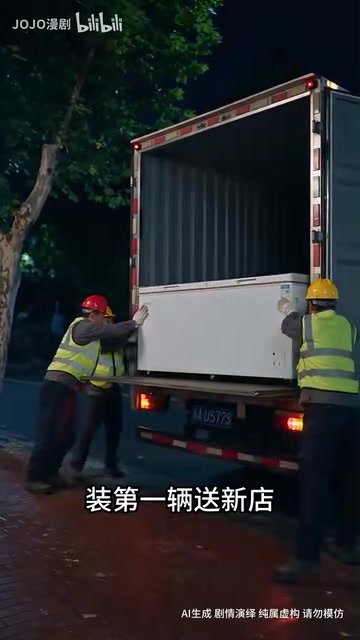
On moving night, the braising pots, mother broth, and freezer went into the first truck, along with usable tables and chairs. The "Yan Ji" sign stayed. Walls and floors were handed over per the contract, drilled holes were patched flat, and self-purchased equipment was removed with receipts — the landlord could find no fault during inspection and could only demand, "Are you moving or demolishing the shop?" The contract was clear: the shop belongs to the landlord; the equipment bought with money belongs to Lin Yan.
This step was remarkably clear-headed: no entanglement, no stubborn resistance — take everything portable, including the craftsmanship, and leave behind only a clean, empty shop.
In commercial restaurant leases, exhaust systems, large stoves, freezers, and drainage modifications purchased at the tenant's expense are considered "fixtures" or "accessions," and ownership often depends on contract terms. If the contract is silent, the landlord may claim they transfer with the property upon lease termination, making them difficult for the tenant to remove — and heavy assets sink. A common protective practice is to list self-purchased equipment in the contract with a clause allowing removal "upon presentation of receipts," while also specifying restoration standards for walls and floors upon move-out. Lin Yan's approach — "patch the holes, hand over per contract, remove equipment with receipts" — is exactly this logic in action, ensuring over 100,000 yuan in equipment investment doesn't go to zero due to relocation and avoiding disputes with the landlord.
Packet-Braised Meat: Quick-Money Logic Meets Real Reputation
The moment Lin Yan moved out, the landlord's daughter took over. She quit her supermarket job, bought ready-made seasoning packets, and started cooking — "one big pot, half an hour, one batch done." She ran different numbers: sell two to three hundred jin a day at over thirty yuan per jin, and she'd recoup the 135,000 yuan equipment and renovation investment in three months.
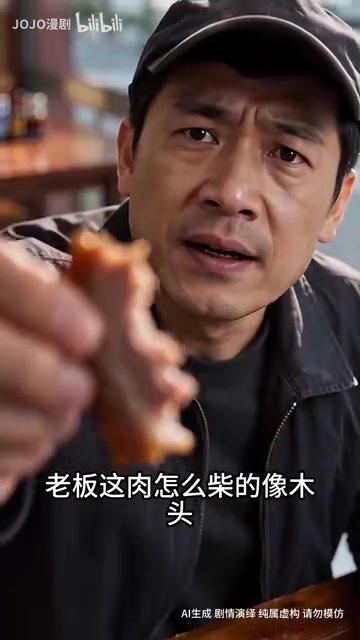
Reality gave quick feedback. Customers commented that "the meat is dry as wood, with a chemical taste and gamey smell inside" — far inferior to Boss Lin's braised meat. Her response was, "Mass-market recipe packets are fast, and you get used to it after two tries." The bigger problem was overnight meat — unsold portions were covered and braised again the next morning. On hot days, left out overnight, the next day a customer tasted sourness. One customer developed acute gastroenteritis after eating and went to the hospital — 1,500 yuan in medical bills plus 2,000 yuan in compensation, wiping out a day's 5,000 yuan revenue and not even covering the cost of meat.
The divide here isn't about skill level — it's about attitude toward "what goes into your mouth." Packets can replicate a flavor profile but cannot replicate the time cost of master stock or the bottom line of "if it's spoiled, dump it."
Compound seasoning packets are a product of food-service industrialization — pre-blended spices, flavor enhancers, and water-retention agents from large manufacturers, highly standardized, fast to produce, and minimally dependent on chefs, suited for chain and delivery scenarios. Their limitations lie in flavor homogenization, lack of depth, and inability to address ingredient freshness or overnight handling. Cooked braised products are high in protein and moisture, prone to bacterial growth at room temperature, and if not thoroughly reheated when re-braised the next day, can cause acute gastroenteritis and other foodborne illnesses — operators bear medical costs, compensation, and even administrative penalties. Packets lower the seasoning barrier but not the food-safety barrier — the latter depends on cold-chain management, waste control, and the discipline of "if it doesn't sell, dispose of it."
Charging for Master Stock and a Late-Night Diner: A Craftsman's Survival Math
Lin Yan's new shop didn't start easily — the first day sold only a few dozen jin. He gave the leftover plate of meat, still hot, to the cleaners and security guards at the hospital entrance: "Don't save it for tomorrow." He cut losses while waiting for old customers to follow.
The turning point came from hospital caregivers. Some family members staying overnight couldn't find food and asked if he could close later. Lin Yan experimented with staying open until 10 p.m., building up walk-in and delivery business. When caregivers wanted six portions delivered to the hospital side door, he took the order, portioned it out, switched meat to breathable containers, used paper bags to prevent sogginess, and packed rice and broth with salt separately — packaging cost a few extra mao, but "it's still good meat when it hits your mouth — that's not where you skimp on customers."

Old customers returning brought new math: master stock over rice went from free to one yuan. Some stopped coming over one yuan, but the numbers worked — giving away bowl after bowl for free, who could afford it? Meanwhile, he sliced meat and warmed broth according to reported headcounts so that the moment customers arrived, broth was poured and they could eat — solving the pain point of a ten-plus-minute queue at noon. Taking in 5,000 yuan a day wasn't about location — it was about catching a specific need: "caregivers have no food to eat."
The showdown had no narrator, only results: on one side, low-price fast output sustained by seasoning packets and overnight meat, with reputation collapsing faster than renovations could pay back; on the other, a craftsman's shop starting from a side alley, rebuilding its customer base through master stock and extended-hours service. The landlord's daughter always believed "anyone could make money running this shop — I said all along it's the location," while Lin Yan proved pot by pot that location brings the first wave of customers, but the broth is what keeps them.
For restaurant entrepreneurs, the value of this story isn't moral judgment but two actionable reminders: when signing a lease, spell out rent-increase clauses and the disposal of self-purchased equipment; when relocating, hand over per contract and remove equipment with receipts to protect heavy assets. Location can be out of the way, but you must capture the real nearby demand (caregivers, late-night meals, delivery) and use service and packaging to compensate for being "off the beaten path." Craftsmanship is a slow variable; location is a fast variable. The fast variable helps you start; the slow variable determines how far you go.
One-line Summary
Braised meat shop owner forced out by 100,000 yuan rent hike clears out overnight; landlord's daughter takes over with seasoning packets — craft versus location, two ways of doing business.
Paragraph Summary
Before his lease expired, braised meat shop owner Lin Yan faced a rent increase from 68,000 to 168,000 yuan from the landlord's daughter, who believed good business was all about location. Lin Yan didn't fight — he moved out overnight, taking his braising pots, mother broth, freezer, and self-purchased equipment, handing over per contract and removing equipment with receipts, then signed a three-year no-increase lease for 26,000 yuan a year in a back alley behind Qingling Ankang Hospital. The landlord's daughter took over the original shop and opened an identical braised meat store using mass-market seasoning packets; overnight meat caused a customer to develop acute gastroenteritis, with compensation exceeding that day's revenue, and reputation collapsed rapidly. Lin Yan rebuilt traffic through extended hours, caregiver meal orders, packaging details, and charging for master stock. The core divide: location brings the first wave of customers; craftsmanship and attitude toward ingredients determine how far you go.
Related articles

AI One-Click Emotional Short Drama: Bilibili Creator Tests the "Beautiful Landlady" Script
Bilibili creator uses AI to produce the emotional short drama "The Beautiful Landlady Comes to Fix the Guy's Drain," testing everything from script generation to character consistency.

Braised Meat Stall Goes Viral, Landlord Raises Rent—She Leaves Gracefully by Contract While Rival Cuts Corners and Loses Everything
A braised meat stall's rent was hiked from ¥68K to ¥168K after going viral; the owner moved out by contract while her rival cut corners and lost it all.

Tenant Paid 7,500 Yuan but Landlord Delayed for a Month—Who Should Be Held Responsible?
Ms. Wang in Haining, Jiaxing paid 7,500 yuan to rent an apartment, but the landlord repeatedly delayed handover and failed to fulfill refund promises. This article reviews the incident, contract breach clauses, and agency responsibilities, with tips for renters to avoid pitfalls.