Building a Restaurant Reservation AI Agent with n8n: A Telegram Automation Deep Dive

An n8n + Telegram AI Agent handles restaurant bookings with conflict detection, alternatives, and human approval in ~15 seconds.
This article walks through an automated restaurant reservation system built with n8n, Telegram, and an AI language model. Customers send natural language requests via Telegram; the Agent queries the booking database, suggests alternative slots when conflicts arise, and routes confirmed requests to a manager for human approval before writing the booking. The full loop takes roughly 15 seconds, balancing automation efficiency with human-in-the-loop control. The article also notes the demo's promotional nature and highlights real-world challenges around ambiguous language, concurrency, and modification flows — while recognizing the pattern's strong potential for replication across appointment-based businesses.
AI Automation for Restaurant Reservations
Taking phone reservations, manually logging them, and going back and forth to confirm times — this workflow is both labor-intensive and error-prone. An AI Agent built on n8n and Telegram is attempting to compress the entire reservation process into just a matter of seconds.
As the demo shows, it all starts simply: a customer opens the restaurant's Telegram chat and makes a request in natural language — "Table for 6 this Saturday at 8 PM." No forms, no menu buttons — just typing, the same way you'd talk to a real person.

This is the core value of conversational AI in service contexts: lowering the barrier for customers. Compared to traditional online booking systems that require clicking through dates, party sizes, and time slots, natural language input aligns far better with how people actually communicate.

How the Workflow Handles Conflicts and Coordination
Once the Agent receives the message, it doesn't just mechanically confirm — it runs through a series of logical checks. It queries the restaurant's booking table and finds that the 8 PM slot is already full.

The key here is that the Agent doesn't bluntly reply with "Sorry, that slot is unavailable." Instead, it proactively offers alternatives — 7:30 PM or 9:00 PM. The customer chooses 7:30, and the interaction moves forward.

This "conflict detection + alternative suggestion" design reflects a mature level of business logic in the Agent workflow. It converts what could have been a lost booking into a successful coordination. For the restaurant, that translates to higher table utilization and a better customer experience.
Keeping a Human Approval Step
Notably, this workflow is not fully unattended. After the customer confirms a time slot, the Agent forwards the reservation request to the restaurant manager and waits for manual approval. Only after the manager clicks "Approve" is the booking written to the data table — and only then is a confirmation sent to the customer.
This human-in-the-loop (HITL) design has real practical significance. Restaurants frequently deal with edge cases — VIP guests, large private bookings, last-minute changes — where full automation can go wrong. Keeping a manager approval checkpoint lets the system capture the efficiency of automation while preserving human control over critical decisions.
Human-in-the-Loop (HITL) is an architectural pattern in AI system design where humans retain the ability to intervene at key points in an automated process, rather than letting the system make all decisions autonomously. The concept originates from active learning in machine learning and has since been widely adopted in content moderation, medical diagnosis, financial risk control, and other domains where errors carry high costs. In AI Agent deployments, HITL typically appears as an "approval node" or "escalation trigger": the system handles routine requests automatically, but pauses for human input when predefined conditions are met — such as a high-value transaction, a VIP customer, or a threshold exceeded in inventory. The core value of this design is risk mitigation. It allows organizations to capture the efficiency benefits of automation at relatively low risk, even before fully validating the AI's reliability, while accumulating real-world business data to gradually calibrate and narrow the scope of human intervention.
Tech Stack Breakdown: n8n + Telegram + AI
The technology combination behind this solution is straightforward, yet covers a complete business loop:
- Telegram serves as the customer-facing frontend, eliminating the cost of building a dedicated app or website;
- n8n acts as the open-source automation orchestration engine, connecting nodes for message ingestion, data querying, conditional logic, approval notifications, and data writes;
- An AI model handles understanding the customer's natural language input and generating appropriate responses.
n8n's strength lies in its visual node-based editor, which allows non-developers to build relatively complex business workflows. Being an open-source, self-hostable tool also gives data-sensitive food and beverage businesses greater control over their information.
The Efficiency Math Behind 15 Seconds
The demo emphasizes that the entire process takes "about 15 seconds." Setting aside the idealized nature of demos, this figure reveals what automation is truly about — not replacing people, but freeing them from repetitive communication tasks.
A restaurant during peak hours might receive dozens of simultaneous reservation inquiries. Human handling inevitably means queuing, delays, and missed requests. An AI Agent can respond to all of them concurrently, 24/7, while the manager just taps "Approve" on their phone. For small and mid-sized restaurants, that's a compelling efficiency trade-off.
n8n (pronounced "nodemation") is a node-based open-source workflow automation tool, similar in concept to commercial products like Zapier or Make (formerly Integromat), but with full self-hosting support. Each step in a business process is abstracted as a "node," with nodes connected by data flows that users can assemble on a visual canvas. Unlike cloud SaaS services, self-hosted deployment means all customer data — names, contact details, booking records — stays on the company's own servers and never passes through a third-party platform, making it more privacy-friendly for businesses handling customer information. n8n natively supports API integrations with hundreds of services, including the Telegram Bot API, various databases, Google Sheets, and LLM interfaces like OpenAI — enabling the full pipeline of "message received → AI parsing → database query → conditional branching → approval notification → confirmed write" to be orchestrated within a single platform.
Where This Approach Has Its Limits
It's worth being clear-eyed here: this content is fundamentally a promotional demo, pointing toward the author's commercial "AI audit" service. Several details remain to be validated in real deployments:
- The robustness of natural language understanding when faced with ambiguous phrasing, dialects, or multi-turn complex requests;
- Database locking and conflict handling under high concurrency;
- Whether cancellations and modification requests flow just as smoothly.
That said, this case study remains a solid reference. It demonstrates how to use off-the-shelf open-source tools and a mature messaging platform to add real value to a traditional brick-and-mortar business at low cost. For small and mid-sized businesses exploring AI Agent deployment, restaurant reservations are just the starting point — the same pattern can be replicated for beauty salon appointments, clinic scheduling, repair dispatching, and countless other use cases.
Related articles
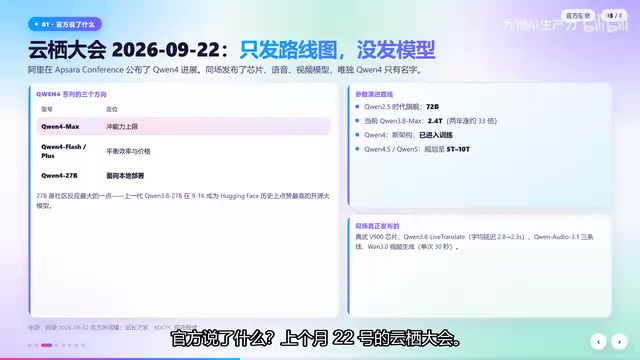
Qwen4 Architecture Preview Open-Sourced: 125B Parameters, 512 Experts, Designed for VRAM-Constrained Hardware
Qwen4 isn't released yet, but its architecture is previewed via open-source Qwen3.8 Flash Next: 125B params, 6B activated per token, 512 experts, 262K context, built for VRAM-limited hardware. This article covers official confirmations, key config.json metrics, and local deployment tests on 24G memory.
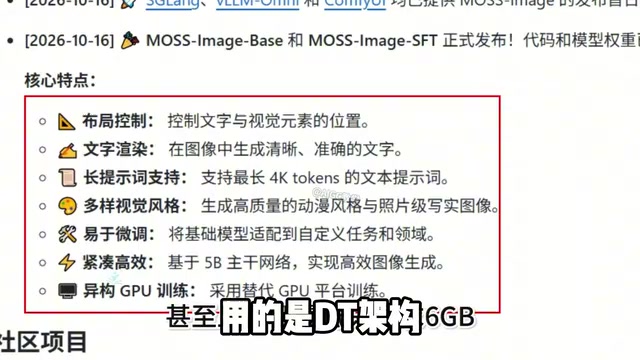
Run 8K Images on 6GB VRAM! Hands-On Test of Fudan's Open-Source MOSS-Image Model
Fudan OpenMouse team and Shanghai MOSS Intelligence open-source MOSS-Image, a 500M-parameter DT architecture text-to-image model that runs locally on 6GB VRAM with precise text rendering, structured layout control, and 4K Token prompt support—ideal for e-commerce posters and local deployment by individual creators.
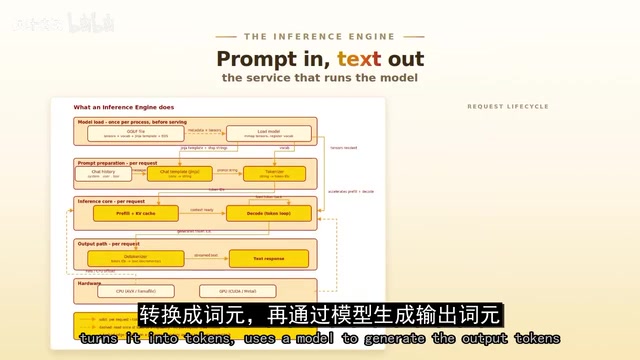
Overseas Blogger Tests Local Deployment of 100B-Parameter MoE Model: Key Lessons on Quantization and Tool Calling
Overseas blogger tests local deployment of Alibaba's Qwen 3.8 Flash Next 100B MoE model on a Strix Halo mini PC and CUDA workstation, revealing how quantization precision affects tool-calling success and the real-world performance of the Strata and GUFO inference engines.