Closed Source Prevails Today, Only Open Source Endures: The Survival Rules of the AGI Spark

In the compute winter, open source is not idealism but a rational strategy under resource constraints.
The article reviews an internal speech about an AI team's survival and route choices. Starting from a compute budget sheet cut to the limit three years ago, the speaker points out that the team survived through "sharing and restraint"—opening results to the outside and using resources sparingly. After the floor model worked, the team faced closed source, the choice most familiar to capital, but the speaker questions its universality: closed source depends on sustained generational leadership and market premiums, and both premises are loosening as model gaps narrow and open source reproduces results at low cost. Open source has structural advantages in collaborative leverage and cost-sharing under resource constraints. The article ultimately reduces the closed-vs-open debate to a strategic choice under constraints rather than a clash of values, and reminds practitioners to be wary of capital narratives reinforcing the "inevitable path."
A Post-Mortem on Survival and Choices
In an internal speech leaked from Bilibili, the speaker opened with "a compute budget sheet from three years ago"—a list of GPU card counts that had been repeatedly compressed and cut almost to the absolute limit. He called this sheet "the starting point of survival." This is not an emotional slogan. During the winter when compute shortage became a fatal bottleneck, there was no room for trial and error, no way to catch up, and the gap would only widen. What truly kept the team going was someone staying awake for three days straight, someone pouring their bonus into training, and someone never leaving. The speaker summarized this state as "sharing and restraint" and called it the key to sustaining the AGI spark.
The value of this narrative lies not in the hardship story itself, but in the industry reality it reveals: during a phase of extreme resource constraints, an organization's survival does not depend on peak compute at a single point, but on whether limited compute can be applied where it matters most, and whether the team is willing to sacrifice short-term interests for long-term goals.
Closed Source Is a Proven Path, But Not Necessarily the Only One
The speaker then raised the core contradiction of the entire piece. After the "floor model" had just been made to work, the team faced a choice most familiar to capital: lock down the strongest model, set the highest price, and monopolize the benefits. He stated plainly that this is "the inevitable path validated by leading companies" and also the most tempting one in the capital narrative—converting technological advantage into pricing power and exclusionary barriers.

But the speaker's judgment was: "These calculations were once taken for granted, but may not be anymore." The subtext of this sentence deserves unpacking. The closed-source route rests on two implicit premises: first, that the leader can continuously maintain a generational advantage; second, that the market is willing to pay a premium for exclusive capability. When the model capability gap is rapidly compressed and the open-source community reproduces near-frontier results at extremely low cost, both premises become shaky. The speaker's headline-style statement "closed source prevails today, only open source endures" is essentially questioning whether that "proven inevitable path" still has universal applicability.

"Floor model" is a concept mentioned in the speech but not elaborated on. It typically refers to the minimum viable version of a model whose capabilities reach a usable threshold and can support productized operation. Its significance lies in this: once the floor model works, the team shifts from the survival question of "can we build it" to the strategic question of "how to monetize and expand." It is precisely at this juncture that the temptation of the closed-source business model peaks—because at this point technological advantage can be immediately converted into pricing power. Understanding the floor model as a milestone helps clarify why the speaker discusses the choice between closed and open source right after the model first works: this is not a debate over technical routes, but a strategic choice during the commercialization window.
Sharing and Restraint: A Counterintuitive Organizational Strategy
The recurring "sharing" and "restraint" in the speech are not abstract in the context of AI R&D. Sharing points to making results open to the outside—models, tools, and methods made public; restraint points to the disciplined use of compute and resources, not pursuing blind card stacking, not participating in disorderly arms races.

The two are mutually conditional. Without restraint, sharing lacks a sustainable resource base; without sharing, restraint degenerates into closed self-consumption. The speaker calls this combination the way to sustain the "AGI spark," and the logic is: the external feedback and collaboration brought by open source can amplify R&D efficiency when compute is limited; while restraint prevents the team from prematurely binding itself to a high-pricing, high-cost closed-source business model under capital temptation.
"Compute budget sheet" and "card count list" are core management tools in AI R&D organizations. The former plans the spending ceiling for training and inference in units of GPU card-hours, while the latter specifies the number and models of accelerator cards available. During compute shortages, these two documents directly determine how large a model the team can train, how many experiment rounds it can run, and how many failures it can tolerate. When the speaker calls the budget sheet cut to the limit "the starting point of survival," he is essentially saying: resource constraints are not a background condition but the first-order variable in organizational decision-making. It determines that the team cannot win by stacking cards, but only by efficiency per unit of compute and collaborative leverage.
Open Source Is Not a Pose, But a Rational Choice Under Resource Constraints
If this speech is understood merely as an idealistic manifesto, its realistic core is missed. From beginning to end, the speaker is doing the math: compute budget sheets, card count lists, training investment. Open source becomes an option precisely because it has structural efficiency advantages under resource constraints—external developers share the cost of trial and error, public benchmarks accelerate iteration, and community contributions fill manpower gaps.
This also explains why the speaker emphasizes that "the starting point of survival" is a budget sheet cut to the limit. When resources are abundant, the exclusive returns of closed source look more tempting; when resources are tight, the collaborative leverage of open source reveals its irreplaceability. The debate between closed and open source is often not a clash of values, but a strategic choice under constraints.
"AGI spark" is a metaphorical expression in the speech, referring to the minimal organizational form and knowledge accumulation that can still sustain general artificial intelligence R&D capability during resource-scarce phases. The spark metaphor emphasizes two things: first, fragility—a slight misstep and it goes out; second, continuity—as long as core capabilities and the team survive, there is the possibility of reigniting. When the speaker calls sharing and restraint the key to sustaining the spark, it means that in the compute winter, the organization's goal is not to pursue peak breakthroughs, but to preserve the continuity of R&D capability—including talent, methods, code, and community relationships. This forms a sharp contrast with the capital logic of "burning money for leadership."
The Tension Between Capital Narrative and Technology Narrative
The speaker devotes considerable space to describing "the choice most familiar to capital," which itself serves as a reminder: the reason the closed-source path of leading companies appears "inevitable" is partly that it has been repeatedly reinforced by the capital narrative, not that it is optimal under all conditions. When the speaker says "I don't know how big this temptation is for others," he is actually drawing a boundary—he does not deny the appeal of closed source, but refuses to treat it as the only answer.
For practitioners, the reference value of this speech lies in providing a judgment framework: when evaluating closed versus open source, first understand your own resource constraints, time window, and collaboration capacity, then decide whether to follow that "proven path." Proven does not mean proven to work for everyone.
Frequently Asked Questions
Does this speech mean the team has abandoned closed source? From the original text, the speaker is questioning the universality of the closed-source path and emphasizing the rationality of open source under specific constraints, without giving an either-or conclusion.
What exactly do "sharing and restraint" mean? Sharing means opening results to the outside; restraint means disciplined use of compute and resources. Together they constitute an R&D strategy under resource constraints.
One-line Summary
In the compute winter, open source is not idealism but a rational strategic choice under resource constraints.
Related articles
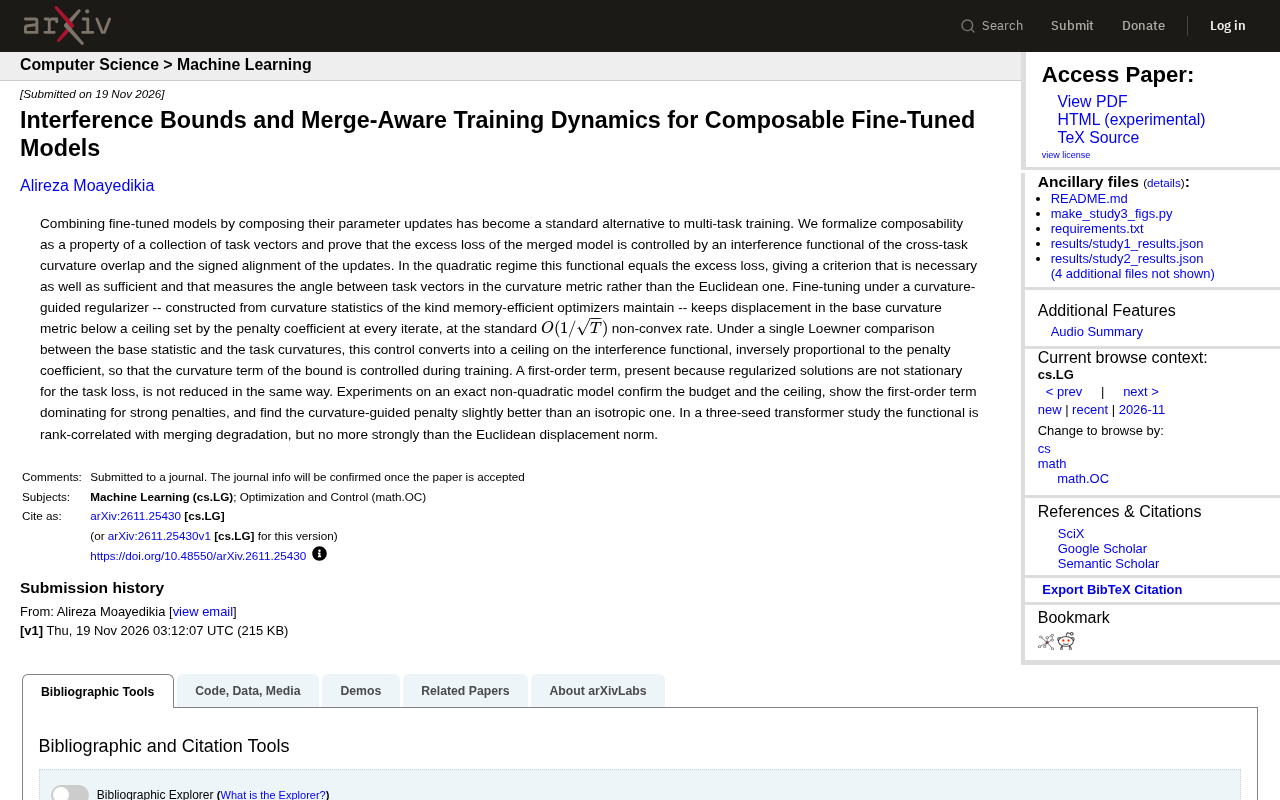
New Breakthrough in Model Merging: Interference Bounds and Curvature-Guided Training
This article interprets new theoretical advances in model merging: characterizing merging excess loss via an interference functional, proposing curvature-guided regularized training, and analyzing its experimental performance and limitations on Transformers.
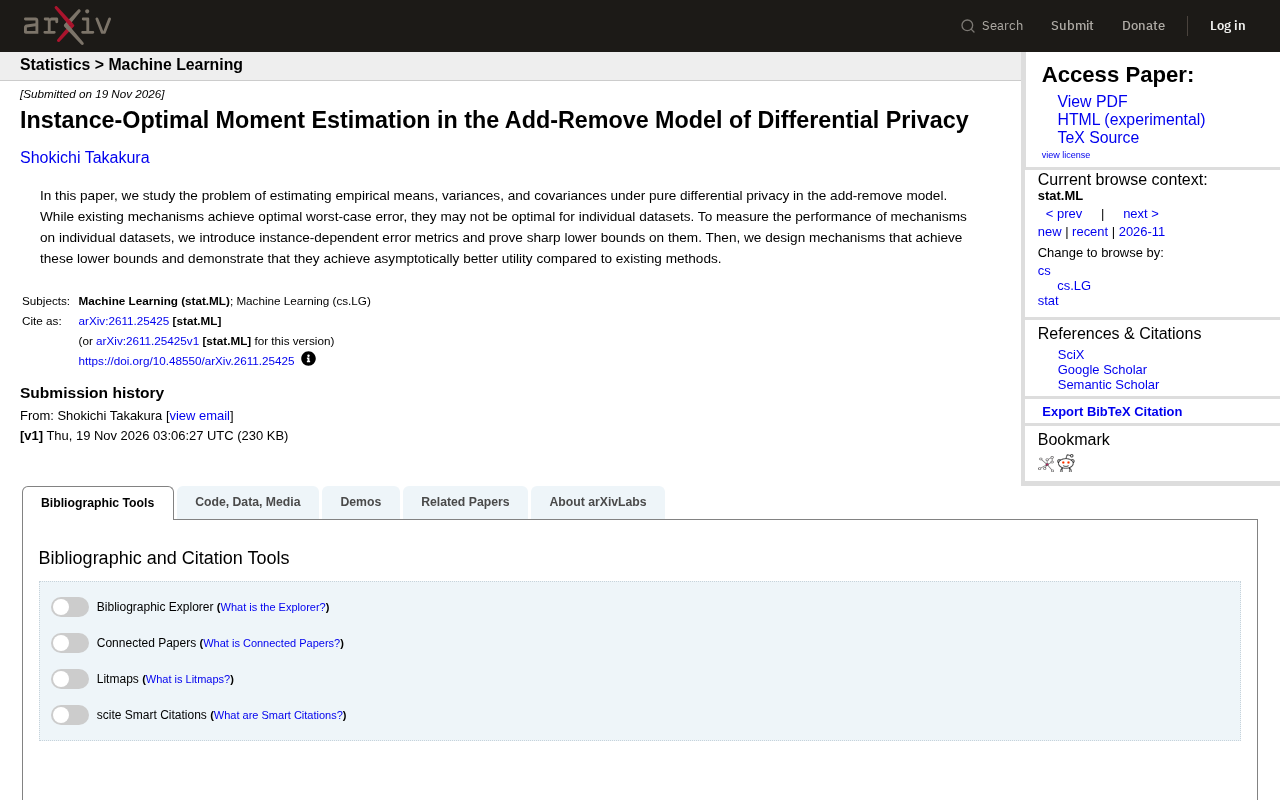
A New Breakthrough in Differential Privacy: How to Achieve Instance-Optimal Moment Estimation?
This article interprets research on instance-optimal moment estimation under the add-remove model of differential privacy, covering instance-dependent error metrics, tight lower bound proofs, and new mechanism design, comparing with existing methods to show utility gains and discussing implications for privacy-preserving practice.
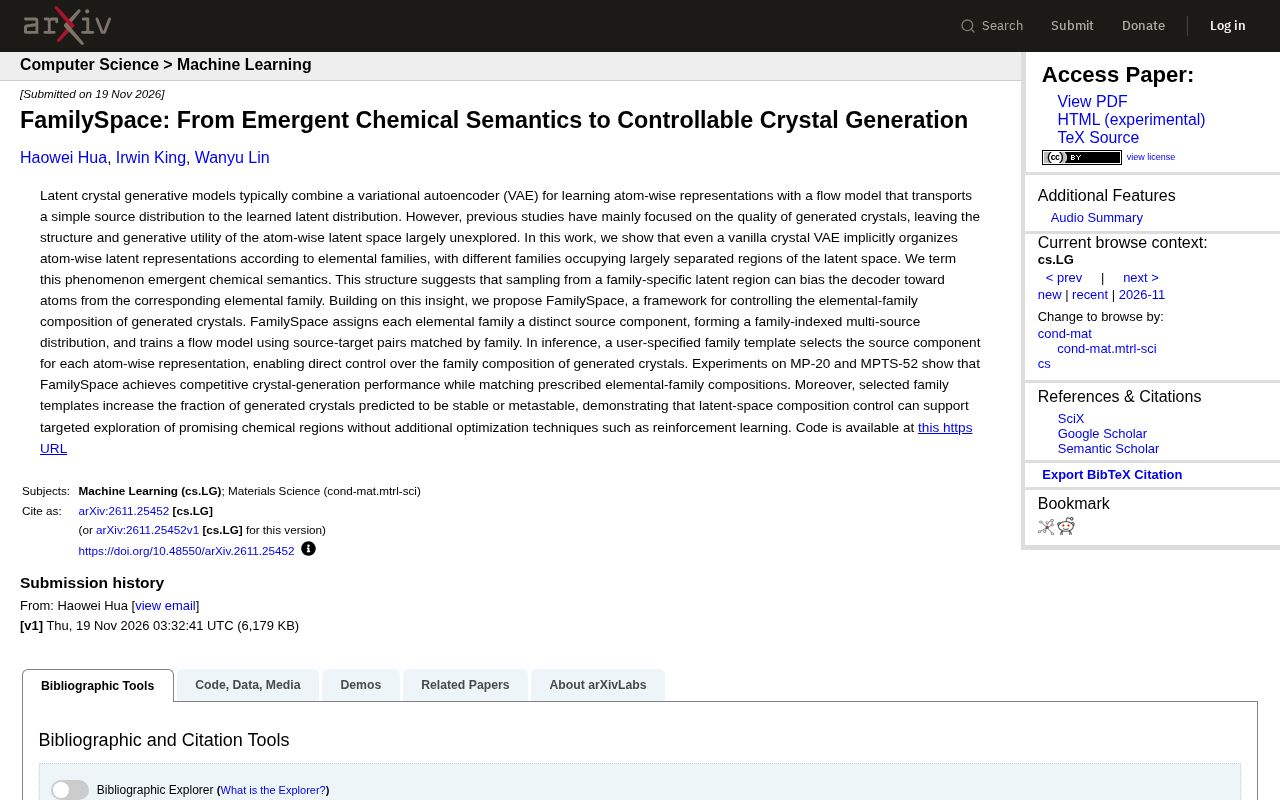
FamilySpace: From Emergent Chemical Semantics to Controllable Crystal Generation
Crystal generation latent spaces spontaneously cluster by elemental family? FamilySpace leverages this emergent chemical semantics to enable composition-controllable crystal generation via multi-source flow models, balancing quality and stable exploration on MP-20 and MPTS-52.