CodeMesh: A Context Optimization Solution That Saves 90% of AI Coding Costs

CodeMesh claims to reduce AI coding costs by over 90% by providing code snippets on demand.
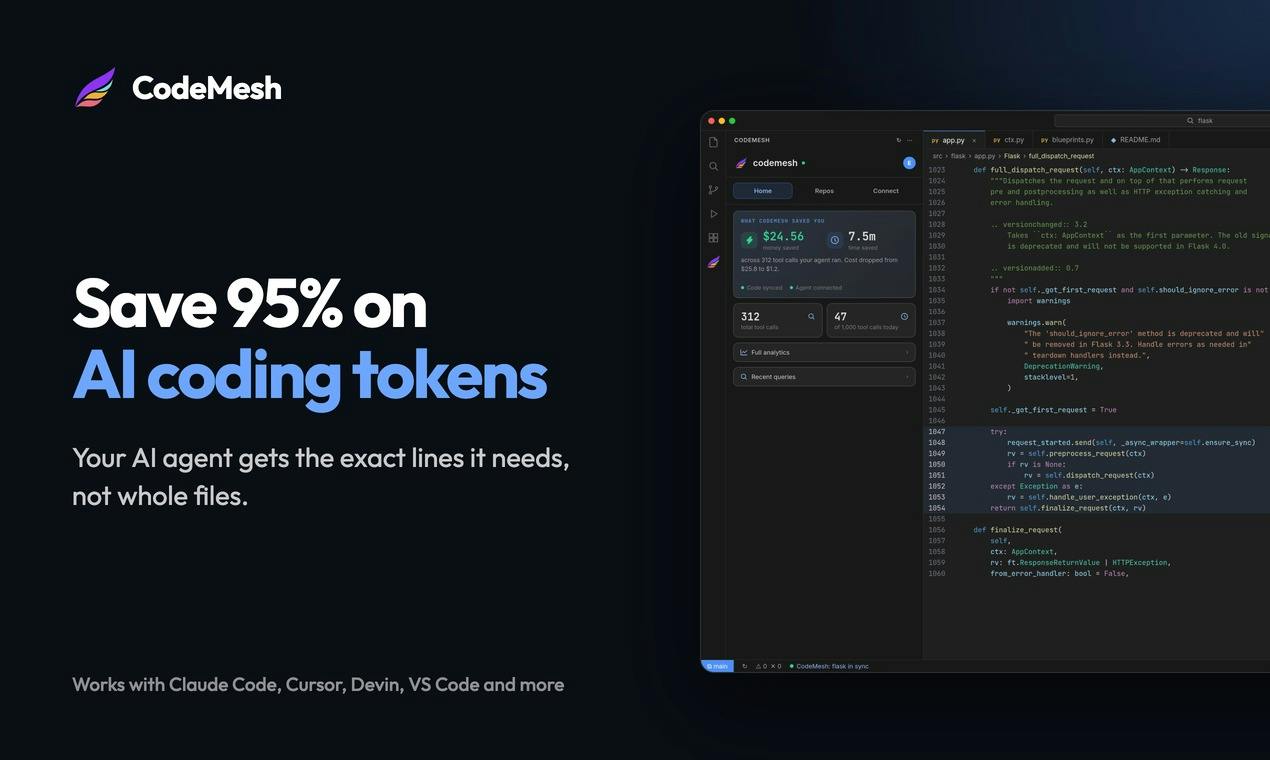
CodeMesh is a new Product Hunt middleware optimizer for AI coding tools. It tackles the pain point of tools like Claude Code, Cursor, and Windsurf repeatedly reading the same files and consuming tokens. By analyzing code dependencies, it supplies only task-relevant snippets, reducing redundant context. It claims to cut AI costs by over 90% and speed up coding agents. The low-intrusion design requires no workflow changes. With 67 votes and 2 comments, ranking 15th, its real-world impact is unverified and best suited for large codebases and frequent AI coding teams.
AI coding assistants are becoming everyday tools for developers, but the high token costs deter many teams. CodeMesh, a new product on Product Hunt, claims it can cut AI coding costs by over 90% while improving the speed and efficiency of coding agents. How does it achieve this?
The Cost Pain Point: The "Repeated Reading" Problem of AI Coding Tools
AI coding tools like Claude Code, Cursor, and Windsurf often need to repeatedly read the same code files to understand the project context during operation. This repeated reading not only consumes a large number of tokens but also slows down response times. CodeMesh's entry point is exactly here: by intelligently analyzing code dependencies, it provides AI tools only with the code snippets truly needed for the current task, thereby significantly reducing redundant information.
According to the official description, this mechanism can reduce token usage and lower AI costs by over 90%, while making coding agents faster and more efficient. For teams that frequently use AI coding, this is undoubtedly a highly attractive value proposition.
Tokens and Context Windows
The basic unit for large language models to process text is the token, roughly corresponding to 0.75 English words or a number of Chinese characters. The model's context window determines the maximum number of tokens that can be accommodated in a single request, and API billing is typically settled based on the total number of input and output tokens. To help the model understand the project, AI coding tools often stuff entire files or even multiple files into the context, causing input tokens to balloon rapidly; when the context approaches the window limit, tools have to truncate or make requests in batches, further exacerbating repeated reading. Therefore, reducing irrelevant code entering the context not only directly lowers billable token counts but also alleviates window pressure—this is a key lever for cost optimization.
How It Works: Acting as an "Intelligent Filter" for AI Coding Tools
CodeMesh does not replace your existing coding tools; instead, it acts as a middleware layer that enhances their context understanding. Developers continue to use their familiar tools, while CodeMesh quietly optimizes the code content passed to the model behind the scenes.
Specifically, CodeMesh analyzes the structure and dependencies of the codebase. When an AI tool requests a file, it returns only the parts relevant to the current task, rather than the entire file or the entire project. This on-demand supply approach ensures the AI's understanding of context while avoiding information overload.
Compatibility with Mainstream Tools
CodeMesh explicitly supports mainstream AI coding tools such as Claude Code, Cursor, and Windsurf. This means users do not need to switch workflows—simply integrating CodeMesh allows them to enjoy cost optimization. This low-intrusion design lowers the adoption barrier.
Code Dependency Analysis and Context Retrieval
The core technologies behind CodeMesh typically include static code analysis (parsing import relationships, function call graphs, type references, etc.) and retrieval-augmented generation (RAG) concepts. The system first builds a structured symbol index for the codebase, then, based on the current task or file requests initiated by the AI tool, prunes out the minimal relevant subgraph along dependency edges, injecting only referenced or semantically relevant snippets into the context. This approach is the opposite of "feeding the entire repository to the model"—it is on-demand retrieval: it preserves cross-file call chain information while preventing irrelevant modules from occupying tokens. Its effectiveness highly depends on the accuracy and update timeliness of the index, which is also the main engineering challenge faced by such middleware tools.
Efficiency Gains: More Than Just Saving Money
Lowering costs is only one of the benefits CodeMesh brings. Because the AI tools receive more streamlined context, model processing speeds up, and the response time of coding agents shortens accordingly. For development scenarios requiring rapid iteration, this efficiency improvement is equally critical.
CodeMesh helps AI coding tools understand your code faster. It gives them only the code they need, rather than repeatedly reading the same files. — Official product description
From a user experience perspective, faster responses mean a smoother coding experience, while lower costs allow teams to use AI-assisted development with greater confidence.
Market Positioning and Competition
CodeMesh falls under the software engineering and developer tools category, and on Product Hunt it has received 67 votes and 2 comments, ranking 15th. Although the vote count is not high, the product hits a real pain point: the cost of AI coding.
Currently, the AI coding tools market is growing rapidly, but cost has always been an obstacle to large-scale adoption. CodeMesh provides developers with a lightweight solution by optimizing context management. However, whether its actual results can truly achieve the advertised 90% cost reduction still requires more user validation.
Use Cases and Potential Limitations
CodeMesh is best suited for teams with large codebases that frequently use AI coding tools. For small projects or simple tasks, the benefits may be less pronounced. Additionally, CodeMesh needs to accurately understand code dependencies, which places high demands on its analytical capabilities.
Another consideration is that CodeMesh currently supports a limited list of tools, mainly around Claude Code, Cursor, and Windsurf. If developers use other AI coding tools, they may not be able to enjoy this optimization.
Is It Worth Trying?
If you are struggling with the token costs of AI coding tools, CodeMesh offers a simple and direct optimization approach. It does not change your work habits but can potentially save substantial costs. Although actual results remain to be verified, the promise of 90% cost reduction is enough to spark interest.
CodeMesh is now live on Product Hunt. Developers can visit its official website to learn more and try it out.
One-line Summary
CodeMesh claims to reduce AI coding costs by over 90% by providing code snippets on demand.
Paragraph Summary
CodeMesh is a new product on Product Hunt positioned as a middleware optimizer for AI coding tools. It addresses the pain point of tools like Claude Code, Cursor, and Windsurf repeatedly reading the same code files and consuming large amounts of tokens. By analyzing code dependencies, it provides AI only with the code snippets truly needed for the current task, thereby reducing redundant context. The official claim is that it can lower AI costs by over 90% while improving the response speed of coding agents. The product uses a low-intrusion design, requiring no workflow switches. It currently has 67 votes and 2 comments, ranking 15th. Actual results remain to be verified, and it is better suited for large codebases and teams that frequently use AI coding.
Related articles
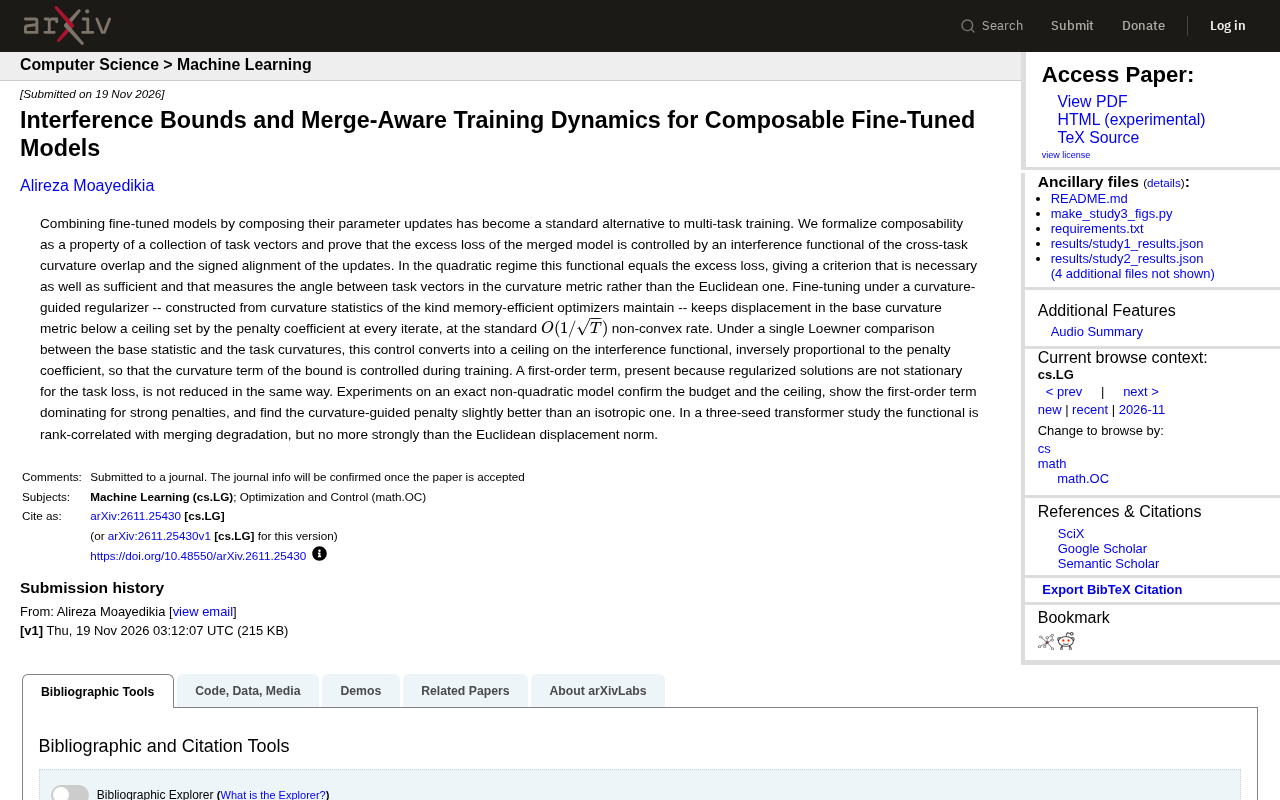
New Breakthrough in Model Merging: Interference Bounds and Curvature-Guided Training
This article interprets new theoretical advances in model merging: characterizing merging excess loss via an interference functional, proposing curvature-guided regularized training, and analyzing its experimental performance and limitations on Transformers.
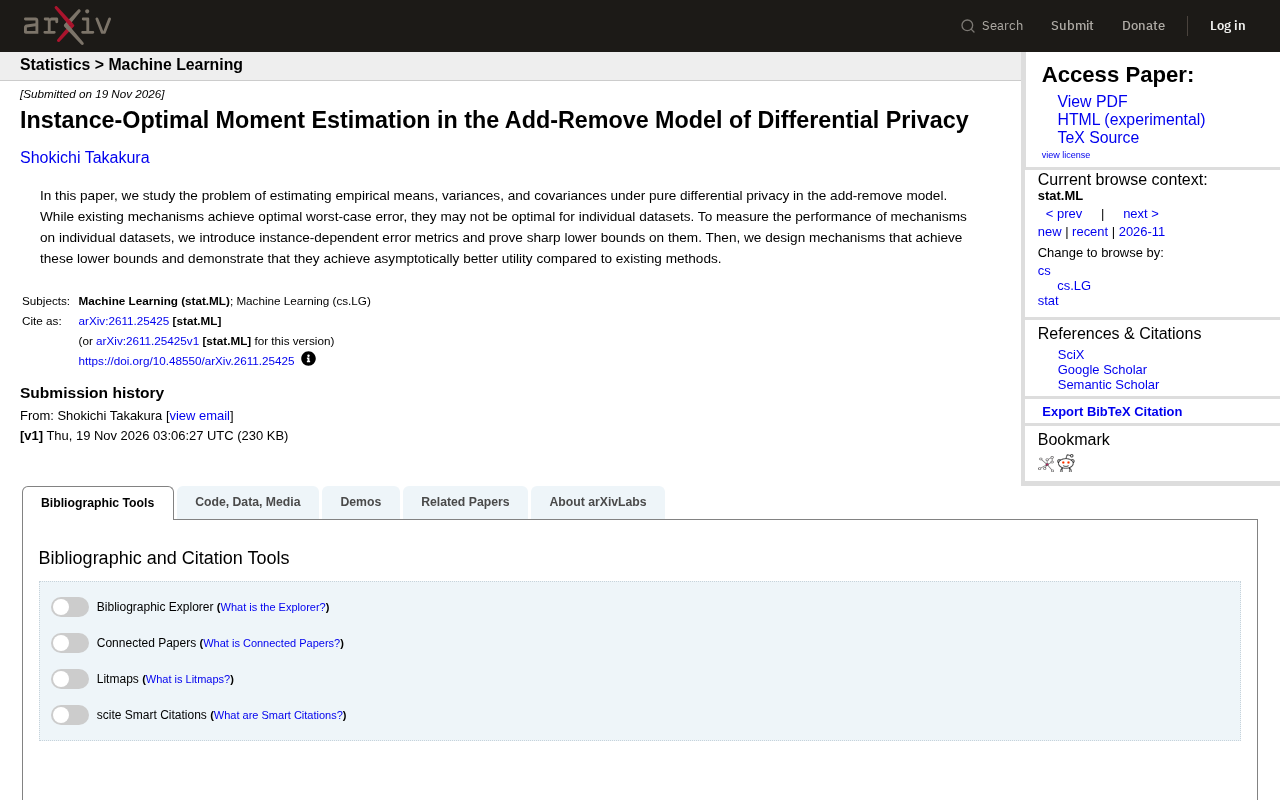
A New Breakthrough in Differential Privacy: How to Achieve Instance-Optimal Moment Estimation?
This article interprets research on instance-optimal moment estimation under the add-remove model of differential privacy, covering instance-dependent error metrics, tight lower bound proofs, and new mechanism design, comparing with existing methods to show utility gains and discussing implications for privacy-preserving practice.
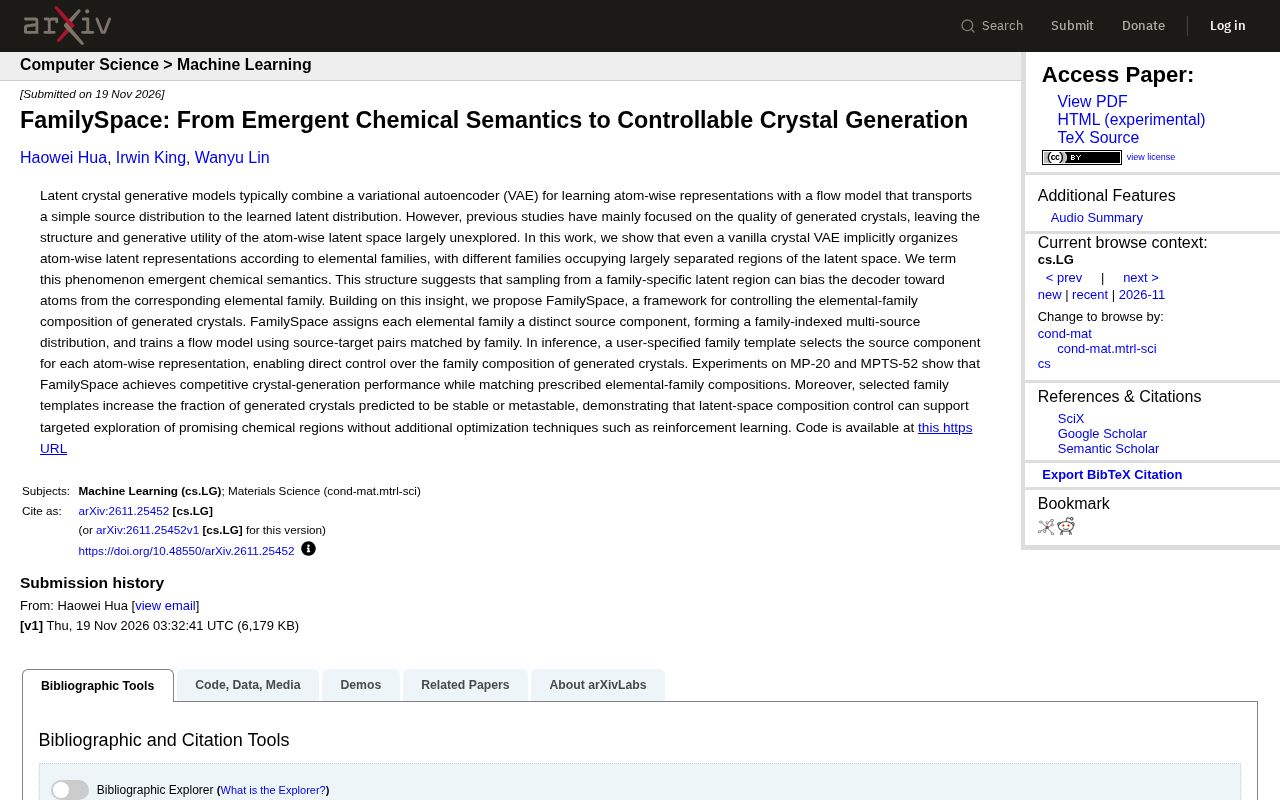
FamilySpace: From Emergent Chemical Semantics to Controllable Crystal Generation
Crystal generation latent spaces spontaneously cluster by elemental family? FamilySpace leverages this emergent chemical semantics to enable composition-controllable crystal generation via multi-source flow models, balancing quality and stable exploration on MP-20 and MPTS-52.