Codex from Beginner to Practitioner: A Complete Analysis of AI Coding Agents
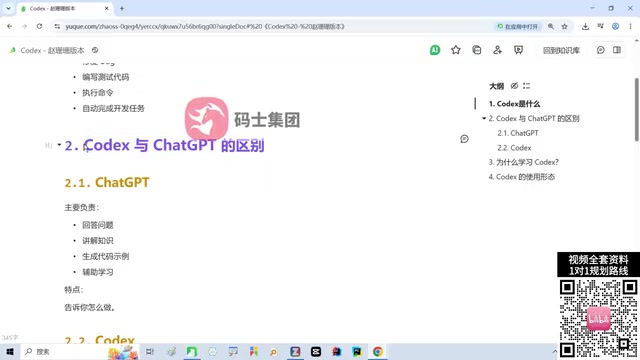
Codex is an AI agent that autonomously does coding tasks, unlike ChatGPT which only gives verbal suggestions.
Based on a Bilibili tutorial, this article introduces OpenAI's AI coding agent Codex. Its key difference from conversational models is "autonomous action": it can read, understand, and modify code, and run tests and scripts. The author uses a "talking vs doing" analogy—ChatGPT is like a teacher offering explanations and examples, while Codex is like a programmer beside you who inspects the project, edits code, runs tests, and reports back. The article argues that in the AI era, development shifts to "submitting requirements + review," making the ability to precisely command AI the new core skill. The tutorial covers environment setup, interface practice, parallel multitasking, and automation with MCP.
AI coding agents are changing how developers work. OpenAI's Codex is not a simple chat tool but an agent capable of autonomously completing programming tasks. Based on a Bilibili tutorial, this article systematically outlines Codex's positioning, its fundamental difference from ChatGPT, and why every developer should learn it.
What Codex Is: From Chat Tool to Coding Agent
Codex is an AI coding agent released by OpenAI. Unlike ordinary conversational models, the core of an agent lies in "autonomous action"—it can complete programming-related work on behalf of developers. According to the tutorial, Codex can not only generate code but also read and understand code, fix bugs, run tests, and execute commands and scripts.
This means Codex is no longer a passive Q&A tool but an assistant that actively operates on projects and executes development tasks. For programmers, such tools are shifting from "optional" to "must-use."
AI Coding Agent refers to a class of systems that use large language models as their reasoning core and can autonomously plan and execute multi-step development tasks. Compared with single-turn conversational models, agents possess three key capabilities: first, tool invocation, allowing them to read and write files, execute terminal commands, and run tests; second, task decomposition and iterative reasoning, enabling them to break "implement a login feature" into sub-steps like reading code, modifying code, and running tests, and advance step by step; third, environment awareness, adjusting next actions by reading project structure and error messages. Codex is a representative of this paradigm—its value lies not in the quality of generated code snippets but in delegating the "generate—execute—verify" loop to the model automatically, with developers only reviewing at key checkpoints.
The Essential Difference Between Codex and ChatGPT: Talking vs Doing
Many developers wonder upon first encountering Codex: since both rely on large models underneath, why not just use ChatGPT? The tutorial uses a vivid analogy to explain the difference.
ChatGPT is like a teacher: when you ask "How do I implement a login feature in Spring Boot?" it explains the principles and provides code examples, but you still need to copy and paste the code into your development tool to run it. It handles the "talking"—providing knowledge and suggestions.
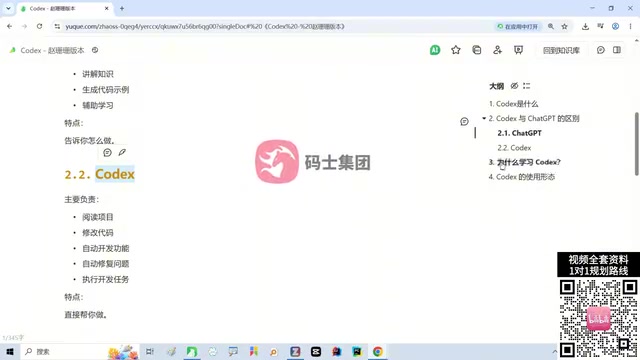
Codex is like a programmer sitting next to you: when you say "Help me build the login feature," it autonomously inspects the project, modifies code, generates code, and tests and debugs on its own, then reports back "Done" once everything passes. It handles the "doing"—directly completing the task.
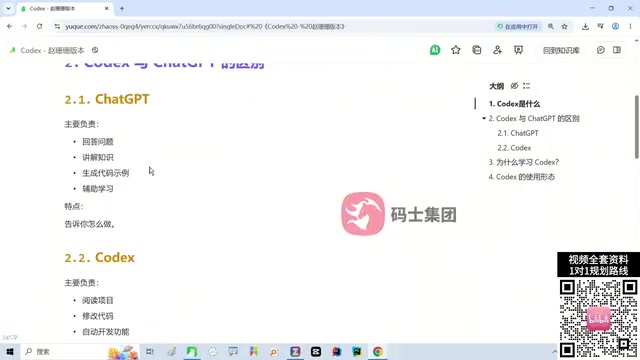
This distinction determines their use cases: ChatGPT is suited for learning, consultation, and code snippet generation; Codex is suited for directly intervening in the project development workflow and taking on actual coding tasks.
The relationship between underlying large models and product form deserves clarification: ChatGPT and Codex can share the same base model, but product-level differences come from different "bolt-on capabilities." ChatGPT's interface only exposes text input and output, so the model cannot touch your file system; Codex wraps the model with a sandboxed execution environment, file read/write permissions, and command execution channels, allowing model output to be directly translated into actual operations on the project. In other words, the model determines the "intelligence ceiling," while the agent framework determines "whether it can actually take action." This also explains why the same model performs very differently across products—the difference lies in whether they have action interfaces and feedback loops.
Why Learn Codex Now
We have entered the AI era, and development models are undergoing a fundamental shift. In the past, developers wrote code line by line; today, they increasingly "submit requirements," with AI coding agents completing most of the coding work while developers shift to review and optimization.
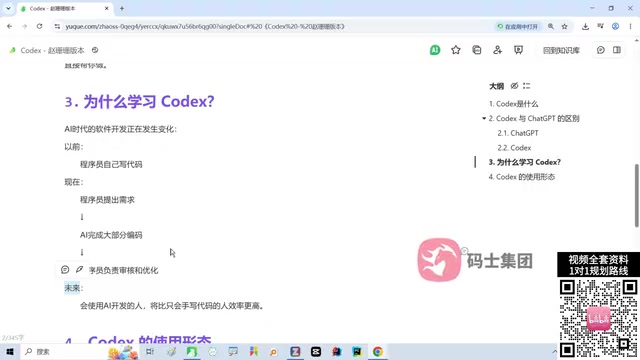
This does not mean programmers will be replaced. The tutorial emphasizes that without any knowledge of programming, one cannot review AI-generated code or optimize it. The core competitiveness of the future is no longer typing speed but the ability to "submit requirements to AI"—whoever can command AI more precisely will achieve higher efficiency. Moving from writing code yourself to directing AI to write code is precisely the most important reason to learn tools like Codex and Claude Code.
The Curriculum Covered by the Tutorial
The Bilibili tutorial is positioned as going from zero basics to advanced practice, covering Git/Node environment setup, hands-on interface operation, multitasking in parallel, and full-process analysis of automation and MCP. Although this article only covers the introduction, this outline reflects the complete learning path for Codex: first set up the development environment, then become familiar with the interactive interface, then master parallel multitasking, and finally leverage automation and MCP (Model Context Protocol) to extend capabilities. For developers who want to systematically master AI programming, this structure offers reference value.
MCP (Model Context Protocol) is an open protocol proposed by Anthropic and now widely adopted, used to standardize how large models connect to external tools and data sources. Think of it as "AI's USB interface": previously, each tool integration (database, Git repository, API service) required separate adapter code, whereas MCP defines a unified communication specification that lets agents discover and invoke external capabilities on demand. For coding agents like Codex, MCP means it can securely access resources beyond the project—such as querying documentation, operating issue systems, or calling cloud services—thereby extending its capability boundary from "local codebase" to "the entire development toolchain."
Key Takeaways
- Codex is an AI coding agent that can autonomously read and modify code and run tests, distinct from ChatGPT's conversational assistance.
- The core difference lies in "talking" versus "doing": ChatGPT provides suggestions, while Codex directly completes tasks.
- In the AI era, the development model shifts to "submitting requirements + review," making precise expression of requirements to AI a key skill.
- Systematically learning Codex requires covering environment setup, interface operation, parallel multitasking, automation, and MCP.
One-line Summary
Codex is an AI agent that can autonomously do programming work, unlike ChatGPT which only offers verbal suggestions.
Paragraph Summary
Based on a Bilibili tutorial, this article systematically introduces OpenAI's AI coding agent Codex. It points out that the fundamental difference between Codex and ordinary conversational models lies in "autonomous action": it can not only generate code but also read, understand, and modify code, and execute tests and command scripts. The author uses the "talking vs doing" analogy to distinguish the two—ChatGPT is like a teacher who explains principles and gives examples, but the code still needs to be run by the developer; Codex is like a programmer sitting beside you who, upon receiving a requirement, autonomously inspects the project, modifies code, runs tests, and reports results when done. The article further argues for the necessity of learning Codex: in the AI era, the development model shifts from line-by-line handwriting to "submitting requirements + review." Programmers will not be replaced, but core competitiveness becomes the ability to precisely command AI. The tutorial covers environment setup, hands-on interface operation, parallel multitasking, and the full workflow of automation and MCP.
Related articles

The Ultimate Codex Tutorial: From Zero to Hands-On in 40 Minutes
A complete beginner's Codex tutorial: from GPT account registration and desktop installation to login error troubleshooting, permission and quota setup, and Pro membership upgrades—a step-by-step guide to getting started with an AI coding assistant, plus common fixes and practical advice.
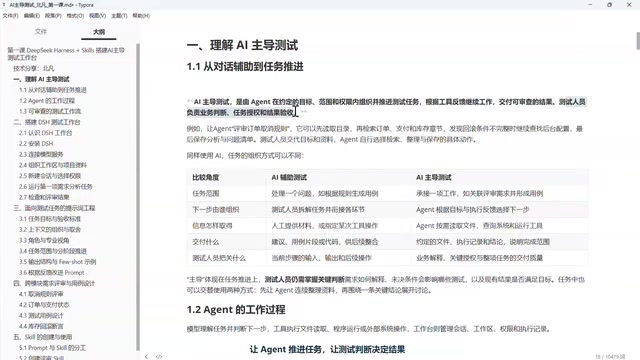
AI-Driven Testing in Practice: How Agents Are Reshaping the Testing Workflow
Starting from how Agents work, this article analyzes the practical path of AI-driven testing: how task planning, tool calling, and feedback loops reshape the testing workflow, and the boundaries and acceptance authority human testers must retain.
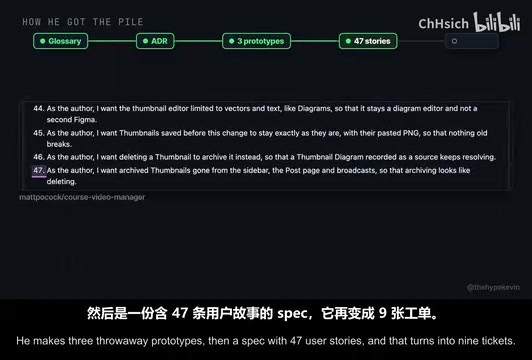
How to Review a 22,505-Line PR? Matt Pocock's Stacked PRs and Ratchet Rules
Matt Pocock split a 22,505-line agent PR into 9 stacked PRs, used a two-way/one-way door framework to isolate the DB change, and enforced ratcheted lint rules and retro.