CoLFA: Lightweight Multi-Agent Fault Attribution Guided by Collaboration Cues

CoLFA organizes attribution inputs using collaboration cues, balancing high accuracy and low token cost in multi-agent fault attribution.
Tracing responsibility after multi-agent system errors is hard due to interleaved steps and cluttered records. CoLFA uses collaboration cues like handoff points and cross-references to organize attribution inputs, focusing on key error paths and reducing irrelevant info. It achieves the highest exact step localization accuracy and lowest token consumption on Who&When and LongRCA datasets, improving accuracy by up to 37.50% and cutting tokens by up to 97.6%.
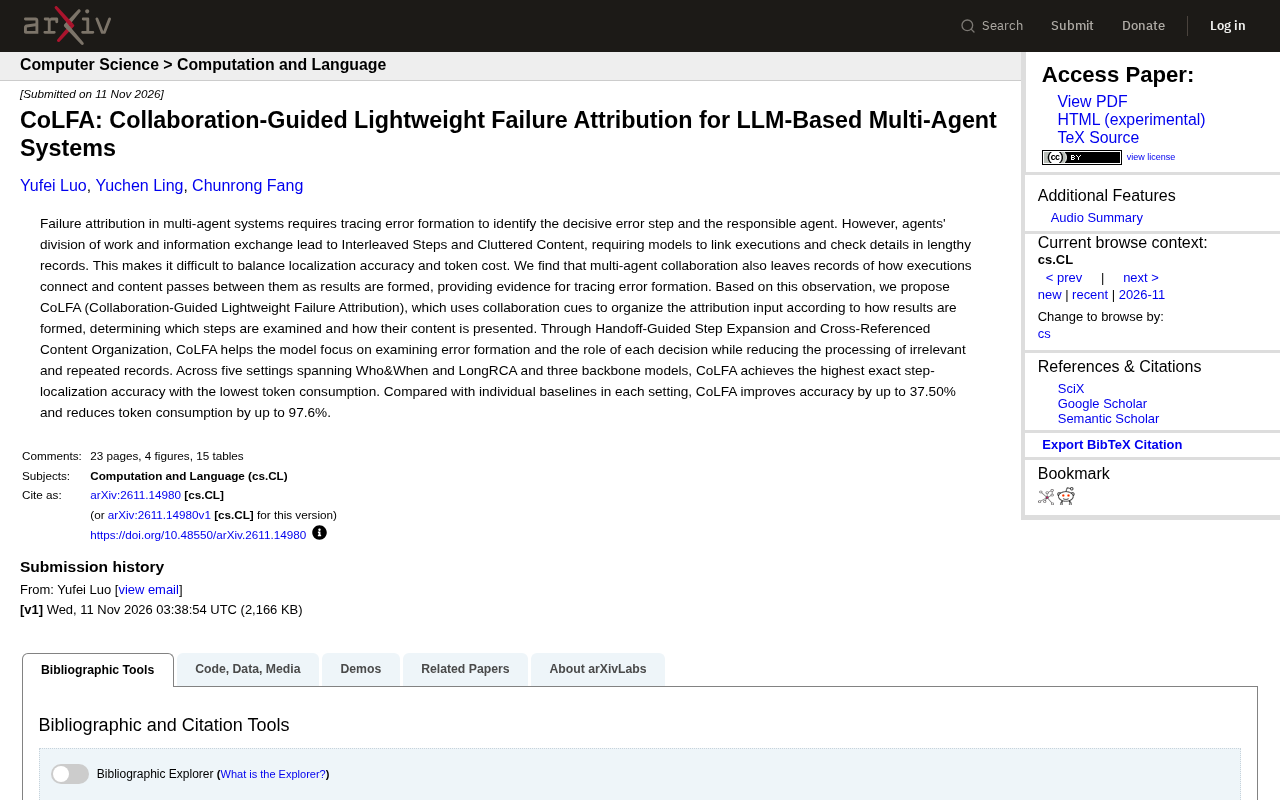
Multi-agent systems demonstrate powerful collaboration capabilities in complex tasks, but once errors occur, tracing responsibility becomes extremely difficult. When multiple agents divide work and frequently exchange information, execution steps become interleaved and content becomes cluttered, requiring models to link execution processes and verify details across lengthy records. This makes it hard to balance localization accuracy and token cost in fault attribution. A recent study from rss proposes CoLFA (Collaboration-guided Lightweight Fault Attribution), which organizes attribution inputs using collaboration cues, achieving the best exact step localization accuracy with the lowest token consumption across multiple datasets and backbone models.
Challenges of Fault Attribution: Interleaved Steps and Cluttered Content
In LLM-based multi-agent systems, fault attribution requires tracing back to the decisive step where the error formed and the agent responsible. However, the division of labor and information exchange among agents leads to two prominent issues: Interleaved Steps and Cluttered Content. The former means execution records from different agents are interwoven, making causal chains hard to disentangle; the latter manifests as records filled with repetitive, irrelevant details from which models must filter key information. This complexity makes it difficult for models to achieve both localization accuracy and token efficiency—fine-grained inspection requires more context, while long contexts drive up costs and introduce noise.
Fault Attribution in the context of multi-agent systems refers to tracing back from an erroneous system output to the specific execution step that caused the error and the agent that performed it. It is similar to "root cause analysis" in traditional software debugging, but the object shifts from code lines to natural-language-driven agent behavior traces. Since each output of an LLM agent is natural language and step boundaries are fuzzy, attribution requires the model to judge at the semantic level which step's decision deviated from the correct path. This task is typically formalized as "given the complete execution record and the final erroneous result, output the index of the erroneous step and the responsible agent," with the evaluation metric being exact step localization accuracy.
Collaboration Cues: Overlooked Attribution Evidence
The research team observed that multi-agent collaboration also leaves records of how execution connects and how content is passed between agents while forming results. These collaboration cues are actually valuable evidence for tracing error formation. For example, handoff points between agents often correspond to key nodes of information transfer, while cross-referenced content reveals decision dependencies. CoLFA is based on this observation, using collaboration cues to organize attribution inputs, deciding which steps to inspect and how to present their content based on how the result was formed.
Handoff is a common mechanism in multi-agent collaboration: when an agent completes a subtask, it passes control along with necessary contextual information to the next agent. Handoff points typically contain metadata such as sender, receiver, transferred content, and trigger conditions. In fault attribution, handoff points are critical because information may be omitted, misinterpreted, or oversimplified during handoff, planting seeds of error. Cross-Reference refers to the relationship where one agent's output is referenced or depended upon by another agent—for example, agent B citing agent A's earlier conclusion in its reasoning. Cross-reference relationships form a dependency graph among agents, helping determine whether an error is locally generated or propagated along dependency chains. CoLFA leverages these two types of structural information to narrow the inspection scope.
CoLFA's Core Mechanisms: Handoff-Guided Expansion and Cross-Referenced Organization
CoLFA achieves lightweight attribution through two key techniques: Handoff-Guided Step Expansion and Cross-Referenced Content Organization. The former uses handoff points to guide step expansion, ensuring the model focuses on the critical path of error formation rather than uniformly scanning all records; the latter organizes content through cross-references, linking related execution fragments to reduce processing of repetitive and irrelevant information. Working together, these two help the model concentrate on examining the error formation process and the role of each decision while significantly reducing token consumption.
Experimental Results: Dual Improvement in Accuracy and Efficiency
On the Who&When and LongRCA datasets, across five settings and three backbone models, CoLFA achieved the highest exact step localization accuracy while consuming the fewest tokens. Compared with individual baselines in each setting, CoLFA improves accuracy by up to 37.50% and reduces token consumption by up to 97.6%. These results validate the effectiveness of collaboration cues in fault attribution and demonstrate that lightweight methods can substantially reduce computational cost without sacrificing accuracy.
Significance and Outlook
CoLFA offers a new approach to fault attribution in multi-agent systems: rather than simply increasing context or model scale, it leverages the system's own collaboration structure to guide attention. This is essential for building reliable and interpretable multi-agent applications. Future work could explore how to apply collaboration cues more broadly in dynamic environments and how to integrate them with existing debugging tools.
One-line Summary
CoLFA organizes attribution inputs using collaboration cues, balancing high accuracy and low token consumption in multi-agent fault attribution.
Paragraph Summary
Tracing responsibility after multi-agent system errors is difficult because division of labor and information exchange cause interleaved execution steps and cluttered records, making it hard for models to balance localization accuracy and token cost. To address this, researchers propose CoLFA, which uses collaboration cues such as handoff points and cross-references left during multi-agent collaboration to organize attribution inputs. Specifically, CoLFA focuses on critical error paths through handoff-guided step expansion and reduces repetitive and irrelevant information through cross-referenced content organization. On the Who&When and LongRCA datasets, across five settings and three backbone models, CoLFA achieves the highest exact step localization accuracy with the lowest token consumption, improving accuracy by up to 37.50% and reducing token consumption by up to 97.6% compared to baselines.
Related articles

AI Writes Your Code—Do You Still Need to Learn Git? Five Reasons
AI coding agents handle Git operations automatically—is it still necessary to learn Git? Five reasons: team communication, reviewing agent PRs, monitoring code changes, fallback when AI goes down, and the joy of learning—plus how the focus of learning Git is shifting in the agent era.
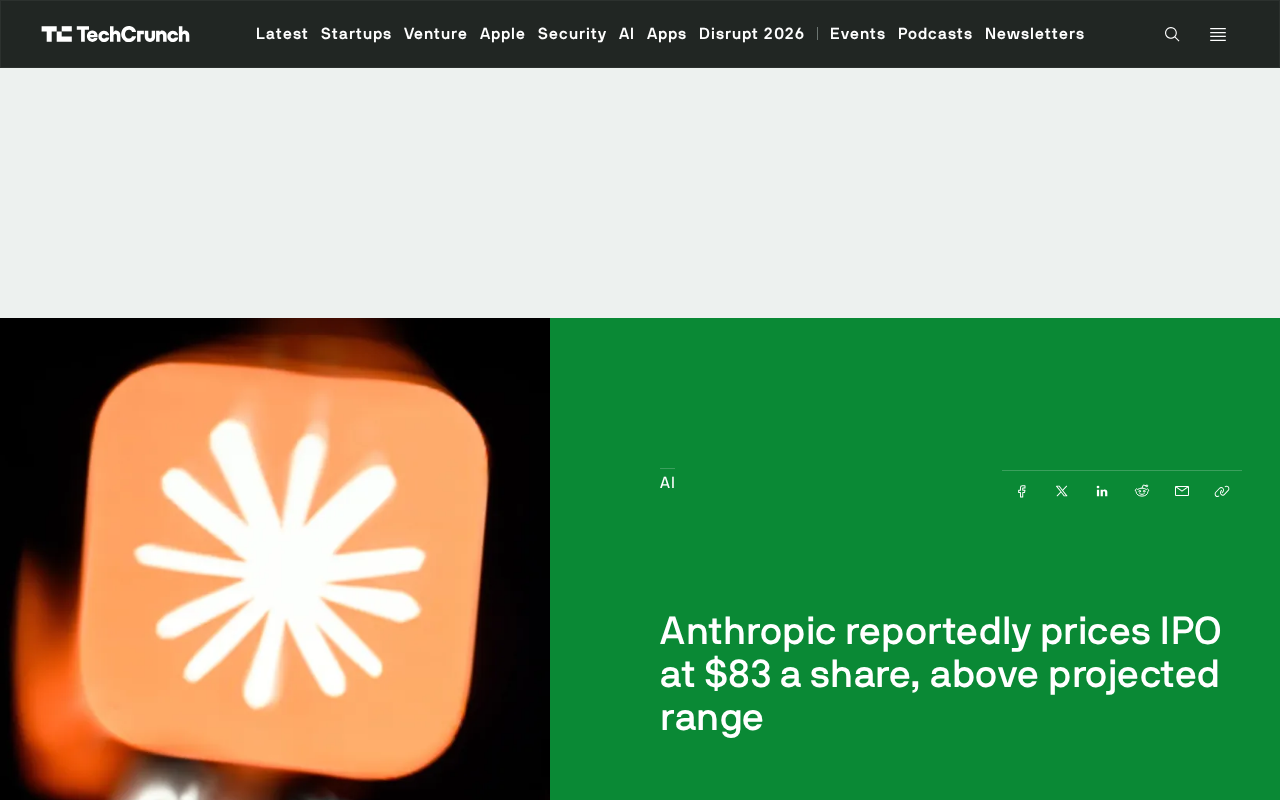
Anthropic Reportedly Prices IPO at $83 Per Share, Valuing Company at $1.5 Trillion
Anthropic reportedly prices IPO at $83 per share, above the expected range, with a fully diluted valuation of $1.5 trillion. This article analyzes the signal significance of the pricing and its impact on the AI industry's financing environment.
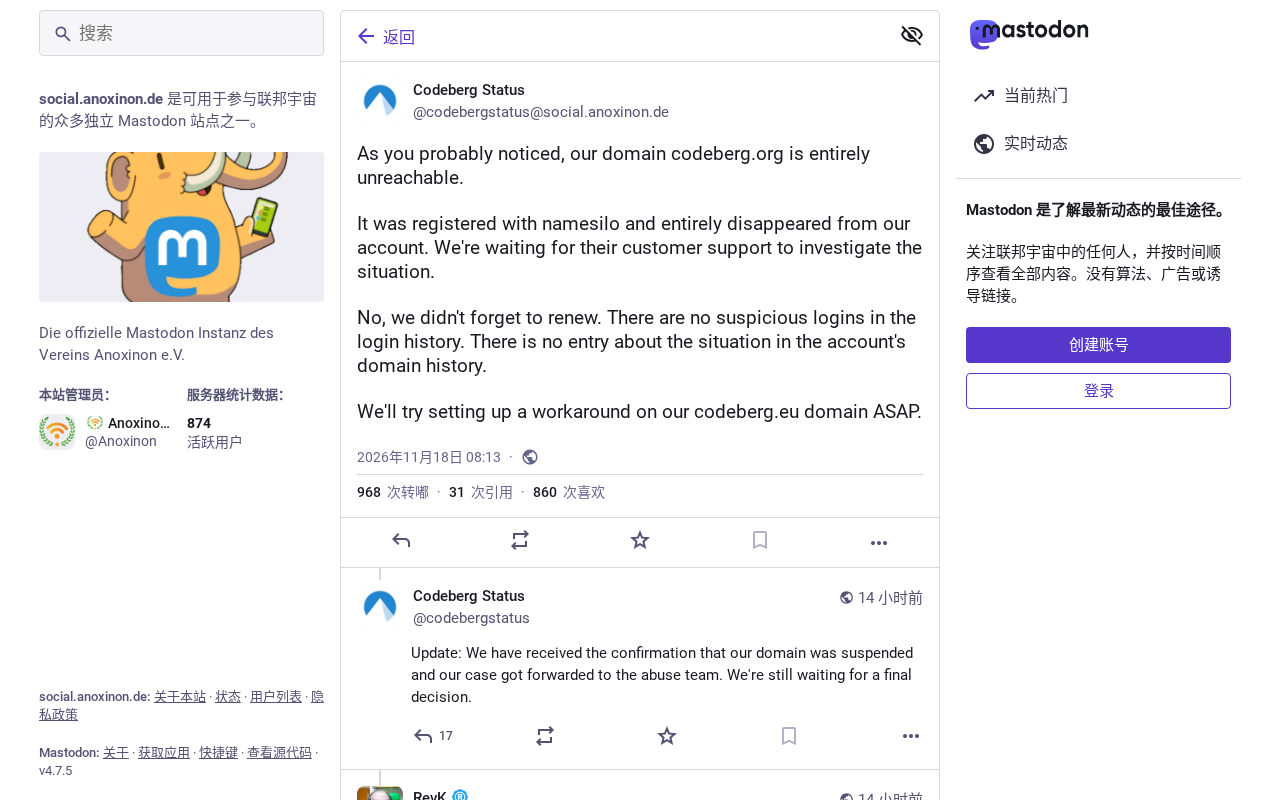
Open-Source Code Hosting Platform Codeberg Suffers Outage, Sparking Debate in Developer Community
Open-source code hosting platform Codeberg.org suffered an outage, sparking Hacker News debate over nonprofit platform stability and open-source infrastructure dependency risks.