Compress Any LLM 3x with One Click, Near-Lossless with Under 50MB Memory Usage
HN project claims one-click 3x compression of any LLM, near-lossless, under 50MB memory—but technical details undisclosed.
The article examines a Hacker News project claiming one-click 3x compression of any LLM with near-lossless performance and under 50MB memory during compression. It likely uses architecture-agnostic post-processing with streaming or chunked strategies. Compared to GGUF/GPTQ/AWQ, it may offer ease-of-use and resource advantages, but the "near-lossless" claim is vague and lacks public evaluation. Suitable for local/edge deployment, though fixed compression ratio and unverified architecture coverage are notable limitations.
Why LLM Compression Has Become a Necessity
Large models are impressive in capability, but model sizes of tens of gigabytes keep deployment and inference costs stubbornly high. From cloud inference to edge devices, memory bottlenecks remain an unavoidable challenge. A project recently surfaced on Hacker News claims that with just one click, any LLM can be compressed threefold while maintaining near-lossless performance, with runtime memory usage under 50MB. If true, this would significantly lower the barrier to deploying large models.
According to the project's description on Hacker News (Points: 15 | Comments: 6), its core selling points are three: one-click operation, 3x compression ratio, and under 50MB RAM usage. Compared to traditional quantization methods, this solution emphasizes "near-lossless" rather than "acceptable accuracy loss," which suggests it may employ a technical approach different from conventional low-bit quantization.
The Potential Logic of the Technical Approach
To achieve 3x compression with near-lossless quality, common approaches include quantization, pruning, knowledge distillation, and low-rank decomposition. However, traditional quantization typically comes with noticeable accuracy degradation when compressed to lower bit widths, while pruning and distillation usually require retraining, making "one-click" completion difficult. The project's emphasis on "any LLM" and "one-click" suggests it is likely a post-processing technique that is architecture-agnostic.
The under-50MB RAM usage is another noteworthy metric. This means the compression process itself doesn't need to load the full model into memory, possibly employing streaming or chunked compression strategies. For scenarios that need to process large models in resource-constrained environments, this is more practically meaningful than the compression ratio itself. However, since the original material only provides title-level information, specific technical details have not been disclosed, and its "near-lossless" claim still requires independent evaluation and verification.
Post-Training Quantization (PTQ) and Calibration Data: Methods like GPTQ and AWQ are post-training quantization approaches—they don't retrain the model but instead use a small batch of representative data (calibration set) to statistically analyze activation distributions, determining optimal scaling factors and zero points for each layer's weights. The calibration set typically only needs a few hundred samples, but its domain distribution significantly affects the quantized model's performance on target tasks—this is also why such methods "require calibration data" yet are still classified as "post-processing." Understanding this helps assess whether a new tool claiming "one-click" and "any LLM" implicitly has built-in general calibration strategies, or employs a completely data-independent compression method.
Perplexity as a Compression Quality Metric: Perplexity measures a language model's prediction uncertainty over text—lower values indicate the model is more "confident." In compression evaluation, the change in perplexity on the same validation set before and after compression is often used as a proxy for accuracy loss. However, perplexity doesn't correspond strictly linearly to downstream task accuracy or generation fluency: a small perplexity increase may correspond to perceptible quality degradation, or may have almost no impact. Therefore, if "near-lossless" is defined solely by perplexity, further clarification of thresholds and test sets is needed to align with the community-accepted "acceptable loss."
Comparison with Existing Solutions
Among current mainstream LLM compression tools, llama.cpp's quantization scheme (such as the GGUF format) is widely used, but typically requires users to manually select quantization levels, with different levels corresponding to different accuracy losses. Post-training quantization methods like GPTQ and AWQ perform well at specific bit widths, but compression ratios usually range between two and four times, and they require calibration data. If this project can truly achieve "one-click 3x compression" with extremely low memory usage, its ease of use and resource efficiency would constitute a differentiating advantage.
It should be noted that "near-lossless" is a vague expression. A common point of contention in community discussions is: how much of a benchmark score drop after compression qualifies as "near-lossless"? Does a tiny change in perplexity correspond to actual degradation in generation quality? These questions cannot be settled without publicly available evaluation data.
GGUF and llama.cpp Quantization Levels: GGUF is the model file format used by llama.cpp, supporting multiple quantization levels from 2-bit to 8-bit (such as Q4_K_M, Q5_K_S, etc.), with different levels trading off between size, speed, and accuracy. Users need to manually select levels based on hardware and tasks—this is both flexibility and a usage barrier. In contrast, if "one-click 3x compression" can truly automatically determine the optimal strategy, it effectively internalizes level selection, reducing tuning costs; but the trade-off is that users lose the ability to fine-tune compression ratios for specific scenarios. Understanding GGUF's level mechanism is essential to objectively evaluate the new solution's trade-offs between ease of use and controllability.
Applicable Scenarios and Limitations
Based on the description, this tool is best suited for developers who need to run LLMs locally or on edge devices. Under-50MB RAM usage means the compression process can be completed on an ordinary laptop or even Raspberry Pi-level devices, without relying on high-memory servers. 3x compression can directly reduce storage and transmission costs.
The limitations are equally obvious. First, a fixed 3x compression ratio may not be suitable for all model sizes—smaller models may be more sensitive to performance degradation after compression. Second, the "any LLM" claim needs verification across different architectures (such as Transformer variants and MoE structures). Finally, lacking public benchmarks and peer review, the community should remain cautious before adoption.
Community Reaction and Follow-up Attention
The post received 15 points and 6 comments on Hacker News—discussion heat is not particularly high, indicating the project is still in its early stages. Specific comment content was not provided in the source material, but such tools typically spark discussion about compression algorithm principles, comparisons with quantization schemes, and practical deployment experiences. For developers concerned with model deployment efficiency, it's worth tracking whether the project will be open-sourced and whether reproducible evaluation results will be provided.
In the absence of detailed technical documentation, it's advisable to view this as a promising direction rather than a mature solution. If the three features—one-click compression, near-lossless quality, and low memory usage—all hold true simultaneously, they could indeed address real pain points in LLM deployment, but verification work needs to be completed collaboratively by the community.
One-line Summary
An HN project claims one-click 3x compression of any LLM with near-lossless quality and under 50MB memory usage, but technical details remain undisclosed.
Paragraph Summary
The article examines a project claim on Hacker News: any LLM can be compressed threefold with one click, near-lossless performance, and under 50MB memory usage during compression. The author analyzes that it likely employs an architecture-agnostic post-processing technique with streaming or chunked strategies to reduce memory requirements. Compared to llama.cpp's GGUF quantization and GPTQ/AWQ methods, the project may have differentiating advantages in ease of use and resource efficiency, but the "near-lossless" claim is vague and lacks public evaluation and peer review. The article concludes that the tool suits local and edge deployment scenarios, but limitations such as fixed compression ratio and unverified architecture coverage are evident—the community should approach it cautiously and track future open-source releases and reproduction results.
Related articles
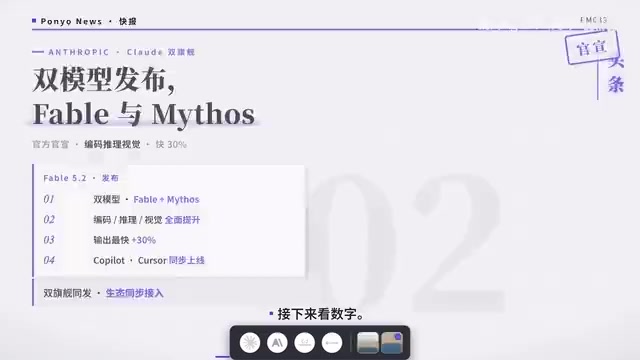
Anthropic Launches Dual Flagships Claude Fable 5.2 and Mythos 5.2, Topping Coding and Science Benchmarks
Anthropic releases Claude Fable 5.2 and Mythos 5.2 dual flagships, with full upgrades in coding, 3D interaction, and life sciences, topping third-party intelligence index, integrated by GitHub Copilot and Cursor, API pricing lower than competitors.
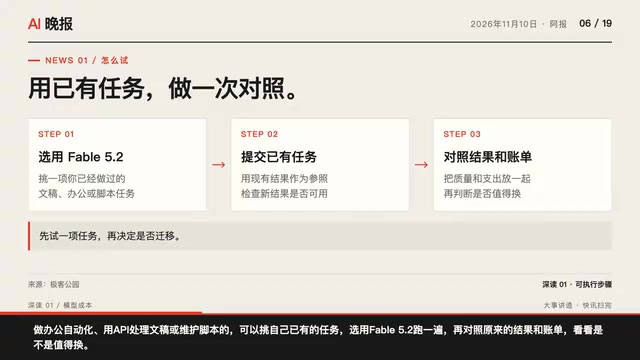
Claude Code Reportedly Leaks Secrets to GitHub, Sounding the Alarm for AI Coding Security
Claude Code reportedly exposed passwords and API keys to GitHub, per Ars Technica. We recap the incident alongside Claude Fable 5.2's 20% price cut and Meta Muse Ember, urging developers to check commit settings before granting permissions.
Getting Started with LangChain: Core Concepts of the Agent Development Framework
Starting from the three major limitations of LLMs, this article explains LangChain's positioning and value as an Agent development framework: limited knowledge, external system interaction, and state retention, along with its official documentation system and learning path.