Controversial US Surveillance Law Section 702 Nears Expiration: Congress Races to Renew

FISA Section 702 nears expiration; lawmakers plan to attach it to the defense bill for emergency renewal.
Section 702 of the US Foreign Intelligence Surveillance Act allows warrantless collection of communications from non-US persons abroad but has long been controversial due to incidental collection of US citizen data. With only weeks left in the legislative session, some lawmakers are pushing to attach it to the must-pass National Defense Authorization Act to bypass regular review. The article examines Section 702's authorization mechanism, the strategy of rider legislation, and core disagreements over warrantless surveillance scope, limits on citizen data queries, and congressional oversight. It notes that without timely renewal, the surveillance authority faces the risk of lapsing.
Section 702 of the US Foreign Intelligence Surveillance Act (FISA)—the surveillance authority that allows intelligence agencies to collect foreign communications in bulk without a warrant—is facing urgent legislative pressure as its expiration looms. With only weeks left in the legislative session, some members of Congress are urgently pushing for reauthorization and are even considering attaching it to a must-pass military spending bill.
According to Politico, Republican Senator Mike Rounds of South Dakota revealed that Section 702 may be attached to the National Defense Authorization Act (NDAA). This strategy bypasses the regular legislative review process, raising concerns about transparency and checks and balances.
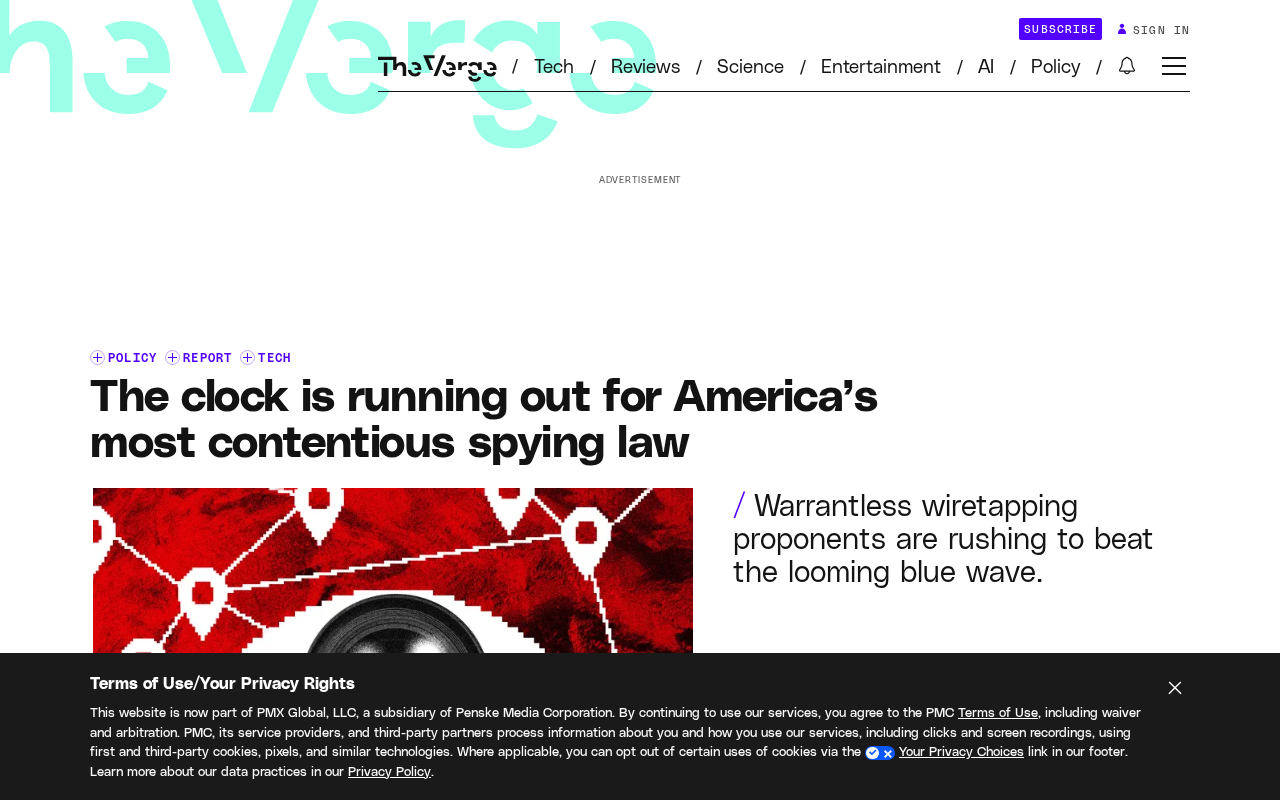
What Is FISA Section 702?
Section 702 is one of the most controversial provisions in the FISA law. It allows US intelligence agencies (such as the NSA) to collect communications from non-US persons abroad—including emails, phone records, and internet metadata—without an individual warrant. Supporters argue it is a critical national security tool that effectively monitors foreign terrorists and cyber threats; critics point out that in practice the provision inevitably "incidentally collects" large volumes of communications involving US citizens.
Since its creation, the provision has been reauthorized multiple times, but each renewal has been accompanied by fierce political debate. Privacy advocates, civil rights organizations, and some bipartisan lawmakers have consistently called for substantive reform, demanding greater transparency, limits on data querying, and stronger congressional oversight.
The Overall Architecture of FISA
FISA was enacted in 1978 in the wake of Watergate to establish a judicial review mechanism for foreign intelligence surveillance. Its core is the Foreign Intelligence Surveillance Court (FISC), where federal judges approve surveillance applications targeting specific individuals. Traditionally, FISA requires the government to obtain a court order for each individual surveillance target.
Section 702, introduced by the 2008 FISA Amendments Act, is a major exception: it does not target specific individuals but instead uses "annual certifications" under which the FISC approves entire categories of collection activities, thereby bypassing the case-by-case warrant requirement. This differs markedly in authorization logic from other provisions such as Section 215 (bulk collection of telephone metadata) and Section 705, and is the structural reason why Section 702 has long been the center of privacy controversies.
The Technical Mechanism of "Incidental Collection"
"Incidental collection" refers to the fact that when intelligence agencies collect targeting non-US persons abroad, they inevitably obtain communications between US citizens and the targets due to factors such as two-way communication, network routing, or keyword filtering. Because Section 702 authorizes "categories of targets" rather than specific individuals, and because collection occurs at the carrier and network backbone level, US citizens' email content, call records, and related metadata may be stored in databases as well.
Of greater concern is the "backdoor query" issue: agencies such as the FBI can search these already-collected data using Americans' names or identifiers without a warrant. This practice has been repeatedly ruled unconstitutional or unlawful by the FISC and constitutes one of the most substantive points of disagreement in the congressional reform debate.
Legislative Strategy: Attaching to the Defense Bill
Attaching Section 702 to the National Defense Authorization Act is not unprecedented. The NDAA is the annual military spending bill that must pass, and is generally regarded as a "must-pass" legislative vehicle. Senator Rounds told Politico that this strategy can ensure the surveillance authority is extended before expiration.
But this approach has also drawn criticism. Opponents argue that cramming such an important surveillance power into a massive military spending bill compresses the space for debate, forcing lawmakers to accept it under the pressure of "pass it or shut down the government."
The NDAA's Special Role as a Legislative Vehicle
The National Defense Authorization Act is the military budget and policy bill that Congress must pass each year. Because it covers military pay, equipment procurement, and force operations, it has historically been regarded as a "must-pass bill" that is nearly impossible to reject. For this reason, it has long been used as a legislative vehicle for controversial provisions, with bipartisan lawmakers often attaching issues that cannot pass on their own.
The cost of this approach is reduced transparency in deliberation: the NDAA often runs thousands of pages, debate time is constrained by the overall voting schedule, and amendment votes on individual provisions are often squeezed by procedural motions. For issues like Section 702 that involve significant constitutional rights, critics argue that rider legislation effectively weakens Congress's independent review and public oversight.
Key Controversies and Future Prospects
The core controversies surrounding Section 702 center on several aspects: whether the scope of warrantless surveillance is too broad, how incidentally collected US citizen data is handled, and whether Congress should impose stricter limits on intelligence agencies' data queries.
As the legislative session draws to a close, the time window is rapidly narrowing. If Congress cannot complete reauthorization before the deadline, Section 702 faces the risk of lapsing—which could deprive intelligence agencies of a tool they consider indispensable. Currently, all parties are still maneuvering, and the final outcome remains unclear.
This legislative tug-of-war over surveillance powers reflects the long-standing tension between national security and civil privacy, and offers a noteworthy case study for global digital governance.
Legal Consequences of Lapse
If Section 702 expires without renewal, the immediate effect is that new collection activities lose their legal basis, but there are transitional arrangements for existing data and some ongoing activities: historically, Congress has repeatedly maintained the provision through short-term extensions (such as several months) to avoid a "cliff-edge" lapse. It is worth noting that Section 702 typically includes a grandfather clause allowing activities against already-initiated surveillance targets to continue for a period after expiration, in order to wind down in an orderly manner.
Moreover, even if the provision lapses, intelligence agencies can still conduct foreign signals intelligence collection under other legal authorities such as Executive Order 12333. Therefore, "lapse" does not mean all related surveillance stops, but rather that collection activities lose the layer of legal protection provided by explicit congressional authorization and FISC certification—an institutional detail often overlooked in the maneuvering among parties.
One-line Summary
FISA Section 702 surveillance authority nears expiration; lawmakers plan to attach it to the defense bill for emergency renewal.
Paragraph Summary
Section 702 of the US Foreign Intelligence Surveillance Act allows intelligence agencies to collect communications from non-US persons abroad without a warrant, but has long been controversial due to "incidental collection" of US citizen data. With only weeks left in the legislative session, some lawmakers are pushing to attach it to the must-pass National Defense Authorization Act to bypass regular review. The article outlines Section 702's authorization mechanism, the strategic logic of rider legislation, and the core disagreements over the scope of warrantless surveillance, limits on querying citizen data, and congressional oversight. It notes that if reauthorization is not completed in time, the surveillance authority faces the risk of lapsing, reflecting the long-standing tension between national security and privacy.
Related articles

Java4Shell Vulnerability Analysis: Has Java's Memory Safety Myth Been Shattered?
Computerphile breaks down the Java4Shell vulnerability: OpenJDK's native Base64 decoder mishandles AVX-512 mask calculation, causing out-of-bounds writes and RCE. Covers root cause, Base64 padding mechanics, AI-assisted discovery debate, and fixes.

iFood Manages 15,000 Repositories with Coding Agents: An Architectural Lesson at 4 Cents per Run
How iFood scaled coding agents to 15,000 repositories with its Remote Agents Platform: REST API-driven, GPT-5.6 Luna selection, structured output acceptance, $0.04 per run, security fixes doubled.

The No-Space Vacuum: The Mystery of Geometric Origins in Quantum Gravity
The "no-space vacuum" in group field theory refers to a state with no geometric quantum excitations—not empty space, but no space. This article explains how this quantum gravity concept yields macroscopic cosmic geometry through condensed matter mechanisms, along with the theory's current status and controversies.