CPI Surprise Lifts Rate Hike Odds; Anthropic's Valuation Cuts and IPO Gamble

US CPI beat expectations, strengthening December rate hike bets; Anthropic's frequent valuation changes highlight the AI bubble debate.
US October CPI rose 0.4% MoM and core CPI rose 0.3% MoM, both above expectations, with markets pricing a 100% chance of a December Fed hike, including a 15.5% probability of a 50bp move. Fed officials turned hawkish, and the 50bp threshold set by Governor Waller was hit. The dollar strengthened, gold plunged, Treasury yields rose back to 5%, and stocks and bonds showed an anomalous positive correlation. Meanwhile, AI star Anthropic's IPO valuation was cut multiple times within half a month from $2 trillion to $1.2–1.3 trillion, and after the market rebound underwriters reportedly considered raising the offering price to above $1.5 trillion. Goldman issued aggressive revenue forecasts, but the prospectus shows chip procurement commitments near $901 billion, and $100 billion in financing is still far from covering capex. Fed Governor Bowman warned that if AI investment returns disappoint, stock valuations could correct sharply. Together, the two events outline the core contradiction in the current market: inflation pressure persists, and the AI bubble debate has arrived.
CPI Accelerates Month-over-Month, Fed Officials Turn Hawkish
After the release of US October CPI data, market expectations for a Fed rate hike in December rose rapidly, with the CME FedWatch Tool showing the probability of a hike on December 9 reaching 100%. Meanwhile, AI star company Anthropic's IPO valuation underwent multiple rounds of cuts within half a month, sliding from $2 trillion all the way to the $1.2–1.3 trillion range, then reportedly seeing underwriters consider raising the offering price after a market rebound. The two events appear independent but together outline the core contradiction in global financial markets today: inflation pressure persists, and the AI bubble debate has arrived.
CPI Month-over-Month Accelerates, Fed Officials Turn Hawkish
According to analysis by Bilibili UP host "Xinhua Dabai", US October CPI rose 0.4% month-over-month, above the market expectation of 0.3%; core CPI rose 0.3% month-over-month, also above the expected 0.2%. Because last year's federal government shutdown left no year-over-year base, no YoY CPI data was published this month, but judging solely from the MoM trend, inflation remains on an accelerating path. More critically, last November and December had low MoM CPI growth; if the current MoM level is maintained next month, the YoY increase will appear even higher.
After the data release, market pricing for a December Fed hike quickly hit the ceiling: the probability of a 25bp hike was 84.5%, and the probability of a 50bp hike was 15.5%. The 50bp possibility is not unfounded—Fed Governor Waller had explicitly said before the data release that if core CPI MoM reached 0.3% or higher, the Fed should consider a 50bp hike. Core CPI MoM landed exactly at 0.3%, and Waller simultaneously warned that inflation remains too high and the Fed needs to at least retract the magnitude of its previous three precautionary rate cuts.

Other voting officials also turned hawkish. Dallas Fed President Logan said that given the current economic outlook, the Fed needs at least two more 25bp hikes, and the pace of action in winter could be faster than in autumn. Philadelphia Fed President Paulson emphasized that monetary policy needs to remain somewhat restrictive to push inflation back to the 2% target.
Core CPI and the Fed's Rate Hike Logic
Core CPI is the consumer price index excluding food and energy prices, regarded as a more stable measure of inflation trends because food and energy prices are volatile and can easily obscure underlying inflationary pressure. When setting monetary policy, the Fed pays particular attention to core inflation trends, using them as a key basis for judging whether inflation is sticky.
The Fed's dual mandate is to promote maximum employment and stabilize prices (with a 2% inflation target). When core CPI MoM continues to exceed expectations, the Fed tends to tighten monetary policy—i.e., raise rates—to curb demand and lower inflation. Rate hikes raise borrowing costs, which in turn affect consumption and investment and ultimately pass through to prices. The market uses CME's "FedWatch Tool" to bet on hike probabilities; the tool is calculated from federal funds rate futures prices and reflects market expectations for the Fed's policy path.
In this data release, core CPI MoM of 0.3% exactly hit the 50bp hike threshold set by Fed Governor Waller, explaining why the market priced the 50bp probability at 15.5%.
The "Anomalous" Positive Correlation Between Treasury Yields and US Stocks
Driven by rate hike expectations, the dollar index climbed back above 102, gold plunged after the data release and closed down 2.6%, and the Nasdaq fell 0.74% that evening, though pre-market futures had already rebounded 2% the next day. More noteworthy is the Treasury market: the 10-year Treasury yield rose back to the 5% mark, after having previously fallen from a high of 5.36% to 4.81%.
The UP host pointed out an anomalous phenomenon: when Treasury yields peaked on October 7, US stocks peaked simultaneously; afterward, as yields fell, US stocks also fell in tandem—the two showed a short-term positive correlation, rising and falling together. Normally, rising Treasury yields should suppress equity valuations, creating a negative correlation. This anomaly may stem from safe-haven flows into bonds during stock market selloffs, forming a seesaw effect between stocks and bonds. The UP host warned that once Treasury yields truly fall sharply, it may instead be a relatively dangerous moment for global financial markets; if the 10-year Treasury yield suddenly spikes and then drops abruptly, that would be the most dangerous scenario.
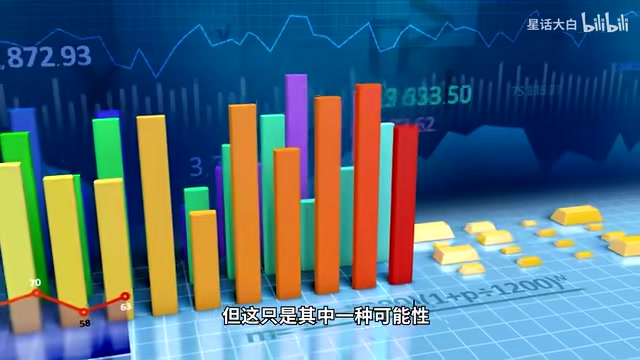
Some within the Fed have begun expectations management regarding the AI bubble. Governor Bowman warned on November 10 that if AI investment returns fall short of expectations, stock market valuations could face significant corrections, while inflation persistently above expectations suggests she supports another rate hike in December.
Transmission Mechanism Between Treasury Yields and Stocks
Treasury yields, especially the 10-year yield, are regarded as the "anchor" for global asset pricing. A rise usually means the risk-free rate is increasing, which lowers the present value of future cash flows and thus suppresses equity valuations, especially for growth stocks such as tech shares. Therefore, under normal circumstances stocks and bonds are negatively correlated.
However, when extreme risk aversion appears in the market, funds may flood into safe-haven assets such as Treasuries and gold simultaneously, causing yields to fall and stocks to drop, creating a short-term same-direction move. Alternatively, if rising yields are driven by expectations of strong economic growth, improving corporate earnings may offset the negative impact of a higher discount rate, and stocks and bonds may rise together.
The "stock-bond seesaw effect" mentioned by the UP host refers to safe-haven funds flowing into the bond market during stock market selloffs, pushing bond prices up and yields down, thereby producing a phenomenon where stocks fall and yields also fall. This positive correlation is usually temporary, but if yields spike and plunge sharply, it may trigger a market liquidity crisis, because many institutional investors use leveraged trading; violent yield swings lead to margin calls and forced liquidations, amplifying market volatility.
Anthropic's Valuation Cut Multiple Times Within Half a Month
One focus of the AI bubble debate is Anthropic's upcoming IPO. Its valuation figures changed frequently in a short period: last month it was publicized at $2 trillion; half a month ago it was revised to $1.5–2 trillion; before the US stock market crash on November 5, reports said investors interested in bidding told underwriting banks that fair value had been adjusted to about $1.4–1.5 trillion; after the crash, the valuation range discussed by potential buyers fell further to $1.2–1.3 trillion.
However, as global AI concepts rebounded collectively on November 11, Anthropic began considering raising its valuation again. According to the Financial Times citing five people familiar with the matter, underwriters are expected to raise the offering price above the previously announced $70–78 per share range, and the IPO valuation target could be pushed to $1.5 trillion or even higher in the coming days. The specific offering price will be determined the night before November 19.

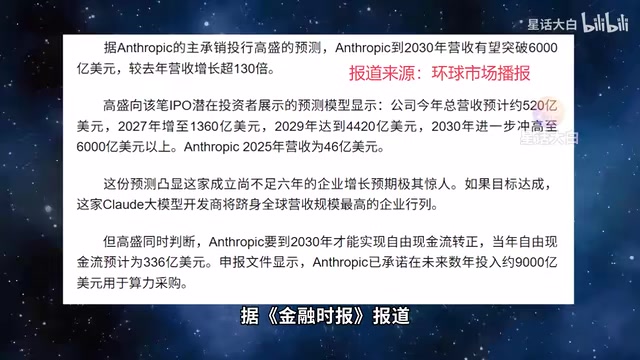
Goldman Sachs is the lead underwriter for this IPO, with Morgan Stanley and 20 other banks participating as co-underwriters. The UP host reminded that investment banks such as Morgan Stanley have a potential conflict of interest in talking up the stock at this time, possibly to create a better market atmosphere for Anthropic's listing. Goldman Sachs, as lead underwriter, is equally tireless; according to the Financial Times, Goldman gave extremely aggressive performance forecasts: Anthropic's revenue is expected to be about $52 billion this year, $136 billion in 2027, $442 billion in 2029, and exceed $600 billion in 2030.
IPO Valuation and the Underwriter's Role
IPO valuation is the offering price range negotiated by the issuer and underwriters based on market conditions, company fundamentals, comparable company valuations, and other factors. Underwriters (such as Goldman Sachs and Morgan Stanley) are responsible for assessing investor demand, roadshow marketing, and ultimately determining the offering price. Underwriters' interest lies in ensuring a successful offering, so they are motivated to create an optimistic atmosphere, but they also need to balance the issuer's fundraising size with investor acceptance.
The sharp short-term fluctuations in Anthropic's valuation reflect market disagreement over high AI company valuations. Underwriters collect investor feedback during roadshows; if demand is strong, they may raise the offering price; if demand is weak, they lower it. Such dynamic adjustment is normal in IPO pricing, but adjustments this frequent (from $2 trillion to $1.2 trillion within half a month and then considering a raise) are relatively rare, highlighting market sentiment swings amid the AI bubble debate.
Investors should note that underwriters' performance forecasts are often aggressive because their revenue is tied to offering size. Goldman's revenue forecast for Anthropic (exceeding $600 billion by 2030) is far above current levels; such optimistic expectations may include interest-driven motives, and investors should independently examine the reasonableness of its assumptions.
$100 Billion Financing Still Insufficient to Cover Capex
The fundamental reason Anthropic is in a hurry to list is that it lacks money. The prospectus shows that its computing resource and chip procurement commitments are close to $901 billion, of which about $71 billion will come due within the 12 months ending September 2027. Even if it completes the market-expected $100 billion-plus financing, that would still be far from enough compared with its massive capex commitments, roughly covering only a slightly earlier one-year period. The UP host pointed out that Anthropic's profitability is far from sufficient to meet capex, and it must rely heavily on external financing; once AI investment returns disappoint, the AI bubble could burst.
However, the UP host also emphasized that "AI is useful" and "AI has a bubble" are not in conflict—referencing the dot-com bubble burst in 2000, which did not affect the internet industry's development prospects. The market expects Anthropic to list as early as next Friday, or by November 26 at the latest, which will be the focus of global financial markets over the next two weeks.
AI Companies' Capex and Financing Needs
Training and inference for AI large models require enormous computing power, which translates directly into high capex for chips (such as GPUs) and data centers. The $901 billion in computing resource and chip procurement commitments disclosed in Anthropic's prospectus reflects the capital-intensive nature of the AI arms race. These commitments are usually long-term contracts with legal binding force, meaning the company must continue to invest huge sums.
Even raising $100 billion through an IPO would still be insufficient relative to nearly $1 trillion in commitments, because financing is one-time while capex is ongoing. AI companies need to continuously iterate models and expand computing power to stay competitive. Therefore, they rely heavily on external financing (equity and debt) to sustain operations. Once the financing environment tightens or investment returns fall short of expectations, the risk of a funding chain break will rise sharply, potentially triggering a valuation collapse.
The lesson of the 2000 dot-com bubble shows that many companies lacking profitability ultimately went bankrupt, but internet technology itself profoundly changed the economy. The AI industry may be similar: a bubble burst will eliminate the weak, but the technology trend is irreversible. Investors should focus on AI companies' revenue growth and cash flow rather than simply chasing valuation stories.
Two Judgments
Looking at CPI and Anthropic together, the two main threads in the current market are clear: accelerating MoM inflation has stripped the Fed of room to turn dovish, a December hike is almost certain, and even 50bp cannot be ruled out; meanwhile, high AI asset valuations are being squeezed by both rising rates and doubts about investment returns. The arbitrariness of Anthropic's valuation adjustments precisely shows that IPO pricing is being pulled back and forth among underwriters, issuers, and market sentiment, and its reference value is limited. For ordinary investors, rather than chasing short-term changes in valuation numbers, it is better to watch two more concrete signals: whether core CPI MoM can fall continuously, and how much of Anthropic's revenue is delivered in its first earnings season after listing.
Related articles

AI Writes Your Code—Do You Still Need to Learn Git? Five Reasons
AI coding agents handle Git operations automatically—is it still necessary to learn Git? Five reasons: team communication, reviewing agent PRs, monitoring code changes, fallback when AI goes down, and the joy of learning—plus how the focus of learning Git is shifting in the agent era.
Anthropic Reportedly Prices IPO at $83 Per Share, Valuing Company at $1.5 Trillion
Anthropic reportedly prices IPO at $83 per share, above the expected range, with a fully diluted valuation of $1.5 trillion. This article analyzes the signal significance of the pricing and its impact on the AI industry's financing environment.
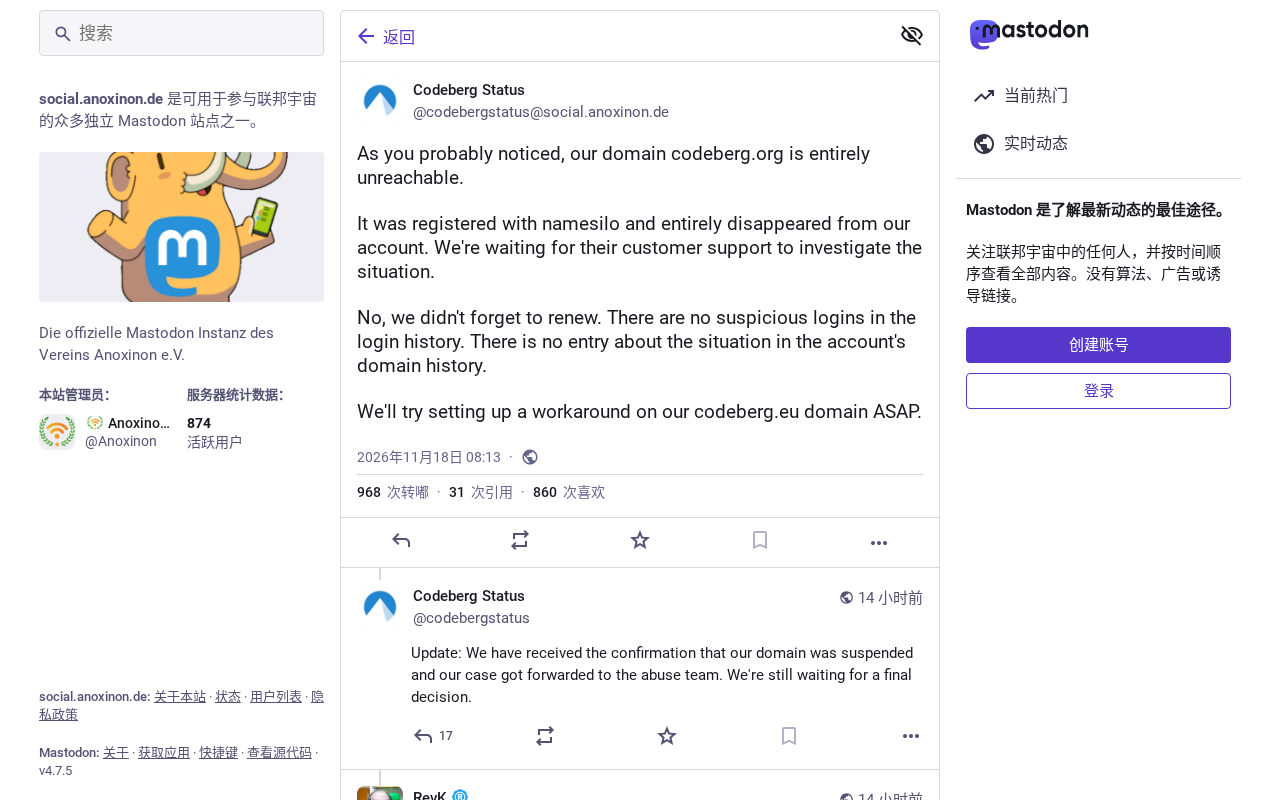
Open-Source Code Hosting Platform Codeberg Suffers Outage, Sparking Debate in Developer Community
Open-source code hosting platform Codeberg.org suffered an outage, sparking Hacker News debate over nonprofit platform stability and open-source infrastructure dependency risks.