Cursor Opens Its AI Brain: TypeScript SDK Ushers in the Era of Custom Agents
Cursor releases a TypeScript SDK, letting developers tap into its AI brain and build custom coding agents.
Cursor has launched a TypeScript SDK that allows developers to build custom extensions for its AI coding agent, marking a shift of AI coding tools from fixed products to programmable platforms. Developers can directly tap into Cursor's AI brain to build dedicated agents tailored to their workflows, tech stacks, and coding habits, and automate complex tasks such as code migration and framework reviews. The SDK also extends AI capabilities from the chat window into everyday toolchains, embedding AI insights into the development process. This open move is expected to foster a developer ecosystem around AI coding agents, but the quality, security, capability boundaries, and documentation completeness of extensions still need to be tested by the community.
Cursor has long been a focal point in the AI coding assistant space, and its latest move pushes "writing code with AI" toward "building AI with AI." According to a recent breakdown by a YouTube tech channel, Cursor has officially released a brand-new TypeScript SDK that allows developers to build custom extensions for its AI coding agent. This means developers are no longer limited to passively using a fixed AI assistant—they can now directly tap into Cursor's "AI brain" and build their own dedicated coding agents.
From Using the Tool to Reshaping It
In the past, developers had fairly limited control over AI coding tools—typically only prompts and a handful of settings could be adjusted. The TypeScript SDK Cursor has now launched changes that. According to the video, developers can use it to "directly tap into Cursor's AI brain," meaning Cursor is exposing its AI capabilities as a programming interface, enabling external code to invoke, orchestrate, and extend its core intelligence.
The first immediate benefit of this openness is deep customization. Every developer's workflow, tech stack, and coding habits differ, and a one-size-fits-all AI assistant struggles to cover every scenario. With the SDK, developers can build a coding assistant that better understands them—tailored to their project structure, code conventions, and commonly used libraries—rather than repeatedly compromising on top of a generic assistant.
A TypeScript SDK is a software development kit written in TypeScript. TypeScript is a superset of JavaScript that adds a static type system and compiles to run in any environment that supports JavaScript. In the AI coding tool space, offering a TypeScript SDK means developers can use a familiar, typed language to call Cursor's AI capabilities, gaining development experiences such as code completion, type hints, and interface documentation. Compared with calling a REST API directly, an SDK typically encapsulates low-level details such as authentication, request orchestration, and error handling, lowering the barrier to integration. For Cursor, choosing TypeScript also aligns closely with its own tech stack and target users (front-end and full-stack developers), making it easy for extensions to run in Node.js environments and editor plugins.
Custom Agents and Workflow Automation
The core value of the SDK lies in enabling developers to "build their own dedicated coding agents and automate complex workflows." This sounds abstract, but in real-world scenarios the possibilities are extensive.
For example, a team could build an agent specifically for code migration that automatically identifies legacy APIs and replaces them with the new syntax; or a code review assistant for a particular framework that automatically checks for potential issues before a commit. The video mentions that developers can also integrate "unique AI insights" into their own development environments, meaning AI capabilities are no longer confined to Cursor's chat window but can permeate the toolchain developers use every day.
This shift from "point conversations" to "embedded in the process" is a sign that AI coding tools are maturing. Developers no longer need to wait for official updates to gain new features—they can roll up their sleeves and turn ideas directly into usable extensions.
An AI coding agent is an AI system capable of understanding natural language instructions, autonomously planning steps, and invoking tools to complete coding tasks—distinct from a chat assistant that only handles single-turn Q&A. Agents typically possess capabilities such as task decomposition, code retrieval, file reading and writing, running tests, and self-correction, progressively approaching the goal over multiple iterations. Combining agents with workflow automation means developers can orchestrate repetitive engineering tasks (such as bulk refactoring, dependency upgrades, and code review) into agent-driven pipelines, reducing manual intervention. The core of what the Cursor SDK opens up is precisely the ability for external programs to create, configure, and schedule such agents, rather than interacting with them only through a chat window.
What It Means for the Developer Ecosystem
Cursor's move to open its SDK is essentially about building an ecosystem around AI coding agents. When developers can freely extend Cursor's capabilities, a variety of extensions targeting niche scenarios will emerge on the platform, and these extensions in turn enhance Cursor's own appeal.
For developers, this is also an opportunity to level up their skills. Knowing how to orchestrate AI agents and how to design automated workflows is becoming a new engineering skill. The video states outright that this is "not a small update, but an explosion of customization capabilities," letting every developer customize their AI coding experience in ways never before possible.
A developer ecosystem refers to the collection of developer communities, extension marketplaces, documentation, tutorials, and third-party tools that form around a platform. By opening APIs or SDKs, a platform lowers the barrier for external developers to contribute, thereby spawning a large number of extensions for niche scenarios and creating network effects: the richer the extensions, the stronger the platform's appeal, which in turn attracts more developers. Historically, the VS Code extension marketplace and the GitHub Actions ecosystem are typical examples. Cursor's intent in opening its SDK is similar—transforming itself from a single product into a platform that can be extended—but whether the ecosystem thrives will depend on supporting design such as interface stability, review mechanisms, and developer incentives.
Challenges Worth Watching
Of course, opening an SDK also brings new problems. The quality and security of extensions need to be vetted by developers themselves, and once code that taps into the AI brain goes wrong, the impact could be greater than that of an ordinary plugin. In addition, the SDK's capability boundaries, the completeness of its documentation, and the cultivation of the community ecosystem all need time to be tested. The video itself introduces the release in an excited tone but does not delve into these details, and the actual results remain to be seen through feedback from the developer community.
Summary
With its TypeScript SDK, Cursor turns the AI coding assistant from a "finished product" into a "work in progress"—developers can shape it as needed to build agents that truly fit their workflows. For developers who want deep control over their AI coding experience, this is a new starting point worth trying out.
One-line Summary
Cursor releases a TypeScript SDK, letting developers tap into its AI brain and build custom coding agents.
Paragraph Summary
Cursor has launched a TypeScript SDK that allows developers to build custom extensions for its AI coding agent, marking a shift of AI coding tools from fixed products to programmable platforms. Developers can directly tap into Cursor's AI brain to build dedicated agents tailored to their workflows, tech stacks, and coding habits, and automate complex tasks such as code migration and framework reviews. The SDK also extends AI capabilities from the chat window into everyday toolchains, embedding AI insights into the development process. This open move is expected to foster a developer ecosystem around AI coding agents, but the quality, security, capability boundaries, and documentation completeness of extensions still need to be tested by the community.
Related articles
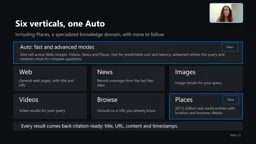
Microsoft WebIQ: Verifiable Real-Time Web Grounding for AI Agents
Microsoft WebIQ gives AI Agents real-time, citable web grounding across web, news, images, videos, and Places—164ms P95 latency, 50% fewer tokens, Scopes source control, and MCP integration.
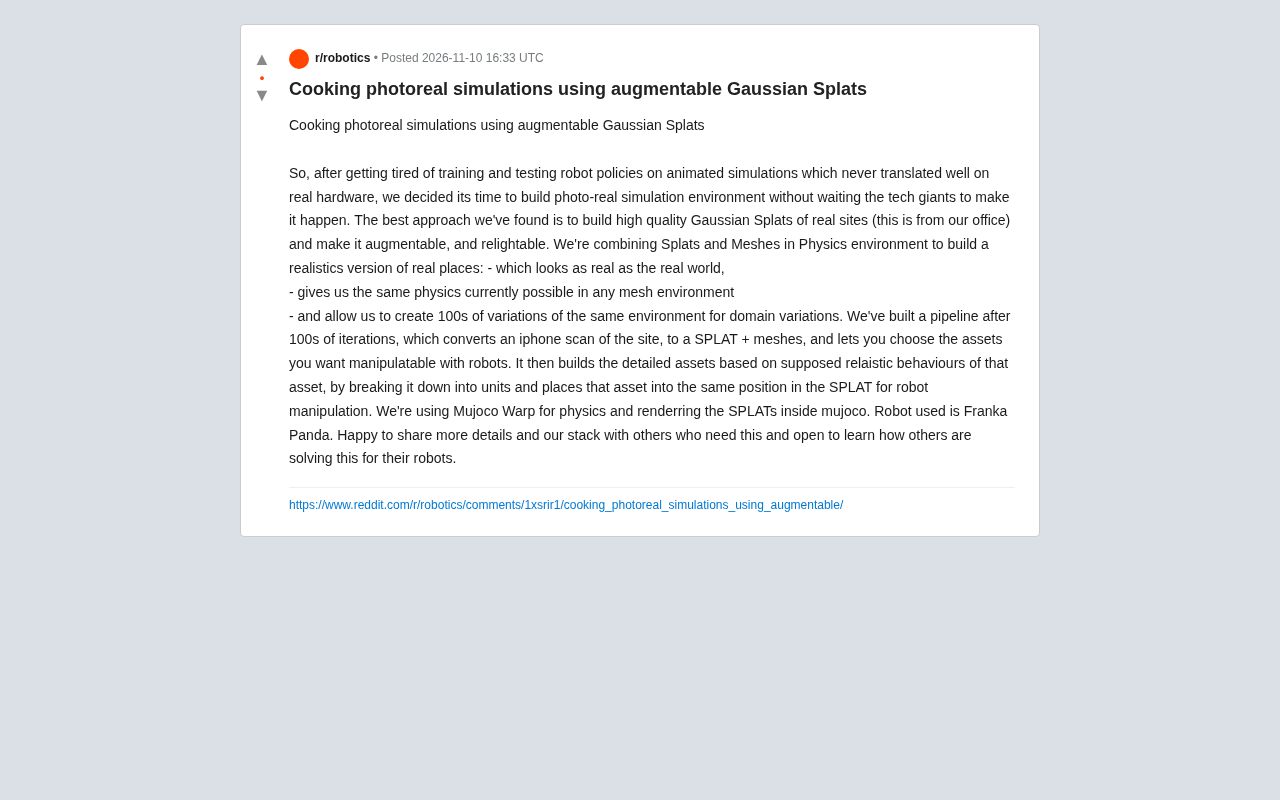
Augmentable Gaussian Splatting: Building Photorealistic Simulation Environments for Robot Training
Team combines Gaussian Splatting with meshes to build photorealistic robot simulation environments, integrating MuJoCo Warp physics and Franka Panda for augmentable, relightable real-site simulation.

Gemini 4 Carbon Released: The Leap from Gemini 3 to Gemini 4 in Under a Year
Google releases Gemini 4 Carbon, less than a year after Gemini 3. In the official demo, Carbon reverse-engineered the Theme Park binary, added a new DeepMind-themed ride, and ported it to the web in one shot.