CVE Tracker Tops HN: A Minimalist Victory for Vulnerability Intelligence Aggregation

Minimalist CVE aggregator CVE Tracker scored high on HN, reflecting vulnerability intelligence shifting from platformization back to toolification.
CVE Tracker scored 205 points and 71 comments on Hacker News with its minimalist single-URL form. The article analyzes why it went viral: CVE vulnerability data is scattered across MITRE, NVD, vendor advisories, and GitHub Advisory, forcing security engineers to constantly switch between sources. Through aggregation and subtraction design, CVE Tracker converges "which vulnerabilities are worth attention today" onto a single page. Community discussion shows real needs center on data freshness and filtering granularity rather than interface complexity. The article argues this reflects security tools shifting from large all-in-one platforms back to lightweight, focused, out-of-the-box toolification, with individual and small-team scenarios especially valuing the ability to get key information within three seconds.
Why One Page Scored 205 Points
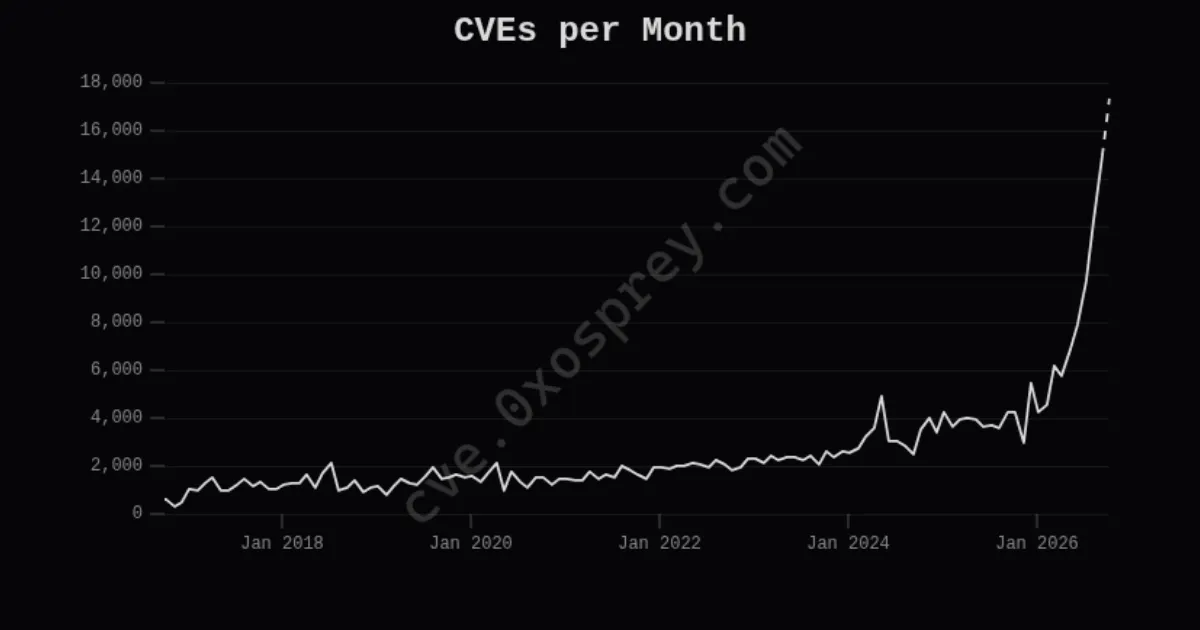
On Hacker News, a project called CVE Tracker scored 205 points with 71 comments in its minimalist form. Its entry point is just a single URL: cve.0xosprey.com—no lengthy product introduction, no flashy marketing page. This "lay the tool right on the table" approach became the best self-introduction.
CVE Tracker's positioning isn't mysterious—it targets one of the most essential types of information in cybersecurity: tracking and aggregating public vulnerability identifiers (CVEs). But what really made developers click, stay, and even join the discussion is the more universal problem it reflects: when vulnerability information is already flooding everywhere, what we need isn't more data sources, but more efficient filtering.
The "Information Overload" Dilemma of Vulnerability Intelligence
The CVE system itself doesn't lack data. The CVE list maintained by MITRE, the scoring and patch status from NVD (National Vulnerability Database), and security advisories from major vendors form a vast and ever-expanding information network. The problem is that this data is scattered across different platforms, with varying formats and inconsistent update rhythms.
Security engineers' daily routines thus become fragmented: open NVD in the morning to check new entries, browse vendor advisories at noon to confirm impact scope, and still keep an eye on GitHub Advisory for new disclosures in the afternoon. What CVE Tracker tries to compress is exactly this chain—converging the question "which vulnerabilities are worth my attention today" onto a single page.
This aggregation approach isn't new, but its minimalist presentation gives it the temperament HN community favors: no explanation, just use it.
CVE (Common Vulnerabilities and Exposures) is a public vulnerability numbering standard maintained by MITRE. Each vulnerability receives a unique identifier in the form CVE-2024-12345, making it easy to reference the same vulnerability across platforms. NVD (National Vulnerability Database), operated by the U.S. National Institute of Standards and Technology (NIST), supplements CVE identifiers with CVSS severity scores, affected software version ranges, and patch reference links.
CVSS (Common Vulnerability Scoring System) is a 0-to-10 vulnerability severity scoring framework that considers dimensions such as attack vector, complexity, privilege requirements, and confidentiality/integrity/availability impact. Security teams typically prioritize based on CVSS scores, but the scores themselves don't reflect business context, so actual ranking also requires considering asset importance and exposure surface. Understanding the relationship among these three concepts—CVE is the identifier, NVD is the database with scores, CVSS is the scoring method—is a prerequisite for evaluating the data quality of any vulnerability aggregation tool.
The Technical Aesthetics Behind Minimalist Tools
High-scoring tool projects on HN often share a common trait: the author is the first user. Judging from the project name 0xosprey, this is a subdomain with a clear personal touch from the security community, not a corporatized product. Such projects usually don't have business plans, yet often align more closely with real workflows in the details.
CVE Tracker's value isn't that it invented some new algorithm, but that it performed a "subtraction": removing redundant dashboards, removing account systems requiring registration, removing multi-layer navigation to detail pages. For people who process dozens of vulnerability alerts daily, one less click is a real efficiency gain.
GitHub Advisory Database is a vulnerability advisory repository maintained by GitHub, covering mainstream package ecosystems such as npm, PyPI, Go, and RubyGems, and providing machine-readable metadata for each affected version. Compared with NVD, its advantage lies in deep integration with dependency management tools: Dependabot can directly read these advisories and automatically submit upgrade PRs to repositories.
This transforms the vulnerability remediation path for open-source projects from "manual version number comparison" to "automated alerts plus upgrade suggestions." For aggregators like CVE Tracker, GitHub Advisory is a data source with high update frequency and good structural quality, but its coverage leans toward the open-source ecosystem; vulnerabilities in commercial software still depend on vendor advisories. How to handle deduplication and priority conflicts during multi-source aggregation is the main engineering challenge these tools face at the data layer.
What Community Discussion Reveals About Real Needs
71 comments is typical heat for such tool posts. The value of the HN comment section often exceeds the original article—developers raise specific questions like "can you add RSS subscription," "does it support filtering by CVSS score," and "how often does the data source sync." These discussions precisely demonstrate that the core competitiveness of vulnerability tracking tools isn't in the interface, but in data freshness and filtering granularity.
If a CVE aggregator has a delay of more than one day, it basically loses its alerting value; if the filtering dimension only has two levels—"severe/not severe"—it can't handle priority ranking in real environments. Whether CVE Tracker can continue iterating on these details determines whether it's a flash-in-the-pan weekend project or will truly be incorporated into security teams' daily toolchains.
RSS (Really Simple Syndication) is an XML-based content subscription format. After users subscribe to a feed address through a reader, they automatically receive updates when new content is published, without repeatedly visiting the website. In security operations scenarios, RSS is often used to connect vulnerability advisories into Slack, Teams, or email alerting pipelines.
The demand for "can you add RSS subscription" in the comments essentially reflects security teams' desire to embed vulnerability intelligence into existing workflows rather than opening yet another webpage. Compared with Webhook or API, RSS has low implementation cost and good compatibility, making it a common choice for individual projects to quickly provide machine-readable output. Whether a structured output interface (RSS, JSON API, Webhook) is provided often determines whether a vulnerability tracking tool can upgrade from "manual checking" to "automated alerting."
Implications for Security Tool Developers
CVE Tracker's popularity offers a reusable observation: in an era where AI and automation concepts are everywhere, a small tool that solves a specific problem with zero learning curve can still earn respect from the technical community. This is especially true for security tools—practitioners don't care how new your tech stack is, only whether they can get the information they need within three seconds of opening the page.
From this perspective, CVE Tracker is more like a signal: the consumption of vulnerability intelligence is shifting from "platformization" back to "toolification." Large all-in-one security platforms certainly have their place, but at the individual and small-team level, lightweight, focused, out-of-the-box trackers may be the more realistic daily reality.
One-line Summary
Minimalist CVE aggregation tool CVE Tracker scored high on HN, reflecting vulnerability intelligence shifting from platformization back to toolification.
Paragraph Summary
CVE Tracker scored 205 points and 71 comments on Hacker News in its minimalist single-URL form. The article analyzes why it went viral: CVE vulnerability data is scattered across multiple platforms including MITRE, NVD, vendor advisories, and GitHub Advisory, forcing security engineers to constantly switch between sources. Through aggregation and subtraction design, CVE Tracker converges "which vulnerabilities are worth attention today" onto a single page. Community discussion shows real needs center on data freshness and filtering granularity rather than interface complexity. The article argues this reflects security tools shifting from large all-in-one platforms back to lightweight, focused, out-of-the-box toolification, with individual and small-team scenarios especially valuing the ability to get key information within three seconds.
Related articles

Build a Reasoning Model from Scratch: An 11-Hour Open-Source Course Breakdown
Sebastian Raschka releases a free 8-episode, ~11-hour video course teaching you to build a reasoning model from scratch with Python and PyTorch—from a small Qwen3 model through Verifier, Inference Time Scaling, GRPO, and distillation, with open-source code on GitHub.

An 11-Hour Reasoning Model Course in Practice: How Small Models Learn to Think
Starting from Sebastian Raschka's 11-hour reasoning model course and HN buzz, this analyzes small-model training, legal text version control, Anthropic data policy, and product reliability reviews.

Lightpanda: A Headless Browser Built for AI and Automation
Lightpanda is a headless browser built from scratch in Zig for AI and automation, with 37,852 GitHub stars. This analysis covers its technical approach, design choices, and use cases.