Cybertruck Discontinued: The End of an Absurd Design

Cybertruck discontinuation reveals a textbook mismatch between product definition and user needs.
The Cybertruck's discontinuation sparked heated debate on Hacker News, with Wired calling it "unloved, unneeded, and utterly absurd." The problem isn't engineering but product definition: the stainless steel exoskeleton and radical wedge shape clash with pickup users' core needs for payload, towing, and repair convenience. Neither traditional buyers nor tech early adopters embraced it. The case warns the industry that product definition always outranks technical showcase.
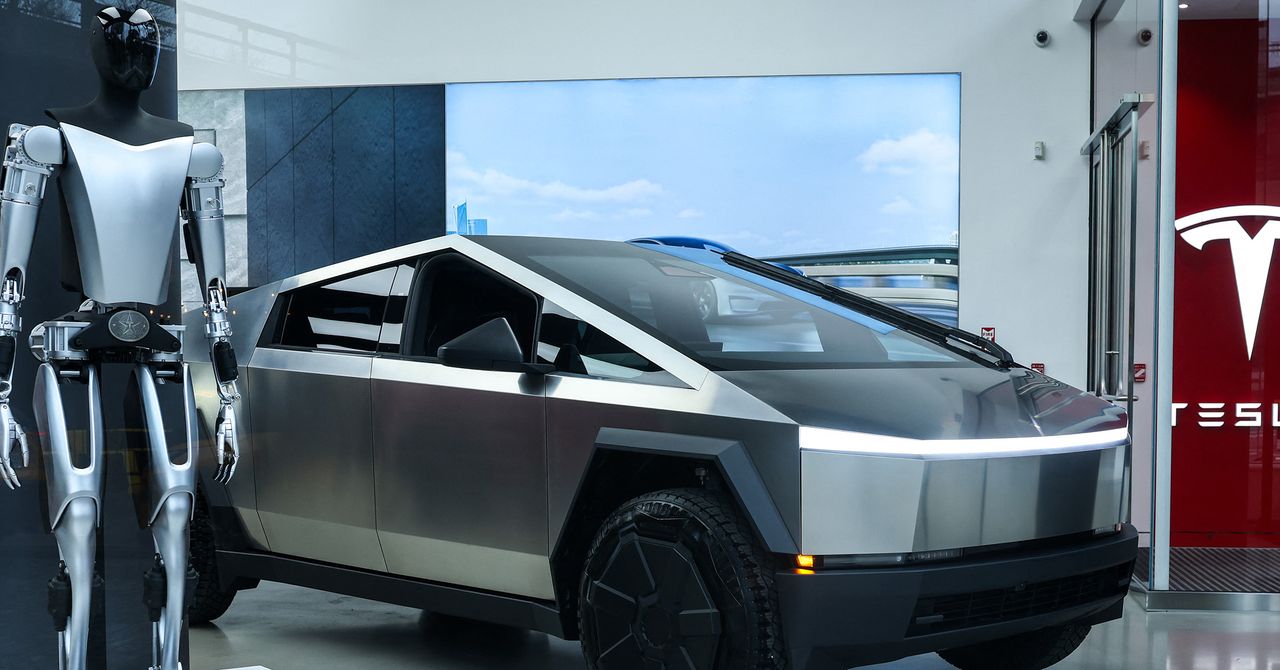
When Musk's Cyber Dream Collides with Reality
The Cybertruck is being discontinued. The news sparked a discussion on Hacker News with 280 points and 388 comments, and Wired's headline delivered a direct verdict on the vehicle—"unloved, unneeded, and utterly absurd."
A product once championed by Musk as something that would "change the pickup truck industry" is now exiting in near silence. This isn't just another failed EV—it's a textbook case of design obsession colliding head-on with market realities.
That Unforgettable Stainless Steel Wedge
The Cybertruck's exterior design was destined to be controversial from day one. The overall silhouette looks like a crumpled sheet of stainless steel, completely ignoring aerodynamics and barely referencing any existing pickup design language.
Behind this radical choice is Musk's obsession with "futurism"—he didn't want a pickup truck, he wanted a symbol. The problem is that pickup buyers want the exact opposite: something that can haul cargo, go off-road, and roll onto a job site. The Cybertruck's cold-rolled stainless steel shell may look sci-fi, but it makes repair costs absurdly high—minor dents are nearly impossible to fix.
Wired directly stated that the vehicle is "unloved and unneeded." Behind this assessment lies a disconnect on two levels: consumers don't buy it, and the industry doesn't either.
Cold-rolled stainless steel refers to steel rolled to a target thickness through rollers without heating, offering high surface finish, strength, and hardness, but relatively low ductility. The ultra-hard cold-rolled stainless steel Tesla chose for the Cybertruck (internal code 30X) is exactly this material, with yield strength far exceeding ordinary automotive steel plate. The problem with this material: on one hand, the extreme hardness renders traditional sheet metal repair techniques almost useless—dents from minor collisions are difficult to restore through conventional pulling; on the other hand, forming stainless steel requires higher-tonnage stamping equipment, and springback control is difficult, making manufacturing tolerances hard to manage. Additionally, stainless steel surfaces cannot be conventionally painted like regular car paint, further limiting exterior customization and repair flexibility. These material characteristics translate directly into high after-sales repair costs, becoming a shared concern for ordinary consumers and insurance companies alike.
The Mismatch Between Product Logic and User Needs
The Cybertruck's core problem isn't at the engineering level—it's at the product definition level.
Who Is It Built For?
Traditional pickup users have very clear use cases—farmers, construction workers, outdoor enthusiasts. These people care about payload capacity, towing power, repair convenience, and durability. The Cybertruck's performance in these dimensions makes it hard to convince someone who's driven a Ford F-150 for twenty years to switch.
Meanwhile, the other category of potential buyers—tech early adopters—are deterred by its size and practicality. This creates the Cybertruck's awkward positioning: stuck between two markets.
Ford F-150 is the benchmark product in the American pickup market, having topped US vehicle sales for decades, with a highly representative user base and use cases. The F-150's success is built on precisely meeting core pickup needs: high payload capacity (over one ton), strong towing capability (over 13,000 pounds), an extensive dealer service network, and extremely low repair barriers. Its body uses a hybrid high-strength steel and aluminum alloy structure, with a mature repair network and ample parts supply—any small-town repair shop can handle common issues. Additionally, the F-150 offers a complete product matrix from basic work models to luxury trims, covering a wide price range and simultaneously meeting job site practical needs and family daily use. The Cybertruck attempted to enter this market with a single radical product but failed to establish clear advantages over the F-150 in core metrics like payload, towing, and repair convenience, while being at a disadvantage in price and practicality—this is precisely the key reason it struggles to win over traditional pickup users.
The Dual Dilemma of Production Capacity and Pricing
From raw materials to manufacturing processes, the Cybertruck's stainless steel exoskeleton approach required an entirely new production line design, which directly drove up costs. Even after multiple price adjustments, it still struggles to compete head-on within the price band against traditional pickups and emerging competitors.
The stainless steel exoskeleton design means the body structure's primary structural strength is borne directly by external stainless steel panels, rather than the layered structure of internal frame plus exterior covering used in traditional vehicles. Traditional pickup bodies use chassis rails or unibody frames for structural rigidity, with exterior coverings (doors, fenders, etc.) serving only styling and aerodynamic functions, made from stamped steel or aluminum alloy—low cost and easy to replace. The Cybertruck's stainless steel exoskeleton combines exterior panels with structural components, eliminating some internal framing, but at the cost of: exterior panels must be thick enough to bear structural loads, increasing overall vehicle weight; manufacturing tolerances are extremely demanding because panels are both structural and cosmetic; post-collision repairs no longer involve replacing coverings but complex repairs involving structural components. This design has precedents in aviation and aerospace, but is extremely rare in mass-produced civilian vehicles—its production line requires entirely new welding, forming, and assembly processes, which is one of the root causes of the Cybertruck's slow production ramp-up and high costs.
Collective Reflection on Hacker News
Among the 388 comments on HN, the intensity of discussion itself is worth noting. Top-voted discussions converged on one point: does this indicate a systematic blind spot in Musk's "first principles" approach to product definition?
An interesting observation: many commenters pointed out that the Cybertruck's predicament isn't a technical failure—its engineering implementation is extremely difficult, and in some sense it truly accomplished what others couldn't—but rather "doing what's possible in places users don't care about."
This reflection has reference value for the entire EV industry: when technical showmanship and user value diverge, the market will ultimately side with users.
First principles refers to a thinking approach that breaks problems down to the most basic facts or physical laws, then reconstructs solutions from these fundamental facts, rather than reasoning by analogy or existing experience. Musk has repeatedly publicly emphasized applying first principles to engineering decisions at Tesla and SpaceX—for example, redesigning battery packs based on raw material costs, and designing rocket reusability based on physical limits. In the Cybertruck project, first principles application manifested in: selecting stainless steel exoskeleton based on material strength, designing the wedge-shaped body based on styling symbolism, and reducing part count based on manufacturing simplification. However, critics point out that first principles excels at solving "how to do it" engineering problems but cannot automatically answer "do users need it" product questions. When the selection of basic facts itself ignores constraints like user use cases, repair ecosystems, and price sensitivity, starting from correct principles can still derive incorrect product definitions. This is the deeper meaning behind what HN commenters called "doing what's possible in places users don't care about."
Implications for the Industry
The Cybertruck's exit won't change the long-term direction of electrification, but it provides a sufficiently clear warning signal.
Radical design needs to match real demand. Tesla's success has never relied on styling spectacles, but on the Model 3 and Model Y delivering experiences at mainstream-acceptable levels in key dimensions. The Cybertruck deviated from this path.
For emerging automakers, this case is especially directly relevant: product definition priority always outranks technical showcase. You can use a vehicle to shape brand image, but you can't expect a showmanship model to carry sales.
The Cybertruck may leave a mark in automotive history—only in the form of a rhetorical question: when engineering capability overrides user understanding, can a product still be called a product?
One-line Summary
Cybertruck's discontinuation reveals a textbook case of disconnect between product definition and user needs.
Paragraph Summary
The Cybertruck's discontinuation sparked heated discussion on Hacker News, with Wired characterizing it as "unloved, unneeded, and utterly absurd." The article points out that the vehicle's problem isn't engineering but product definition: the cold-rolled stainless steel exoskeleton and radical wedge shape are severely disconnected from pickup users' core needs for payload, towing, and repair convenience. Traditional pickup users aren't buying, while tech early adopters find the size and practicality lacking—positioned between two markets. Production capacity and pricing dilemmas further compressed its survival space. HN commenters reflected that this exposes a blind spot in "first principles" product definition—no matter how strong the engineering, if it's done in places users don't care about, the market won't pay. The article ultimately warns the industry: product definition priority always outranks technical showcase.
Related articles
 Tech Frontiers
Vibe Coding Step-by-Step Guide: Learn to Build Products with AI in Six Steps
Breaking down the six-step methodology of Bilibili's 748-episode Vibe Coding course, analyzing the usage boundaries and prompt techniques of Codex, Claude Code, and Cursor, and discussing who this AI coding course suits, who it doesn't, and how to avoid the trap of watching without acting.
 Tech Frontiers
Is a $50 Pro Tier Really Coming? Plus Could Face Major Restrictions
A Reddit rumor suggests a $50 Pro subscription tier is coming and that the existing Plus tier will be aggressively limited. We analyze the rumor's credibility, the business logic behind subscription tiering, and practical ways to evaluate such pricing-change rumors.
 Tech Frontiers
Coldframe: A Honeypot Disguised as a Supermarket Freezer Controller
Coldframe is a honeypot disguised as Danfoss AK-SM 800A and Dixell XWEB freezer controllers, built as a single Python file that detects CVE-2025-41450 attempts and is identified as real devices on Shodan.