Data Centers Soar, US Climate Pollution Could Surge 42%

Surging data center power demand could drive a 42% rebound in U.S. power sector carbon emissions by 2030, erasing 15 years of reductions.
A Sierra Club analysis points out that the U.S. power sector is building out fossil fuel infrastructure on a large scale to meet the ever-growing electricity demand from data centers. By 2030, CO2 emissions could surge 42% compared with 2025, nearly wiping out all greenhouse gas reductions over the past 15 years. Generative AI is driving exponential growth in compute demand; surging data center electricity use is widening the power gap, and fossil fuels filling the breach are causing emissions to rebound. Although tech giants claim carbon neutrality or 100% renewable electricity, their actual electricity mix falls short of their pledges, and green power certificates fail to reflect true carbon footprints. The article proposes mitigation paths such as improving chip energy efficiency, optimizing cooling technology, siting in clean energy-rich areas, and investing in storage and nuclear power, while warning that an "expand first, govern later" logic could cause the emissions curve to rebound sharply.
According to a new analysis by the Sierra Club, the U.S. power sector is building out fossil fuel infrastructure on a large scale to meet the ever-growing electricity demand from data centers. By 2030, its carbon dioxide emissions could surge 42% compared with 2025, which would nearly wipe out all the greenhouse gas reductions achieved over the past 15 years.
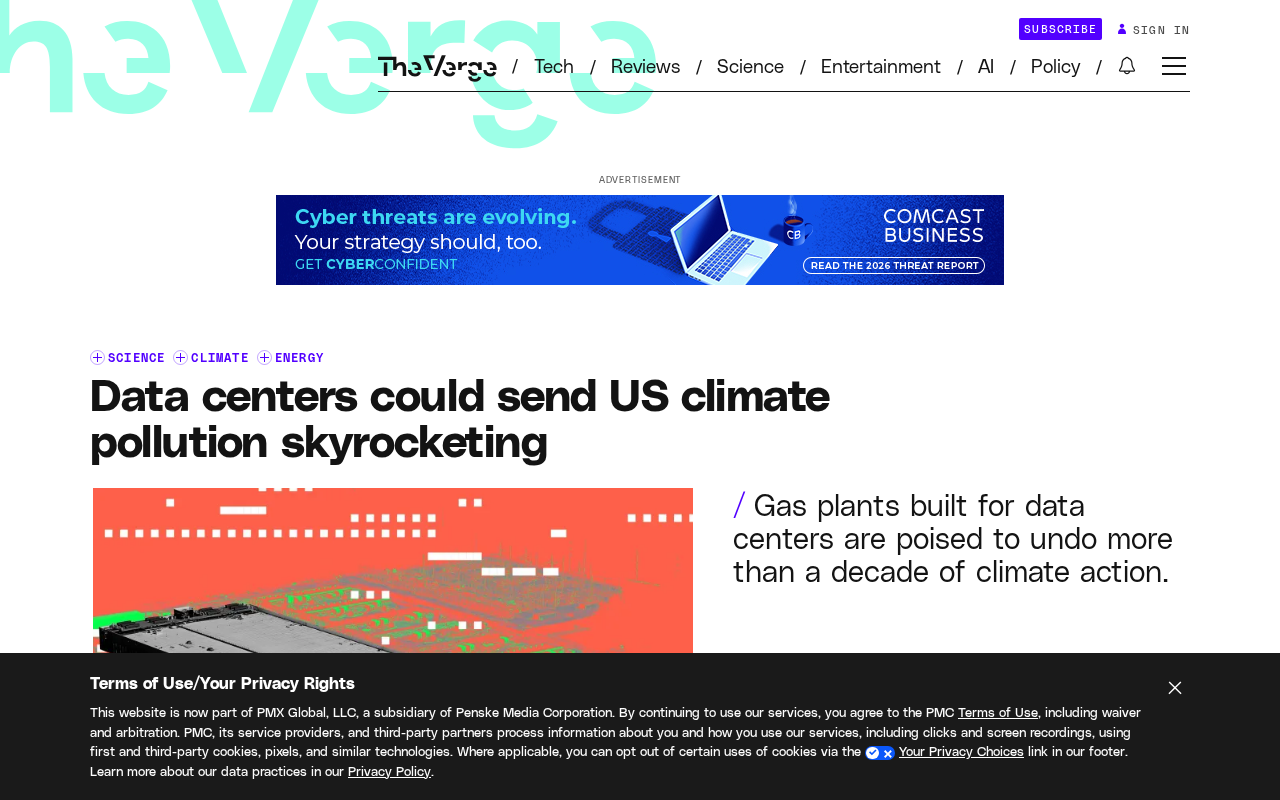
Data Centers: The Energy Black Hole Behind the AI Boom
The explosion of generative AI has caused data center compute demand to grow exponentially, and behind that compute lies enormous electricity consumption. Training large models, running inference services, and supporting cloud computing—every link in the chain depends on a stable power supply. Tech giants are racing to expand data centers, yet they rarely discuss publicly the carbon footprint of their energy sources.
The Sierra Club analysis points directly to a neglected chain reaction: surging data center electricity use → a widening power gap → fossil fuels filling the breach → a carbon emissions rebound. This is not alarmism; it is a trend that is already unfolding.
PUE (Power Usage Effectiveness) is the core metric for measuring data center energy efficiency, defined as the ratio of a data center's total power consumption to the power consumed by IT equipment. The closer PUE is to 1, the less energy is used for auxiliary systems such as cooling and power distribution. Traditional data centers often have a PUE between 1.5 and 2.0, meaning nearly half of the electricity is consumed in non-computing components; advanced liquid-cooled or free-cooling data centers can bring PUE down to around 1.1. Understanding PUE helps explain why simply adding compute can create electricity demand far beyond expectations—if efficiency gains cannot keep pace with compute expansion, total electricity use will still climb rapidly.
What a 42% Increase Means
A 42% increase is a staggering figure. According to the Sierra Club's estimate, it is equivalent to letting the U.S. power industry's 15 years of clean energy transition efforts go to waste. The growth of wind and solar installations and the gradual retirement of coal power could be almost entirely offset by new natural gas and coal-fired generation.
Even more alarming is that this emissions rebound is occurring during a critical window for global climate action. Just as the scientific community repeatedly warns that the emissions reduction window is closing, the expansion of AI infrastructure is pulling fossil energy demand in the opposite direction.
Tech Giants' Green Pledges Face a Test
Many tech companies claim they will achieve carbon neutrality or 100% renewable electricity, but the actual electricity mix of their data centers often falls short of those pledges. When the share of fossil fuels in the grid rises, even companies that purchase green power certificates may see their actual carbon footprint increase.
The core of this contradiction is that the AI race does not allow for slowing down, while climate goals require emissions reductions. The tension between the two is becoming an unavoidable governance challenge for the tech industry.
Green power certificates (RECs) and 24/7 carbon-free energy are two key concepts for assessing a company's electricity carbon footprint. Green power certificates allow companies to purchase renewable energy credits on an annual volumetric matching basis, but they do not correspond to the time and location of actual electricity use—when the grid relies on fossil fuels at night or on cloudy days, companies can still claim "100% renewable energy" based on annual certificates. This explains the gap between tech giants' pledges and their actual carbon emissions. In recent years, some companies have begun shifting to "24/7 carbon-free energy" targets, which require hourly matching of electricity use with local carbon-free power sources, but this standard places higher demands on grid structure and energy storage and is difficult to implement fully in the short term.
The Way Forward: Efficiency, Siting, and Energy Mix
Mitigating this conflict is not impossible. Improving chip energy efficiency, optimizing data center cooling technology, deploying new compute capacity in regions rich in clean energy, and investing in stable low-carbon power sources such as energy storage and nuclear power are all directions worth exploring.
But the Sierra Club analysis reminds us that if the industry continues to advance under the logic of "expand first, govern later," the U.S. power system's carbon emissions curve could rebound sharply in the coming years. Data centers should not become a blind spot in climate action.
Demand response and grid flexibility are another dimension for easing the conflict between data center expansion and emissions reduction. Data centers have some potential for load adjustment: by shifting non-urgent computing tasks (such as batch model training) to periods when the grid has surplus clean electricity or lower electricity prices, dependence on new fossil fuel peaking units can be reduced. In addition, siting in clean energy-rich areas with supporting storage can reduce the pull on fossil fuel power sources in the grid. However, the effectiveness of such measures depends on whether data center operators are willing to concede some flexibility in compute scheduling, and whether the local grid has the corresponding market mechanisms.
One-line Summary
Surging data center electricity demand could cause U.S. power sector carbon emissions to rebound 42% by 2030, erasing 15 years of reductions.
Paragraph Summary
A Sierra Club analysis finds that the U.S. power sector, in order to meet the ever-growing electricity demand from data centers, is building out fossil fuel infrastructure on a large scale. By 2030, carbon dioxide emissions could surge 42% compared with 2025, nearly wiping out all greenhouse gas reductions achieved over the past 15 years. Generative AI is driving exponential growth in compute demand; surging data center electricity use is widening the power gap, and fossil fuels filling the breach are causing carbon emissions to rebound. Although tech giants claim carbon neutrality or 100% renewable electricity, their actual electricity mix falls short of their pledges, and green power certificates fail to reflect true carbon footprints. The article proposes mitigation paths such as improving chip energy efficiency, optimizing cooling technology, siting in clean energy-rich areas, and investing in storage and nuclear power, while warning that a "expand first, govern later" logic could cause the emissions curve to rebound sharply.
Related articles

Vibe Coding Full-Stack in Practice: AI Programming from Beginner to Enterprise Deployment
From Cursor to Claude Code, this Bilibili AI programming course uses four progressive projects to cover full-stack development, open-source secondary development, and team collaboration. The article analyzes the shock to frontend roles, the efficiency shift from 50 people to 5, and the methodology required for enterprise-grade projects.

David Blaine's Global Quest for Real Magic: From South Africa to Japan and India
David Blaine travels to South Africa, Japan, and India in his Do Not Attempt special, documenting Spinning drivers, black mamba rescuers, iaijutsu masters, and ascetics—exploring the boundary between magic and real human极限 challenges.

Is a Touchscreen MacBook Coming? Vergecast Reveals Apple Executive's Response
Vergecast podcast reveals a conversation between a reporter and Apple executive John Ternus about a touchscreen MacBook and Apple Pencil support. Ternus says iPad is the best device for a stylus, while the reporter bets MacBook will eventually support Apple Pencil.