datasette-cluster-map 0.19 Released: Compatible with Datasette 1.0a42

datasette-cluster-map 0.19 supports Datasette 1.0a42 and moves tile requests to datasette-leaflet.
datasette-cluster-map has released version 0.19, centered on compatibility maintenance: supporting Datasette 1.0a42 and migrating map tile requests to the datasette-leaflet plugin so OpenStreetMap tile requests carry a referrer header. Author Simon Willison calls it one of his favourite plugins. The release notes use a California PG&E power plant map to demonstrate map point clustering and integration with the new facet feature, where bars show category proportions and filtering narrows the map to matching points. The article says such maintenance releases lower upgrade costs and show old plugins still keep pace with core evolution.
One of the longest-standing plugins in the Datasette ecosystem, datasette-cluster-map, has reached version 0.19. Author Simon Willison calls it "one of my favourite plugins" in the release notes; this update mainly addresses two things: compatibility with Datasette 1.0a42, and migrating the way map tile requests are made to the new datasette-leaflet plugin.

A Compatibility-Focused Update
Judging by the version number, 0.19 is a minor iteration, but the changes land right on the Datasette 1.0 migration cadence. Datasette 1.0a42 belongs to the 1.0 alpha series, and plugins need to keep up with core API changes to keep working. datasette-cluster-map choosing to ship a compatible version at this point means users still on the older plugin won't suddenly find their maps broken after upgrading Datasette.
More noteworthy is the change in dependencies: the new version depends on datasette-leaflet. That plugin centralizes management of Leaflet-related static assets, and its key role here is to ensure OpenStreetMap tile requests carry a referrer header. For map plugins, tile service terms of use and request-origin identification have always been easy-to-overlook details; delegating this to a dedicated lower-level plugin is more robust than having every higher-level plugin assemble URLs on its own.
The "a42" in Datasette 1.0a42 refers to the 42nd iteration in the alpha version series. Before the 1.0 final release, Datasette has long shipped preview versions in this fast, small-step manner, and each alpha may include API changes, deprecations, or UI adjustments. Plugin authors typically need to test compatibility against specific alpha versions, because plugin hook signatures, template variables, or static asset loading methods may change between iterations. This is why plugin release notes explicitly state "compatible with 1.0a42" rather than vaguely saying "compatible with Datasette 1.0."
The referrer header is an HTTP header automatically attached by the browser when making cross-origin requests, used to tell the target server the address of the referring page. Many tile services (including OpenStreetMap's official tile server) have usage policies requiring requests to carry a valid referrer, so that traffic sources can be identified and abuse limited when necessary. If pages using the map send requests in certain ways (for example, without correctly setting the referrer policy, or opening the page directly via file://), the referrer may be missing, causing tiles to be rejected or accounts to be restricted. datasette-leaflet handles this detail uniformly, so higher-level map plugins don't each have to reimplement it.
Plugin Capabilities Seen Through the PG&E Power Plant Map
The example given in the release notes is a map of power plants owned by PG&E in California, which also showcases Datasette's recently redesigned facet feature. This example makes the plugin's two value points clear.
The first is map clustering. Data points are shown on the map as clusters, with several clusters of different sizes forming across northern and central California, plus scattered individual markers along the coast. For unevenly distributed data like power plants, clustering prevents a large number of markers from overlapping and obscuring each other, making regional density visible at a glance.
The second is integration with facets. The facet panel in the screenshot shows three dimensions: country_long, owner, and primary_fuel, with primary_fuel listing categories such as Hydro, Solar, Gas, Storage, and Nuclear, each row backed by a light blue horizontal bar drawn in proportion to its count. The bar for Hydro nearly fills the entire row width, Solar is noticeably shorter, Gas shorter still, and Storage and Nuclear are reduced to a thin line on the left. This design of expressing proportions through bar length makes the data distribution readable before any filtering.
Once filter conditions are combined, the map retains only data points that meet the criteria. In the example, the country is limited to the United States and the owner is set to PG&E, and the map extent accordingly shrinks to California and parts of Nevada. This combination of "facet filtering + map display" is exactly the typical use of datasette-cluster-map in exploratory data analysis: first narrow the scope with facets, then view the spatial distribution on the map.
A facet is an interactive filtering mechanism in Datasette used to group and count by column values. In the table view, Datasette generates a facet panel for specified columns, with each row showing a unique value and its corresponding record count; clicking a value adds that condition to the current query, and the page refreshes to show the filtered results. The light blue horizontal bars mentioned in the article are a newly added visual element from the redesign, with bar length proportional to the record count for that value—effectively showing the shape of the distribution before you click. Multiple facets can be stacked, and Datasette combines these conditions into the SQL query with AND, so in the example, once "country=United States" and "owner=PG&E" take effect simultaneously, the map data naturally shrinks to the California extent.
What Continuous Maintenance of an Old Plugin Means
datasette-cluster-map is described by its author as one of Datasette's oldest plugins, and that positioning itself reflects an ecosystem phenomenon. Datasette's core keeps evolving, and the 1.0 alpha series brought UI-level adjustments such as facets; if plugins can't keep up, users experience it as "some features stop working after upgrading."
This update introduces no new features, but instead straightens out compatibility and lower-level dependencies. For users, the value of this kind of maintenance release lies in reducing upgrade costs; for those observing the Datasette ecosystem, it shows the author is still investing effort in old plugins rather than letting them stagnate at some historical version.
If you're using Datasette for quick browsing of geographic data and have already moved to 1.0a42, upgrading to 0.19 is a necessary step; if you're still on an older version, this release is also a good opportunity to check your plugin dependency chain, especially the Leaflet-related parts.
One-line Summary
datasette-cluster-map 0.19 supports Datasette 1.0a42 and migrates to datasette-leaflet for managing tile requests.
Paragraph Summary
datasette-cluster-map has released version 0.19, focused on compatibility maintenance: supporting Datasette 1.0a42 and migrating map tile requests to the datasette-leaflet plugin to ensure OpenStreetMap tile requests carry a referrer header. Author Simon Willison calls it one of his favourite plugins. The release notes use a California PG&E power plant map example to demonstrate two capabilities: map point clustering and integration with the new facet feature—the facet panel visually expresses category proportions through bar length, and after filtering the map retains only matching data points. The article argues that such maintenance releases lower users' upgrade costs and show that old plugins continue to keep pace with core evolution.
Related articles

AI Writes Your Code—Do You Still Need to Learn Git? Five Reasons
AI coding agents handle Git operations automatically—is it still necessary to learn Git? Five reasons: team communication, reviewing agent PRs, monitoring code changes, fallback when AI goes down, and the joy of learning—plus how the focus of learning Git is shifting in the agent era.

Anthropic Reportedly Prices IPO at $83 Per Share, Valuing Company at $1.5 Trillion
Anthropic reportedly prices IPO at $83 per share, above the expected range, with a fully diluted valuation of $1.5 trillion. This article analyzes the signal significance of the pricing and its impact on the AI industry's financing environment.
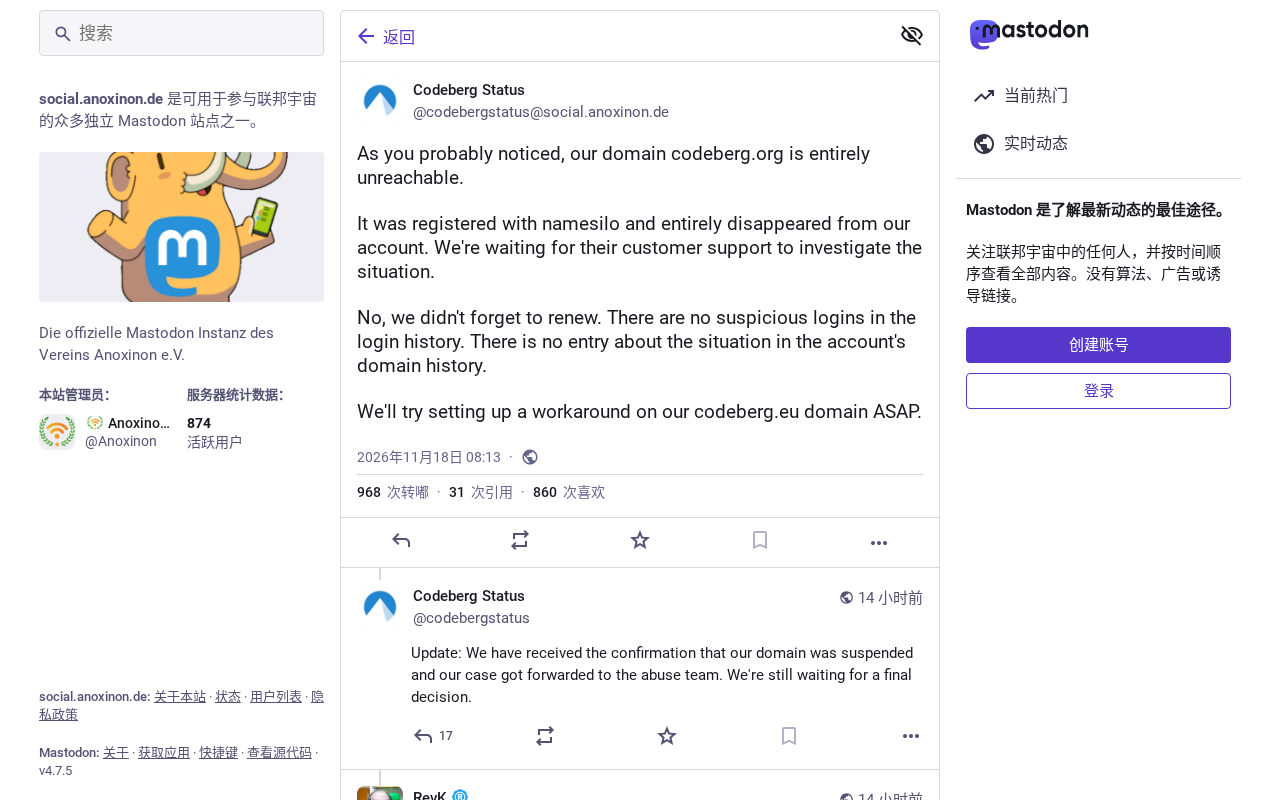
Open-Source Code Hosting Platform Codeberg Suffers Outage, Sparking Debate in Developer Community
Open-source code hosting platform Codeberg.org suffered an outage, sparking Hacker News debate over nonprofit platform stability and open-source infrastructure dependency risks.