Decoding Vance's New Memoir: The 2028 Presidential Campaign Strategy Behind a Faith Narrative
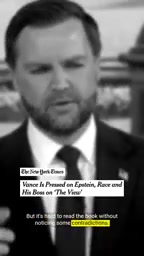
Vance's faith memoir is less spiritual autobiography than a strategic 2028 presidential campaign blueprint.
Vice President J.D. Vance's new memoir presents his Catholic conversion as a spiritual journey, but a closer reading reveals it as a calculated political strategy for 2028. The book's most glaring contradiction lies between his professed faith and his dismissal of Catholic Social Teaching on immigration — a stance directly criticized by successive popes and the U.S. bishops' conference. The memoir follows a long tradition of pre-campaign political books, positioning Vance as Trump's heir apparent through selective faith narratives.
Vice President Vance's Faith Narrative and Political Ambition
U.S. Vice President J.D. Vance recently published a new memoir recounting his journey of losing faith, struggling with life's meaning, and ultimately finding belonging in the Roman Catholic Church. The book is eloquently written, but a careful reading reveals glaring contradictions — it's not merely a spiritual autobiography, but more of a meticulously packaged political manifesto.
Vance first rose to prominence with his 2016 memoir Hillbilly Elegy, which described his impoverished upbringing in the Appalachian region of Ohio and was widely regarded as an essential text for understanding the white working-class voters who supported Trump. He later transitioned from venture capitalist to politician, winning election as a U.S. Senator from Ohio in 2022 and being chosen as Trump's running mate in 2024, successfully winning the vice presidency. Notably, Vance had once publicly criticized Trump, calling him "America's Hitler," before executing a complete 180-degree political reversal to become one of Trump's most loyal allies. This transformation itself provides crucial context for understanding his new memoir — a politician skilled at reinventing his personal narrative is once again using the written word to redefine himself.
In the book, Vance champions a return to Christian tradition, arguing that faith can serve as a common social language. Yet he spends almost no time discussing how his leadership reflects Catholic Social Teaching, nor does he explain how these values might be applied to build a better society. Catholic Social Teaching (CST) is the Catholic Church's comprehensive ethical framework on social justice issues, with core principles including: the inviolable dignity of the human person, preferential option for the poor and vulnerable, solidarity, subsidiarity (the principle that social problems should be addressed at the lowest effective level), and the primacy of the common good. These teachings trace back to Pope Leo XIII's 1891 encyclical Rerum Novarum and have developed over more than a century into a systematic social ethics framework. Vance's approach of "talking faith without talking practice" — particularly his avoidance of such a rich tradition of social teaching — inevitably raises questions about the book's true purpose.
Immigration Policy: The Biggest Contradiction Between Vance's Faith and Governance
The most striking contradiction in this memoir emerges in Vance's treatment of immigration. When addressing the Trump administration's handling of immigrants, Vance's tone becomes markedly defensive and dismissive. He argues that immigration enforcement is inherently "messy" and involves various "trade-offs."

This stance stands in stark contrast to the Catholic Church's official teachings. On immigration, Catholic Social Teaching clearly holds that nations have an obligation to welcome immigrants seeking better lives — especially refugees and the persecuted — while acknowledging a state's right to manage its borders, provided that management respects fundamental human dignity. In fact, Trump's immigration agenda and overseas war policies are precisely the two areas where successive popes and the U.S. Conference of Catholic Bishops have directly criticized Trump and Vance.

Pope Francis has repeatedly and publicly criticized U.S. immigration enforcement policies. In 2019, he stated that "those who build walls will end up becoming prisoners of the walls they build" — a direct response to Trump's border wall policy. In early 2025, Francis took the rare step of directly calling out America's mass deportation operations, calling them "shameful." The United States Conference of Catholic Bishops (USCCB) has likewise long opposed harsh immigration enforcement measures. Its subsidiary Migration and Refugee Services is one of the largest refugee resettlement organizations in the country. The bishops' conference has issued multiple statements opposing the separation of immigrant families, opposing abuse in detention facilities, and calling for a path to legalization for undocumented immigrants. These positions fundamentally conflict with the Trump-Vance administration's hardline immigration policies.
Vance appears to have chosen to ignore these criticisms from the highest levels of the Church. For someone who claims to have found life's meaning in Catholicism, this selective acceptance of doctrine exposes a deep tension between faith narrative and political reality.
Vance's 2028 Presidential Campaign Positioning
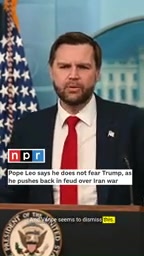
So why should we pay attention to a vice president's memoir? The answer is simple: Vance is widely regarded as Trump's heir apparent for 2028. In American political tradition, publishing a book is a classic strategy for politicians to shape their public image. Barack Obama published Dreams from My Father in 2004 and The Audacity of Hope in 2006, laying the narrative foundation for his 2008 presidential campaign. Hillary Clinton, Marco Rubio, Ted Cruz, and others all published similar works before their campaigns. These books serve functions far beyond literature — they are strategic tools for candidates to control their narrative, define their public image, and signal to donors and voters. Vance's earlier Hillbilly Elegy already demonstrated his ability to use personal narrative to shape a political persona, and this new faith memoir is clearly a continuation and escalation of the same strategy.
Vance's book doesn't just reveal how he thinks — more importantly, it shows how he wants the public to see him. If Vance truly has a strong chance of becoming the next U.S. president, then decoding his self-narrative becomes critically important. This memoir is essentially a carefully orchestrated image-building exercise — using a faith story to establish moral authority while deftly sidestepping the thorny questions where faith and policy collide.
How Selective Faith Becomes a Political Tool
Vance's book reveals a phenomenon worth watching in contemporary American conservative politics: faith being instrumentalized as part of a political narrative. He embraces Catholicism's cultural identity and moral framework while going selectively deaf in policy areas where the Church has taken clear opposing positions. This "cafeteria-style" practice of faith may be politically shrewd, but it is theologically indefensible.
"Cafeteria Catholicism" is a common critical term in American religious discourse, referring to believers who selectively accept the parts of Church teaching that align with their preferences while ignoring the inconvenient parts. This phenomenon is particularly prevalent in American politics: Democratic Catholics tend to diverge from Church positions on abortion and contraception, while Republican Catholics tend to clash with the Church on immigration, the death penalty, and economic justice. More broadly, this reflects a deep trend in the American religious right movement since the 1970s — religious identity has increasingly become a marker of political alliance rather than an independent moral guide. Sociologists call this phenomenon the "politicization of religion," where political positions determine religious interpretation rather than the other way around. Vance's case is the latest and most vivid illustration of this trend.
For observers tracking the direction of American politics, this book provides an important window: Vance is constructing a political brand that fuses nationalism, traditionalism, and selective religious narrative in preparation for a 2028 presidential run. His success or failure may hinge on whether American voters are willing to accept this carefully edited faith story.
Key Takeaways
Related articles

Replit at Web Summit Lisbon: AI Coding Platform Accelerates European Expansion
Replit participated in Web Summit Lisbon 2026 Day 1 as Replit Live. This article examines its transition from an online IDE to an AI app-building platform and analyzes its European market opportunities and compliance challenges.

Codex Integrates with Zotero: Batch Literature Review and Deep-Read Tools Tested
Hands-on testing of two new Codex functions for Zotero: batch literature reviews by collection and screening key papers for deep reading. Covers comparison tables, citation verification, the three-layer method and experiment analysis, plus a complete workflow.

Codex + Obsidian + Zotero: An AI-Powered Automated Paper Reading Workflow
A Codex + Obsidian + Zotero paper management and retrieval workflow: Zotero manages references, Codex calls GPT for close reading and notes, Obsidian with DataView builds indexes, enabling Q&A with your paper library and quick literature review material — includes close-reading template and two Skill setup steps.