DeepSeek Full-Featured Client Arrives on HarmonyOS Ecosystem: One API for Unlimited Refresh and Branching
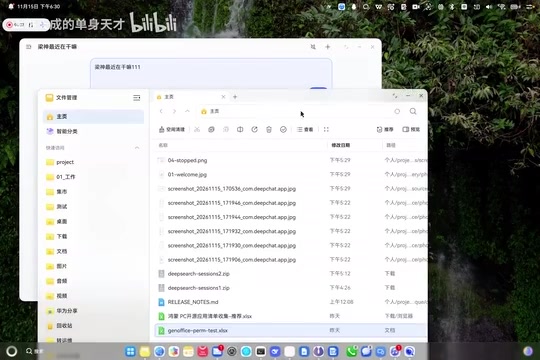
A developer open-sources a full-featured DeepSeek client for HarmonyOS based on the official API, supporting unlimited refresh and multi-branch conversations.
The article introduces a full-featured HarmonyOS client built by a developer based on DeepSeek's official API. Users only need to supply their own API key, and it supports "unlimited refresh" and "unlimited branching" (i.e., regenerating responses and multi-branch conversation management), seen as a reinforcement of the HarmonyOS AI app ecosystem. The video also mentions DeepSeek completed two financing rounds within half a year, totaling over 150 billion yuan, but this is single-source data and should defer to official disclosures. The article analyzes the value of such open-source clients—filling gaps not covered officially and demonstrating HarmonyOS development feasibility—and notes limitations: stability depends on the official interface, maintenance depends on the author's energy, and "unlimited" claims still need real-world verification.
Recently, a video on Bilibili drew attention: a developer has built a full-featured DeepSeek client for the HarmonyOS ecosystem based on DeepSeek's official API. According to the video title, users only need one API key to experience "unlimited refresh and unlimited branching." This move is seen by some community members as a reinforcement of the HarmonyOS AI application ecosystem.
Filling the AI Client Gap in the HarmonyOS Ecosystem
The HarmonyOS native app ecosystem is still growing, and AI tools—especially large model clients—remain relatively limited. The core value of this open-source DeepSeekAd client lies in fully encapsulating the official API's capabilities into a HarmonyOS app, allowing HarmonyOS users to access chat, refresh, and branch-switching features locally without relying on the web version or third-party wrapper apps.
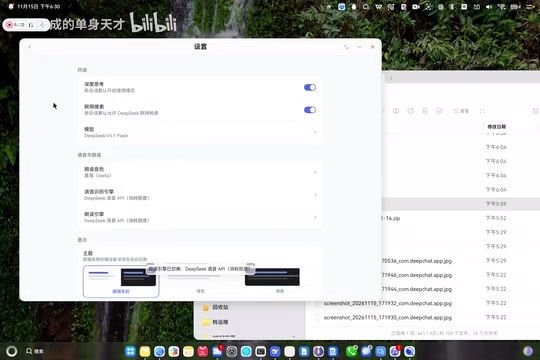
From a technical standpoint, such clients typically handle API authentication, request encapsulation, and streaming response rendering. The video emphasizes "only one API," meaning users can use it after entering their own key, bypassing in-app purchases or subscription systems, with costs determined entirely by API usage.
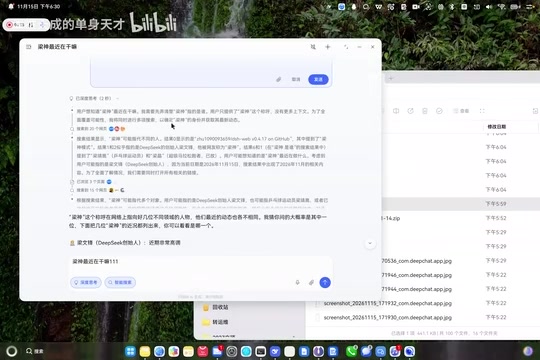
HarmonyOS native apps refer to applications built using Huawei's official HarmonyOS development framework (such as ArkTS/ArkUI) rather than running through a compatibility layer. The HarmonyOS ecosystem started relatively late, and the number and maturity of native apps are still catching up with Android and iOS—AI tool apps are especially scarce. Large model clients encapsulate cloud-based large model services (such as DeepSeek, ChatGPT) API capabilities into apps users can directly interact with, typically handling authentication, request encapsulation, and streaming response rendering. So-called wrapper apps merely skin the web version's interface without truly calling the API, resulting in poorer experience and controllability. The significance of open-source HarmonyOS native clients is that they bypass app store review and in-app purchase systems, letting users directly use model capabilities with their own API keys, and lowering the barrier for third-party developers to enter the HarmonyOS AI tool space.
The Intersection of Open Source and the "Liang Shen" Moniker
The "Liang Shen" in the title refers to multiple people in the Chinese internet space, and the original content explicitly notes this: the moniker may refer to individuals in different fields, one of whom is DeepSeek founder Liang Wenfeng. While introducing the client, the video also mentions DeepSeek's recent financing moves—according to the video content, DeepSeek completed two rounds of financing within half a year, with cumulative funding exceeding 150 billion yuan.
As a caveat, the above financing data comes from the video narration and is single-source information; readers should defer to official disclosures. What can be confirmed is that DeepSeek has indeed maintained high market activity recently, and its API has become the foundation for many developers building上层 applications.
API (Application Programming Interface) is the channel through which large model service providers open model capabilities to developers, with callers billed by token usage. API keys are credentials issued by service providers to identify callers and charge fees, so they must be kept secure and never shared publicly. In this project, users enter their own keys, meaning costs are determined entirely by their own API usage, and the app itself charges no subscription fee—this is the core of the "only one API" model: the client is merely the key holder and request forwarder, while the model service is still provided officially. This model is developer-friendly but also brings risks such as key leakage and API rate limiting, which users must weigh themselves.
What "Unlimited Refresh" and "Unlimited Branching" Mean
For ordinary users, "unlimited refresh" and "unlimited branching" are attractive phrases. Judging from product logic, this most likely means the client supports regenerating responses and multi-branch conversation management—users can repeatedly refresh within a conversation to get different replies, or start new conversation branches from any node without worrying about limits.
Such features are not uncommon in web-based large model products, but tools that fully implement branch management in HarmonyOS native clients are rare. If the client is indeed open source, developers can also customize it further based on its code—for example, changing the UI, adding local records, or connecting to other compatible API services.
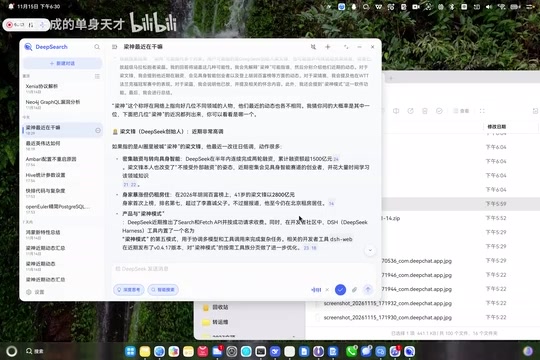
Multi-branch conversation management refers to deriving parallel reply branches from any message node in a conversation tree structure, allowing users to switch between, compare, or backtrack across branches without overwriting existing content. It differs from simple "regeneration"—the latter typically replaces the current reply, while the former preserves historical paths to form a tree-structured conversation. Streaming response rendering means the model returns output word by word (rather than waiting for the complete result), and the client must concatenate and render in real time to reduce perceived waiting. These two capabilities place high demands on the client's network request layer and state management, and complete implementations in HarmonyOS native apps are rare, so the technical reference value of this open-source project exceeds its functional scarcity.
Practical Significance and Limitations of the Open-Source Client
From an ecosystem perspective, an individual developer open-sourcing a HarmonyOS DeepSeek client fills a gap "not covered officially." It gives HarmonyOS users a lightweight option and demonstrates the feasibility of HarmonyOS app development. But the limitations are equally obvious: API keys are user-supplied, and stability depends on the official interface; the project's maintenance continuity depends on the author's energy; and the claimed "unlimited" features still require real-world verification.
For HarmonyOS users wanting to try it out, such projects are worth watching; for developers, it offers a sample for studying HarmonyOS network requests and streaming rendering. Whether it can become a long-term component of the HarmonyOS AI ecosystem depends on future updates and community feedback.
One-line Summary
A developer open-sources a full-featured DeepSeek client for HarmonyOS based on the official API, supporting unlimited refresh and multi-branch conversations.
Paragraph Summary
The article introduces a full-featured HarmonyOS client built by a developer based on DeepSeek's official API. Users only need to supply their own API key, and it supports "unlimited refresh" and "unlimited branching" (i.e., regenerating responses and multi-branch conversation management), seen as a reinforcement of the HarmonyOS AI app ecosystem. The video also mentions DeepSeek completed two financing rounds within half a year, totaling over 150 billion yuan, but this is single-source data and should defer to official disclosures. The article analyzes the value of such open-source clients—filling gaps not covered officially and demonstrating HarmonyOS development feasibility—and notes limitations: stability depends on the official interface, maintenance depends on the author's energy, and "unlimited" claims still need real-world verification.
Related articles

No Coding Required: He Shipped an App Store App by 'Cutting Features' and Nitpicking with AI
A game designer with zero frontend/backend skills shipped a dual-platform App Store app with AI—not via one-click generation, but by cutting scope and nitpicking like a demanding client.

What Is Harness Engineering? From Concept Origins to Enterprise-Level Agent Implementation
What is Harness Engineering? This article traces the concept's origins and analyzes enterprise-level Agent requirements for tool call fault tolerance, data security, tenant isolation, and memory gaps.
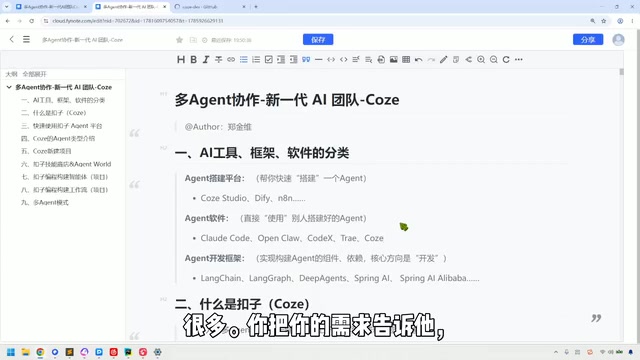
Coze in Practice: A Three-Tier Agent Classification and a Multi-Agent Collaboration Guide
A Bilibili tutorial breaks down the multi-agent collaboration toolchain into three categories: building platforms like Coze Studio and Dify, Agent software like Claude Code, and development frameworks like LangChain—plus a Coze demo of industry templates, three-platform interoperability, local Agent integration, and the trade-offs of credit consumption.