DeepSeek Is Open Source but Makes Money via API? Three Questions That Explain Its #1 Call Volume

DeepSeek's open-source business logic: profit from centralized inference efficiency, win call volume by being smart enough, cheap, and fast, and gain compute advantage from High-Flyer's early GPU stockpiling.
The article addresses three questions from a Bilibili video: how an open-source model makes money, why a non-top model ranks #1 in call volume, and why a quant fund background gives a compute advantage. Open source doesn't mean free—individuals can't self-host due to memory limits, and SMEs face idle machines, making API calls cheaper. DeepSeek uses global user scale and MoE architecture to reduce expert idle rates. On OpenRouter it holds about one-third of requests, chosen for being "smart enough, cheap, fast." Behind this is High-Flyer's GPU stockpile since 2016 and tens of thousands of A100s bought before the 2022 export ban.
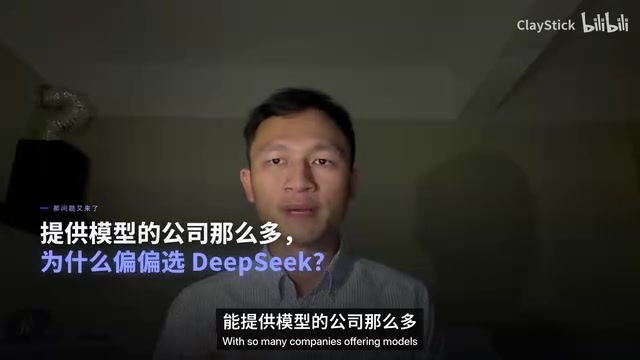
I came across a video discussing DeepSeek on Bilibili, where the creator raised three thought-provoking questions: If the model is open source, how does it make money? If it's not the most capable model, why does it rank #1 in call volume on aggregator platforms? And how could a company that started as a quantitative fund have an inherent advantage in compute? These three questions happen to connect the entire chain of business logic for open-source large models.
Open Source Doesn't Mean Free: The Real Cost of Self-Hosting
Anyone can download DeepSeekAd's model weights and deploy them on their own hardware, but "can deploy" and "deploying cost-effectively" are two different things. The creator breaks down the calculation from two perspectives.
For individuals, taking V4.1 Flash mentioned in the source material as an example, the weights are about 510GB. Just to fit the model, you'd need at least 510GB of memory, while most consumer computers have only 10-odd to several dozen GB of RAM. Running the model on a discrete GPU requires fitting it into VRAM, and consumer GPUs typically have only 8 to 32GB of VRAM. Self-hosting is basically unworkable for individuals.
For enterprises, those with GPU data centers can indeed deploy it, but many small and medium businesses don't use models around the clock—machines sit idle and draw power most of the time. Unless there are extremely strict data privacy requirements, self-hosting isn't cost-effective.
The bottleneck isn't just VRAM—it's utilization.
Why the MoE Architecture Makes Centralized Inference Cheaper
For the same model, DeepSeek's own deployment is cost-effective for two reasons.
First, user scale. Its model serves users worldwide—there's always somewhere on Earth where it's daytime. With more requests, they can be batched together for processing, so machines are rarely idle.
Second, the MoE (Mixture of Experts) architecture. Think of it as a large team of experts where only a few are called upon to handle each problem. For an SME self-hosting the model, it's like hiring the entire team of experts but only using a few at a time while the rest sit around scrolling on their phones—that's a loss of efficiency. DeepSeek, with its high request volume, can pool large numbers of requests and invoke experts in a coordinated way, so every expert has work to do and idle rates drop.
Even though the model is open source, self-hosting is expensive and leaves capacity idle, so most people end up calling it via API—which is exactly how it makes money.
MoE (Mixture of Experts) is a sparsely activated model architecture: the model contains multiple parallel "expert" sub-networks (usually a feed-forward layer) along with a gating network (router) that decides which experts to activate for each token. Unlike traditional dense models where every token passes through all parameters, MoE routes each token through only a few experts, so the total parameter count can be very large while the computation per forward pass scales only with the activated parameters. Common configurations include 8-choose-2, 64-choose-6, etc., determined by taking the top-k gating scores.
The cost of this design is high VRAM usage—all experts must reside in VRAM, waiting to be routed to. Another cost is load imbalance: if requests are sparse, some experts sit idle for long periods. MoE's economics depend heavily on batch size: the larger the batch, the more evenly experts get activated and the higher the hardware utilization. This explains why the same model has low unit cost under large-scale centralized inference but poor cost-effectiveness when self-hosted at small scale.
Not the Most Capable but the Most Used: Smart Enough, Cheap, Fast
Many companies offer models, so why do users prefer DeepSeek? You first need to understand the value of aggregator platforms.
When working with agents, a single task may require models from several companies. In the past, you'd have to register accounts with each company and top up separately—accounts were hard to manage and funds were scattered. Aggregator platforms like OpenRouter put various APIs in one place, so one account lets you use whichever you want. Which model users pick on the platform is effectively "voting with their feet."
Measured by request count, DeepSeek alone accounts for about one-third, ranking #1. But on evaluation platforms like Artificial Analysis, its intelligence level isn't #1. The creator sums up users' choice in three words: smart enough, cheap, fast.
Smart enough: Not top-tier smart, but smart enough. Many tasks don't require the highest level of intelligence—good enough is enough.

Cheap: Data in the source material shows V4.1 Flash costs $0.3 per million input tokens and $1.2 per million output tokens, while OpenAI's GPT-6 Astra is $10 and $50—a difference of 30 to 40 times.
Fast: Artificial Analysis's time per task (average time to complete a task) shows V4.1 Flash at 15.2 minutes, ranking second among these frontier models; GPT-6 Astra takes 24.7 minutes, Google's Gemline 4 Carbon takes 25.7 minutes, and Cloud Fable 5.2 takes 47.5 minutes.
There's an "impossible triangle" in the LLM world: intelligence, speed, and price are hard to balance. DeepSeek strikes a relatively good balance across all three, making it particularly suitable for executing tasks. User reviews on overseas platforms like X confirm this.
The Compute Advantage of a Quant Fund Background
Cheap and fast requires massive compute support. Where does a quantitative fund get so many GPUs?

The answer lies in its origins. DeepSeek is backed by the quantitative fund High-Flyer (幻方量化). High-Flyer began using GPUs to run deep learning models as early as 2016, and by the end of 2017 nearly all quantitative strategies had been converted to AI model computation, so it had bought large numbers of GPUs very early. One theory is that quantitative trading's GPU peak usage is during the day, leaving GPUs idle at other times—perfect for AI research unrelated to trading.
High-Flyer kept investing bigger: in 2020 it invested 200 million yuan to build the Fire-Flyer I training platform, and in 2021 another 1 billion yuan to build Fire-Flyer II, which housed roughly 10,000 NVIDIA A100 GPUs.
The key turning point came in October 2022, when the U.S. introduced regulations banning A100 chip exports to China. By the time ChatGPT took off in 2023 and the AI boom erupted, everyone realized they couldn't buy cards anymore—but High-Flyer already had tens of thousands of cards accumulated. At the time, almost no company in China besides a few tech giants could muster that scale of compute. Others started looking for cards only after seeing ChatGPT explode; High-Flyer's cards were already in the data center.
Three Questions, One Chain of Logic
Looking back at the three questions from the beginning: it can still make money despite being open source because it runs the model more cost-effectively than anyone else; it's not the most capable yet the most used because it's smart enough, cheap, and fast; and a quant fund could pull this off because it had long been doing AI-related research and happened to have enough GPUs. Open source is the entry point—efficiency and cost are the real moat.
One-line Summary
DeepSeek's open-source business logic: making money through centralized inference efficiency, winning call volume by being smart enough, cheap, and fast, and gaining compute advantage from High-Flyer's early GPU stockpiling.
Paragraph Summary
The article addresses three questions from a Bilibili video: how an open-source model makes money, why a non-top model ranks #1 in call volume, and why a company with a quant fund background has a compute advantage. The author notes that open source doesn't mean free—individuals can't self-host due to memory and VRAM limits, and SMEs face idle machines and energy costs, making API calls more cost-effective. DeepSeek leverages global user scale and MoE architecture to reduce expert idle rates, making centralized inference cheaper than enterprise self-hosting. On aggregator platforms like OpenRouter, DeepSeek accounts for about one-third of requests by count, ranking #1; users choose it for the balance of "smart enough, cheap, fast." Behind its low cost and speed is GPU resources accumulated by High-Flyer since 2016, with hundreds of millions invested in the Fire-Flyer platforms from 2020 to 2021 and tens of thousands of A100s stockpiled—a scarce advantage after the 2022 export ban.
Related articles

AI Writes Your Code—Do You Still Need to Learn Git? Five Reasons
AI coding agents handle Git operations automatically—is it still necessary to learn Git? Five reasons: team communication, reviewing agent PRs, monitoring code changes, fallback when AI goes down, and the joy of learning—plus how the focus of learning Git is shifting in the agent era.
Anthropic Reportedly Prices IPO at $83 Per Share, Valuing Company at $1.5 Trillion
Anthropic reportedly prices IPO at $83 per share, above the expected range, with a fully diluted valuation of $1.5 trillion. This article analyzes the signal significance of the pricing and its impact on the AI industry's financing environment.
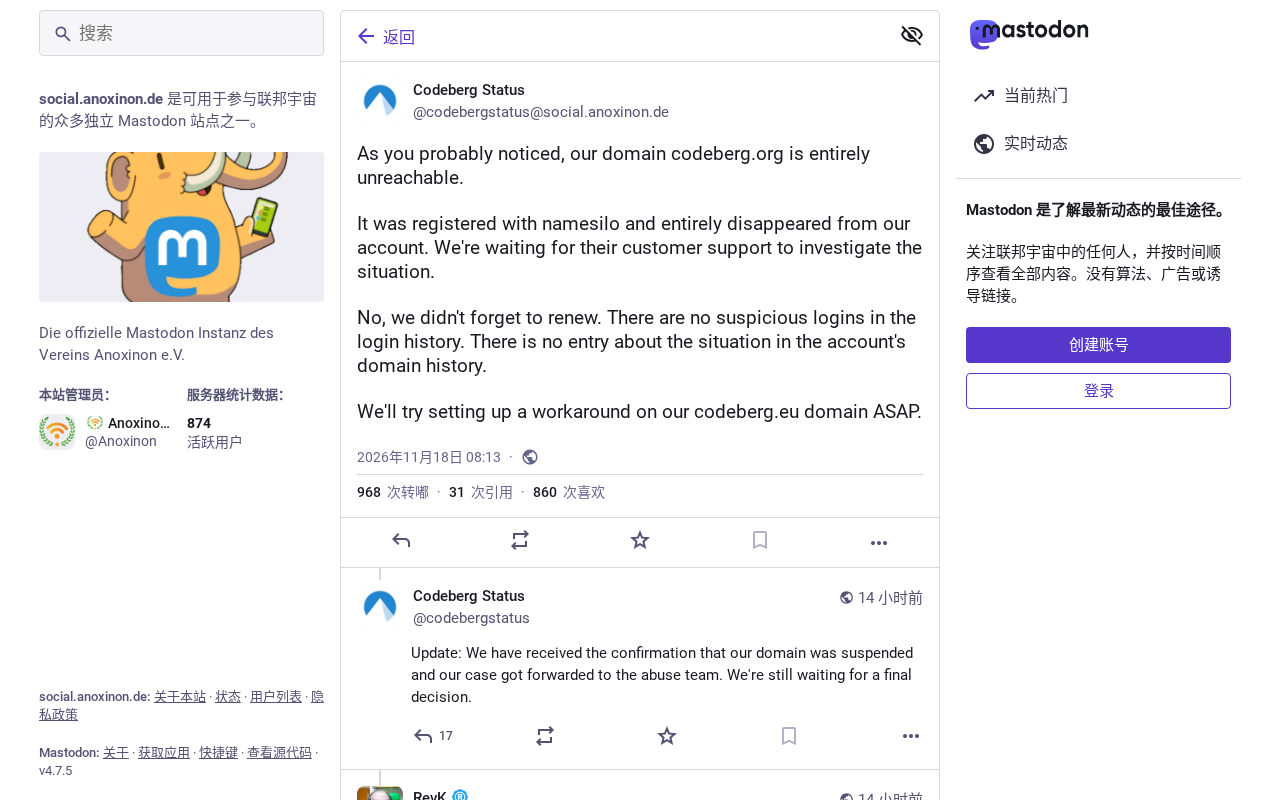
Open-Source Code Hosting Platform Codeberg Suffers Outage, Sparking Debate in Developer Community
Open-source code hosting platform Codeberg.org suffered an outage, sparking Hacker News debate over nonprofit platform stability and open-source infrastructure dependency risks.