DeepSeek Open-Sources Full Conversational Stack: Developers Can Replicate the Complete App 1:1
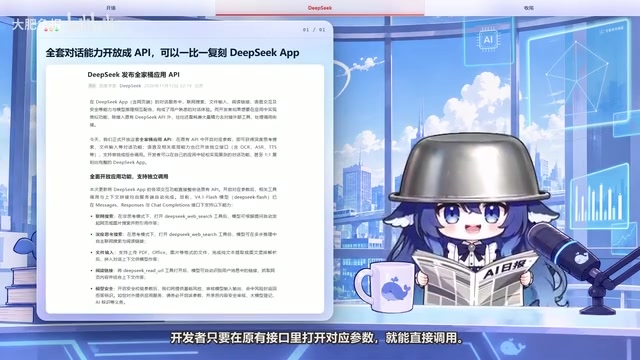
DeepSeek fully API-izes App conversational capabilities and open-sources a frontend Demo, billed by usage.
DeepSeek has opened up its App's complete conversational experience as APIs, covering web search, deep thinking, file parsing, link reading, and speech recognition and synthesis. Non-thinking mode attaches citation links to search results, while thinking mode supports searching and reading during multi-step reasoning. File input supports PDF, Office, and images with automatic context assembly. An open-source lightweight frontend Demo enables 1:1 replication. Beyond tokens, tool calls are billed by usage: search 5 yuan/1K calls, OCR 1.5 yuan/1K pages, speech recognition 0.39 yuan/hour, speech synthesis 1.5 yuan/10K chars, limited-time 50% off. Powered by VIE-Flash with compatibility across Messages, Responses, and Chat Completions.
DeepSeek has once again opened up the core capabilities of its own product. This time it's not the model weights, but the complete conversational experience inside the App—web search, deep thinking, file parsing, link reading, and even speech recognition and synthesis—all packaged into APIs. According to a Bilibili news video report, developers simply need to enable the corresponding parameters in the existing interface to call these capabilities directly.
Conversational Capabilities Fully API-ized, with Distinct Non-Thinking and Thinking Modes
DeepSeekAd has broken down the App's conversational capabilities into multiple callable modules. In non-thinking mode, the search tool retrieves web pages or images and attaches citation links to the answer; when thinking mode is enabled, the model can search and read links during multi-step reasoning, forming a more coherent reasoning chain. This design lets developers choose flexibly based on the scenario—using the non-thinking path for quick Q&A and switching to thinking mode for deep analysis.
This mode distinction actually addresses a real pain point for developers: a single API endpoint carries two reasoning paradigms, reducing integration complexity. The official announcement also mentions that search scraping, text recognition, speech recognition, and speech synthesis can be called as standalone interfaces, meaning developers don't have to rely on the full conversational chain and can assemble capabilities on demand.
Differences Between Non-Thinking Mode and Thinking Mode
Non-thinking mode refers to the model generating an answer directly without explicit multi-step reasoning—it responds quickly and consumes fewer tokens, making it suitable for factual Q&A, information retrieval, and similar scenarios. Thinking mode, by contrast, has the model unfold an internal reasoning chain before outputting the final answer, breaking the problem down step by step, and during the process it can call search tools and read link content—suited for complex tasks requiring logical analysis and multi-source information integration. This dual-mode design is gradually becoming standard among reasoning models (such as the OpenAI o series and DeepSeek-R1); the core idea is to let a single endpoint balance efficiency and depth, with developers switching via parameters rather than maintaining two sets of calling logic.
File Input and Automatic Context Assembly
File input supports PDFs, Office documents, and images. According to the video, parsed files are automatically assembled into the context, saving developers the steps of manually handling document chunking and embedding.
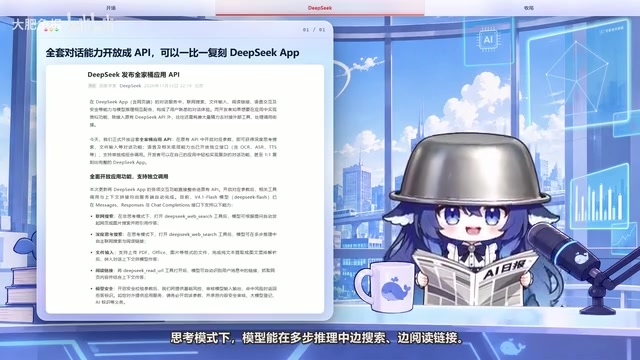
This feature is especially critical for building knowledge-base Q&A and document analysis applications. In the past, developers had to build their own document parsing pipelines; now the official platform provides an end-to-end input channel. Combined with link reading, the model can simultaneously process user-uploaded files and external web content, integrating multi-source information within a single conversation.
Technical Implications of Document Parsing and Context Assembly
In a traditional RAG (Retrieval-Augmented Generation) workflow, developers must handle document chunking, vector embedding, storing into a vector database, and retrieving and assembling at query time. DeepSeek's "automatic context assembly after parsing" internalizes this pipeline: uploaded PDFs, Office documents, or images are first parsed to extract text (images go through OCR), then automatically organized according to the model's context window and fed into the conversation. This eliminates chunking strategy tuning and vector database operations, but developers still need to watch the context window limit—very long documents may be truncated or processed in shards, and in complex knowledge-base scenarios a self-built retrieval layer may still offer more control.
Open-Source Lightweight Frontend Demo, Aiming for 1:1 Replication
In addition to the API, DeepSeek has also open-sourced a lightweight frontend Demo that supports importing historical conversations. According to the official statement, developers can replicate the complete DeepSeek App experience 1:1.
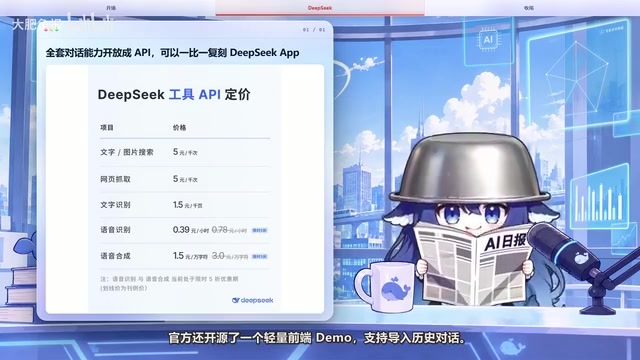
The value of this Demo lies in lowering the frontend development barrier. For teams wanting to quickly validate a product form, they can modify the Demo directly instead of building the chat interface, session management, and file upload components from scratch. The open-source frontend combined with the full API effectively provides a complete reference implementation from interface to capability.
Pricing Strategy: Beyond Tokens, Tool Calls Billed by Usage
On pricing, in addition to token fees, tool calls are billed separately by usage. According to information disclosed in the video: search and web scraping cost 5 yuan per thousand calls, text recognition 1.5 yuan per thousand pages, speech recognition 0.39 yuan per hour, and speech synthesis 1.5 yuan per ten thousand characters, with a limited-time 50% discount.
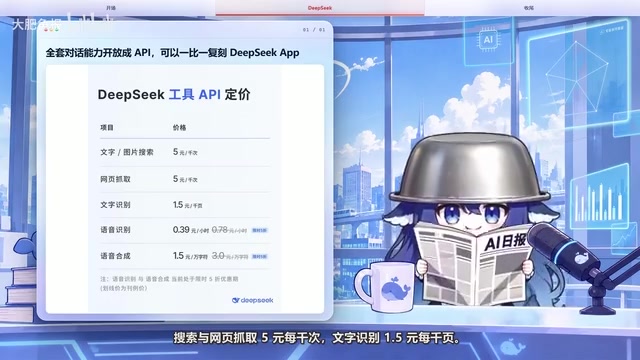
This tiered billing model means developers need to estimate costs based on actual call volume. Search and web scraping are billed per call, so for high-frequency retrieval applications costs grow linearly with the number of calls; speech recognition is billed per hour, making it relatively better suited to long-audio processing scenarios. The limited-time 50% discount lowers the barrier for early trials.
Technical Foundation and Interface Compatibility
The official announcement states these capabilities are powered by VIE-Flash, covering three interfaces: Messages, Responses, and Chat Completions. Multi-interface compatibility means existing OpenAI-style integrations can migrate at low cost, and developers don't need to rewrite calling logic. As the supporting foundation, VIE-Flash handles the orchestration of multimodal capabilities such as search, parsing, and speech.
From an industry perspective, DeepSeek's move shifts the competitive focus from pure model capability to a complete delivery of "model + toolchain." When conversation, search, files, and speech are all packaged as standard interfaces, the space for innovation at the application layer will be further unlocked, and differences between platforms will be reflected more in the stability of tool calls, billing transparency, and ecosystem compatibility.
For developers, what's worth evaluating now is: which capabilities are worth calling directly, and which parts still need to be built in-house. The barrier to 1:1 replication is already low, but true product differentiation still depends on how these capabilities are combined to solve problems in specific scenarios.
Differences Between the Three Interface Standards
Chat Completions is the conversation completion interface OpenAI first popularized, carrying multi-turn conversations in a messages array, with the broadest ecosystem compatibility. Responses is OpenAI's newer-generation interface, unifying the return structure for text, tool calls, and multimodal output, making it easier to express agent-style interactions. Messages is the interface style used by the Anthropic Claude series. DeepSeek covering all three means that no matter which vendor's SDK developers previously integrated with, they only need to replace the base URL and authentication information to migrate, greatly reducing switching costs and making it easy to use DeepSeek as a swappable backend in multi-model routing scenarios.
One-line Summary
DeepSeek fully API-izes App conversational capabilities and open-sources a frontend Demo, billed by usage.
Paragraph Summary
DeepSeek has opened up the complete conversational experience in its App as APIs, covering web search, deep thinking, file parsing, link reading, and speech recognition and synthesis. In non-thinking mode, search results include citation links; thinking mode supports searching and reading during multi-step reasoning. File input supports PDF, Office, and images, with parsed content automatically assembled into context. The official team also open-sourced a lightweight frontend Demo that can replicate the App experience 1:1. On pricing, beyond tokens, tool calls are billed by usage: search scraping 5 yuan per thousand calls, text recognition 1.5 yuan per thousand pages, speech recognition 0.39 yuan per hour, speech synthesis 1.5 yuan per ten thousand characters, with a limited-time 50% discount. The capabilities are powered by VIE-Flash and compatible with the Messages, Responses, and Chat Completions interfaces.
Related articles

AI Writes Your Code—Do You Still Need to Learn Git? Five Reasons
AI coding agents handle Git operations automatically—is it still necessary to learn Git? Five reasons: team communication, reviewing agent PRs, monitoring code changes, fallback when AI goes down, and the joy of learning—plus how the focus of learning Git is shifting in the agent era.
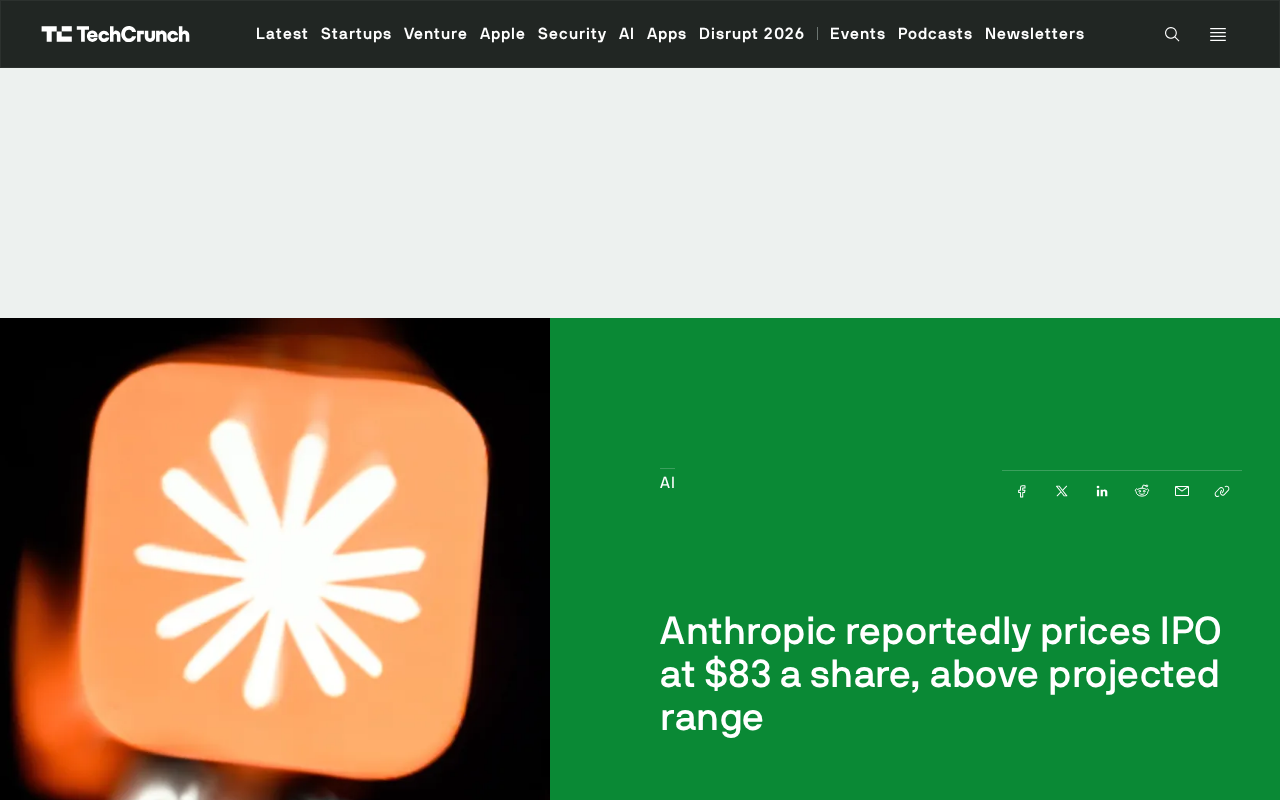
Anthropic Reportedly Prices IPO at $83 Per Share, Valuing Company at $1.5 Trillion
Anthropic reportedly prices IPO at $83 per share, above the expected range, with a fully diluted valuation of $1.5 trillion. This article analyzes the signal significance of the pricing and its impact on the AI industry's financing environment.
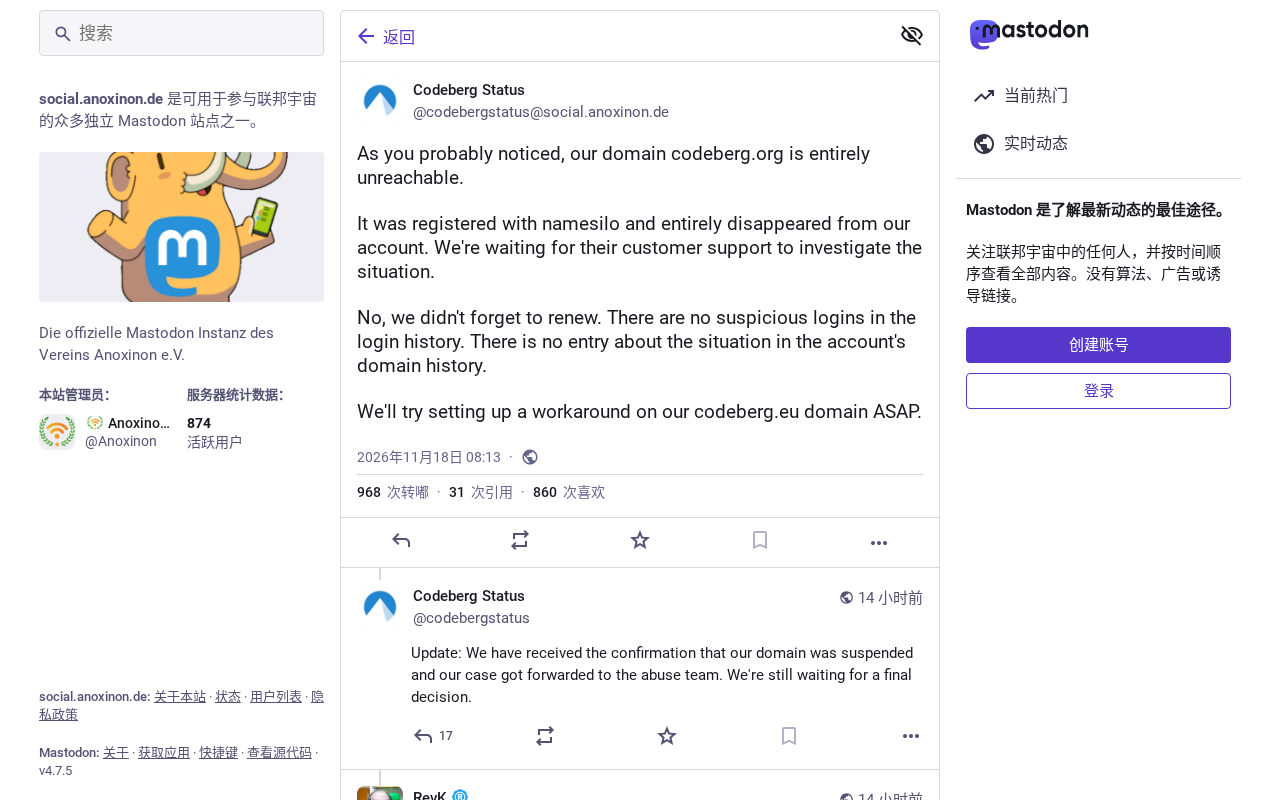
Open-Source Code Hosting Platform Codeberg Suffers Outage, Sparking Debate in Developer Community
Open-source code hosting platform Codeberg.org suffered an outage, sparking Hacker News debate over nonprofit platform stability and open-source infrastructure dependency risks.