DeepSeek's Continuous Open Sourcing: How Liang Wenfeng's Ecosystem Strategy Is Driving Closed-Source Giants Crazy

DeepSeek opens its APP API; the crowdsourced open-source ecosystem model is challenging closed-source giants' packaging premium approach.
The article discusses a popular Bilibili video's view on how DeepSeek's opening of its APP API continues Liang Wenfeng's open-source path. The video argues that closed-source giants' "packaging premium" model—polishing interfaces with thousands-strong product teams and charging subscriptions—has a shallower moat once underlying interfaces open; the open-source ecosystem has officials guard the core while global developers fill long-tail adaptations for free, pushing marginal iteration costs near zero. The article also cautions: closed-source accumulation in enterprise services, compliance, and SLA guarantees is hard to replace, and a more realistic picture is layered competition—open-source takes developers and customization, closed-source holds high-determinism customers—not a zero-sum game.
A team of just a few dozen people—how is it making closed-source giants that spend heavily to maintain product teams of thousands feel nervous? A popular video on Bilibili offers the answer: the degree of openness at the underlying interface level is redefining the rules of AI competition.
Liang Wenfeng's bet on a continuous open-source path has been pushed back into the spotlight with DeepSeekAd's opening of its APP API. The video's creator takes a rather direct stance—if this path is pursued consistently, closed-source giants like OpenAI and Anthropic will eventually fail to keep up. This judgment is worth unpacking.
The Confidence of Closed-Source Giants May Not Be as Solid as It Seems
What is the biggest advantage of closed-source giants? The video puts it bluntly: spending疯狂 amounts of money to maintain product teams of thousands, making the interface interactions polished and beautiful, and then charging a $20 monthly subscription fee.
The logic of this approach is "packaging premium"—model capability is the core, product experience is the shell, and users pay for the refined shell. In the stage where AI capabilities were not yet widespread, this model indeed held up; after all, ordinary users lacked the ability to build their own chat interface.
But in the eyes of real developers, no matter how fancy the interface is, it's just a good-looking packaging box. Although the video author's metaphor is sharp, it points out a fact: when underlying capabilities converge, the moat at the product layer is far shallower than imagined. Interface interactions can be imitated, subscription models can be copied, but the inertia of an ecosystem is hard to build overnight.
What Does Opening the API Release?
The video uses a vivid phrase for DeepSeek's opening of its APP API—it's equivalent to directly handing the dragon-slaying sword to countless geeks around the world.

Behind this analogy is the core mechanism of the open-source ecosystem: the official team only needs to guard the core foundation, and the remaining long-tail needs are filled in for free by developers worldwide. The video mentions that even if the official team has only a few dozen people and no time to polish various clients, it doesn't matter at all—folk experts, to meet their own needs, can casually build Android clients, desktop plugins, and even smartwatch adaptations.

This division of labor—"official guards the foundation, community builds the periphery"—pushes the marginal cost of product iteration close to zero. Niche scenarios that closed-source giants need to initiate projects, schedule, and hire for to cover might be built by someone in the open-source community over a single weekend.
The Layered Difference Between APP API and Open-Sourcing Model Weights
What DeepSeek opened this time is the APP API, i.e., an interface allowing third-party applications to call its model capabilities. This is at a different layer from fully open-sourcing model weights (as the Llama series does). API openness means external developers can embed DeepSeek's reasoning capabilities into their own clients, plugins, or automation workflows, but the model itself is still hosted and iterated by the official team; weight open-sourcing hands over the model itself, allowing local deployment, fine-tuning, and redistribution. The ecosystem leverage differs: API openness has a lower barrier and faster onboarding, suitable for quickly spawning peripheral tools; weight open-sourcing leaves room for enterprise-grade private deployment. The video's "handing the dragon-slaying sword to geeks" is closer to API-level empowerment—developers don't need to build their own compute to innovate products around model capabilities, which is exactly the key to lowering marginal costs.
Why Can't Manpower and Packaging Beat Crowdsourced Co-Building?
The video's core argument is: the closed-source giants' approach of competing on manpower and packaging will instantly lose its advantage in the face of the open-source ecosystem.

This judgment can be broken down into two layers. The first is cost structure. Closed-source giants use high-salaried teams to cover all product lines, and every feature must be calculated for ROI; the open-source ecosystem is demand-driven—whoever has the pain point takes action, and development costs are shared by distributed individuals. The second is coverage breadth. No matter how strong a team of thousands is, it cannot cover all scenario needs of global developers, and the community happens to be good at filling these gaps.
How can a refined shell charging subscriptions compete with a crowdsourced open-source ecosystem—this rhetorical question at the end of the video is actually saying: when the dimension of competition shifts from "whose product looks better" to "whose ecosystem is more prosperous," the original advantages may simply become invalid.
The Economics of Long-Tail Demand and Distributed Development
"Long tail" refers to a large number of individually small but collectively substantial demands, such as terminology translation for a specific industry, adaptation for a niche device, or automation of a certain workflow. When closed-source vendors initiate projects based on ROI, such demands are often shelved because the market is too small; in the open-source community, as long as one person has the pain point and the development capability, they can take action themselves and give back to the community—the motivation is self-use rather than profit. This distributed supply method allows the ecosystem's coverage breadth to expand naturally over time without consuming the official manpower budget. It should be noted that long-tail innovation excels at "whether it exists" but does not naturally guarantee "whether it's stable"—uneven quality and maintenance gaps are common problems in open-source peripheral projects, which is also why closed-source products still have a foothold in scenarios with high determinism requirements.
Parts That Need Calm Consideration
The video's viewpoint is impactful, but it's too early to treat it as a final conclusion. The open-source ecosystem excels at long-tail innovation and rapid adaptation, while closed-source giants' accumulation in enterprise services, compliance and security, and SLA guarantees is equally hard to replace. The subscription business model doesn't only sell the interface; behind it are stability, technical support, and continuous investment in model R&D.
A more realistic picture may be layered competition: open-source models capture the developer market and customization needs, while closed-source products hold onto customers with high requirements for service determinism. Whether DeepSeek's continuous open-sourcing can truly "drive crazy" closed-source giants depends on the evolution speed of both sides in their respective tracks, rather than a zero-sum game.
The direction Liang Wenfeng bet on at least proves one thing: in the AI era, the ecosystem leverage brought by opening underlying interfaces may be more cost-effective than stacking product teams.
One-line Summary
DeepSeek opens its APP API, and the crowdsourced co-building model of the open-source ecosystem is challenging closed-source giants' packaging premium approach.
Paragraph Summary
The article revolves around the viewpoint of a popular Bilibili video, discussing how DeepSeek's opening of its APP API continues Liang Wenfeng's continuous open-source path. The video argues that the "packaging premium" model of closed-source giants—polishing interfaces with product teams of thousands and charging subscription fees—has a shallower moat once underlying interfaces are opened; while the open-source ecosystem has the official team guard the core foundation and global developers fill in long-tail adaptations for Android, desktop, watches, etc. for free, pushing the marginal cost of product iteration close to zero. The article also reminds for calm consideration: closed-source accumulation in enterprise services, compliance and security, and SLA guarantees is hard to replace, and a more realistic picture is layered competition where open-source takes the developer and customization market while closed-source holds high-determinism customers, rather than a zero-sum game.
Related articles
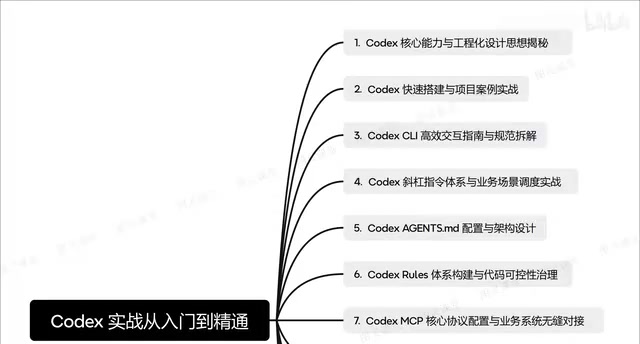
Codex in Practice: From Installation and Configuration to Multi-Agent Collaboration
Based on a Bilibili Codex course overview, this guide maps the full path of AI coding assistants from installation and agents.md context design to CLI commands, MCP integration, and multi-agent collaboration.
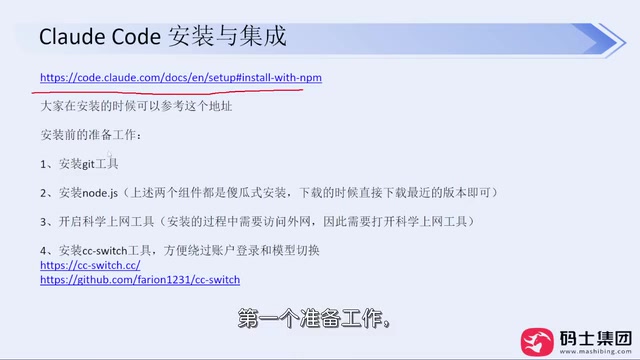
Claude Code Installation and Model Switching Guide for Users in China
How can developers in China install Claude Code reliably? This article compiles a Bilibili creator's hands-on solution: install via NPM, skip official login, use CC Switch to configure API Keys and freely switch between DeepSeek, Kimi, and other models to avoid account bans.
AI Supply Chain Security: What Canary Tokens Reveal
Starting from a Hacker News discussion, this article analyzes the role of canary tokens in AI supply chain security: how they detect abnormal access to model weights, training data, and credentials, as well as coverage blind spots and cost constraints during implementation.