DeepSeek V4.1 Flash Hands-On Review: Impressive Coding, Shaky Reasoning

DeepSeek V4.1 Flash impresses on coding but stumbles on constrained reasoning tasks.
This hands-on evaluation of DeepSeek V4.1 Flash covers instruction following, math reasoning, logic puzzles, and three coding challenges. Results show a clear imbalance: instruction following and structured logic are reliable, but the model failed all three 24 Game solutions, exposing a weakness in tracking numeric constraints. Coding was the standout — the 3D racing game was rated among the best ever seen in ongoing testing, with the dynamic desktop OS and Trello kanban app also performing well. Only the space design game failed to run. Overall, its coding output is top-tier for a lightweight Flash model, but reasoning instability remains a concern.
Introduction: Testing the Official Release of DeepSeek V4.1 Flash
DeepSeekAd V4.1 Flash officially launched today. As a version built around speed and lightweight deployment, the community has been eager to see how it actually performs. This article is based on hands-on testing by a Bilibili content creator, offering a fairly systematic evaluation of the model.
To minimize interference from the testing harness, all evaluations were conducted on the PI platform with the thinking mode set to its maximum level, fully unlocking the model's reasoning and generation potential. The test suite covers instruction following, mathematical reasoning, logical reasoning, and three coding challenges — a reasonably comprehensive scope.
The overall results reveal a clear imbalance: DeepSeek V4.1 Flash is genuinely impressive at coding tasks, but stumbles unexpectedly on certain reasoning challenges. Let's break it down question by question.
Basic Capability Tests: Strong Instruction Following, Surprise Reasoning Failures
Task 1: Long-Form Constrained Instruction Following
The first task tested the model's ability to follow complex constraints — specifically, generating content where each sentence ends with a number from 1 to 10 in sequence. The result was excellent: every generated sentence met the constraint, and the output read naturally with coherent logic throughout. This demonstrates that DeepSeek V4.1 Flash has a solid foundation for understanding and strictly executing complex constraints.
Task 2: New Version of the 24 Game — All Three Solutions Wrong
The second task was a new version of the classic "24 Game": given the numbers 2, 7, 8, and 10, each used exactly once, provide three different solutions that evaluate to 24. The result was surprising — all three solutions were incorrect. Method one used an extra 2, method two introduced an extra 3 during a cube root operation, and method three also violated the single-use constraint. Every solution broke the core rule that each number can only appear once.
This result exposes a clear weakness in the model's ability to handle combinatorial math reasoning under strict constraints — particularly in scenarios that require precisely tracking how many times each number has been used. The model tends to "assume" and introduce extra elements.
Task 3: Combination Lock Logic Puzzle — Redeems Itself
The third task was a new combination lock logic puzzle, with the correct answer being 7294364. This time, DeepSeek V4.1 Flash produced the completely correct answer, redeeming itself. This suggests the model is reliable at structured logical reasoning, and the failure on Task 2 looks more like a blind spot for a specific constraint type rather than a general breakdown in reasoning ability.
Coding Challenges: Where DeepSeek V4.1 Flash Truly Shines
The coding tasks were the centerpiece of this evaluation — and the area where DeepSeek V4.1 Flash delivered its most impressive results.
Task 4: Elegant Browser-Based OS Interface
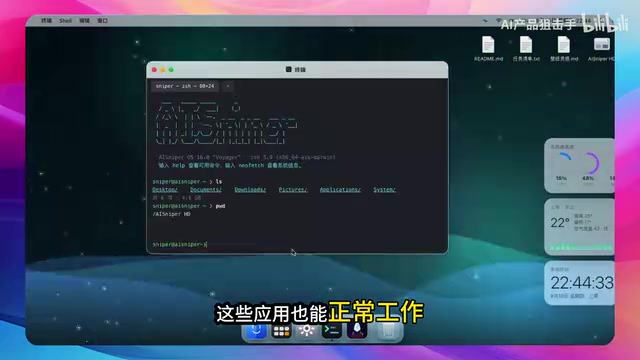
Task 4 asked the model to implement a polished browser-based operating system interface. The result was outstanding: rather than the static desktop wallpapers commonly seen in similar benchmarks, this was the first time the reviewer saw a fully animated dynamic desktop. The right side featured some surprisingly beautiful miniature landscape decorations as a bonus. Multiple pop-up windows in the upper left were elegantly designed, and the apps in the Dock were functional and responsive.
Space Design Game: So Close, Yet So Far
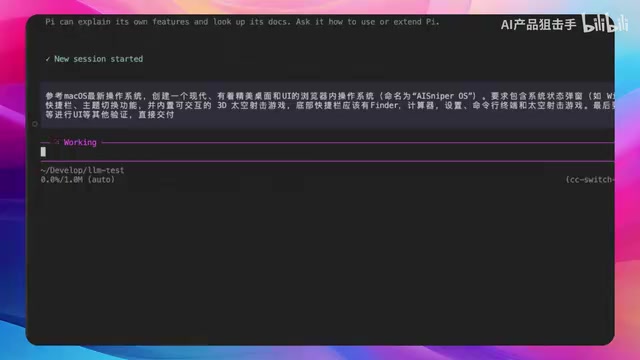
The space design game — meant to be the showpiece of this task — turned out to be the biggest disappointment. The game simply wouldn't run. Had it worked, the entire implementation would have been an exceptional showcase. Instead, it fell at the final hurdle, dragging down the overall completion score for this task.
Task 5: 3D Racing Game — The Most Stunning Result of the Entire Test
Task 5 asked for a 3D racing game, and this turned out to be the biggest surprise of the entire evaluation. The reviewer stated outright that this was one of the best implementations they had seen across all their long-term testing: the interface looked great, and the car model wasn't a blocky placeholder but a complete, detailed racing car design. The overall implementation quality was genuinely jaw-dropping, fully showcasing DeepSeek V4.1 Flash's powerful potential for complex graphics and interactive logic.
Task 6: High-Quality Trello-Style Kanban App
Task 6 required implementing a visually polished Trello-style kanban application without any third-party libraries. The final product used a dark-themed UI — aesthetics aside, the core functionality was complete and usable. The only notable shortcoming was the drag animation for task cards: when dragging, the target card didn't follow the cursor smoothly, making the animation feel slightly janky. Outside of that, it was a solid implementation overall.

Summary: A "Specialist" Model — Exceptional at Coding, Weak on Constrained Reasoning
Taken together, this evaluation paints a clear picture of DeepSeek V4.1 Flash's capability profile.
On coding tasks, it excels — particularly the 3D racing game and the animated desktop OS, which reached a high standard among comparable benchmarks and demonstrated strong front-end and graphics generation capabilities. This is great news for developers looking for rapid prototyping and high-quality UI generation.
On constrained reasoning, there are still significant gaps. All three solutions to the 24 Game were wrong, exposing instability in the model's ability to precisely track constraint conditions. The space design game also failed to run, highlighting a "last-mile" problem when it comes to complete delivery of complex features.
For a Flash-tier model built around speed, delivering this kind of coding performance is already impressive. Whether the reasoning weaknesses get addressed in future iterations is something worth watching closely.
Related articles

world2vec: Building Mechanistic World Models with Latent Dynamics Learning
world2vec proposes a reward-free method for learning mechanistic world models via latent dynamics, faithfully reproducing systems over long horizons with at least an order of magnitude fewer parameters than DreamerV3, TD-MPC2, and LeWM, and achieving accurate system identification on 71 attractor benchmarks.

A New KL-DRO Paradigm: Adaptive Scenario Generation Around a Learned Density Model
KL-DRO research proposes centering the KL ball on a learned density model instead of the empirical distribution, with adaptive scenario generation guiding sampling toward the worst case. Experiments show lower cost under distribution shift when records are scarce and the model can extrapolate, with comparable in-distribution cost.

ODE Samplers for Discrete Diffusion Models: Exponential Residual Flows Accelerate Generation
Discrete diffusion models lack deterministic ODE sampling? This article introduces Exponential Residual Flows (ERFs), which introduce continuous residual variables per token to construct piecewise ODEs for deterministic sampling and support consistency distillation acceleration. Superior to prior methods on code and text generation tasks.