Diffusion Models for Absolute Beginners: A Learning Path That Avoids Detours

Learn diffusion models from zero: first build theory, then master DiT source code, and finally innovate.
The article targets common pitfalls in learning diffusion models (grinding theory or only running code) and proposes a zero-background, actionable learning path. Step one is to solidify core theory, clarify the logic of forward diffusion and reverse generation, and closely read papers on acceleration, lightweighting, and structural optimization to understand innovation ideas. Step two is to prioritize lightweight open-source toolkits such as DiT, read the source code line by line, and close the loop among mathematical formulas, algorithm flows, and experimental logic in code—master 2-3 core codebases before discussing innovation. It emphasizes understanding principles and mastering source code before designing innovation points, avoiding castles in the air. Ultimately, by alternating the theory and practice lines, it helps zero-background learners systematically get started and gain the implementation capability to publish papers.
Diffusion models have been hot for several years now. After exploding across the internet in 2022 and 2023, top-tier conference papers on them appeared everywhere. Although the hype has cooled somewhat, diffusion models remain a core hot direction for paper innovation and model improvement. Many students learn diffusion models the wrong way: either they get stuck grinding through gray, opaque theory they can't understand, or they can only run open-source code without understanding the underlying logic—and when they want to modify a model or innovate, they have no idea where to start. This article lays out a complete learning process for mastering diffusion models from zero, with the ability to implement and publish papers, helping you avoid detours.
Step 1: Solidify the Core Theoretical Foundation
When learning diffusion models, foundational theory and core mathematical derivations are unavoidable priorities. Many people write papers full of formulas they only half understand, and then crash and burn during defense or revision. You don't need to dig into complex, advanced derivations, but you absolutely must clarify the core ideas of diffusion models—the complete logic of forward diffusion and reverse generation—and thoroughly understand the basic framework. This is the foundation for later source-code work and innovation.
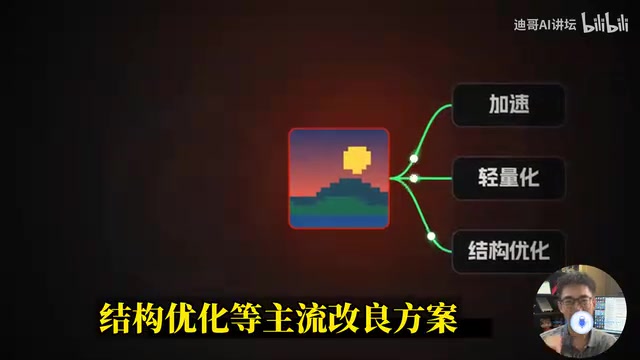
At the same time, you should selectively read high-quality papers closely, focusing on mainstream improvement approaches such as model acceleration, lightweighting, and structural optimization, to understand the commonly used innovation ideas of today and pave the way for future research.
Forward diffusion and reverse generation are the two pillars of diffusion models; understanding them is what lets you grasp the intuition behind the formulas.
- Forward diffusion: Gradually add Gaussian noise to a clean image; after T steps, the image is approximately pure noise. Each step adds only a tiny bit of noise, and the noising process is controlled by a fixed variance schedule (such as linear or cosine), involving no learnable parameters.
- Reverse generation: Train a neural network (usually a U-Net or Transformer) to "guess" what noise was added at each step, then start from pure noise and gradually denoise to reconstruct the image. The network learns the conditional distribution p(x_{t-1} | x_t), i.e., predicting the distribution of the previous step given the current noisy image.
Mathematically, the training objective is often simplified to the mean squared error of predicting noise ε, which is exactly the core of DDPM. Understanding the duality—"forward is a fixed Markov chain, reverse is learned denoising"—lets you see the motivation behind later improvements such as accelerated sampling (e.g., DDIM) and conditional generation (e.g., Classifier-Free Guidance).
Step 2: Prioritize Lightweight Open-Source Toolkits
Beginners should absolutely not start by hacking through huge, overly complex open-source projects—it's easy to get discouraged immediately. The most recommended entry point for beginners is the low-barrier Transformer-architecture DiT (Diffusion Transformer) toolkit, which is also the core tool with maximum usage in the industry. It comes with a large number of ready-to-use open-source models, has extremely strong adaptability, and most importantly, its source code is concise and clear—very suitable for beginners to compare line by line and debug hands-on. For later personal projects, model modifications, and innovation, this toolkit can be used directly; its practicality is maxed out.
The correct learning method is: take the diffusion model principles, acceleration optimization, lightweight improvement, and other knowledge points you learned earlier, and go through them line by line alongside the DiT source code. Whatever mathematical formulas you don't understand, algorithm flows you can't sort out, or experimental logic you can't connect—close the loop through hands-on source-code work. First thoroughly master two or three core codebases, fully straighten out the algorithm's runtime logic, and completely understand the essence of diffusion models. Then go study advanced algorithms, design personal innovations, and implement research projects—the difficulty will be cut in half.
Remember one core principle: first understand the principles and master the source code, then talk about innovation and publishing papers. Skipping hands-on source-code work makes all model improvements castles in the air, with zero persuasiveness.
DiT (Diffusion Transformer) is work from late 2022 that introduced the Transformer architecture into diffusion models, and it is also the backbone structure of current text-to-image models (such as Sora and Stable Diffusion 3). Traditional diffusion models mostly use U-Net as the denoising network, whereas DiT replaces U-Net with a pure Transformer, splitting images into patch sequences as input and modeling global dependencies through self-attention.
DiT source code is suitable for beginners because its structure is clean: a Patchify layer, several DiT Blocks (including adaptive layer normalization adaLN to inject timestep and class conditions), and a linear decoding layer—without the complex skip connections in U-Net. Once you read through the DiT source code, you can also understand the diffusion model's training loop, noise scheduling, sampler implementation, and condition injection mechanism. For later research on acceleration, lightweighting, or structural improvement, DiT is also an excellent baseline codebase.
Summary of the Learning Path
The whole process can be summarized into two main lines:
- Theory line: core mathematical derivations → forward/reverse processes → close reading of papers on acceleration, lightweighting, and structural optimization
- Practice line: lightweight toolkits such as DiT → read source code line by line → get 2-3 core codebases running → understand the essence of the algorithm → design innovation points
The two lines advance alternately: theory guides practice, and practice feeds back into theory. This is also the "not a single detour" learning path emphasized in the original text. For students with zero background who want to systematically master diffusion models and also hope their results can be implemented and published, advancing in this order is far more efficient than blindly grinding through big books or only running demos.
One-line Summary
Learn diffusion models from zero: first build theory, then master DiT source code, and finally innovate.
Paragraph Summary
The article targets common pitfalls in learning diffusion models (grinding theory or only running code) and proposes a zero-background, actionable learning path. Step one is to solidify core theory, clarify the logic of forward diffusion and reverse generation, and closely read papers on acceleration, lightweighting, and structural optimization to understand innovation ideas. Step two is to prioritize lightweight open-source toolkits such as DiT, read the source code line by line, and close the loop among mathematical formulas, algorithm flows, and experimental logic in code—master 2-3 core codebases before discussing innovation. It emphasizes understanding principles and mastering source code before designing innovation points, avoiding castles in the air. Ultimately, by alternating the theory and practice lines, it helps zero-background learners systematically get started and gain the implementation capability to publish papers.
Related articles

T3 Code: The Open-Source AI Coding Assistant's Comeback Story
T3 Code is an open-source AI coding assistant that unifies subscriptions like Codex and Claude, with powerful remote control and parallel task management.

Never Elected, Yet Ruled New York for 30 Years: The Ultimate Case Study in the Mechanics of Power
Robert Caro's biographies reveal how unelected Robert Moses ruled New York for 30 years through legal drafting and public authorities, and how Lyndon Johnson built leverage as a "powerless" Senate Majority Leader. Unpacking the underlying logic of accumulating and sustaining power.

The CPython 3.10 Recursion Trap and Synthetic Recovery in TokenGuard, an LLM Circuit Breaker
TokenGuard's author recounts a recursion crash caused by OrderedDict.pop in CPython 3.10 and introduces v0.3.0's Loop Nudge synthetic recovery, inline DLP scanning, and other new LLM agent circuit-breaker capabilities.