Discord Opens Public Server Content for Search Engine Indexing
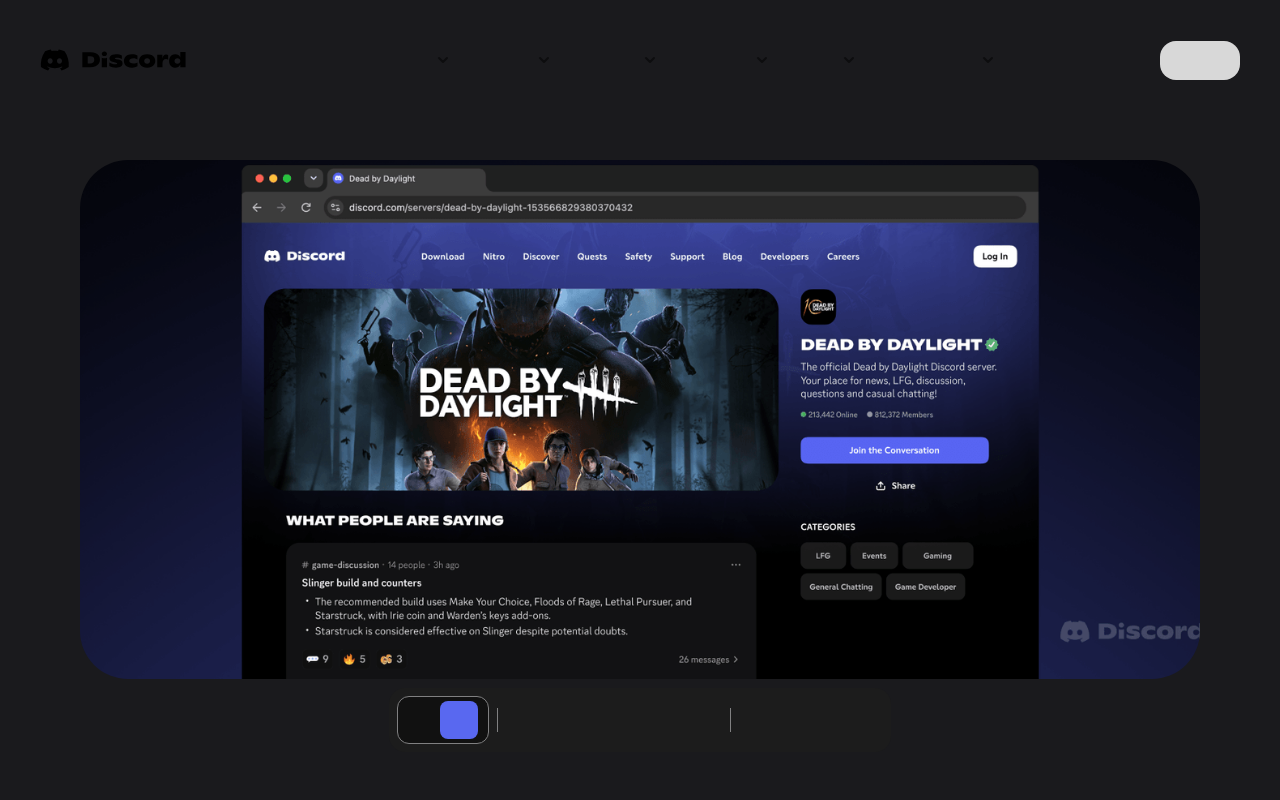
Discord will allow search engines to index public messages in discoverable servers, balancing growth and privacy.
Discord announced it will allow Google and other search engines to index public messages in "Discoverable servers," a directional shift from a semi-closed community toward open discovery. The scope is limited to public communities already in the server discovery directory; private servers and DMs are excluded. The core motivation is to improve discovery efficiency, introduce external traffic, and reactivate dormant high-quality discussions. However, Hacker News discussion reveals a privacy expectation gap—many users don't realize public channel messages will enter search engines. Server admins need to re-examine visibility settings, and the platform must design prompts, permissions, and opt-out mechanisms well to balance growth and privacy.
Discord is changing its long-standing closed posture. According to an official blog post, Discord will allow search engines to index public content in "Discoverable servers," meaning Google and other search engines may soon be able to directly index messages within these servers.
For those familiar with Discord, this is a directional shift. Discord has always existed as a "semi-closed community": servers require invite links, and content is not publicly visible. Now it is proactively handing a portion of its content to search engines, and the motivations behind this are worth unpacking.
What Changes and What Stays the Same
Only "Discoverable Servers" Will Be Indexed
The scope of this change has clear boundaries. Discord's official statement specifies that only servers marked as Discoverable may have their content indexed by search engines. "Discoverable servers" refers to communities that have joined Discord's server discovery directory and are open to the public. Private servers, invite-only servers, and direct messages are not included in this opening.
In other words, Discord is not "publicizing" the entire platform, but rather making content on the "already public community" line easier to find from outside the platform. For administrators running public communities, this is an expansion of traffic entry points; for users accustomed to treating Discord as a private space, it requires a reunderstanding of what "public server" means.
Discord's "Server Discovery" is a built-in public community browsing feature on the platform, officially launched around 2020. Servers must meet certain conditions (such as member size, activity level, content compliance, etc.) and actively apply; only after review can they enter the directory and be randomly recommended or browsed by category within the Discord client. Servers that enter the directory are marked as Discoverable, visible to all users, and joinable without an invite. This mechanism is similar to Reddit's subreddit directory or gaming platform community hubs, but the entry point has always been confined to within the platform, lacking external exposure channels. Opening up search engine indexing is precisely a further expansion for this batch of already-public servers.
From "In-Platform Discovery" to "Off-Platform Discovery"
Discord has provided server discovery features in the past, but the entry point was limited to within the platform. Users needed to browse the directory inside Discord to find communities of interest. Opening content to search engines extends this discovery capability to the entire open web: a discussion, a guide, a Q&A exchange could all become entry points for new users to enter a server.
This has a direct impact on community operations. Previously, there was almost no way for public servers to be found outside of Discord; now, the discussion content in public channels itself becomes a searchable asset.
Why Discord Is Doing This
Community Growth Hits a Ceiling
Discord's user base is massive, but the "discoverability" efficiency of public communities has always been low. Exposure in the server discovery directory is limited, new communities struggle to stand out, and established communities face pressure from declining activity. Opening search engine indexing is essentially introducing external traffic to public communities.
From the platform's perspective, this can boost activity in public servers and also allow Discord's public content to occupy a place in search results, competing with forums, Q&A sites, and social media for the same pool of search traffic.
The Search Value of Public Content Has Long Been Wasted
Discord has accumulated a large amount of high-quality discussion: technical Q&A, game guides, creative exchanges. Because this content is not externally indexed, it almost "doesn't exist" in search engines. Opening indexing is equivalent to reactivating these dormant discussions, allowing them to be searched, cited, and seen by new users.
One key technical reason Discord's content has long not been indexed by search engines is that its messages are primarily rendered dynamically via JavaScript, and the platform has access restrictions on crawlers, making it difficult for traditional search engines to crawl and parse historical messages within channels. In contrast, forums and Q&A sites typically provide static pages or structured data that are easier to index. For search engines to truly index Discord messages, the platform needs to make technical accommodations, such as providing crawler-accessible page structures, standardized meta information, and content update signals. Additionally, indexed content involves synchronization issues after deletion or editing—how search engine caches are updated after users retract or modify messages is an engineering and governance challenge the platform must solve.
Privacy and Governance Controversy
The Boundary of "Public" Needs Reconfirmation
Discussion on Hacker News (the post received 286 points and 146 comments) reflects the community's complex emotions. The core controversy is that many users speaking in public servers may not realize their content will enter search engines. Although Discord's public servers are open to everyone, users' psychological expectations tend to be closer to "semi-public chat rooms" rather than "web pages that will be indexed by Google."
This change requires server administrators to proactively confirm whether their servers are in a discoverable state, and also requires Discord to provide sufficiently clear prompts on the user side.
"Context collapse" is a classic concept in social media research, referring to content originally published for a specific audience being seen by people in different contexts because its spread exceeds expectations, thereby creating misunderstanding or privacy risks. Statements in Discord public servers are often psychologically expected by users to be "visible to community members" rather than "permanently searchable across the entire web." Once content enters search engine indexes, it transforms from "chat logs" into "public web pages," which may be screenshotted, cited, taken out of context, or even used in background checks in the future. This expectation gap is not unique to Discord—early Facebook and Twitter also experienced similar controversies when opening up search, and platforms typically need to mitigate this through explicit prompts, default-off settings, and opt-out mechanisms.
Server Administrators' Control
For server administrators, this is both an opportunity and a responsibility. Once content is indexed, servers may attract more new members, but may also face risks of spam, malicious crawling, and content being taken out of context. Discord needs to provide switches and permission controls so administrators can decide which channels' content is externally visible; otherwise, a change in default settings could trigger community backlash.
Potential Impact on the Community Ecosystem
If this adjustment is successfully implemented, Discord's public communities will transform from "isolated islands within the platform" to "searchable public spaces." This will bring several layers of chain reactions:
- Community operations shift from "pulling people into groups" to "content-driven acquisition," with discussion quality in public channels directly affecting search exposure;
- The value of high-quality Q&A and guide-type content is amplified, and the accumulation effect similar to forums may reappear on Discord;
- Platform governance pressure rises, and content moderation, privacy protection, and anti-abuse mechanisms need to keep pace.
Discord has chosen to open up the portion of content that was "already discoverable," with relatively restrained boundaries. But once search indexing is opened, users' perception of "chatting" versus "publishing" will change. Whether this adjustment can balance growth and privacy depends on how Discord designs prompts, permissions, and opt-out mechanisms. For community managers, now is the time to re-examine their servers' visibility settings.
One-line Summary
Discord will allow search engines to index public messages in discoverable servers, seeking a balance between growth and privacy.
Paragraph Summary
Discord has announced that it will allow Google and other search engines to index public messages in "Discoverable servers," a directional shift from a semi-closed community toward open discovery. The scope is limited to public communities already in the server discovery directory; private servers and direct messages are excluded. The core motivation is to improve discovery efficiency for public communities, introduce external traffic, and reactivate high-quality discussion content that has long been dormant on the platform. However, Hacker News discussion reveals a gap in users' privacy expectations—many do not realize that statements in public channels will enter search engines. Server administrators need to re-examine visibility settings and channel permissions, while the platform needs to design prompts, permissions, and opt-out mechanisms well to balance growth and privacy.
Related articles

The Truth Behind Titanic's Sinking: Key Decisions and Communication Failures in the National Geographic Documentary
National Geographic's The Unsinkable Ship uses survivor testimony to reconstruct Titanic's fatal decisions—from the missing MSG telegram prefix and the broken boiler-room-to-bridge link to how 'unsinkable' thinking delayed damage control and evacuation.

74M-Parameter Open-Source Model Partially Outperforms Jev AI in Testing
Fastino AI's Glider 2.5 models, with just 74M–300M parameters, reportedly outperform Jev AI in some guardrail benchmarks per YouTube testing, run on consumer hardware, and even play Doom. We analyze small models' competitiveness and deployment value on specific tasks.

Gemini 4 Argon Hands-On: Aggressive Pricing, 3D Capabilities Need Coaching
Gemini 4 Argon hands-on: limited-time $2/$10 pricing, million-token output, strong 3D and reverse-engineering work, but weak front-end aesthetics and zero-shot ability need coaching.