Fable 5.2 vs. Opus 5.5: One-Prompt MOBA Prototype Showdown — Who Wins?

Same prompt, same MOBA prototype — Fable 5.2 clearly leads on animation and smoothness.
A YouTube creator gave several AI models the same prompt to build a simple MOBA prototype with movement, training dummies, and Q/W/E/R abilities, then compared the results. Opus 5.5 completed the core loop but stuttered; Deep Seek's version was a polygon collage with extreme stutter, cut short for taking too long; Fable 5.2 was rated the best yet — best animations, most refined, zero stutter. The article draws three signals: performance is becoming AI code's dividing line, animation completeness reflects game-feel understanding, and creator standards are shifting from "it runs" to "it feels polished."
A single prompt to generate a playable MOBA prototype? This isn't a concept demo — it's a real side-by-side comparison. A YouTube creator fed the same prompt — build a simple MOBA proof of concept with character movement, training dummies, and castable abilities — to several AI models, and the gap in results was so wide it looked like products of two different eras.
The Prompt Is Simple, the Results Aren't
The creator's requirements were quite restrained: a League of Legends / Dota-style prototype would do, with a character that can move around the map, a few training dummies placed on the field, and four abilities on Q/W/E/R that trigger properly. No art style requirements, no online multiplayer.
It's precisely this "minimum viable" framing that exposed the differences between models so clearly. When the requirements are simple enough, the contest is no longer about comprehension — it's about the model's engineering ability to stitch together game logic, animation systems, and runtime performance all at once.
MOBA (Multiplayer Online Battle Arena) is a game genre that originated from StarCraft custom maps and was codified by Dota and League of Legends. Its core structure includes: a top-down or semi-top-down map, controllable hero movement and positioning, an ability system bound to the Q/W/E/R keys (typically three basic abilities plus one ultimate), and training dummies that serve as damage-testing and lane-practice targets.
In the context of AI-generated games, the MOBA prototype was chosen as the test case because it simultaneously involves input handling, character control, cooldown and resource management, collision detection, animation state machines, and other subsystems — exposing the model's system-integration limits far better than a single-mechanic casual game would.
Opus 5.5: It Runs, But It's Not Perfect
Opus 5.5's submission was called by the creator "one of the best results yet." The character can move around a typical MOBA map, the Q ability casts a card, W is some kind of teleport, E is a self-centered area effect, and the R ultimate has a real payoff too.
The problems are equally obvious: overall performance is stuttery, and the creator bluntly called it "not the optimal solution." But it at least fully completes the MOBA core loop — movement, dummies, and ability feedback are all present — which is no small feat at the one-prompt game-generation threshold.
Deep Seek: Barely Functional, Crippled by Performance
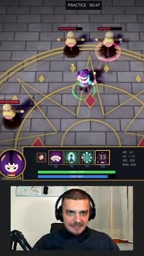
Deep Seek's result was described as "like a polygon collage," with essentially no visual effects. The abilities "barely work," but it runs extremely poorly.
It should be noted that this result isn't entirely fair — the creator cut the process short because generation took too long. In other words, Deep Seek's main bottleneck may have been generation efficiency rather than pure output quality. This also highlights an easily overlooked dimension: in long-task generation scenarios, waiting time itself is part of the experience.
Fable 5.2: Fluidity That's a Generation Ahead
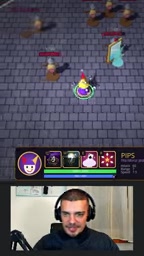
What genuinely changed the creator's tone was Fable 5.2. The first thing he noticed wasn't the visuals but the frame rate — "extremely smooth, not stuttery at all," and in his words, at the performance level it "really feels like a polished game."
Ability presentation was upgraded across the board: the Q animation is detailed, W is a clone-type effect, E animates smoothly, and R summons several mirrors that fire attacks in all directions. The creator gave the highest praise of the entire comparison: best animations, most refined presentation, zero stutter — "the best result to date" for this prompt.
Frame rate (FPS, Frames Per Second) refers to the number of frames rendered per second and is a direct measure of how smooth a real-time interactive program is. 30 FPS is generally considered the playable floor, while 60 FPS is the common target for action games; if the frame rate fluctuates noticeably, players will directly perceive it as "stuttering" or "dropped frames."
For a game prototype generated in one shot by AI, frame rate issues often don't come from rendering itself but from inefficient logic-layer implementation — for example, recreating objects every frame, failing to reuse object pools, using full traversal for collision detection, or performing calculations in the main loop that should be event-driven. So the difference in fluidity actually reflects the model's ability to anticipate runtime overhead, not just visual refinement.
Three Signals Worth Noting
The value of this comparison goes beyond "who won."
First, performance is becoming the dividing line for AI-generated code. Getting features to run has long ceased to be the hard part; whether it runs without stuttering is now what distinguishes a model's engineering maturity. The gap in feature coverage between Opus 5.5 and Fable 5.2 isn't huge, but their smoothness is a tier apart.
Second, the completeness of animations and effects reflects a model's understanding of "game feel." The thrill of a MOBA depends heavily on ability feedback, and Fable 5.2's investment in animation detail shows it has a more concrete grasp of "what makes a game feel like a game."
Third, creator expectations are being rapidly raised. From "it can run" to "it feels like a polished game" — this shift in evaluation standards happened within a single generation of models.
Of course, a comparison based on a single sample and a single prompt can't represent everything, but it at least offers an intuitive snapshot: once AI starts generating complete, playable interactive systems, the evaluation dimension shifts from "can it be built" to "is it fun to play." The latter is the real barrier in games.
"Game feel" (polish) is a common concept in game design, referring to the immediate, dense, and weighty experience players get between input and feedback, typically built up from details like animation transitions, particles and light effects, sound-effect timing, screen shake, and hit-stop.
Given equivalent functionality, game feel determines whether a prototype feels like "a piece of code that runs" or "a game." This also explains why the completeness of animations and effects becomes a dimension that distinguishes model performance: it requires the model not only to implement mechanics but also to make design judgments about the player's perceptual path — knowledge that is typically implicit in high-quality game project code and design discussions within training data.
One-line Summary
Same prompt, same MOBA prototype — Fable 5.2 clearly leads on animation and smoothness.
Paragraph Summary
A YouTube creator fed the same prompt — build a simple MOBA prototype with movement, training dummies, and Q/W/E/R abilities — to several AI models and compared the results. Opus 5.5 fully completed the movement, dummy, and ability loop but stuttered overall; Deep Seek's output was described as a polygon collage with no effects and extreme stutter, cut short due to long generation time; Fable 5.2 was rated the best result to date, with the best animations, most refined presentation, and zero stutter. The article draws three signals: performance is becoming the dividing line for AI-generated code, animation and effect completeness reflects a model's grasp of game feel, and creator standards are rapidly shifting from "it runs" to "it feels like a polished game."
Related articles
Persistent Memory for AI Coding Agents: Reverse-Engineering the Understand Anything Plugin
Reverse-engineering the Understand Anything plugin: how it builds a local persistent knowledge base for Claude Code, Codex, and Cursor AI coding agents through code maps, business logic connections, and incremental updates—achieving project-level memory without relying on a larger context window.

5 Free GitHub Repositories Every AI Agent Developer Should Know
Explore 5 free GitHub repositories every AI agent developer should know, covering agent project templates, code generation, and integration with large models like Claude to help you build AI agents faster.

Buttered Corn Flan: A New Thanksgiving Dessert Idea
Discover the New York Times Cooking buttered corn flan recipe, inspired by flan di elote, balancing caramel and sweet corn for a Thanksgiving dessert.