FFmpeg-Skill: A Local Video Editing Toolbox for Coding Agents
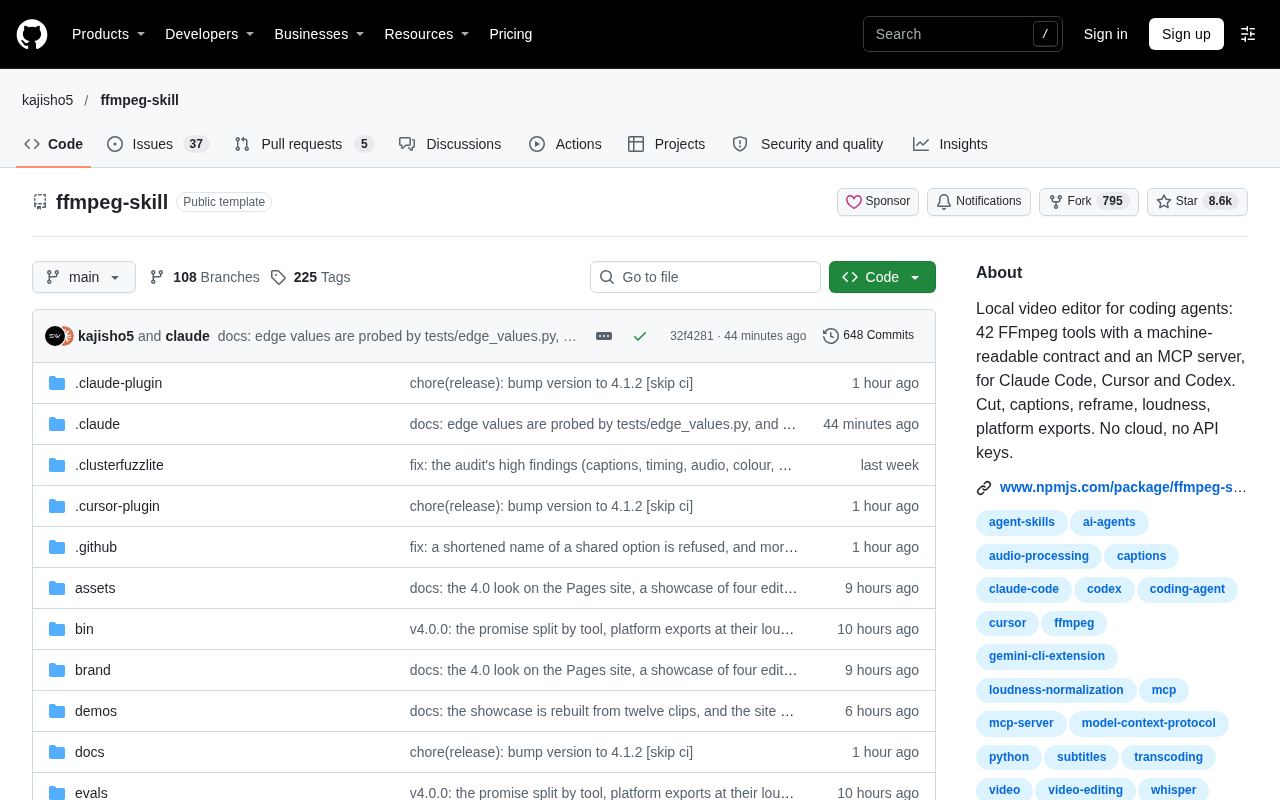
ffmpeg-skill wraps FFmpeg into 42 contract-based tools accessible to coding agents via MCP, enabling local automated video editing pipelines.
The article introduces kajisho5/ffmpeg-skill, which wraps FFmpeg capabilities into 42 tools with machine-readable contracts and provides an MCP server so coding agents like Claude Code, Cursor, and Codex can execute cutting, captions, reframing, loudness normalization, and platform export as function calls—rather than generating error-prone FFmpeg commands for users to paste. Contracts let agents know parameter ranges and return structures, enabling composable, reproducible processing chains; MCP lets all clients connect through a unified protocol. It runs fully locally without cloud services or API keys, keeping assets on-device—ideal for batch processing and privacy-sensitive scenarios—though capabilities are bounded by FFmpeg and exclude generative or semantic editing. With 8588 GitHub stars and ~2998 added in a week, it reflects how many developers are exploring agent toolification.
Why Coding Agents Need a Video Editor
Asking Claude Code or Cursor to edit a video sounds like a stretch, but it's actually a natural need. AI coding assistants can already write code, run terminals, and modify files—but when it comes to tasks like "cut this footage into vertical format and add captions," they usually just generate an FFmpeg command for the user to paste. One wrong parameter and it fails, and the agent gets no parseable feedback.
kajisho5/ffmpeg-skill aims to solve exactly this gap. It wraps FFmpeg's capabilities into 42 tools, each with a machine-readable contract, and provides an MCP server so agents like Claude Code, Cursor, and Codex can directly execute editing, captioning, reframing, loudness processing, and platform exports as if calling functions. Everything runs locally—no cloud services, no API keys.
Community feedback shows this direction hits the mark: the project has 8588 stars and 795 forks on GitHub, with roughly 2998 stars added in a single week. For a utility repository, that's remarkably dense attention.
Machine-Readable Contracts: No More "Guessing Parameters"
What Contracts Solve
In the traditional approach, agents understand FFmpeg through command snippets in their training data—whether parameters are valid, whether filter order is correct, whether output meets platform specs—all inferred by the model itself. ffmpeg-skill defines explicit input/output contracts for each tool, so agents know what parameters exist, what their valid ranges are, and what the return values look like.
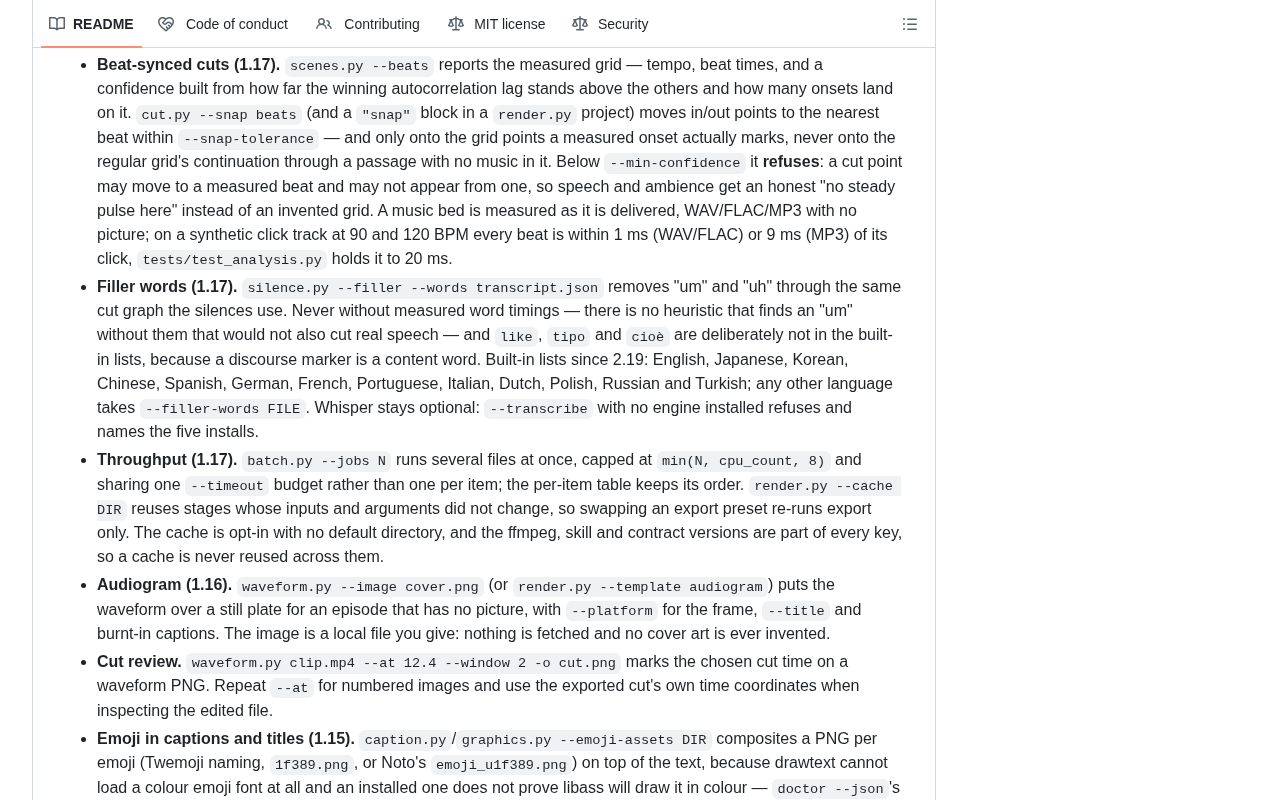
The value isn't just "fewer errors." Once tools have stable contracts, agents can combine calls: first probe media info, then crop for the target platform, then burn in captions, then normalize loudness. Each step's output can be read by the next, forming a reproducible processing chain rather than one-off command concatenation.
Machine-readable contracts are typically described in JSON Schema, including parameter names, types, whether required, enum value ranges and defaults, plus structure definitions for return values. Agents can read the Schema before calling a tool, generating valid parameters and parsing structured returns rather than guessing from natural language or help docs. This contract-based design also enables orchestration engines to perform static validation and error localization: if a call is missing required parameters or has type mismatches, it can be intercepted before execution and prompt the agent to correct it, rather than reverse-engineering from stderr after FFmpeg fails at runtime.
How the MCP Server Enables Integration
MCP (Model Context Protocol) is the standard channel for agents to access external tools. The project ships with its own MCP server, meaning no adapter layer is needed for each client—Claude Code, Cursor, and Codex can all discover and call these 42 tools through the same protocol. For developers already using MCP workflows, this lowers the cost of trying it out.
MCP (Model Context Protocol) was introduced by Anthropic in late 2024, using a client-server architecture: the agent host (such as Claude Code or Cursor) acts as the client, communicating with external MCP servers via JSON-RPC 2.0. Servers declare their exposed tool list and each tool's input Schema, and clients dynamically discover and invoke capabilities accordingly without hardcoded adapters. MCP's positioning is to become a universal interface layer between agents and external tools—like USB-C for peripherals. For tool authors, implementing an MCP server once means all clients supporting the protocol can connect, which is why ffmpeg-skill emphasizes its built-in MCP server.
What the 42 Tools Cover
Based on the project description, the toolset revolves around the tasks creators encounter most often:
- Cutting and concatenation: basic trimming, clip extraction, and merging—the starting point of automated editing.
- Captions: caption processing is listed as a standalone capability, reflecting the reality of the short-video era where "no captions means no reach."
- Reframing: converting landscape to portrait and adjusting composition—a necessary step for cross-platform distribution.
- Loudness: audio loudness processing to prevent volume jumps between clips, also relevant to platform loudness standards.
- Platform export: outputting files with appropriate specs for different distribution platforms.
The orientation is clear: it's not professional post-production software, but a standardized pipeline covering "a video from raw material to publishable." For agents, this kind of deterministic, repetitive labor is exactly what's best suited to take over.
Local-First: No Cloud, No API Keys
The project explicitly emphasizes no cloud and no API keys. This deserves special mention in the current tooling ecosystem.
Video assets are often large and privacy-sensitive; uploading to the cloud for processing is both slow and adds another layer of concern. ffmpeg-skill runs on local FFmpeg, so assets never leave the machine, and processing latency depends on local hardware rather than network. For creators who need to batch-process assets, or for work scenarios with confidentiality requirements, this trade-off is practical.
On the other hand, local-first also means capability ceilings are constrained by FFmpeg itself. It excels at deterministic operations like transcoding, filters, and muxing, but doesn't do generative content understanding or semantic-level editing decisions—those still require agent-side capabilities.
Loudness normalization in video distribution typically references the EBU R128 standard, measuring perceived loudness in LUFS (Loudness Units Full Scale) and constraining True Peak to avoid clipping. Platforms like YouTube and Spotify normalize uploaded audio to their own target loudness, so inconsistent source loudness causes volume jumps during playback. FFmpeg's loudnorm filter implements EBU R128 measurement and two-pass normalization—this is the capability behind ffmpeg-skill's loudness tool. When agents call this tool, the contract exposes parameters like target LUFS and True Peak ceiling, making it easy to batch-process according to platform standards.
A Sample of Agent Toolification
ffmpeg-skill's form is more noteworthy than the specific 42 tools it supports. It demonstrates a pattern that's taking shape: wrapping mature command-line tools through contracts and MCP into capability units that agents can directly invoke.
The advantage of this path is reusing the existing ecosystem. FFmpeg has been refined over years, with stability and coverage already proven—what's missing is just an agent-facing interface layer. Add that layer, and a pure Python project can give coding assistants video processing capabilities without rebuilding an engine from scratch.
The project's current popularity on GitHub (8588 stars, nearly 3000 added in a week) shows that agent toolification is at a stage being actively explored by many developers. What's worth watching next is contract stability and depth of tool coverage—when agents can reliably compose and call these tools, video processing truly shifts from "generating commands" to "completing tasks."
Who It's For
Developers already building automated workflows in Claude Code, Cursor, or Codex can connect to the MCP server and try it directly. Creators who need to batch-process assets without uploading videos to the cloud can also benefit. If you only occasionally edit a video manually, traditional editing software is still more straightforward; ffmpeg-skill's value is in "letting agents run the pipeline for you," not replacing human creative judgment.
Related articles
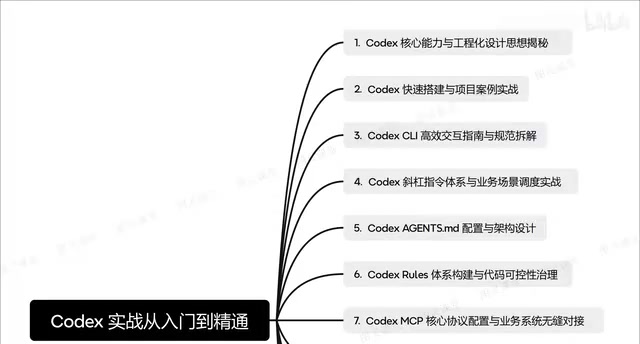
Codex in Practice: From Installation and Configuration to Multi-Agent Collaboration
Based on a Bilibili Codex course overview, this guide maps the full path of AI coding assistants from installation and agents.md context design to CLI commands, MCP integration, and multi-agent collaboration.
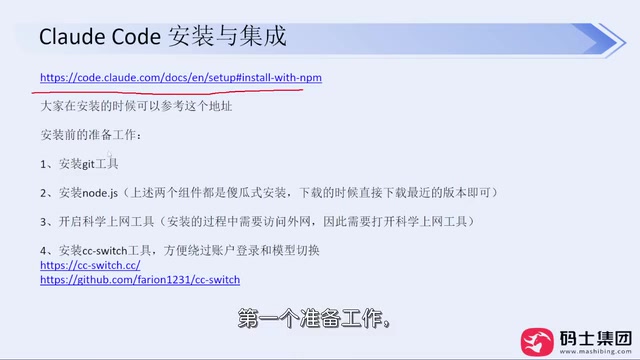
Claude Code Installation and Model Switching Guide for Users in China
How can developers in China install Claude Code reliably? This article compiles a Bilibili creator's hands-on solution: install via NPM, skip official login, use CC Switch to configure API Keys and freely switch between DeepSeek, Kimi, and other models to avoid account bans.
AI Supply Chain Security: What Canary Tokens Reveal
Starting from a Hacker News discussion, this article analyzes the role of canary tokens in AI supply chain security: how they detect abnormal access to model weights, training data, and credentials, as well as coverage blind spots and cost constraints during implementation.