Flower AI Tested: One Prompt Lets an Agent Handle Full Character Design for Short Drama Series
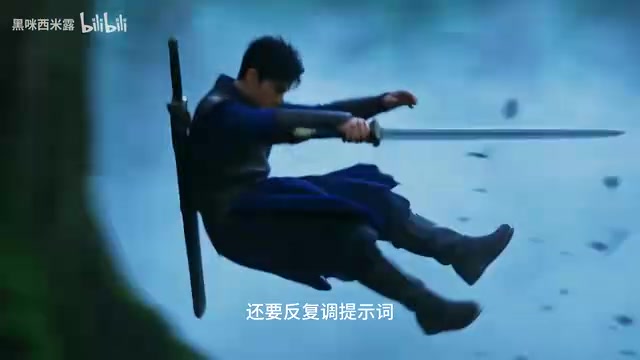
Flower AI uses an Agent to unify character, scene, and voice assets, solving AI short drama inconsistency at the source.
The trickiest problem in AI short drama production is maintaining consistent character appearances, scene styles, and props across shots — because traditional tools treat each asset as an independent task with no shared world-building constraint. Flower AI addresses this with an Agent-based approach: describe your story in one sentence, and the Agent first internalizes the overall world-building, then produces characters, scenes, props, and storyboard drafts in a unified style. It also generates a dedicated voice profile from each character's appearance, binding visuals and audio into a reusable "character asset." This workflow — build assets upfront, call them up later — noticeably improves consistency across continuous shots, marking a shift from single-frame generation toward coordinated production pipelines. Stability under complex storylines still awaits further real-world validation.
The Biggest Pain Point in AI Short Dramas: Characters and Scenes Doing Their Own Thing
Anyone making AI videos has run into the same problem — each frame looks fine on its own, but the moment you cut them together, the cracks show: the protagonist's outfit changes between shots, scene styles shift without warning, props appear and disappear out of nowhere. Audiences can tell immediately that these shots don't belong to the same world.
The root cause is that traditional workflows treat characters, environments, and props as completely separate tasks, each requiring its own description from scratch. Settings end up "fighting" each other, and the further you go, the harder consistency becomes. The Flower AI breakdown by this Bilibili creator approaches the problem differently — by handing all these scattered assets to a single Agent to manage, solving the consistency problem at the source.
One Sentence Generates a Full Script — the Agent Understands the Whole Story
Flower AI's first core capability: drop your idea into the Agent in a single sentence, and it generates a complete script. The key here isn't the scriptwriting itself — it's that the Agent understands the entire story's world-building, then uses that understanding to produce a full suite of assets: characters, scenes, props, and storyboard draft images.
In other words, a character's wardrobe, living environment, and personal props are all automatically grounded in the same narrative setting — they all exist in the same world. You don't have to keep re-describing your background requirements over and over, which eliminates the visual conflicts that come from inconsistent repeated inputs. This "world-building first" generation logic is what sets it apart from frame-by-frame output tools.
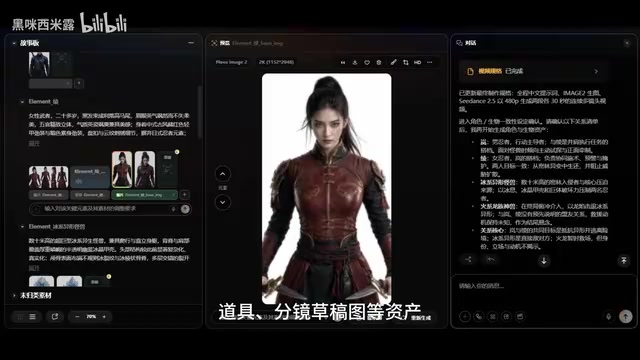
The "Agent" here refers to an AI system with planning and tool-calling capabilities — fundamentally different from a standard single-turn prompt. Ordinary text-to-image or text-to-video tools are stateless on every call: you input a description, it outputs an image, and no context is retained. An Agent, by contrast, maintains a shared "state" (the story's world-building) throughout the entire task lifecycle, using that world as a constraint when generating each individual asset. This type of architecture is often called a "multi-step planning Agent" or "Orchestration Agent." Its core advantage is decomposing a complex task into subtasks while ensuring that the outputs of each subtask remain semantically consistent — rather than each going off in its own direction.
From Appearance to Voice: Character Assets Captured in One Pass
The second capability the creator found especially practical: the Agent can produce a complete design for each character — not just their appearance, but their voice. It generates a dedicated voice profile directly from the character's visual design, binding the look and sound together into a single "character asset."
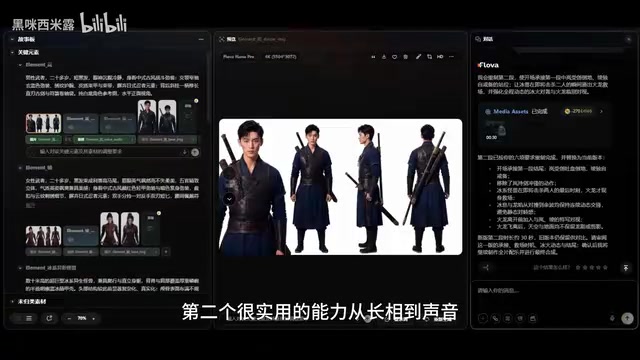
The real value of this binding mechanism only becomes clear when you're generating continuous shots. When you need to produce multiple scenes, you can call up this pre-finalized character asset directly, making it much easier to maintain consistency in both the character's appearance and vocal style. For short dramas — where characters need to appear repeatedly — this is practically a must-have.
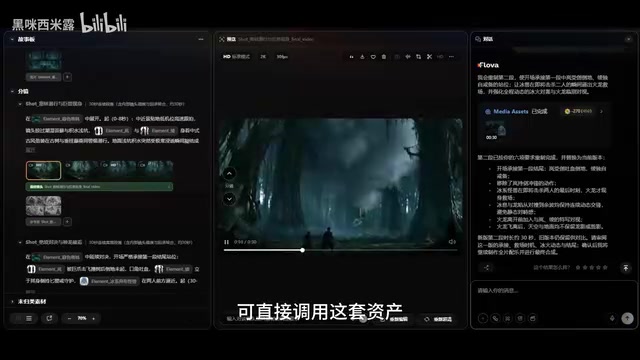
The concept of a "Character Asset" is borrowed from Digital Asset Management (DAM) workflows in the game and film industries. In traditional 3D animation or game production, a character asset bundles together the model, textures, rigging, facial controllers, and voice files into a single reusable unit — so whenever any team member calls up that character for any scene, the visual and audio style is inherently consistent. Flower AI transplants this approach into AI generation: using diffusion models to lock in a character's visual features (LoRA fine-tuning or IP-Adapter-style techniques are common implementations), while binding the result of voice cloning or voice selection to that character, forming a reusable "asset package." This design gives AI video creation a level of reusability comparable to a professional production pipeline for the first time.
Build Assets Upfront, Make Generation Easier Later
The logic behind Flower AI's entire workflow can be summarized as: lock in all the assets — characters, scenes, voices — upfront, and generating shots later becomes far simpler. This is the opposite of the traditional "figure it out as you go" approach. It emphasizes establishing the world-building and character assets first, then moving into the shot production phase.
Based on the finished clips shown by the creator, the characters, scenes, props, and overall visual atmosphere do achieve a consistent look — which is the direct payoff of asset-based management. For creators looking to try AI short dramas, this kind of workflow can significantly cut down the cost of repeated tweaking.
What's Worth Watching
The core idea behind this approach — using an Agent to centrally manage character assets and bind appearance with voice — represents the direction AI content generation is evolving: from "generating single images" toward "workflow coordination." That said, it's worth noting that this article is based on a single creator's demonstration. The actual generation quality, the stability of asset consistency, and performance with complex storylines all require more real-world testing to verify. Creators who are curious should try it hands-on and judge for themselves whether it fits their creative workflow.
Related articles

Vibe Coding Full-Stack in Practice: AI Programming from Beginner to Enterprise Deployment
From Cursor to Claude Code, this Bilibili AI programming course uses four progressive projects to cover full-stack development, open-source secondary development, and team collaboration. The article analyzes the shock to frontend roles, the efficiency shift from 50 people to 5, and the methodology required for enterprise-grade projects.

David Blaine's Global Quest for Real Magic: From South Africa to Japan and India
David Blaine travels to South Africa, Japan, and India in his Do Not Attempt special, documenting Spinning drivers, black mamba rescuers, iaijutsu masters, and ascetics—exploring the boundary between magic and real human极限 challenges.

Is a Touchscreen MacBook Coming? Vergecast Reveals Apple Executive's Response
Vergecast podcast reveals a conversation between a reporter and Apple executive John Ternus about a touchscreen MacBook and Apple Pencil support. Ternus says iPad is the best device for a stylus, while the reporter bets MacBook will eventually support Apple Pencil.