From Delta Sharing to OpenSharing: The Evolution of Open Data Exchange

Delta Sharing is evolving toward OpenSharing, with the core shift from a single project to open governance and a broader ecosystem.
The article examines the evolution of data sharing protocols from Delta Sharing to OpenSharing. Delta Sharing enables real-time cross-organizational sharing without data copying through an open protocol and has been adopted by thousands of organizations. As adoption scales, the single-project governance model faces challenges around transparency and participation. The core change in OpenSharing is not in technical details but in governance models and ecosystem boundaries: promoting multi-stakeholder participation in protocol evolution, expanding asset type coverage, and reducing integration costs between implementations. For data teams, this means more diverse protocol choices, clearer contribution paths, and lower long-term maintenance risk. Key issues for the next phase include interoperability certification, security and compliance extension, and ecosystem tool building. Existing users need not migrate in the short term but should track whether the governance structure is genuinely diverse.
The opening-up of data sharing is accelerating. As the de facto standard for real-time cross-organizational data exchange, Delta Sharing has been adopted by thousands of organizations. Now, this model is evolving toward a more open direction—OpenSharing. This article examines the logic behind this shift, its core changes, and where it is headed.
Delta Sharing: The Starting Point of Open Data Exchange
Delta Sharing was born to solve a problem that had long plagued data teams: how to securely share real-time data across organizations without copying it. It is built on an open protocol design—senders do not need to copy data to the recipient's platform, and recipients can query shared data directly with tools they are already familiar with.
The key to this model lies in "openness"—it is not tied to any specific vendor's compute engine, nor does it require recipients to adopt the same technology stack as senders. For this reason, thousands of organizations have adopted it as the infrastructure for cross-organizational data collaboration, spanning industries such as finance, retail, and manufacturing.
As adoption has scaled, community expectations for the sharing protocol have also shifted. The governance model led by a single project has begun to face challenges: users want the protocol's evolution to be more transparent, they want more diverse channels for participating in decisions, and they want the protocol itself to cover more types of data assets.
The relationship between Delta Sharing and Delta Lake: Delta Sharing was initially developed under Databricks' leadership and is part of the Delta Lake ecosystem. Delta Lake is an open-source table format storage layer that provides ACID transactions, schema evolution, and time travel on top of the data lake. Delta Sharing is the protocol layer defined on top of it, specifying how senders expose table data and metadata to recipients via REST API. It does not require recipients to use Delta Lake or Spark—this is the technical source of its "open" nature: the protocol only describes the exchange format and is not bound to an execution engine. Understanding this layering helps distinguish the openness issues at two different levels: "table format" and "sharing protocol".
OpenSharing: From Project to Open Governance
The core change in OpenSharing is not in the technical details of the protocol itself, but in the governance model and ecosystem boundaries. According to the source material, this shift focuses on two questions—"what changed" and "what comes next"—pointing toward the migration of sharing capabilities from a single project to a more open ecosystem.
From the available information, we can infer that OpenSharing attempts to address several structural issues. The first is governance openness: enabling more organizations and developers to participate in the protocol's evolution, rather than having a single vendor dominate the roadmap. The second is ecosystem breadth: data sharing should not stop at tabular data but should cover more asset types and use cases. The third is interoperability: reducing integration costs between different implementations while keeping the protocol open.
What do these changes mean for existing users? In the short term, Delta Sharing's existing capabilities will not disappear, and existing sharing pipelines can continue to operate. In the medium to long term, if OpenSharing fulfills its promise of open governance, participants will gain more stable expectations for protocol evolution and richer choices of tools and implementations.
Practical Impact on Data Teams
For data teams currently using Delta Sharing, the direct impact of this shift plays out at three levels.
First, protocol choices become more diverse. Open governance typically means multiple implementations coexist, allowing teams to choose a sharing solution that fits their own technology stack without deep lock-in to a single implementation.
Second, contribution paths become clearer. In the past, improvement proposals at the protocol level often depended on the maintainers of a single project; under open governance, community members can submit proposals, participate in discussions, and drive implementation through more formal channels.
Third, long-term maintenance risk decreases. When a protocol is maintained jointly by multiple parties, the impact of a single vendor's strategic adjustments on the ecosystem is diluted—this is especially important for enterprises that treat data sharing as critical infrastructure.
Common forms of open governance: In the open-source world, moving from single-vendor leadership to open governance typically means introducing foundation hosting, a Technical Steering Committee (TSC), a public proposal process (such as RFC/Enhancement Proposal), and decision-making mechanisms with joint voting by multiple vendors. Typical references include the Apache Software Foundation, projects under the Linux Foundation, and the Cloud Native Computing Foundation (CNCF). Such structures reduce the impact of a single vendor's roadmap changes on the ecosystem by clarifying contributor tiers, code ownership, and release cadence. The "governance openness" mentioned in the article corresponds to these institutional arrangements, not merely open-source code.
What's Next for Open Sharing
The source material focuses the discussion on "what's next" but does not lay out a specific roadmap. Judging from the general patterns of open data exchange, the next phase of evolution may unfold along several directions.
Interoperability is the foremost issue. The value of a sharing protocol grows with the number of participants, and the more participants there are, the more important consistency between different implementations becomes. Open governance needs to establish clear compatibility testing and certification mechanisms to avoid ecosystem fragmentation.
Security and compliance are another main thread. Cross-organizational data sharing involves access control, audit trails, and privacy protection. An open protocol needs to leave room for extending these enterprise-grade requirements while remaining simple. Open governance does not mean relaxing security standards—the two must advance in tandem.
Building ecosystem tools is equally critical. The protocol itself only defines exchange rules; the actual user experience depends on the richness of connectors, SDKs, and integration solutions. If open governance can attract more contributors to tool building, the cost of onboarding for recipients will decrease further.
Interoperability and compatibility testing: When multiple independent implementations of the same protocol exist, interoperability depends on two things: the precision of the protocol specification and an executable compatibility test suite. Common practices include publishing conformance tests, establishing certification programs, and maintaining reference implementations. Without these mechanisms, different implementations may diverge subtly in metadata formats, authentication methods, or pagination behavior, ultimately leading to fragmentation where "the same protocol cannot interoperate". Therefore, open governance agendas often advance specification governance and testing infrastructure in parallel.
Signals Worth Watching
From Delta Sharing to OpenSharing is essentially data sharing moving from "a successful open-source project" to "an open ecosystem". Whether this shift succeeds depends on several observable signals: whether the governance structure is genuinely diverse, whether protocol evolution remains backward compatible, and whether ecosystem tools continue to grow.
For data practitioners, there is no need to rush to migrate right now, but this process is worth tracking. Data sharing is becoming a foundational capability of enterprise data architecture, and the governance model of foundational capabilities will ultimately affect every organization that uses them.
One-line Summary
Delta Sharing is evolving toward OpenSharing, with the core shift from a single project to open governance and a broader ecosystem.
Paragraph Summary
The article examines the logic behind the evolution of data sharing protocols from Delta Sharing to OpenSharing. Delta Sharing enables real-time cross-organizational sharing without data copying through an open protocol and has been adopted by thousands of organizations. As adoption scales, the single-project governance model faces challenges around transparency and participation. The core change in OpenSharing is not in technical details but in governance models and ecosystem boundaries: promoting multi-stakeholder participation in protocol evolution, expanding asset type coverage, and reducing integration costs between implementations. For data teams, this means more diverse protocol choices, clearer contribution paths, and lower long-term maintenance risk. Key issues for the next phase include interoperability certification, security and compliance extension, and ecosystem tool building. Existing users need not migrate in the short term but should track whether the governance structure is genuinely diverse.
Related articles
 Tech Frontiers
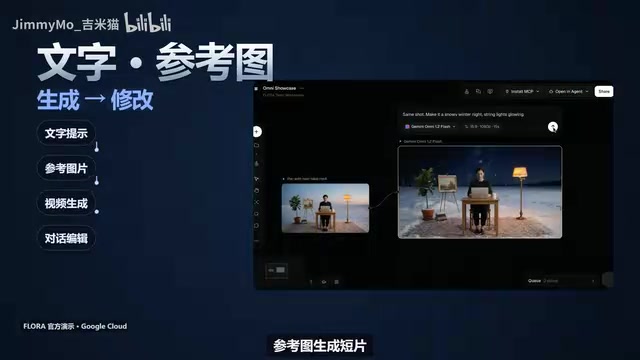
Gemini Omni 1.2 Flash: AI Video Moves Toward Draft-Style Editing
Google's Gemini Omni 1.2 Flash update enables conversational, draft-style editing of the same video—swap scenes while keeping products, adjust lighting while keeping characters. Clips up to 15s, 720p costs 30% less than the previous Flash—ideal for e-commerce ads, previs, and short-asset production.
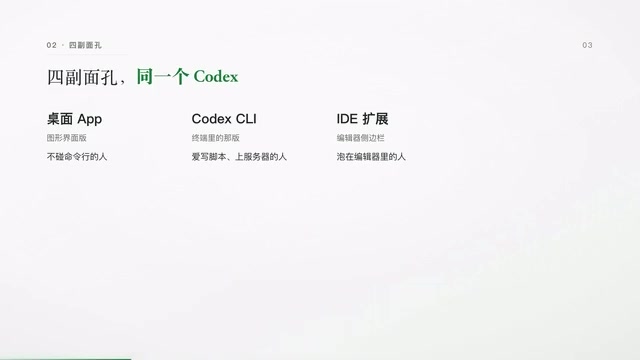
Codex Tutorial: One-Command Install and Run Your First Task
Codex tutorial: one-command install and run your first task. Covers the four Codex forms, sandbox and approval guardrails, AGENTS.md and MCP configs, cloud network policy, and the iron rule of human review—everything you need to get started with this autonomous coding agent.
 Tech Frontiers
Localix: An Open-Source Agentic Development Environment with Multi-Model and Local AI Integration
Localix is an MIT open-source Agentic Development Environment (ADE) supporting seamless Claude Code plugin loading, multi-model cloud and local execution, Mini Apps extensions, and agent context management—an open AI collaboration workbench for developers.