Full-Stack Agent Development Learning Roadmap: Three Stages from Beginner to Production

The real barrier in Agent development is production stability—this article presents a three-stage full-stack learning roadmap.
The article argues that the core pain point of Agent development isn't getting a demo to run but achieving stable production operation—an Agent running 10 steps at 95% success each has only ~60% end-to-end reliability. The author proposes a three-stage roadmap: Stage 1, just-enough Python fundamentals (3-4 days); Stage 2, master LLM theory and hands-on build knowledge bases and workflows to develop RAG intuition; Stage 3, pick a mainstream framework like LangChain and build projects, remembering "Agent = LLM + Memory + Tools." Stability issues—tool failures, context overflow, token cost overruns—are where the industry most needs talent and where personal growth happens.
A viral discussion on Bilibili reveals a fact that few people explain clearly: getting an Agent to run is easy, but making it run reliably in production is the real barrier. A widely circulated rule of thumb says that an Agent running 10 steps with a 95% success rate per step has only about a 60% chance of working end-to-end. This number strikes at the core pain point of Agent development today—plenty of tutorials teach you how to get the model responding, but very few explain how to design the workflow, where the pitfalls are, how to choose a framework, or how to wire up tools.
Drawing on the core ideas from that video, this article breaks down a practical full-stack Agent learning roadmap: Python fundamentals, LLM theory and hands-on practice, and mainstream framework project work—three stages that build on each other.
Why Agent Development Is the Most Worthwhile Hard Skill Right Now
There are plenty of people who can tune models, but those who can get an Agent running reliably in production are still few and far between. This supply-demand mismatch makes it a hard skill gap you can't avoid—whether you're job hunting, taking on projects for income, or building intelligent products.
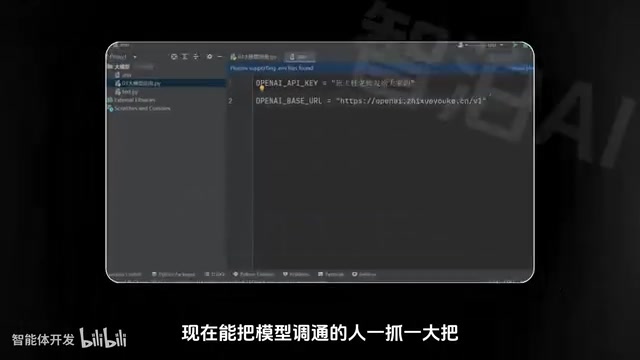
Demand is growing, companies are hiring, but schools don't teach it and fragmented tutorials don't cover it. Most people's problem isn't that they can't learn—it's that they don't know what to learn or in what order. The result is products that "worked great the first day, then were never used again." Running once and running reliably 10,000 times are two completely different industries.
Stage 1: Python Fundamentals—Good Enough Is Enough
The biggest mistake beginners make is diving straight into thick textbooks and grinding through syntax, only to find none of it is actually useful.
Agent development is about building things, not algorithm research. For Python, you only need two things: the ability to read basic code and write simple logic. The core content takes one to two hours a day and can be done in three to four days—no need to endlessly consume yourself with syntax details.
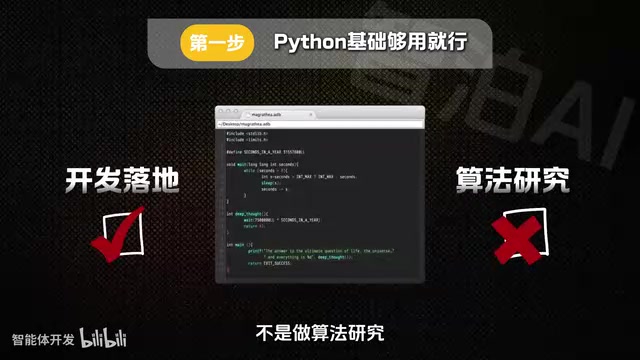
The bar for this stage is clear: you can read Agent scripts others have written, and you can write a few lines of glue code to connect model output to tools. Once you reach that level, move to the next stage immediately.
Stage 2: Master LLM Theory and Hands-On Practice
LLMs are the engine of an Agent, but there's so much scattered information out there that it's easy to get overwhelmed. When studying LLM architecture in depth, focus on just three things: overall architecture, core concepts, and runtime logic.
Beyond theory, you must get hands-on. Build a knowledge base and create a workflow using no-code or low-code tools on a mainstream cloud platform—one actual run-through is worth more than watching 20 videos.
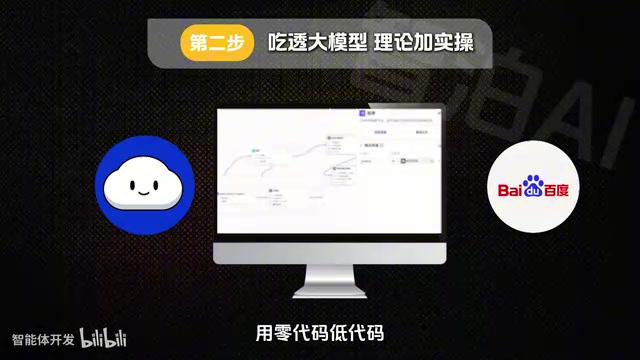
The value of this step is building intuition for RAG, workflow orchestration, and model invocation chains. Only by going through it yourself will you avoid staying at the conceptual level when you later learn frameworks.
What Is RAG: RAG (Retrieval-Augmented Generation) means that before the model generates a response, it first retrieves the most relevant fragments from an external knowledge base, then feeds those fragments as context to the LLM. Its value lies in solving two natural weaknesses of LLMs: first, training data has a cutoff date and can't answer questions about the latest information; second, it can't access a company's private data. RAG decouples the "source of knowledge" from model parameters, replacing it with a vector store that can be updated at any time—making it one of the most widely deployed Agent capabilities today. The typical pipeline is: document splitting → vectorization and storage → user query vectorization → similarity search → prompt assembly → model generation. Understanding this pipeline is essential to grasp what components like Retriever, Embedding, and Vector Store are actually doing in frameworks later on.
Workflow Orchestration: Workflow orchestration means connecting multiple steps—such as retrieval, model invocation, conditional logic, and tool execution—using visual nodes and connections. Compared to letting the model act freely, workflows return process control to the developer, making each step's input and output predictable, debuggable, and reproducible. This is also why low-code platforms are recommended for beginners: drag a few nodes and you can run a complete pipeline, intuitively experiencing the data flow from "input → processing → output." When you later migrate to code frameworks like LangChain, you won't get stuck on abstract concepts.
Stage 3: Master Mainstream Frameworks and Jump Straight into Projects
The most critical step is to pick a mainstream framework (like LangChain) and build a project directly. Don't get bogged down in underlying principles—official documentation plus hands-on practice is the most efficient path.
Remember the core formula: Agent = LLM + Memory + Tools. The key is enabling AI to autonomously call tools and get work done. Follow the code to run through the process and build your first simple Agent—that counts as getting started.
The Truth After Getting It Running: Stability Is the Dividing Line
After you get it running, there's something almost no one warns you about in advance: Agents break. Tools fail to connect, context fills up and it starts forgetting things, and you never even calculated how many tokens a single run burns.
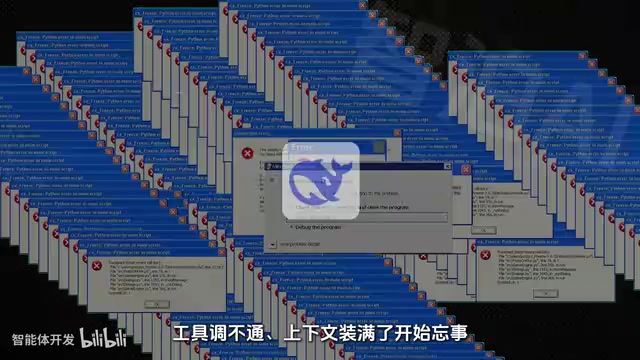
These gray areas are exactly where the industry is most short-handed. The effective approach is: wherever it breaks, log it. That spot is your growth opportunity—and it's also the problem the industry most needs solved right now.
Context Window and Overflow: The context window refers to the maximum total number of tokens a model can receive and process in a single call. When an Agent has multi-turn conversations and repeatedly calls tools, historical messages, tool return results, and retrieved fragments keep accumulating. Once the window limit is exceeded, earlier content gets truncated or discarded—manifesting as "forgetting things mid-conversation." Common mitigation strategies include conversation summarization and compression, keeping only the most recent few turns, and externalizing long-term information into a vector store for on-demand retrieval.
Token Cost: A token is the smallest unit of text a model processes, and both input and output are billed by token. An Agent typically carries the full context and calls the model again at each step—the more steps and the longer the context, the more costs compound. Many demos don't reveal the problem because they have few steps, but once deployed to production with high-frequency calls, costs can far exceed expectations. Therefore, you should estimate average token consumption per task during the design phase and bring it down through prompt optimization, caching, and step control.
The Underlying Logic of the Three-Stage Roadmap
What makes this roadmap smart is that it's ordered by "implementation priority" rather than by knowledge system. Python—good enough is enough (the tool). LLM theory plus hands-on practice (the engine). Frameworks plus projects (the complete vehicle). Each stage has a clear "passing grade" and "next action," avoiding the two most common ways beginners fail: getting stuck in syntax details and never getting out, or obsessing over theory without ever getting hands-on.
For developers looking to break into Agent development, the earlier you learn systematically, the better your head start. And your real competitiveness isn't about getting a demo to run—it's about being able to locate and fix every crash an Agent experiences in a real environment.
One-line Summary
Getting an Agent to run reliably in production is the real barrier—this article lays out a three-stage full-stack learning roadmap.
Paragraph Summary
The article points out that the core pain point of Agent development isn't getting a demo to run—it's achieving stable production operation. An Agent running 10 steps with a 95% success rate per step has only about a 60% end-to-end success rate. Against this reality, the author proposes a three-stage learning roadmap: Stage 1, Python fundamentals—just enough to read code and write glue logic in three to four days; Stage 2, master LLM theory and hands-on build a knowledge base and workflow to develop intuition for RAG and invocation chains; Stage 3, pick a mainstream framework (like LangChain) and build projects directly, remembering "Agent = LLM + Memory + Tools." The author emphasizes that after getting it running, you must confront stability issues like tool failures, context overflow, and runaway token costs. Crash points are exactly where the industry is most short-handed—and where personal growth happens.
Related articles

Firebase AI Logic + Gemini Nano 4: A Practical Guide to Android AI Development
How Firebase AI Logic and Gemini Nano 4 help Android developers ship generative AI: App Check and prompt templates ensure security, hybrid routing cuts latency and cost, Spend Caps control budgets, and AI monitoring provides observability.

Microsoft AI Agent Breakthroughs: More Efficient, Better at Code and Weather Forecasting
Microsoft Research Focus Issue 97: ForkPilot cuts agent inference costs, Cabra reveals coding agents' code-understanding gap, Teletune learns workflows from logs, PBC improves extended forecasts, BioEMU-2 opens preview.

Prime Intellect Releases Prime Mega MoE: Trainable Fused MoE Kernel with 3.11x Forward Speedup
Prime Intellect releases Prime Mega MoE, adding backpropagation to DeepSeek's fused Mega MoE kernel for trainability. Up to 3.11x forward speedup and 34% faster Qwen3 MoE training steps in prime-rl.