Gemini 4 Carbon: Balancing SOTA Performance and Safety Amid Rapid Iteration

Google releases Gemini 4 Carbon, claiming SOTA and emphasizing safety and iteration speed, but details are lacking and await verification.
Google has officially released Gemini 4 Carbon, claiming SOTA on multiple key benchmarks and highlighting the combination of frontier capabilities and deep safety research, while emphasizing "lightning-fast iteration speed." The article notes that with AI model competition at a fever pitch, iteration speed itself has become a competitive dimension, but this release lacks details on specific benchmarks, competitor comparisons, margins of leadership, and safety evaluation data; the SOTA and safety claims remain qualitative. It advises developers and enterprises to watch independent third-party evaluations (such as LMSYS Chatbot Arena) and scenario-specific verification, and notes that safety research depth may become a key watershed between commercially viable and experimental models.
Iteration Speed Becomes a Competitive Edge
According to official news on Twitter, Google has officially released Gemini 4 Carbon, claiming to achieve SOTA (State-of-the-Art) performance on multiple key benchmarks and emphasizing its "lightning-fast iteration speed" in R&D. With competition among large AI models at a fever pitch, iteration speed itself has become an important dimension of product competitiveness—faster version updates mean more timely capability patches and more agile market response.
The name Gemini 4 Carbon hints at some "carbon" element innovation in model architecture or training methods, but official technical details have not yet been disclosed. From public information, this generation's core selling points center on two aspects: the combination of frontier capabilities and deep safety & security research.
The Fusion of Frontier Capabilities and Deep Safety Research
The official statement particularly emphasizes that Gemini 4 Carbon "combines frontier capabilities with deep safety and security research." This continues Google's investment strategy in AI safety in recent years—pursuing performance breakthroughs while making safety alignment a hard prerequisite for model releases.
This "dual-drive" approach is not common in the industry. Most model releases gloss over the safety aspect, whereas Gemini 4 Carbon elevates safety research to a position alongside performance, reflecting Google's dual consideration of regulatory pressure and user trust. However, since official specific safety evaluation data or red team test results have not been published, the actual substance of this claim still awaits third-party verification.
Information Gaps Behind the SOTA Claim
"Achieving SOTA on key benchmarks" is the most powerful statement in this release, but it likewise lacks detailed support. Officials did not specify which benchmarks, which competitor models were compared, or by what margin. Such vague statements are not uncommon in AI releases, yet they leave room for independent evaluation.
For developers and enterprise users, the reference value of the SOTA label depends on the coverage of the benchmarks. If leadership is only on some academic leaderboards, real-world performance may tell a different story. It is advisable to follow subsequent blind test rankings from third-party evaluators (such as LMSYS Chatbot Arena) and independent verification for specific scenarios like coding, reasoning, and multilingual capabilities.
Common Pitfalls of SOTA and Benchmarks
SOTA (State-of-the-Art) refers to achieving the current best result on a public benchmark, but the value of this label depends heavily on the credibility and coverage of the benchmark itself. Common issues include: benchmark data contamination (test set content mixed into training data), benchmark saturation (top model scores approaching the ceiling, reducing discrimination), and selective reporting (only publishing leaderboards where one leads). Commonly used comprehensive evaluations in the industry include MMLU (multidisciplinary knowledge), HumanEval (code generation), GSM8K (mathematical reasoning), etc., but a single leaderboard is hard-pressed to reflect real-world capabilities. Therefore, more and more organizations are adopting Elo rankings like LMSYS Chatbot Arena, which are based on anonymous pairwise battles and votes from real users, as they are closer to subjective experience and difficult to game. When judging SOTA claims, one should focus on whether the benchmark is independently maintained by a third party, whether the evaluation configuration (prompts, sampling parameters, few-shot settings) is disclosed, and whether equal-condition comparisons with competitors are provided.
Why Safety Research Became a Release Highlight
Putting safety research in the release headline is a notable feature that distinguishes Gemini 4 Carbon from routine model iterations. As AI regulatory frameworks in various countries gradually take effect, model safety capabilities are no longer just internal metrics for technical teams but have become evaluation criteria for compliance access and commercial procurement.
If Google's accumulated safety research (such as adversarial testing, model red teaming, content filtering mechanisms) can be translated into verifiable safety reports, it will help establish differentiated advantages in enterprise markets and government projects. But for now, safety claims, like performance claims, remain at the qualitative description stage.
Basic Concepts of AI Safety Alignment and Red Teaming
Safety alignment refers to the set of techniques that make model behavior conform to human intentions and value norms. Common methods include reinforcement learning from human feedback (RLHF), Constitutional AI, and injection of safety data during instruction fine-tuning. Red teaming is the process of proactively finding model vulnerabilities from an adversarial perspective, covering scenarios such as jailbreak prompts, harmful content induction, bias, and privacy leakage. Content filtering mechanisms typically deploy classifiers at both input and output ends to intercept violating requests and generations. Related to this is adversarial testing, which probes model robustness through carefully constructed inputs. Whether these efforts can form auditable safety reports (e.g., disclosing attack success rates, false refusal rates, mitigation measures) is key to distinguishing "safety claims" from "verifiable safety capabilities." For procurement parties, safety statements lacking quantitative metrics have limited reference value.
What It Means for Developers and Users
In the short term, the release of Gemini 4 Carbon reinforces the industry trend of "rapid iteration + safety first." Developers can expect more frequent model update cycles and more stable API performance under safety guardrails. But the actual value of the SOTA claim still needs to be tested by independent benchmarks and real-world feedback.
In the long term, accelerating model iteration means the window for technology selection is narrowing. Enterprises need to establish more agile evaluation processes to avoid being swayed by a single leaderboard or release rhetoric. The depth of safety research may become a key watershed distinguishing "commercially viable models" from "experimental models."
Technology Selection Strategies Amid Accelerating Model Iteration
When model version update cycles shorten to months or even weeks, enterprises should avoid tightly coupling business logic with the specific behavior of a single model, and instead reduce replacement costs through abstraction layers (such as a unified multi-model invocation gateway). In terms of evaluation processes, it is recommended to establish an internal task benchmark set and use real business samples for regression testing rather than relying on vendor-published general leaderboards. At the same time, pay attention to API version deprecation policies, pricing changes, and engineering constraints such as context windows, because these changes often affect cost and stability more directly than capability improvements. For safety-sensitive scenarios, suppliers should be required to provide safety evaluation reports or conduct independent red team verification, clearly distinguishing "commercially viable" from "experimental" models.
One-line Summary
Google releases Gemini 4 Carbon, claiming SOTA and emphasizing safety and iteration speed, but details are lacking and await verification.
Paragraph Summary
Google has officially released Gemini 4 Carbon, claiming SOTA on multiple key benchmarks, with the combination of frontier capabilities and deep safety research as its core selling point, while emphasizing "lightning-fast iteration speed." The article notes that with competition among large AI models at a fever pitch, iteration speed itself has become a competitive dimension, but this release lacks details on specific benchmarks, competitor comparisons, margins of leadership, and safety evaluation data; the SOTA and safety claims remain at the qualitative description stage. The article advises developers and enterprises to pay attention to independent third-party evaluations (such as LMSYS Chatbot Arena) and scenario-specific verification, and points out that the depth of safety research may become a key watershed distinguishing commercially viable models from experimental ones.
Related articles
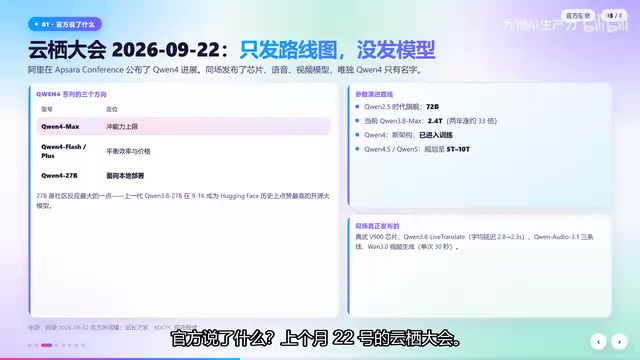
Qwen4 Architecture Preview Open-Sourced: 125B Parameters, 512 Experts, Designed for VRAM-Constrained Hardware
Qwen4 isn't released yet, but its architecture is previewed via open-source Qwen3.8 Flash Next: 125B params, 6B activated per token, 512 experts, 262K context, built for VRAM-limited hardware. This article covers official confirmations, key config.json metrics, and local deployment tests on 24G memory.
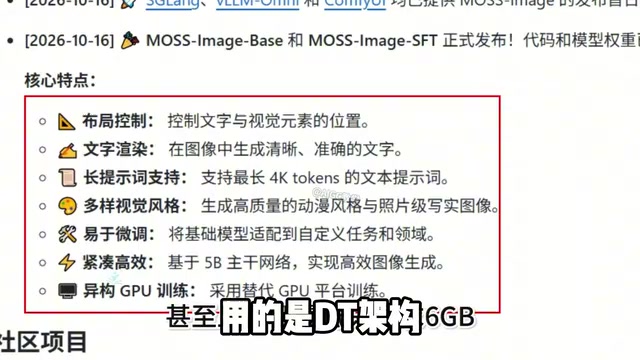
Run 8K Images on 6GB VRAM! Hands-On Test of Fudan's Open-Source MOSS-Image Model
Fudan OpenMouse team and Shanghai MOSS Intelligence open-source MOSS-Image, a 500M-parameter DT architecture text-to-image model that runs locally on 6GB VRAM with precise text rendering, structured layout control, and 4K Token prompt support—ideal for e-commerce posters and local deployment by individual creators.
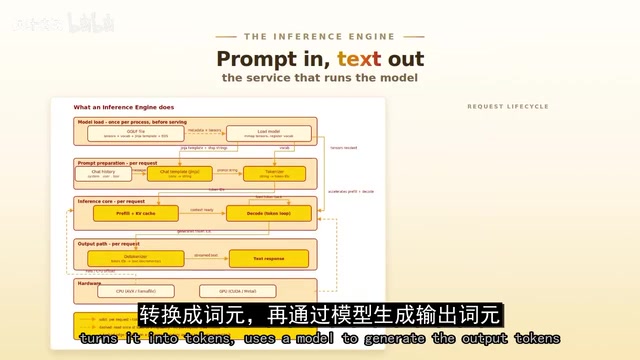
Overseas Blogger Tests Local Deployment of 100B-Parameter MoE Model: Key Lessons on Quantization and Tool Calling
Overseas blogger tests local deployment of Alibaba's Qwen 3.8 Flash Next 100B MoE model on a Strix Halo mini PC and CUDA workstation, revealing how quantization precision affects tool-calling success and the real-world performance of the Strata and GUFO inference engines.